


Search results
Search for "filter" in Full Text gives 437 result(s) in Beilstein Journal of Nanotechnology. Showing first 200.
Carboxylic acids and light interact to affect nanoceria stability and dissolution in acidic aqueous environments
Beilstein J. Nanotechnol. 2023, 14, 762–780, doi:10.3762/bjnano.14.63

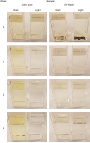
- biological systems. Ceria has been considered a possible UV filter in sunscreens [2][42]. Oxygen defects in the crystal lattice of ceria can presumably be altered by UV irradiation causing a redox switching of the cerium atoms between Ce3+ and Ce4+. This could explain the observance of a blue shift of the
A graphene quantum dots–glassy carbon electrode-based electrochemical sensor for monitoring malathion
Beilstein J. Nanotechnol. 2023, 14, 701–710, doi:10.3762/bjnano.14.56
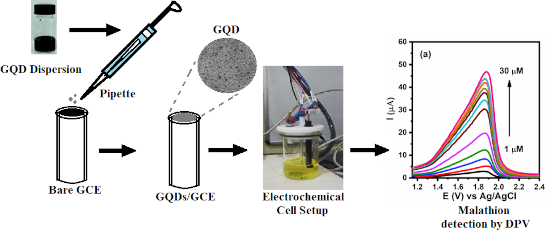
- modifications. Glucose (2 g) was dissolved in 20 mL DI water and filtered for the removal of undissolved particles through Whatman filter paper. In the above solution, 20 mL of conc. H2SO4 was added dropwise until it turned brownish under constant stirring. The hydrothermal treatment was conducted by heating
- collected after centrifugation. To obtain the GQDs, the final black suspension was filtered through a 0.22 µm syringe filter. Fabrication of the electrochemical sensor A mirror-like surface was first achieved on the bare GCE by polishing it with 0.3 and 0.05 μm alumina powder. In the next step the GCE was


Metal-organic framework-based nanomaterials as opto-electrochemical sensors for the detection of antibiotics and hormones: A review
Beilstein J. Nanotechnol. 2023, 14, 631–673, doi:10.3762/bjnano.14.52
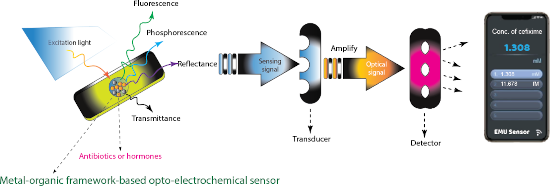
- limit of detection for SMZ is 0.655 μM, and the Ln-MOF luminescence is strongly quenched, with a quenching constant of 4.60 × 10⁴ M−1. They proposed two potential mechanisms for quenching (inner-filter effect and electron transfer). The overlap between the antibiotic’s absorption spectrum and the Ln
- -MOF’s excitation/emission spectrum is thought to be the cause of the inner-filter effect, as shown in Figure 7. The second process was linked to an electron transfer from the L-MOF’s conduction band to the antibiotic’s lowest unoccupied molecular orbital. In a related study, Zhang et al. [43
- fluorescence quenching behaviour, and it was found that there were distinct overlaps between the analyte’s emission bands and the MOFs’ emission band at 322 nm. The FRET mechanism was therefore thought to be key in detecting these analytes. Inner filter effect (IFE): The IFE was formerly thought of as a


Suspension feeding in Copepoda (Crustacea) – a numerical model of setae acting in concert
Beilstein J. Nanotechnol. 2023, 14, 603–615, doi:10.3762/bjnano.14.50

- , see [12][13]). Even though most crustaceans are primarily raptorial, suspension feeding plays an important role. In general, multiple pairs of appendages generate the feeding current, and the particles are captured by plumate “filter setae”, which cover the trunk and head appendages. These setae have
- chose the copepod Centropages hamatus (Lilljeborg, 1853). This species belongs to the Calanoida, where filter feeding is the derived condition [19][20][29][42][43][44][45][46][47][48][49][50][51][52][53][54]. For this species (Figure 1), previous confocal laser scanning microscopy (CLSM) studies on the
- a basis to unravel the interplay between the feeding structures of suspension feeders, the preferred food, and the gathering performance. Additionally, it could open new avenues in the development of new filtration technologies (e.g., mucus-like filter media or bioinspired membranes) that use


Observation of multiple bulk bound states in the continuum modes in a photonic crystal cavity
Beilstein J. Nanotechnol. 2023, 14, 544–551, doi:10.3762/bjnano.14.45
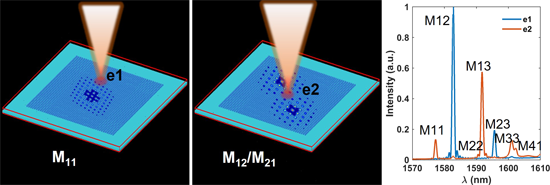
- along the z direction was applied as the source. Perfectly matched layers are used at all boundaries of the simulation region. The mode patterns are captured by adding a field monitor at the middle plane of the structure. An apodization window is utilized in the monitor to filter out the incident power
- polarization-dependent beam splitter (PBS) is added, not only to combine incident and reflection light, but also to filter out the co-polarization component with the incident light. Only the scattering light possessing both polarization components can partially pass the PBS and be detected by the spectrometer


The origin of black and white coloration of the Asian tiger mosquito Aedes albopictus (Diptera: Culicidae)
Beilstein J. Nanotechnol. 2023, 14, 496–508, doi:10.3762/bjnano.14.41
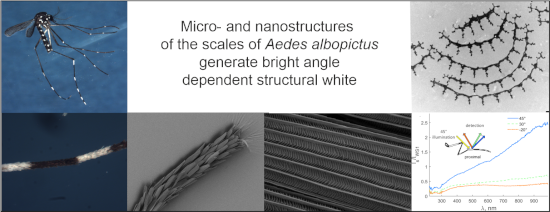
- microscopy Observations of the legs of dry adults were performed using a fluorescence microscope Zeiss Axiophot (Zeiss, Jena, Germany) with an excitation filter 365 nm, chromatic beam splitter FT 395 nm, emission 397 nm, with an excitation filter 450–490 nm, chromatic beam splitter FT 510 nm, emission 520 nm
- , and with an excitation filter 546 nm, chromatic beam splitter FT 580 nm, emission 590 nm. Insect legs were removed from the insects and placed on a microscope slide for observations. Scanning electron microscopy and cryo-SEM Dry insects were observed in a scanning electron microscope Hitachi S-4800
- , Florida, USA). Further spectral processing was performed in Matlab 7.10 (The MathWorks, Natick, NA, USA) and includes dark noise subtraction and smoothing with a Savitzky–Golay filter of fourth order with 12 nm window. All spectra were normalized to the WS1 standard (Ocean Insight, Ostfildern, Germany



Conjugated photothermal materials and structure design for solar steam generation
Beilstein J. Nanotechnol. 2023, 14, 454–466, doi:10.3762/bjnano.14.36
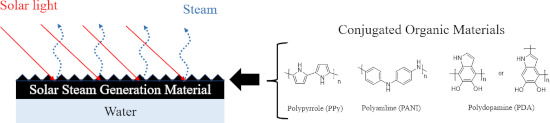
- functions of the membranes. As already described, DPP has been used as the PTM for SSG devices [27]. Microcrystalline solids of DPP molecules were formed in a solution and they were deposited on a filter paper by filtration. The filter papers with the deposited DPP derivatives were employed as photothermal
- films. Optical microscopy was employed to observe the surface structure of the films (Figure 10a–d). Figure 10a shows the filter paper. In the photothermal films, the filter paper is the supporting layer. The filter paper is indeed suitable for this purpose because the cellulose fibers are randomly
- hydrophobic. The contact angle measurements revealed that the contact angles of the filter paper coated with DPP-H, DPP-DCV, and DPP-INCN were 123.9°, 113.4°, and 131.8°, respectively. In contrast, the contact angle of the bare filter paper remained at approx. 0°. These results suggest that coating the DPP


Quercetin- and caffeic acid-functionalized chitosan-capped colloidal silver nanoparticles: one-pot synthesis, characterization, and anticancer and antibacterial activities
Beilstein J. Nanotechnol. 2023, 14, 362–376, doi:10.3762/bjnano.14.31

- 0.22 µm syringe filter (Sartorius, NY). The resulting Ch-Ag NPs were kept in a refrigerator at 4 °C in the dark for further use. Quercetin- and caffeic acid-functionalized chitosan-capped colloidal silver nanoparticles (Ch/Q- and Ch/CA-Ag NPs) were also synthesized following the above procedure. In


Structural, optical, and bioimaging characterization of carbon quantum dots solvothermally synthesized from o-phenylenediamine
Beilstein J. Nanotechnol. 2023, 14, 165–174, doi:10.3762/bjnano.14.17
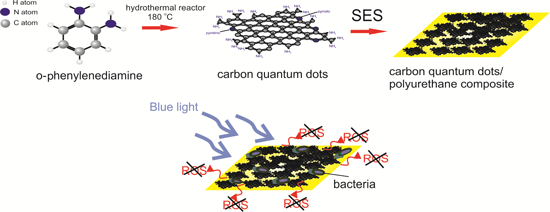
- observed using a custom-made detector unit (interference filter, Ge diode). The resulting signal was an average of 2000 traces, and it was calculated as the difference between the luminescence of individual samples in oxygen atmosphere and vacuum. The resulting luminescence traces were fitted by a single
- ). After 48 h of treatment, the cells were washed in PBS and visualized using an Olympus BX51 fluorescence microscope with a Spectrum Aqua filter. All images were captured using a 20× objective and analyzed with Cytovision 3.1 software (Applied Imaging Corporation). (a) Top-view AFM image of neat PU and (b


Induced electric conductivity in organic polymers
Beilstein J. Nanotechnol. 2022, 13, 1551–1557, doi:10.3762/bjnano.13.128

- characteristics of each lead electrode separately. To measure differential characteristics dI/dV(V), modulation technique and phase-sensitive lock-in detection were used. To suppress the negative effect of stray electromagnetic pickups, a multistage RLC filter system was used [17]. While R(T) measurements at



Photoelectrochemical water oxidation over TiO2 nanotubes modified with MoS2 and g-C3N4
Beilstein J. Nanotechnol. 2022, 13, 1541–1550, doi:10.3762/bjnano.13.127

- filter cutting at 380 nm. Results and Discussion Characterizations of materials Figure 1a displays the morphology of TNAs, which have a uniform distribution of nanotubes with average diameters ranging from 80–100 nm and a length of 500 nm (Figure 1b). The MoS2 material exhibits the stacked layers of 2D


Non-stoichiometric magnetite as catalyst for the photocatalytic degradation of phenol and 2,6-dibromo-4-methylphenol – a new approach in water treatment
Beilstein J. Nanotechnol. 2022, 13, 1531–1540, doi:10.3762/bjnano.13.126

- the reaction, 2 mL samples were collected from the reactor at regular time intervals (from the first to the tenth minute, every 2 min, then every 10 min up to 1 h), then filtered through a 0.22 μm syringe filter. The organic compound concentrations were evaluated by using HPLC. Ozonolysis of phenols


In search of cytotoxic selectivity on cancer cells with biogenically synthesized Ag/AgCl nanoparticles
Beilstein J. Nanotechnol. 2022, 13, 1505–1519, doi:10.3762/bjnano.13.124

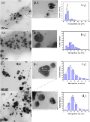
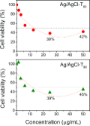
- weighed and put into a coffee filter. Subsequently, an infusion was made with 1 L of distilled water in a Oster® brand coffee maker. The solution obtained was vacuum filtered and concentrated in a rotary evaporator at 50 °C, 250 rpm, and 42 mbar. Biosynthesis of Ag/AgCl nanoparticles Quantification of
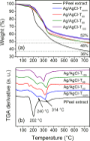
- before drying to be characterized by UV–vis spectroscopy. Characterization X-ray diffraction patterns were obtained in a Bruker AXS D8 Advance diffractometer, at 30 mA and 40 kV, with a Ni filter and a Cu Kα radiation generator. Diffraction patterns were acquired at a scan rate of 1 °/min from 10 to 90





Near-infrared photoactive Ag-Zn-Ga-S-Se quantum dots for high-performance quantum dot-sensitized solar cells
Beilstein J. Nanotechnol. 2022, 13, 1337–1344, doi:10.3762/bjnano.13.110
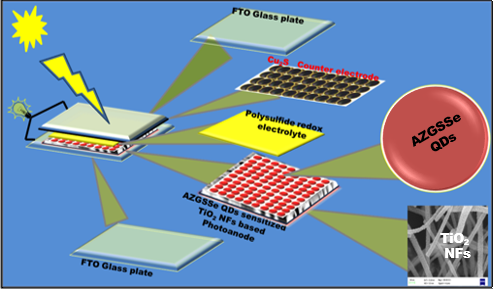
- measured by using an AM 1.5 solar simulator (Oriel instruments 67005) of 100 mW·cm−2 power density. This power density was calibrated with the photocurrent of the reference cell (crystal Si capped by an IR cut filter). Fill factor (FF) and photoconversion efficiency (η) were calculated by using the


Laser-processed antiadhesive bionic combs for handling nanofibers inspired by nanostructures on the legs of cribellate spiders
Beilstein J. Nanotechnol. 2022, 13, 1268–1283, doi:10.3762/bjnano.13.105

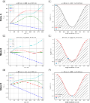
- .13.105 Abstract Nanofibers are drawing the attention of engineers and scientists because their large surface-to-volume ratio is favorable for applications in medicine, filter technology, textile industry, lithium-air batteries, and optical sensors. However, when transferring nanofibers to a technical
- applications in medicine, filter technology, textile industry, lithium-air batteries, and optical sensors [1][2][3][4][5][6][7]. The inherently small scale makes production as well as further processing of nanofibers challenging [8]. For the technical production of artificial nanofibers, different methods such
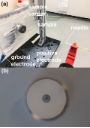
- new way for technologically improving the production of tools for handling of artificial nanofibers. This can facilitate and optimize the production of, for example, filter materials and nanofabrics. Results and Discussion Theoretical modelling The general model is depicted in Figure 2. The course of






Roll-to-roll fabrication of superhydrophobic pads covered with nanofur for the efficient clean-up of oil spills
Beilstein J. Nanotechnol. 2022, 13, 1228–1239, doi:10.3762/bjnano.13.102

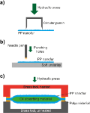
- , mixtures of oil (nonpolar) and water (polar) are easily separated. A promising application of nanofur is therefore the cleaning of oil spills [23][31]. This behavior can be also utilized for the fabrication of membranes that filter oil out of water (or vice versa) [17]. For that, the nanofur is perforated




A cantilever-based, ultrahigh-vacuum, low-temperature scanning probe instrument for multidimensional scanning force microscopy
Beilstein J. Nanotechnol. 2022, 13, 1120–1140, doi:10.3762/bjnano.13.95
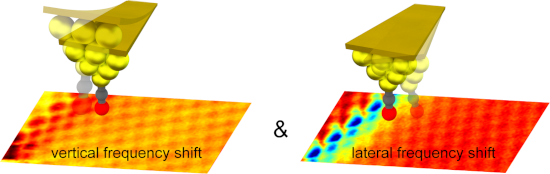
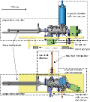
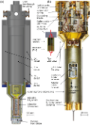
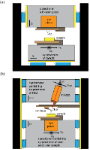
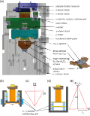
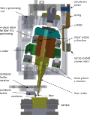
- (by the shaker piezo on the cantilever holder) or optically (using a DC and AC current for the 635 nm laser diode to oscillate its light intensity), respectively. Note that the additional color filter placed in front of the photodiode prevents the backreflected 635 nm light to reach the photodiode





Recent advances in green carbon dots (2015–2022): synthesis, metal ion sensing, and biological applications
Beilstein J. Nanotechnol. 2022, 13, 1068–1107, doi:10.3762/bjnano.13.93
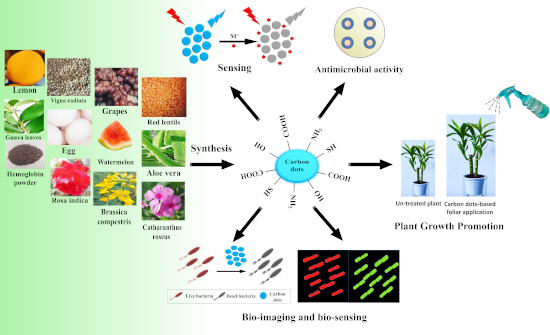
- . These nanodots served as fluorophore in the inner filter effect (IFE) sensing platform to detect tetracycline in pharmaceutical doses [76]. Highly water-soluble and blue emitting CDs were synthesized from hemoglobin by Chakraborty et al., which can be used to detect H2O2 [117]. Food materials Different




Spindle-like MIL101(Fe) decorated with Bi2O3 nanoparticles for enhanced degradation of chlortetracycline under visible-light irradiation
Beilstein J. Nanotechnol. 2022, 13, 1038–1050, doi:10.3762/bjnano.13.91
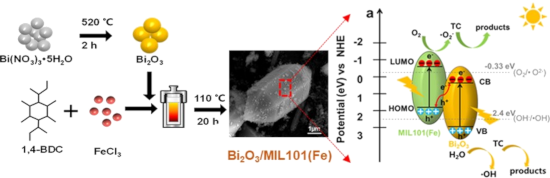
- of a CTC solution with an initial concentration of 20 mg/L and stirred in the dark for 30 min to reach adsorption–desorption equilibrium. Then, the photocatalytic reaction was initiated by a 300 W xenon lamp with a 420 nm cut-off filter. At 20 min intervals, 4 mL of the sample was taken out and


Solar-light-driven LaFexNi1−xO3 perovskite oxides for photocatalytic Fenton-like reaction to degrade organic pollutants
Beilstein J. Nanotechnol. 2022, 13, 882–895, doi:10.3762/bjnano.13.79
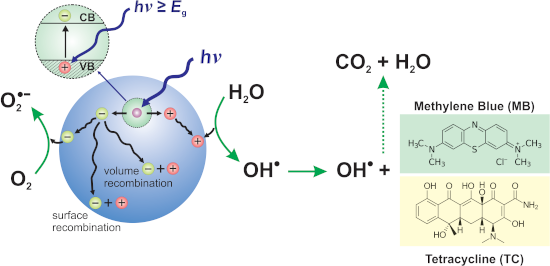
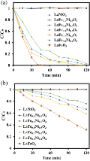
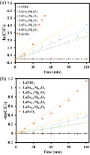
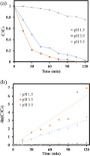
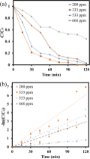
- photocatalytic activity of LaFexNi1−xO3 photocatalysts was examined by evaluating the performance of photocatalytic MB degradation. 300 W Xe-lamp equipped with AM 1.5G filter (Newport Corporation, USA) was used as the light source in the degradation experiment. The light intensity was adjusted to 100 mW/cm2
- , then filtering the samples through a 0.22 µm needle filter. The MB concentrations were evaluated using the UV–vis spectrometer U-2910 (HITACHI, Japan). The detection range was set from 200 to 800 nm. The scanning rate was 400 nm/min. The maximum absorption peaks of MB and TC solution were at 664 nm and



Numerical modeling of a multi-frequency receiving system based on an array of dipole antennas for LSPE-SWIPE
Beilstein J. Nanotechnol. 2022, 13, 865–872, doi:10.3762/bjnano.13.77

- dipole antennas located in the opening of a special bidirectional horn that forms the radiation pattern of the receiving system and also serves as a low-frequency filter. For radiation detection, many bolometer types can be applied. The detectors for this instrument should work at 300 mK, since this is
- frequency channel at the level of 0.5 is 45 GHz. At 220 GHz there is a spurious resonance that can be suppressed with a low-pass filter. Auxiliary frequency channels of the LSPE-SWIPE The cells are located within a circle with a diameter of 4.5 mm; while one half of the circle is occupied by cells for 210
- channel. The frequency response width at 50% of the maximum level for the 210 GHz channel is 26 GHz and for the 240 GHz channel is 38 GHz. In addition, the radiofrequency (RF) tails of the 240 GHz channel above 270 GHz are supposed to be suppressed by a band-pass filter. Noise-equivalent power


Recent advances in nanoarchitectures of monocrystalline coordination polymers through confined assembly
Beilstein J. Nanotechnol. 2022, 13, 763–777, doi:10.3762/bjnano.13.67

- with considerable mechanical strength. For instance, DUT-134(Cu) plates could be assembled into carpets and tubes through face-to-face or edge-to-face alignment [150]. The carpets and tubes showed excellent performance as air filter. The uptake of H2S by the carpets is 6–7 times higher than that of




Hierarchical Bi2WO6/TiO2-nanotube composites derived from natural cellulose for visible-light photocatalytic treatment of pollutants
Beilstein J. Nanotechnol. 2022, 13, 745–762, doi:10.3762/bjnano.13.66
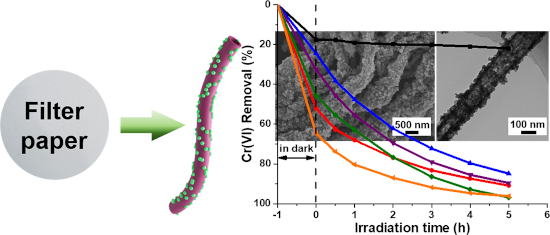
- prepared by utilizing natural cellulose (e.g., laboratory filter paper) as the structural template. The obtained nanoarchitectonics, namely Bi2WO6/TiO2-NT nanocomposites, displayed three-dimensionally interwoven structures which replicated the initial cellulose template. The composite Bi2WO6/TiO2-NT
- control is expected to offer a solution [28]. Based on biomimetic synthesis, the morphological control of functional materials is accomplished by combining chemical building blocks and natural substances with unique structures. Natural cellulose products (e.g., filter paper for quantitative analysis
- Scientific Ltd. Polyvinylidene difluoride (PVDF) was obtained from Fluorochem Co., Ltd. All chemicals were directly applied without further treatment. Filter paper for quantitative laboratory analysis (made from cotton) was purchased from Hangzhou Xinhua Paper Industry Co., Ltd. (China). Ultrapure water was


Direct measurement of surface photovoltage by AC bias Kelvin probe force microscopy
Beilstein J. Nanotechnol. 2022, 13, 712–720, doi:10.3762/bjnano.13.63

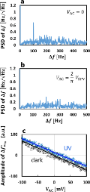
- influence of the photocurrent [35][36][37]. The ultraviolet (UV) light source was a He–Cd laser (Kimmon Koha) with a wavelength of 325 nm and a laser power of 2 mW. A lens was equipped on a xyz-scanner in the UHV chamber to focus the laser onto the sample with a beam diameter of 500 µm. A band-pass filter



Sodium doping in brookite TiO2 enhances its photocatalytic activity
Beilstein J. Nanotechnol. 2022, 13, 599–609, doi:10.3762/bjnano.13.52
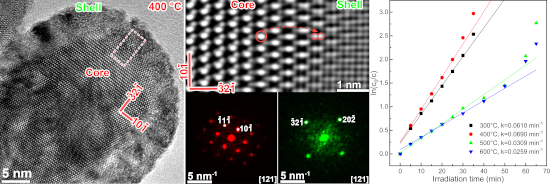
- methylene blue (MB) solution at room temperature under UV light generated by a PLS-SXE300 Xenon lamp with a 365 nm band filter. Following the method reported by Wang et al. [22], 15 mg of the catalyst was dispersed into 75 mL of the MB solution (10 mg/L). Before UV light irradiation, the suspension was





