

Search results
Search for "hydrogel" in Full Text gives 80 result(s) in Beilstein Journal of Nanotechnology.
Influence of the PDMS substrate stiffness on the adhesion of Acanthamoeba castellanii
Beilstein J. Nanotechnol. 2014, 5, 1393–1398, doi:10.3762/bjnano.5.152
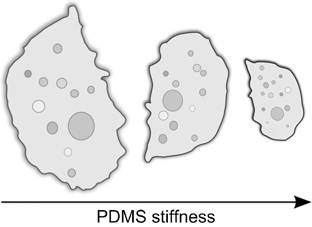
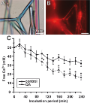
- the adhesion of A. castellanii to hydrogel materials used in contact lenses [39]. We determined a very strong dependence of A. castellanii adhesion on the water content of contact lens materials, i.e., a strong increase in adhesion with increasing water content. In the study presented here, the PDMS



Controlling mechanical properties of bio-inspired hydrogels by modulating nano-scale, inter-polymeric junctions
Beilstein J. Nanotechnol. 2014, 5, 887–894, doi:10.3762/bjnano.5.101

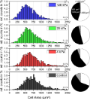
- quinone tanning. The hydrogels produced by catecholamine crosslinking using 6Arm-PEG-NH-catechol exhibited enhanced mechanical properties and rapid gelation compared to the hydrogel prepared by PEGs that can only use catechol-catechol crosslinking. This study demonstrates that the chemical configuration
- the effect of the amine group in PEG gelation, we prepared 6Arm-PEG-NH-catechol and 6Arm-PEG-catechol (control). Both were dissolved in PBS pH 8.0 with a final concentration of 3% (w/v). It is expected that the hydrogel formed by amine-catechol involved tanning (6Arm-PEG-NH-catechol) may exhibit
- completed within 10 min. The elastic modulus of the hydrogel made of 6Arm-PEG-NH-catechol was about 1,000 Pa, but the G’ of the hydrogel prepared by 6Arm-PEG-catechol was low, as expected (about 500 Pa). The two-times increase in the elastic modulus indicates that amine-catechol quinone tanning is more



Biocalcite, a multifunctional inorganic polymer: Building block for calcareous sponge spicules and bioseed for the synthesis of calcium phosphate-based bone
Beilstein J. Nanotechnol. 2014, 5, 610–621, doi:10.3762/bjnano.5.72

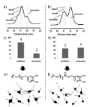
- cells retain their capacity to synthesize HA crystallites. Furthermore, the mechanical properties, including surface roughness and hardness, of the hydrogel were determined. If silica is included in the hydrogel matrix, the encapsulated SaOS-2 cells were found to increasingly express the gene encoding
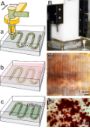
- liberation of both orthophosphate (pink filled triangles) and Ca2+, both components are required for the synthesis of HA [(Ca5(PO4)3(OH)]. Partially taken from [58] with permission. Computer-aided rapid prototyping bioprinting. (A-a) A sketch outlining the computer-guided extrusion of Na alginate hydrogel



Growth behaviour and mechanical properties of PLL/HA multilayer films studied by AFM
Beilstein J. Nanotechnol. 2012, 3, 778–788, doi:10.3762/bjnano.3.87

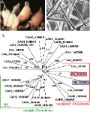
- , back in 1993 [9]. Further measurements include different strains of E. coli with a colloidal probe [10], elastic modulus of human platelet cells [11], human bone cell or skeletal muscle cells [12], breast cancer cells [13][14], hydrogel films [15][16][17], or nanoribbons [18], as well as single
- hydrogel particles [19][20][21][22]. Recent advances in the area have been summarized by Picart and co-workers [23][24]. Several studies on the bio-applicability of polymer-based films showed that if cells are deposited on a surface with an elasticity gradient, they move from the softer region to a


Determination of object position, vortex shedding frequency and flow velocity using artificial lateral line canals
Beilstein J. Nanotechnol. 2011, 2, 276–283, doi:10.3762/bjnano.2.32

- (cf. Equation 2). According to a recent study an artificial cupula made out of hydrogel can improve the performance of artificial sensory hairs (ANs) by about two orders of magnitude. Minimal thresholds were as low as 2.5 μm/s [33]. Thus, one should be able to increase further the sensitivity of ALLCs



Other Beilstein-Institut Open Science Activities