

Search results
Search for "phosphorus" in Full Text gives 81 result(s) in Beilstein Journal of Nanotechnology.
En route to controlled catalytic CVD synthesis of densely packed and vertically aligned nitrogen-doped carbon nanotube arrays
Beilstein J. Nanotechnol. 2014, 5, 219–233, doi:10.3762/bjnano.5.24

- ) type as compared to the purely ‘base’-type for undoped MWCNTs. Keywords: carbon nanotubes; catalytic chemical vapour deposition; crystallinity; nitrogen doping; vertically aligned nanotube arrays; Introduction The doping of carbon nanotubes (CNTs) with boron [1][2], nitrogen [3][4] or phosphorus [5


Nanoparticles of novel organotin(IV) complexes bearing phosphoric triamide ligands
Beilstein J. Nanotechnol. 2013, 4, 94–102, doi:10.3762/bjnano.4.11

- compounds [4][5][6]. For example, they can act as potential antitumor agents [7][8], wood preservatives, agrochemical fungicides and biocides [9][10], as well as catalysts [11]. The organotin(IV) complexes with phosphorus-based ligands bearing the P(E) group (E = O, S, or Se) are especially important
- . Comparing the phosphorus chemical shift, δ(31P), of compounds 1–4 demonstrates that it is the most deshielded atom in 4 (containing three N-phenylpiperazinyl substituents on the P atom with δ(31P) = 17.33 ppm). The 31P NMR of complexes 1–3, each containing identical phosphoric triamide ligands, show that
- the phosphorus atom is at the most upfield region in 1 with M = SnCl2(CH3)2. Further, the δ(31P) shifts downfield from 1 to 3. The complexes 1 and 4 both contain SnCl2Me2, and they differ in the phosphoric triamide ligands. The 31P NMR reveals that the phosphorus atom in 1 appears at a much more




Synthesis and electrical characterization of intrinsic and in situ doped Si nanowires using a novel precursor
Beilstein J. Nanotechnol. 2012, 3, 564–569, doi:10.3762/bjnano.3.65

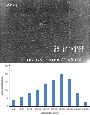
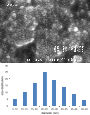
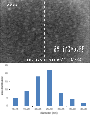
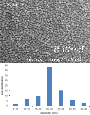
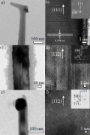
- 700 °C with OCTS, (b) top-view SEM image of boron-doped Si-NWs grown at 600 °C, (c) SEM image of phosphorus-doped NWs grown at 900 °C. TEM images (a), (c) and (e) show impressions of intrinsic, B-doped and P-doped NWs respectively. Analogously (b), (d) and (f) represent the respective HRTEM images


Macromolecular shape and interactions in layer-by-layer assemblies within cylindrical nanopores
Beilstein J. Nanotechnol. 2012, 3, 475–484, doi:10.3762/bjnano.3.54

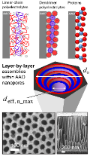
- -disubstituted hydrazine phosphorus-containing dendrimers of the fourth generation (G4) [37]. Each dendrimer had 96 peripheral charged groups, which were either all cationic or all anionic in nature (G4(+) = G4(NH+Et2Cl−)96, Mw = 32.3 kDa; G4(−) = G4(CHCOO−Na+)96, Mw = 36 kDa). The mass of these molecules is




Surface functionalization of aluminosilicate nanotubes with organic molecules
Beilstein J. Nanotechnol. 2012, 3, 82–100, doi:10.3762/bjnano.3.10

- water content increases and there is a risk of formation of multilayers due to the uncontrolled polymerization of the multifunctional organosilanes [17][18]. Phosphorus derivatives are much less sensitive to nucleophilic substitution than silicon derivatives are, because phosphorus has a higher
- dispersibility of imogolite in organic solvents, as well as in various polymer matrices and nanocomposites. The metal–oxygen–phosphorus (M–O–P) interaction plays an important role for surface functionalization of imogolite nanotubes. The strong affinity between octadecylphosphonic acid and the imogolite surface


Twofold role of calcined hydrotalcites in the degradation of methyl parathion pesticide
Beilstein J. Nanotechnol. 2011, 2, 99–103, doi:10.3762/bjnano.2.11

- . Conclusion In this work, the basic character of hydrotalcite oxides (M2+/Al3+) is reported for the first time to be essential for MP degradation. The resulting compounds are (p-NP) and other inorganic (sulfur and phosphorus containing compounds etc.) substances. The degradation of MP with hydrotalcite oxides


Other Beilstein-Institut Open Science Activities