

Search results
Search for "redox reactions" in Full Text gives 77 result(s) in Beilstein Journal of Nanotechnology.
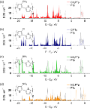
Structural and electronic properties of oligo- and polythiophenes modified by substituents
Beilstein J. Nanotechnol. 2012, 3, 909–919, doi:10.3762/bjnano.3.101

- chemist’s terminology one might call these processes redox reactions, whereas from a physicist’s point of view one would more likely call them n- and p-doping, respectively, to stress the analogy to the doping processes in traditional semiconducting materials such as silicon. Hence, neutral polymers, which





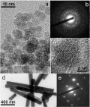
Enhanced visible light photocatalysis through fast crystallization of zinc oxide nanorods
Beilstein J. Nanotechnol. 2010, 1, 14–20, doi:10.3762/bjnano.1.3

- semiconductor undergo redox reactions with molecules adsorbed onto the surface, thereby breaking them into smaller fragments. Photocatalysis with metal-oxide-semiconductor nanostructures has been an area of intense research over the last couple of decades with titania (TiO2) receiving the most attention [1][2
- surface defects play an important role in the photocatalytic activity of metal-oxide nanostructures, as the contaminant molecules need to be adsorbed on to the photocatalytic surface for the redox reactions to occur. The higher the effective surface area, the higher will be the adsorption of target


Other Beilstein-Institut Open Science Activities