

Search results
Search for "MoS2" in Full Text gives 113 result(s) in Beilstein Journal of Nanotechnology.
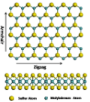
Fracture behaviors of pre-cracked monolayer molybdenum disulfide: A molecular dynamics study
Beilstein J. Nanotechnol. 2016, 7, 1411–1420, doi:10.3762/bjnano.7.132

- and Vibration, Xi’an Jiaotong University, Xi’an 710049, China 10.3762/bjnano.7.132 Abstract The fracture strength and crack propagation of monolayer molybdenum disulfide (MoS2) sheets with various pre-existing cracks are investigated using molecular dynamics simulation (MDS). The uniaxial tensions of
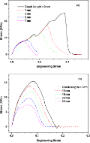
- pre-cracked monolayer MoS2 sheets with different crack tips, different locations of crack, different crack lengths and angled cracks are simulated and studied. The results show that the configuration of crack tip can influence significantly the fracture behaviors of monolayer MoS2 sheets while the
- location of crack does not influence the fracture strength. With the increase of crack length, the fracture strength of monolayer MoS2 sheets reduces almost linearly, and the fracture of monolayer MoS2 sheets is transformed from almost brittle to ductile. By making comparison between the MDS results and




Metal oxide-graphene field-effect transistor: interface trap density extraction model
Beilstein J. Nanotechnol. 2016, 7, 1368–1376, doi:10.3762/bjnano.7.128
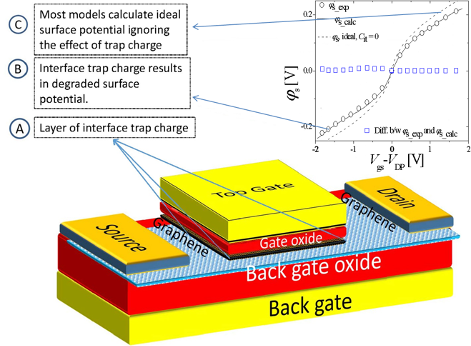
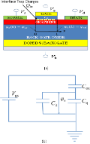
- ) type trap state. Dit is the interface trap density defined at the ith energy level. Qit can be found by the integral of product of all the k trap states with their respective FtA (FtD) between ED and Ef. Dit distribution extraction criteria are based on our earlier work on MoS2 MOSFET [14], and are
- ., Qit_calc, Cit_calc, φs_calc and device Ctot_calc are in excellent agreement with the respective extracted experimental parameters, thereby validating the extracted Dit distribution. It must be mentioned part of this work is based on our earlier work on MoS2 transistor [14] as briefly mentioned earlier
- . However, in that work the interface trap density of MoS2 transistor was extrated by simply fitting the Qit parameter in the device’s drain current (Ids) model to fit experimental device’s Ids with the calculated one from the model. Next, device’s φs was calculated from the model equation. This φs was



Current state of laser synthesis of metal and alloy nanoparticles as ligand-free reference materials for nano-toxicological assays
Beilstein J. Nanotechnol. 2014, 5, 1523–1541, doi:10.3762/bjnano.5.165
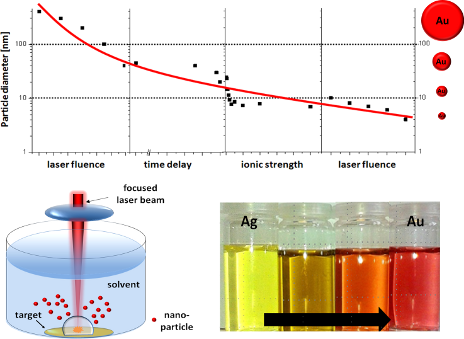
- [156], TiO2, ZnO [157], Ni, NiTi, NiFe, Ti [11] and MoS2 [158] on the viability of mammalian cell lines were studied. Furthermore, some studies addressed antimicrobial effects of Ni [159] and Ag nanoparticles [160][161]. Additionally, some authors reported on the application of laser-fabricated CuO


Magnesium batteries: Current state of the art, issues and future perspectives
Beilstein J. Nanotechnol. 2014, 5, 1291–1311, doi:10.3762/bjnano.5.143


Enhanced photocatalytic hydrogen evolution by combining water soluble graphene with cobalt salts
Beilstein J. Nanotechnol. 2014, 5, 1167–1174, doi:10.3762/bjnano.5.128

- ][27][28][29][30][31][32][33]. Specifically, graphene has been involved in photocatalytic hydrogen production systems [34], such as TiO2-(N)RGO-Pt [35][36][37][38], g-C3N4-RGO-Pt [39], CdS-RGO-Pt [40][41][42][43], MoS2-NRGO [44][45], EY-RGO-Pt [46] and BiVO4-RGO-Ru/SrTiO3:Rh [47] (RGO: reduced graphene


Functionalized nanostructures for enhanced photocatalytic performance under solar light
Beilstein J. Nanotechnol. 2014, 5, 994–1004, doi:10.3762/bjnano.5.113
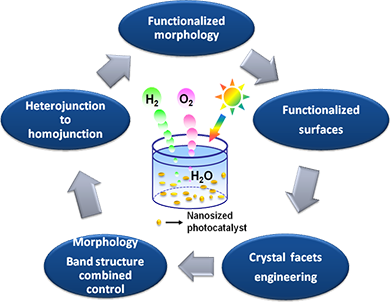
- platinum was demonstrated to be more efficient than metallic platinum as cocatalyst for hydrogen production [23][24]. Taking into account the cost of the designed photocatalyst for commercial purposes, the development of noble-metal free cocatalysts is still valued. Alternative cocatalysts such as MoS2


Nanostructure sensitization of transition metal oxides for visible-light photocatalysis
Beilstein J. Nanotechnol. 2014, 5, 696–710, doi:10.3762/bjnano.5.82
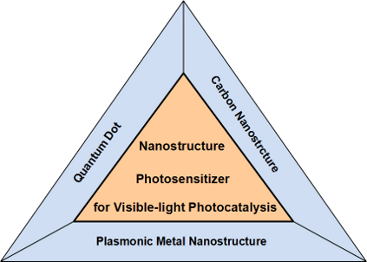
- photoelectrochemical systems in the future. There are also new nanostructures with special features for the potential application in visible-light photocatalysis. For example, very recently, Heinz and co-workers found that by decreasing the thickness of MoS2 to a monolayer [148], the indirect bandgap bulk
- semiconductor can change into a direct bandgap. Correspondingly, the monolayer of MoS2 exhibits 104 times enhancement of luminescence quantum efficiency than that of bulk material. This new finding has also been verified by other research groups [149][150]. Based on this new finding, one may easily imagine that
- the monolayer of MoS2 has great potential as a photosensitizer in the near future. In addition to monolayer MoS2, the nanostructures of gold clusters and carbon nanodots are still in a stage of early development, providing numerous challenges and opportunities for future investigation. Although




DNA origami deposition on native and passivated molybdenum disulfide substrates
Beilstein J. Nanotechnol. 2014, 5, 501–506, doi:10.3762/bjnano.5.58
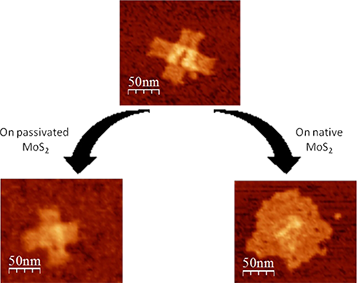
- prerequisite for the successful fabrication of hybrid DNA origami/semiconductor-based biomedical sensor devices. Molybdenum disulfide (MoS2) is an ideal substrate for such future sensors due to its exceptional electrical, mechanical and structural properties. In this work, we performed the first investigations
- into the interaction of DNA origami with the MoS2 surface. In contrast to the structure-preserving interaction of DNA origami with mica, another atomically flat surface, it was observed that DNA origami structures rapidly lose their structural integrity upon interaction with MoS2. In a further series
- of studies, pyrene and 1-pyrenemethylamine, were evaluated as surface modifications which might mitigate this effect. While both species were found to form adsorption layers on MoS2 via physisorption, 1-pyrenemethylamine serves as a better protective agent and preserves the structures for


Effect of contaminations and surface preparation on the work function of single layer MoS2
Beilstein J. Nanotechnol. 2014, 5, 291–297, doi:10.3762/bjnano.5.32

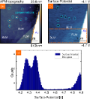
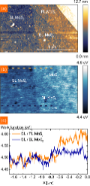
- . 36, 10623 Berlin, Germany Solid State Electronics Department and CeNIDE, University of Duisburg-Essen, Lotharstr. 55, 47058 Duisburg, Germany 10.3762/bjnano.5.32 Abstract Thinning out MoS2 crystals to atomically thin layers results in the transition from an indirect to a direct bandgap material
- . This makes single layer MoS2 an exciting new material for electronic devices. In MoS2 devices it has been observed that the choice of materials, in particular for contact and gate, is crucial for their performance. This makes it very important to study the interaction between ultrathin MoS2 layers and
- materials employed in electronic devices in order to optimize their performance. In this work we used NC-AFM in combination with quantitative KPFM to study the influence of the substrate material and the processing on single layer MoS2 during device fabrication. We find a strong influence of contaminations



Preparation of NiS/ZnIn2S4 as a superior photocatalyst for hydrogen evolution under visible light irradiation
Beilstein J. Nanotechnol. 2013, 4, 949–955, doi:10.3762/bjnano.4.107
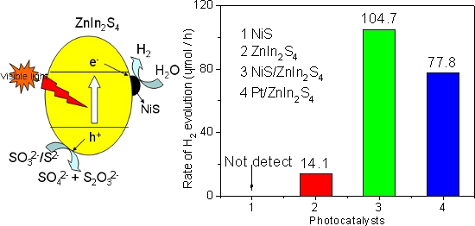
- photocatalytic hydrogen evolution. However, the precious metals are expensive and to reduce the cost of renewable hydrogen evolution, it is necessary to explore alternative co-catalysts based on inexpensive transition metals. Our recent studies revealed that MoS2, a good electrocatalyst for hydrogen evolution
- [34], can be an effective co-catalyst in promoting photocatalytic hydrogen evolution over ZnIn2S4 and MoS2/ZnIn2S4 show even superior performance for hydrogen evolution than Pt/ZnIn2S4 [35]. NiS, a p-type semiconductor, is also reported to be a good electrocatalyst for cathodic hydrogen evolution in
- /ZnIn2S4 and ZnIn2S4 (a) survey spectrum and high-resolution spectra for (b) S 2p; (c) Zn 2p and (d) In 3d. UV–vis diffraction spectra of the pure ZnIn2S4 and 0.25 wt %, 0.5 wt %, 1.0 wt %, 2.0 wt % NiS/ZnIn2S4. Amount of hydrogen evolution over (a) pure ZnIn2S4; (b) 0.2 wt % MoS2/ZnIn2S4; (c) mechanical


Effect of spherical Au nanoparticles on nanofriction and wear reduction in dry and liquid environments
Beilstein J. Nanotechnol. 2012, 3, 759–772, doi:10.3762/bjnano.3.85

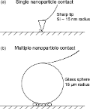
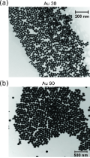
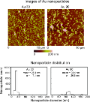
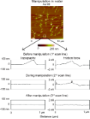
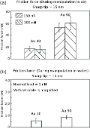
- ], spherical MoS2 (15–60 nm) in poly-alpha-olefin (PAO) and 150 SN [18], spherical WS2 nanoparticles (50–350 nm) in SN 150 and SN 190 [19], spheroidal carbon-nano-onion nanoparticles (<10 nm) in PAO [20], WS2 nanoparticles (120 nm) in paraffin oil [21], MoS2 spheres (0.5–3 µm) in 500 SN oil [22] and carbon



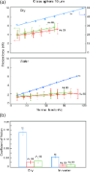
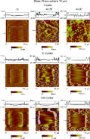
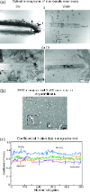
Switching adhesion forces by crossing the metal–insulator transition in Magnéli-type vanadium oxide crystals
Beilstein J. Nanotechnol. 2011, 2, 59–65, doi:10.3762/bjnano.2.8
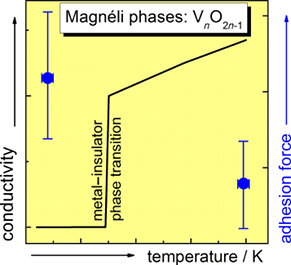
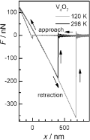
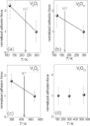
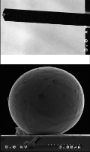
- materials revealed consistent results: Comparative adhesion force measurements of the (0001) basal planes and the (10−10) prism planes of highly oriented pyrolytic graphite (HOPG) and MoS2 also showed that the metallic state lowers the adhesion at the nanoscale [36]. Experimental Vanadium oxide crystal



A collisional model for AFM manipulation of rigid nanoparticles
Beilstein J. Nanotechnol. 2010, 1, 158–162, doi:10.3762/bjnano.1.19

- benchmark would be the flower-shaped Sb islands first manipulated by Ritter et al. on HOPG and MoS2 [9]. Possible discrepancies between theory and experiment concerning the direction of motion and angular speed of the islands could be related to the friction forces between island and substrate and even used