
Search results
Search for "aggregate" in Full Text gives 196 result(s) in Beilstein Journal of Nanotechnology.
Bioinspired self-healing materials: lessons from nature
Beilstein J. Nanotechnol. 2018, 9, 907–935, doi:10.3762/bjnano.9.85

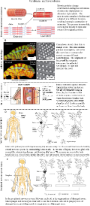
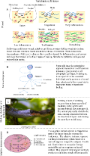
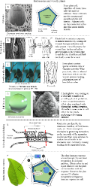
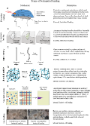
- through muscle control. Figure 2B shows an example of a chameleon that, by stretching its skin, can change the spacing and conformation of guanine nanocrystal lattices embedded in its skin [15]. In a similar fashion, some animals can use muscle control to disperse or aggregate chromatophores in the dermal








Synthesis and characterization of two new TiO2-containing benzothiazole-based imine composites for organic device applications
Beilstein J. Nanotechnol. 2018, 9, 721–739, doi:10.3762/bjnano.9.67
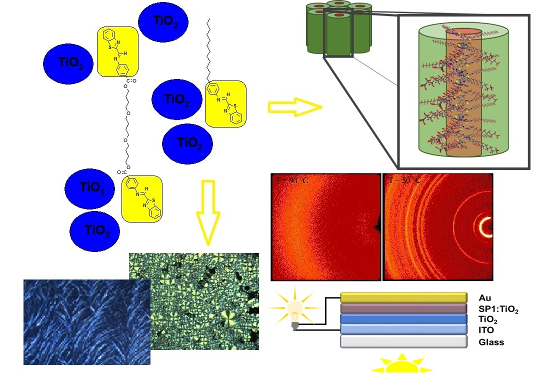
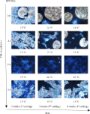
- . This may be because the thickness of this substance is too high or due to the very slow crystallization from isotropic liquid. Furthermore, both the imines (SP1 and SP2) aggregate into small islands after evaporation of solvent (not shown here). After 3 months of being kept in air atmosphere, both SP2







Cyclodextrin-assisted synthesis of tailored mesoporous silica nanoparticles
Beilstein J. Nanotechnol. 2018, 9, 693–703, doi:10.3762/bjnano.9.64

- of pristine CD (β-CD) or hydroxypropyl-functionalized CDs (HP-γ-CD and HP-β-CD). Depending on the formulation conditions, differently shaped MSNs, such as bean-like, spherical, ellipsoid, aggregate and faceted were generated. The morphology and size of MSNs varied with the CD-type used. Generally
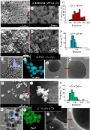
- types (i.e., β-CD, HP-γ-CD and HP-β-CD). By varying the concentrations of additives and CD-type, MSNs in various shapes, such as spherical, aggregate, bean-like and faceted were generated (Figure 1). The particles were characterized in terms of morphology by SEM, TEM and STEM, the surface area by BET
- HP groups. These molecules do not aggregate like β-CD, which might affect the particle formation, and eventually lead to the particles in different shapes and pore structures. For detailed analysis of the faceted particles, TEM, STEM and EDX analyses were performed. Figure 3f shows the TEM images of



Optimisation of purification techniques for the preparation of large-volume aqueous solar nanoparticle inks for organic photovoltaics
Beilstein J. Nanotechnol. 2018, 9, 649–659, doi:10.3762/bjnano.9.60
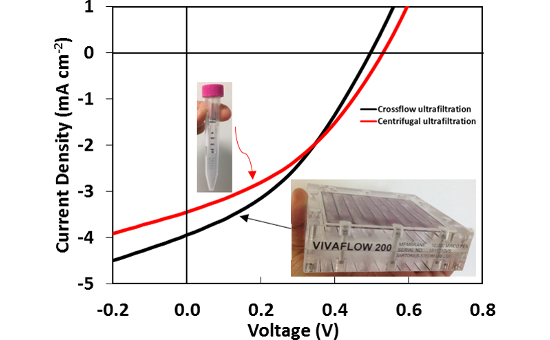
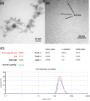
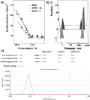
- methods, as shown in (Figure 1A). There is no evidence of large aggregate formation within the ASNP inks as the particle sizes indicated by the Z-average are constant at approximately 41 ± 9 nm as a function of dilution factor (defined in section ‘Preparation of aqueous solar nanoparticle inks’). As such


Mechanistic insights into plasmonic photocatalysts in utilizing visible light
Beilstein J. Nanotechnol. 2018, 9, 628–648, doi:10.3762/bjnano.9.59
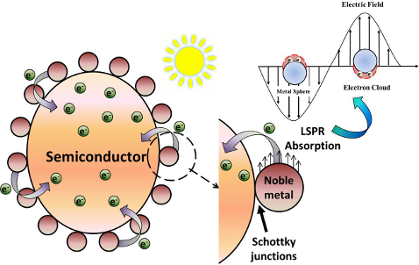
- inside the semiconductor layer are less likely to dissolve, aggregate and detach. These advantages are helpful to increase the scattering of the NPs in the semiconductor and to confirm the stability of the photocatalysis reaction. However, noble metal NPs do not interact with the surrounding environment





Facile phase transfer of gold nanorods and nanospheres stabilized with block copolymers
Beilstein J. Nanotechnol. 2018, 9, 616–627, doi:10.3762/bjnano.9.58

- hydro- and organosols with the data of numerical simulations of the surface plasmon resonance, we find that nanoparticles do not aggregate and confirm the transmission electron microscopy data regarding their shape and size. The proposed approach can be effective in preparing hybrid composites without
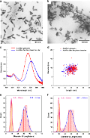
- 1a). Such a mutual arrangement of nanorods could arise either during solvent evaporation or earlier in a sol state. In order to shed light on the behavior of Au nanorods in hydrosols and organosols, we modeled the extinction spectra of a single rounded cylinder and of a simplest possible aggregate
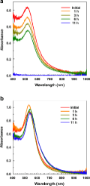
- -stabilized Au nanoparticles start to aggregate immediately, and after 11 h of aging, no plasmon resonance is detected. Simultaneously, polymer-stabilized particles keep their optical properties almost unchanged throughout all 11 h of aging. Conclusion In this study, we have shown that CTAB-coated Au nanorods


Anchoring of a dye precursor on NiO(001) studied by non-contact atomic force microscopy
Beilstein J. Nanotechnol. 2018, 9, 242–249, doi:10.3762/bjnano.9.26

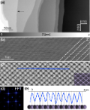
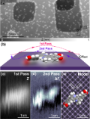
- blue in the Figure) on top of the nickel atoms. However, even at low coverage, single molecules are less regularly observed than molecular clusters. Indeed, as shown in Figure 4a by the arrows, DCPDMbpy appears frequently to aggregate in windmill-shaped clusters. A preferential orientation along the



Co-reductive fabrication of carbon nanodots with high quantum yield for bioimaging of bacteria
Beilstein J. Nanotechnol. 2018, 9, 137–145, doi:10.3762/bjnano.9.16
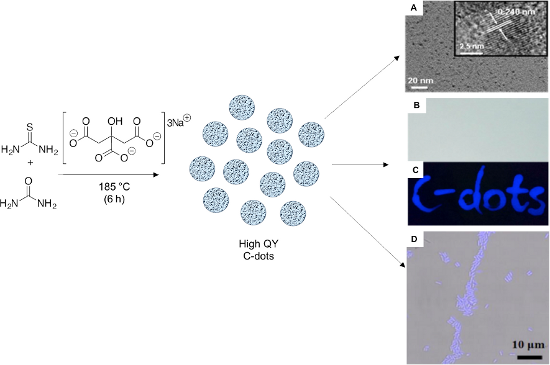
- -dots with co-reduction using urea and thiourea is much higher than when urea or thiourea are used individually during reduction. Moreover, during the scale-up synthesis, it was determined that the C-dots tend to aggregate due to their larger magnitude in mass, leading to an increase in the size of the


Impact of titanium dioxide nanoparticles on purification and contamination of nematic liquid crystals
Beilstein J. Nanotechnol. 2017, 8, 2766–2770, doi:10.3762/bjnano.8.275
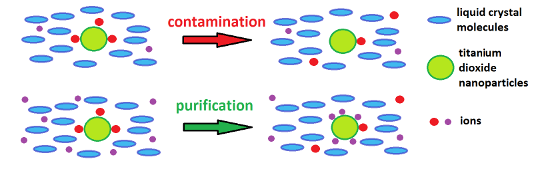
- near nanoparticles and the action of a high electric field affect the purification/contamination processes. NPs with smaller size have a larger surface area thereby facilitate purification/contamination processes. Nanoparticles in LCs tend to aggregate. This leads to the reduction of the total number
- of adsorbing sites. Moreover, in composites with a higher NP concentration, the aggregation process is stronger. Dry nanoparticles tend to aggregate in a nematic liquid crystal matrix. We have observed this aggregation in a polarized optical microscope at a concentration of over 0.5 wt %. This
Strategy to discover full-length amyloid-beta peptide ligands using high-efficiency microarray technology
Beilstein J. Nanotechnol. 2017, 8, 2446–2453, doi:10.3762/bjnano.8.243
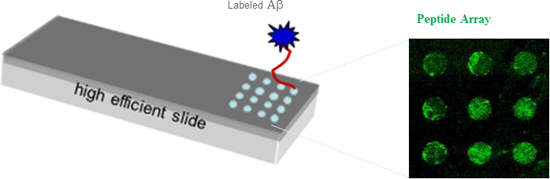
- morphologically analogue to the branched fibrillar form described elsewhere [39]. Figure 1B displays a more rich area of fibrils, showing the typical 5 nm wide component strands consistent with the ribbon aggregate morphology; inset is the magnified view of the yellow box in Figure 1B in which details of the


Suppression of low-energy dissociative electron attachment in Fe(CO)5 upon clustering
Beilstein J. Nanotechnol. 2017, 8, 2200–2207, doi:10.3762/bjnano.8.219
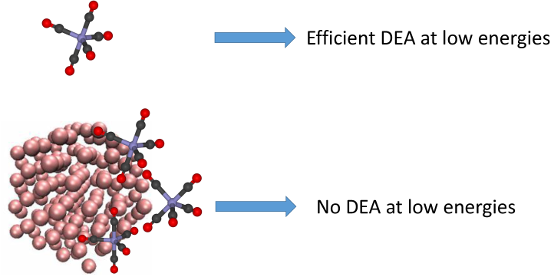
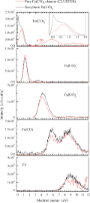
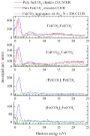
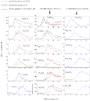
- decreases the resulting electric field at the target molecule, which reduces its attractive interaction with the incoming electron. This causes the significant cross section drop at very low energies. When such an aggregate is sitting on a much larger argon nanoparticle, the shielding, due to the

Methionine-mediated synthesis of magnetic nanoparticles and functionalization with gold quantum dots for theranostic applications
Beilstein J. Nanotechnol. 2017, 8, 1734–1741, doi:10.3762/bjnano.8.174

- cobalt ferrite NPs with metionine molecules confers them strong non-fouling properties not allowing aggregate. The XRD pattern of these NPs (Figure 1c) implied the formation of pure, inverse spinel structure CoFe2O4, as all diffraction peaks at 2Θ positions: 18.29 (111), 30.08 (220), 35.44 (311), 43.06


Calcium fluoride based multifunctional nanoparticles for multimodal imaging
Beilstein J. Nanotechnol. 2017, 8, 1484–1493, doi:10.3762/bjnano.8.148
- acceleration voltage of 200 kV. Samples were prepared by dipping 200 mesh copper grids coated with a thin carbon film (Quantifoil Micro Tools GmbH) into aggregate-free NP dispersions. The size of the particles was determined by the measurement tools of Fiji. The DLS was measured with a Zetasizer Nano-ZS from


Development of polycationic amphiphilic cyclodextrin nanoparticles for anticancer drug delivery
Beilstein J. Nanotechnol. 2017, 8, 1457–1468, doi:10.3762/bjnano.8.145

- organic solvent, which diffuses from the organic phase into the aqueous phase. Meanwhile, polymers in the organic phase tend to spontaneously aggregate, forming spherical crystals, and thus nanoparticles form rapidly [27][29]. As seen in Table 1, the mean particle size of the nanoparticles varies greatly


Metal oxide nanostructures: preparation, characterization and functional applications as chemical sensors
Beilstein J. Nanotechnol. 2017, 8, 1205–1217, doi:10.3762/bjnano.8.122

- large surface area, while the performance of the Nb2O5 nanoflowers depends on the size of the nanostructures and how they aggregate to the 3D structure. If the assembly leads a low surface-to-volume ratio, the final performance could be degraded. Reproducibility was also taken into account. For the same


Surface-enhanced Raman spectroscopy of cell lysates mixed with silver nanoparticles for tumor classification
Beilstein J. Nanotechnol. 2017, 8, 1183–1190, doi:10.3762/bjnano.8.120

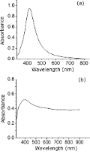
- absorption band of silver (Ag) nanoparticles corresponds to the maximum of the plasmon resonance which is near 415 nm (Figure 1a). Shifting the plasmon resonance of our nanoparticles to the near-IR spectral region was achieved by aggregation using potassium chloride (KCl). When nanoparticles aggregate, they
- of the Ag nanoparticles was determined to be around 50 nm with a high degree of polydispersity in size ranging from 10 to 100 nm. The Ag nanoparticles do not tend to aggregate to a single specific shape after adding KCl. Instead, they form different shapes from spheres to rods. The cells, before and


Study of the correlation between sensing performance and surface morphology of inkjet-printed aqueous graphene-based chemiresistors for NO2 detection
Beilstein J. Nanotechnol. 2017, 8, 1023–1031, doi:10.3762/bjnano.8.103

- -printing process and to determine its jettability as ink. Surface tension, dispersion stability and aggregate size have been measured since the ink printability depends on these main parameters, which have to match the operating parameters of the employed printing system. Based on these considerations, the


Needs and challenges for assessing the environmental impacts of engineered nanomaterials (ENMs)
Beilstein J. Nanotechnol. 2017, 8, 989–1014, doi:10.3762/bjnano.8.101

- product meets the definition of “nano-relevant” using the European Union regulatory recommendation of 2011 [57]. According to this recommendation, a nanomaterial is defined as “an unknown material containing primary particles in an unbound state or as an aggregate or as an agglomerate and where, for 50
BTEX detection with composites of ethylenevinyl acetate and nanostructured carbon
Beilstein J. Nanotechnol. 2017, 8, 982–988, doi:10.3762/bjnano.8.100

- order to determine dispersion, aggregate size and distribution of carbon nanoparticles. Gas sensing measurements are made using different concentrations of BTEX vapours as well as of gasoline vapours. Experimental Materials and composite structure The sensor material used is a nanostructured composite


α-((4-Cyanobenzoyl)oxy)-ω-methyl poly(ethylene glycol): a new stabilizer for silver nanoparticles
Beilstein J. Nanotechnol. 2017, 8, 627–635, doi:10.3762/bjnano.8.67

- reaction) size distribution. Moreover, the interaction of the cyano group with the silver surface is reasonably strong [36][38][39][40][41][42][43] and provides a good attachment of CBAmPEG to the NP surface. UV–vis spectroscopy suggests that a smaller fraction of the nanoparticles may aggregate upon



Analysis and modification of defective surface aggregates on PCDTBT:PCBM solar cell blends using combined Kelvin probe, conductive and bimodal atomic force microscopy
Beilstein J. Nanotechnol. 2017, 8, 579–589, doi:10.3762/bjnano.8.62
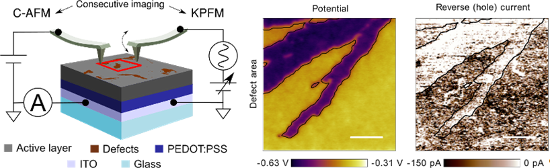
- Information Supporting Information contains detailed experimental setup, image cross-correlation, analysis of an aged sample, time evolution of surface aggregates, aggregate removal during KPFM scans, a typical current–voltage curve, cantilever calibration, comparison of contact-mode and bimodal AFM


Formation and shape-control of hierarchical cobalt nanostructures using quaternary ammonium salts in aqueous media
Beilstein J. Nanotechnol. 2017, 8, 494–505, doi:10.3762/bjnano.8.53

- lateral surface (diameter) of nanoplates is seen under the electron microscope. The corresponding electron micrograph (Figure 3e), shows an array of small nanoparticles forming an edge of a nanoplate. A high-resolution image for this aggregate illustrated in Figure 3f shows a lattice spacing of 0.22 nm
- aggregate by magnetic interaction (ferromagnetic) by oriented attachment resulting in nanorods. The FEGSEM images (Figure 5c) show a persistent tendency of nanorods to interlock while a few isolated nanorods can also be seen. In the following we explain the crystal structure and the effect of different


Self-assembly of silicon nanowires studied by advanced transmission electron microscopy
Beilstein J. Nanotechnol. 2017, 8, 440–445, doi:10.3762/bjnano.8.47

- , re-condensate as silicon spheres due to the surface-energy minimization principle. During the formation of the microspheres, a fraction of the Si feedstock sublimates and the molecules in the vapor phase aggregate in the form of lighter Si nanostructures. These are transported downstream in the


Tailoring bifunctional hybrid organic–inorganic nanoadsorbents by the choice of functional layer composition probed by adsorption of Cu2+ ions
Beilstein J. Nanotechnol. 2017, 8, 334–347, doi:10.3762/bjnano.8.36
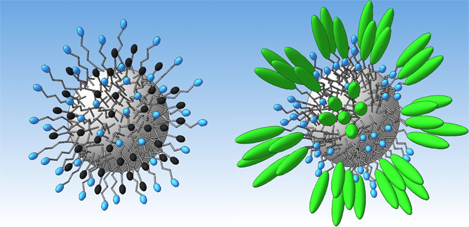
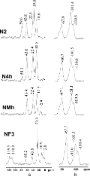
- temperatures, while the increased temperature favors nucleation with less charged and easier coalescing nuclei that aggregate easier (sample NMh). The behavior of the three-component system APTES/TEOS/MTES is thus more complex and is not dominated by the reactivity of any single component. The decrease in TEOS




Nanoscale isoindigo-carriers: self-assembly and tunable properties
Beilstein J. Nanotechnol. 2017, 8, 313–324, doi:10.3762/bjnano.8.34

- , and fluorometry. The critical association concentrations and aggregate sizes were measured. The hydrophilic–lipophilic balance of alkylated isoindigo derivatives strongly influences aggregate morphology. In the case of short-chain dialkylated isoindigo derivatives, supramolecular polymers of 200 to
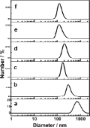
- -assemble in solution. In Figure 3 and Table S2 (Supporting Information File 1), aggregate sizes and polydispersity index at various isoindigo concentrations are given. As seen, aggregate size depends on the length of hydrocarbon fragments of isoindigo with the particle sizes of compounds 2с–f varying
- comparable with that determined spectrophotometrically (Figure 4a). Compounds 2e and 2f aggregate at higher concentrations (CAC ≈ 0.6 mМ). Importantly, this rather low aggregation number may result from the quenching effect of isoindigo derivatives [50]. Figure 4b and Figure S10 (Supporting Information File