

Search results
Search for "amino acids" in Full Text gives 109 result(s) in Beilstein Journal of Nanotechnology.
Nanodiamond-DGEA peptide conjugates for enhanced delivery of doxorubicin to prostate cancer
Beilstein J. Nanotechnol. 2014, 5, 937–945, doi:10.3762/bjnano.5.107
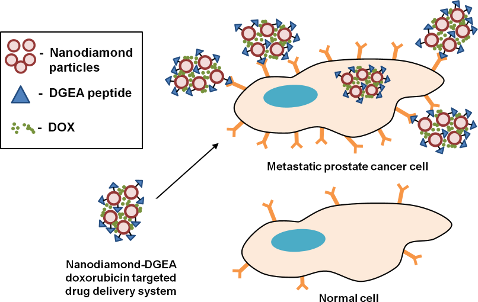
- , which was mainly due to the covalent bonding of the peptide to the surface. FTIR confirmed that the layer was DGEA as several characteristic peaks for DGEA were represented in the ND-DGEA spectrum (Figure 3). Particularly, there were peaks due to C–N stretching in primary or secondary amines of amino
- acids between 1130 and 1390 cm–1, carbonyl stretching in the amide I bonds (1655 cm–1), and NH bending of the primary amine (1544 cm–1). There was also a broadening of the 1544 cm–1 peak (amide II), signifying successful conjugation as additional amide bonds were formed between the carboxyl groups on


Controlling mechanical properties of bio-inspired hydrogels by modulating nano-scale, inter-polymeric junctions
Beilstein J. Nanotechnol. 2014, 5, 887–894, doi:10.3762/bjnano.5.101

- quinones. For mussel adhesives, DOPAquinone is formed by oxidation of a catecholic amino acid, 3,4-dihydroxy-L-phenylalanine (DOPA). Subsequently, DOPAquinone rapidly reacts with basic amino acids, such as lysine and/or histidine, forming covalent adducts of DOPA-DOPA, lysyl-DOPA, and/or histeinyl-DOPA [7



Morphological characterization of fullerene–androsterone conjugates
Beilstein J. Nanotechnol. 2014, 5, 374–379, doi:10.3762/bjnano.5.43

- suitably functionalized fullerene derivatives with physical and biological properties interesting for biomedicine and materials science [2]. The covalent linkage of C60 to moieties, such as porphyrins [3], anionic polymethine cyanine [4], and other bioactive molecules such as amino acids [5], peptides [6


Extracellular biosynthesis of gadolinium oxide (Gd2O3) nanoparticles, their biodistribution and bioconjugation with the chemically modified anticancer drug taxol
Beilstein J. Nanotechnol. 2014, 5, 249–257, doi:10.3762/bjnano.5.27

- absorption edge at ca. 270 nm arises due to electronic transitions in the delocalized π-electrons present in the indole ring of aromatic amino acids such as tryptophan, tyrosine and to some extent phenylalanine residues, which are present in the proteins moiety [24]. These residues of proteins may be


Nanoscopic surfactant behavior of the porin MspA in aqueous media
Beilstein J. Nanotechnol. 2013, 4, 278–284, doi:10.3762/bjnano.4.30

- . Results and Discussion MspA (porin A from M. smegmatis), an octameric channel protein (184 amino acids, Mw = 155,248 Da [20]) is isolated from the outer cell wall of M. smegmatis, a species of nonpathogenic mycobacteria commonly found in soil [21]. The structure of MspA has been studied extensively and
- without denaturation. The MspA-octamer is formed by 160 negatively charged and 64 positively charged amino acids [2]. R165 and E63/E127, as well as R161 and E39, form salt bridges, which greatly stabilize its tertiary structure (R: arginine, E: glutamic acid) [2]. As a result, 136 negatively charged and
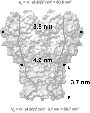
- 48 positively charged amino acids are accessible at the surface. Whereas the negative charges are predominantly found within the interior of the “goblet”, positive charges are concentrated in the stem and the periplasmatic loop region of MspA (Figure 1B and Figure 1C). We have investigated the




Distinction of nucleobases – a tip-enhanced Raman approach
Beilstein J. Nanotechnol. 2011, 2, 628–637, doi:10.3762/bjnano.2.66

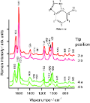
- orientation of the ring on the gold surface. Similar effects were found to influence the ring breathing mode of aromatic amino acids [31]. Apart from this difference the spectral features can be attributed solely to uracil and no signals of the sugar and phosphate backbone were found. This suggests a strong



Self-organizing bioinspired oligothiophene–oligopeptide hybrids
Beilstein J. Nanotechnol. 2011, 2, 525–544, doi:10.3762/bjnano.2.57

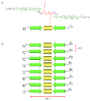
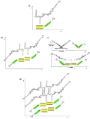
- (SPPS) by sequential coupling of standard fluorenylmethoxycarbonyl (Fmoc)-protected amino acids and the pseudoproline unit onto a preloaded TentaGel resin [27]. Incorporation of the Fmoc-protected azido-phenylalanine (aPhe) and the addition of the switch ester segment between valine (Val) and threonine




Electrochemical behavior of dye-linked L-proline dehydrogenase on glassy carbon electrodes modified by multi-walled carbon nanotubes
Beilstein J. Nanotechnol. 2010, 1, 135–141, doi:10.3762/bjnano.1.16

- require considerable time for analysis. In recent years, researchers have paid much more attention to the construction of electrochemical enzyme biosensors for the analysis of amino acids [5][6][7], and several electrochemical biosensing systems for L-proline and D-proline determination have been reported


Review and outlook: from single nanoparticles to self-assembled monolayers and granular GMR sensors
Beilstein J. Nanotechnol. 2010, 1, 75–93, doi:10.3762/bjnano.1.10

- hydrophilic. The hydrophilic C-terminal of Mms6 is believed to be the iron binding site [26]. Recent studies within our group showed that nanoparticles can be synthesized in vitro by the use of a shorter synthetic version of the protein Mms6 called c25-mms6. This polypeptide consists of 25 amino acids from




Other Beilstein-Institut Open Science Activities