


Search results
Search for "bioavailability" in Full Text gives 103 result(s) in Beilstein Journal of Nanotechnology.
PLGA nanoparticles as a platform for vitamin D-based cancer therapy
Beilstein J. Nanotechnol. 2015, 6, 1306–1318, doi:10.3762/bjnano.6.135

- polymeric NPs will increase bioavailability by preventing drug degradation before administration, increasing the half-life of vitamin D3 in the bloodstream, avoiding the first-pass effect and circumventing the multidrug resistance (MDR) problem [18]. Also it is well documented that PLGA NPs are efficiently
- activity, allowing reduced administration frequency, as well as lower drug dosage, and thus increased drug bioavailability. This work also demonstrated that encapsulation in a nanovehicle enhanced the growth inhibition effect of calcitriol in the treated human cell lines by inducing cell cycle arrest in
- conclude that nanoencapsulation in PLGA NPs may offer a new and potentially effective administration strategy of calcitriol that overcomes the actual limitations such as its low bioavailability. Experimental Chemicals PLGA Resomer® RG503H (50:50; Mw 24,000–38,000), ethyl acetate, Pluronic®F127, coumarin-6


Nanodiamond-DGEA peptide conjugates for enhanced delivery of doxorubicin to prostate cancer
Beilstein J. Nanotechnol. 2014, 5, 937–945, doi:10.3762/bjnano.5.107
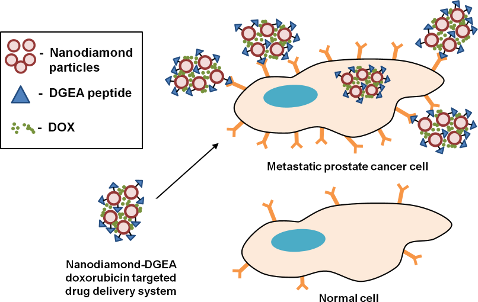
- , delivery due to size, and bioavailability. In contrast to the aforementioned nanoparticle systems, nanodiamond particles (ND) possess advantageous properties such as rich surface chemistry for conjugating targeting molecules, high surface area for loading drugs, and the ability to act as transmembrane


Cytotoxic and proinflammatory effects of PVP-coated silver nanoparticles after intratracheal instillation in rats
Beilstein J. Nanotechnol. 2013, 4, 933–940, doi:10.3762/bjnano.4.105
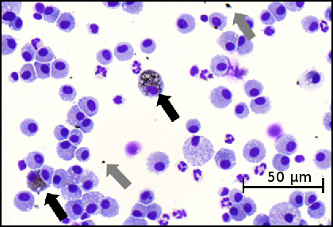
- profound chemical transformations in biological environments that can affect bioavailability and toxicity. In case of argyria, silver deposits in the skin are not translocated engineered AgNP, but rather secondary particles formed of silver metabolites resulting from partial AgNP dissolution and subsequent




Other Beilstein-Institut Open Science Activities



