Search results
Search for "chemical vapor deposition" in Full Text gives 238 result(s) in Beilstein Journal of Nanotechnology. Showing first 200.
Magnetism and magnetoresistance of single Ni–Cu alloy nanowires
Beilstein J. Nanotechnol. 2018, 9, 2345–2355, doi:10.3762/bjnano.9.219
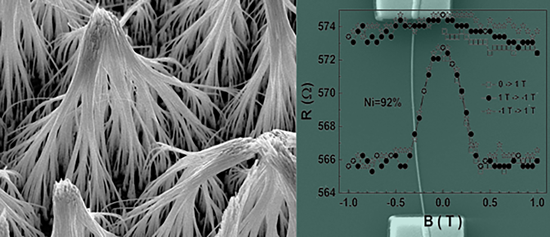
- -resistance and magneto-thermopower measurements on single Co–Ni alloy nanowires have been reported [10]. Several methods have been reported for the controlled fabrication of magnetic nanowires including lithographical techniques, chemical vapor deposition and hydrothermal growth [11][12][13]. The main




Metal–dielectric hybrid nanoantennas for efficient frequency conversion at the anapole mode
Beilstein J. Nanotechnol. 2018, 9, 2306–2314, doi:10.3762/bjnano.9.215

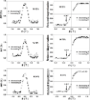
- SiOx are deposited on the surface via plasma-enhanced chemical vapor deposition (PECVD) to later improve the adhesion of the negative-tone HSQ resist on the III–V layer. A first positive-tone lithography step with PMMA resist is performed to realize the alignment structures, followed by electron beam


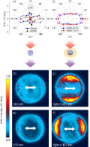


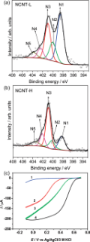
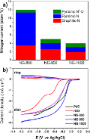
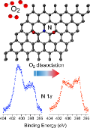
Metal-free catalysis based on nitrogen-doped carbon nanomaterials: a photoelectron spectroscopy point of view
Beilstein J. Nanotechnol. 2018, 9, 2015–2031, doi:10.3762/bjnano.9.191
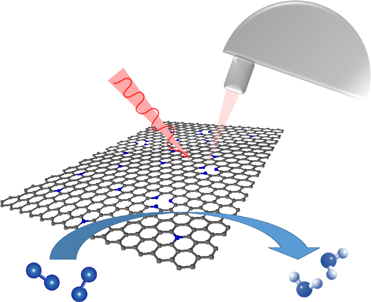
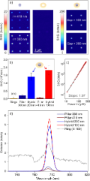
- -synthetic treatments. The most common technique for doping during the synthesis is chemical vapor deposition (CVD), similar to the synthesis of the pristine material [36][69][70], albeit using nitrogen-containing precursors such as benzylamine [71], acetonitrile [72][73], phthalocyanines [74][75] or ammonia





Synthesis of carbon nanowalls from a single-source metal-organic precursor
Beilstein J. Nanotechnol. 2018, 9, 1895–1905, doi:10.3762/bjnano.9.181
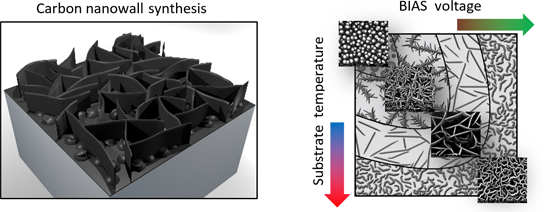
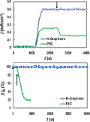
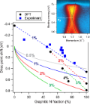
- vapor deposition (ICP-PECVD) is investigated. The CNWs are electrically conducting and show a large specific surface area, which is a key characteristic to make them interesting for sensors, catalytic applications or energy-storage systems. It was recently discovered that CNW films can be deposited by
- Andre Giese Sebastian Schipporeit Volker Buck Nicolas Wohrl Faculty of Physics and CENIDE, University Duisburg Essen, Carl-Benz-Straße 199, 47057 Duisburg, Germany 10.3762/bjnano.9.181 Abstract In this work, the deposition of carbon nanowalls (CNWs) by inductively coupled plasma enhanced chemical


SO2 gas adsorption on carbon nanomaterials: a comparative study
Beilstein J. Nanotechnol. 2018, 9, 1782–1792, doi:10.3762/bjnano.9.169
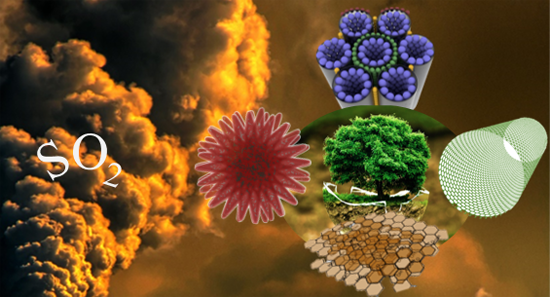
- vapor deposition [56][57]. The bimetallic catalyst system for the VACNT growth was prepared by depositing a thin layer of aluminum (13–15 nm) over the substrate through thermal evaporation in a vacuum of 10−6 mbar, followed by the sputter deposition of 1.2 nm of an iron catalyst layer. The synthesis was
- with a total length of 5–20 μm. SWNTs have a diameter of ca. 1.5 nm, a length of 1–5 µm and were produced by using CVD with a purity of >95%. Vertically aligned carbon nanotubes (VACNTs) were synthesized in our lab over a Si/SiO2 (600 nm) substrate in a quartz furnace using water-assisted chemical



Toward the use of CVD-grown MoS2 nanosheets as field-emission source
Beilstein J. Nanotechnol. 2018, 9, 1686–1694, doi:10.3762/bjnano.9.160
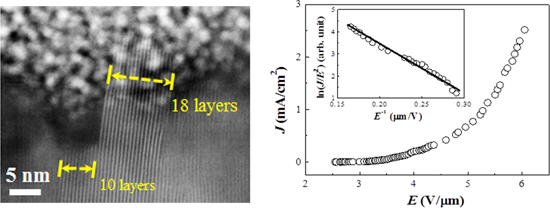
- the fabricated MoS2 NSs could have a great potential as robust high-performance electron-emitter material for various applications such as microelectronics and nanoelectronics, flat-panel displays and electron-microscopy emitter tips. Keywords: chemical vapor deposition (CVD); field emission
- ][16] and the number of layers [16]. Various methods have been used to synthesize vertically aligned MoS2 NSs: liquid-phase exfoliation [17], hydrothermal synthesis [8] or chemical vapor deposition (CVD) [15][17][18]. CVD is regarded as the most promising method to synthesize high-quality MoS2 with



Light extraction efficiency enhancement of flip-chip blue light-emitting diodes by anodic aluminum oxide
Beilstein J. Nanotechnol. 2018, 9, 1602–1612, doi:10.3762/bjnano.9.152

- reflected by the surface roughness of LEDs. RCWA analysis indicated that surface plasmon waves are not involved in LEE enhancement. Experimental To produce a typical LED chip with a single-sided PSS, InGaN/GaN MQW LEDs were grown on c-plane (0001)-oriented PSSs using a metal–organic chemical vapor
- deposition apparatus. An inductively coupled plasma etcher was used to prepare periodic arrays with a depth of 1.5 μm on the PSS. Trimethylgallium, trimethylindium, ammonia, bicyclopentadienyl magnesium, and silane served as the precursors of Ga, In, N, Mg, and Si, respectively. The epitaxial structure of


Electrostatically actuated encased cantilevers
Beilstein J. Nanotechnol. 2018, 9, 1381–1389, doi:10.3762/bjnano.9.130

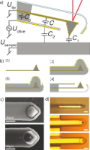
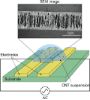
- . Beginning with gold-coated silicon cantilevers (NSC 19, Mikromasch) (1), we use chemical vapor deposition to coat a 11 μm thick sacrificial polymer layer followed by a 2 μm thick parylene layer. The first layer serves as sacrificial film that defines the air gap and the parylene builds the encasement. Next


Chemistry for electron-induced nanofabrication
Beilstein J. Nanotechnol. 2018, 9, 1317–1320, doi:10.3762/bjnano.9.124
- chemical vapor deposition (CVD), which is a thermally driven process [6]. Consequently, these precursors are optimized with respect to thermal chemistry and do not necessarily perform well in the electron-driven FEBID process. In fact, they often experience incomplete fragmentation so that material from
Formation mechanisms of boron oxide films fabricated by large-area electron beam-induced deposition of trimethyl borate
Beilstein J. Nanotechnol. 2018, 9, 1282–1287, doi:10.3762/bjnano.9.120
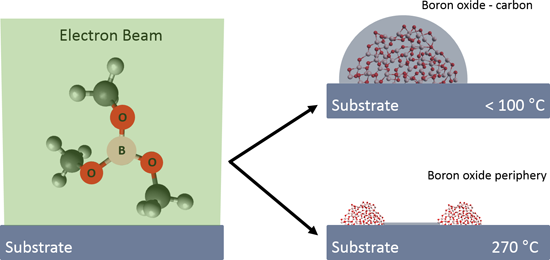
- at rates comparable to conventional techniques such as laser-induced chemical vapor deposition. The deposition rate and stoichiometry of boron oxide fabricated by EBID using trimethyl borate (TMB) as precursor is found to be critically dependent on the substrate temperature. By comparing the
- and undergoes subsequent reaction with an electron beam. The process has major advantages over thermal chemical vapor deposition (CVD) processes one of which being that the substrate is not exposed to the elevated temperatures required for the thermal decomposition of precursor molecules. To date, the



A novel copper precursor for electron beam induced deposition
Beilstein J. Nanotechnol. 2018, 9, 1220–1227, doi:10.3762/bjnano.9.113

- deposition should furthermore provide for conductive deposits with a preferably high copper content. Here, the metal-organic precursor bis(tert-butylacetoacetato)Cu(II) (CAS: 23670-45-3, C16H26CuO6) is introduced as a fluorine-free alternative. This precursor is known from chemical vapor deposition (CVD


Review on nanoparticles and nanostructured materials: history, sources, toxicity and regulations
Beilstein J. Nanotechnol. 2018, 9, 1050–1074, doi:10.3762/bjnano.9.98

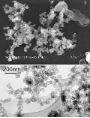
- morphologies such as hollow tubes, ellipsoids or spheres. Fullerenes (C60), carbon nanotubes (CNTs), carbon nanofibers, carbon black, graphene (Gr), and carbon onions are included under the carbon-based NMs category. Laser ablation, arc discharge, and chemical vapor deposition (CVD) are the important



Single-crystalline FeCo nanoparticle-filled carbon nanotubes: synthesis, structural characterization and magnetic properties
Beilstein J. Nanotechnol. 2018, 9, 1024–1034, doi:10.3762/bjnano.9.95

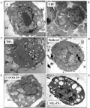
- the filling material due to the confinement of the material within the hollow tubular cavity. Chemical vapor deposition (CVD) is a technique used to fill MNPs into CNTs via in situ filling, in which metallocene precursors are used as a carbon source and MNPs [22][30][37] or hydrocarbons (such as


Effect of annealing treatments on CeO2 grown on TiN and Si substrates by atomic layer deposition
Beilstein J. Nanotechnol. 2018, 9, 890–899, doi:10.3762/bjnano.9.83
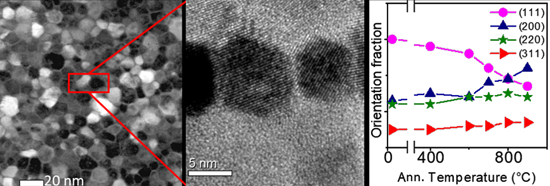
- sputtering [7], e-beam [16], physical vapor deposition [17], chemical vapor deposition (CVD) [18], and atomic layer deposition (ALD). The latter has been explored by using different precursors, e.g., Ce(thd)4, Ce(iPrCp)3 and Ce(mmp)4) [19][20][21][22][23], obtaining as-deposited film with polycrystalline


The effect of atmospheric doping on pressure-dependent Raman scattering in supported graphene
Beilstein J. Nanotechnol. 2018, 9, 704–710, doi:10.3762/bjnano.9.65

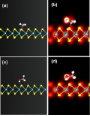
- , graphene functionalization techniques, and taking into account adsorption effects during nanoelectronic device engineering. Experimental Graphene was synthesized on Cu foil at 1020 °C by a chemical vapor deposition (CVD) method using a mixture of CH4 of 40 sccm and H2 of 10 sccm. Cu foil (Alfa Aesar


Sensing behavior of flower-shaped MoS2 nanoflakes: case study with methanol and xylene
Beilstein J. Nanotechnol. 2018, 9, 608–615, doi:10.3762/bjnano.9.57

- methods have been applied to synthesize single or few-layered MoS2, including but not limited to mechanical cleavage, chemical exfoliation, hydrothermal synthesis and chemical vapor deposition [16][17][18][19][20][21][22][23]. The hydrothermal process is a scalable method to synthesize MoS2 nanosheets and


Engineering of oriented carbon nanotubes in composite materials
Beilstein J. Nanotechnol. 2018, 9, 415–435, doi:10.3762/bjnano.9.41
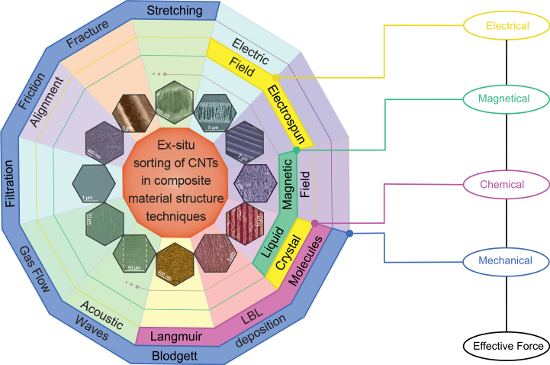
- arrangement of CNTs and sorting of nanofibers are done at the same time, as shown in Figure 9 [70]. Recently, direct spinning to a vertical chemical vapor deposition (CVD) synthesis zone has also been studied and is under development to produce CNT fibers and ribbons [44][71]. In a vertical CVD reactor, the
- of a wide range of materials, spraying can be combined with other methods to fabricate composite materials. In this method, a sheet of CNTs is produced by chemical vapor deposition (CVD) on a SiO2/Si substrate that is coated with a very thin layer of iron as a catalyst. The CNT rows have been grown








Electron interaction with copper(II) carboxylate compounds
Beilstein J. Nanotechnol. 2018, 9, 384–398, doi:10.3762/bjnano.9.38
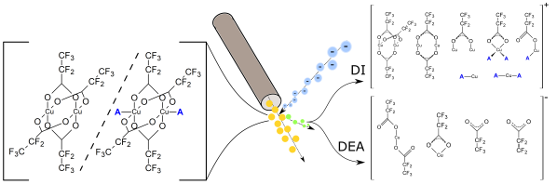
- remains and forms the layer. Activation of the precursor molecules can be induced by several processes. For instance, a catalytic or a thermal dissociation can occur. Plasma activated processes such as plasma enhanced chemical vapor deposition (PECVD) can be used for coating of the surface [1]. In the


Gas-assisted silver deposition with a focused electron beam
Beilstein J. Nanotechnol. 2018, 9, 224–232, doi:10.3762/bjnano.9.24

- (AgO2CC2F5), for silver FEBID based on reported successful chemical vapor deposition (CVD) experiments yielding silver films at moderate temperatures of around ≤200 °C [16]. This carboxylate compound showed to be susceptible to electron-induced dissociation, but it requires thermal conditions outside the


Dopant-stimulated growth of GaN nanotube-like nanostructures on Si(111) by molecular beam epitaxy
Beilstein J. Nanotechnol. 2018, 9, 146–154, doi:10.3762/bjnano.9.17

- offer a new degree of freedom due to possible confinement effects. It has been previously demonstrated that GaN NTs may be synthesized using the following methods: 1) chemical vapor deposition of nitrogen precursor with gallium precursor in the presence of catalysts such as Ni, In or Au [11][12][13]; 2


Atomic layer deposition and properties of ZrO2/Fe2O3 thin films
Beilstein J. Nanotechnol. 2018, 9, 119–128, doi:10.3762/bjnano.9.14

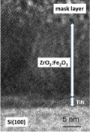
- terms of the chemical composition. Altogether, 220–235 ALD cycles were deposited to obtain each thin film. The films were grown on various substrates: Si(100) and highly doped conductive Si substrates covered by a 10 nm TiN film grown by chemical vapor deposition. Before deposition, the Si(100) was
- , the separation is not perfect during the actual operation. The adsorption waves may partially overlap and meet in the vicinity of the substrate surface, causing the chemical vapor deposition to be less controlled. At the leading edge, the film thickness is usually higher and gradually decreases



Response under low-energy electron irradiation of a thin film of a potential copper precursor for focused electron beam induced deposition (FEBID)
Beilstein J. Nanotechnol. 2018, 9, 57–65, doi:10.3762/bjnano.9.8
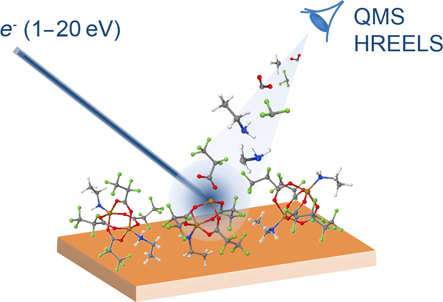
- , Poland, for chemical vapor deposition (CVD) [6][7][8]. Among these complexes, two different compounds, [Cu2(EtNH2)2(μ-O2CC3F7)4] and [Cu2(EtNH2)2(μ-O2CC2F5)4] (Figure 1) will be studied in the present paper and hereafter named as compound A and compound B, respectively. They differ only by the length of



Electro-optical characteristics of a liquid crystal cell with graphene electrodes
Beilstein J. Nanotechnol. 2017, 8, 2802–2806, doi:10.3762/bjnano.8.279

- . Results and Discussion Synthesis of graphene films The graphene was obtained by a chemical vapor deposition (CVD) process. Details of synthesis and extensive characterization of the CVD graphene can be found in prior works [13][14]. The monolayer graphene film was then transferred from the Cu foil to a


The rational design of a Au(I) precursor for focused electron beam induced deposition
Beilstein J. Nanotechnol. 2017, 8, 2753–2765, doi:10.3762/bjnano.8.274
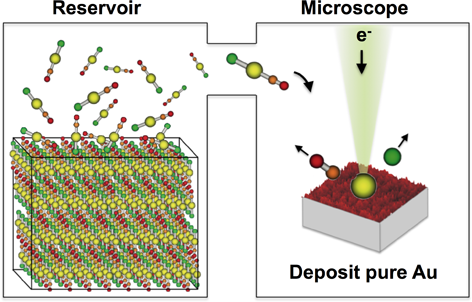
- , but non-volatile [12]. MeAuPMe3 has been used for chemical vapor deposition (CVD) [51][52] and can be used for FEBIP. However, the electron-induced dissociation is incomplete, with just a single methyl ligand being removed [12]. The studies of Au(I) compounds that have been made so far have raised
- -volatile. ClAuPMe3 and ClAuPEt3 are hence not useful as FEBIP precursor. However, replacing the Cl ligand with a Me ligand improves the volatility. MeAuPMe3 is chemically stable enough to act as a precursor for FEBIP (and chemical vapor deposition) and crystallizes with six molecules in an asymmetric unit


CdSe nanorod/TiO2 nanoparticle heterojunctions with enhanced solar- and visible-light photocatalytic activity
Beilstein J. Nanotechnol. 2017, 8, 2741–2752, doi:10.3762/bjnano.8.273
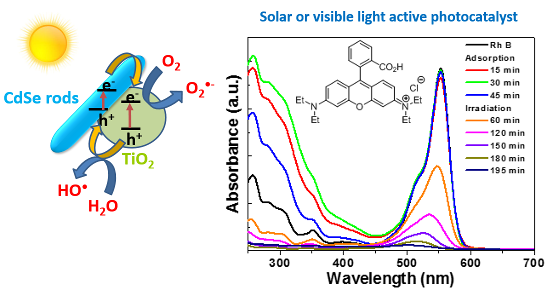
- . used chemical vapor deposition to associate CdS, CdSe or CdSeS rods to TiO2 NRs arrays and demonstrated that the CdSeS/TiO2 heterostructure exhibits the highest performances as photoelectrode [39]. More recently, small CdSe NRs [40] or type II CdSe/CdSexTe1−x NRs [41] were also used as light harvesters