
Search results
Search for "drug release" in Full Text gives 119 result(s) in Beilstein Journal of Nanotechnology.
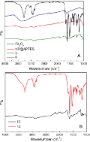
Enzymatically promoted release of organic molecules linked to magnetic nanoparticles
Beilstein J. Nanotechnol. 2018, 9, 986–999, doi:10.3762/bjnano.9.92

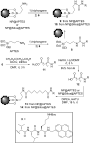
- previous experience in using the TAP/PMT strategy in activation of enediyne prodrugs [25][26], we decided to use a linker conceived to allow drug release by the action of a selective protease, such as plasmin. Plasmin is a serine protease that is formed upon cleavage of plasminogen by a urokinase-type



Nanoparticle delivery to metastatic breast cancer cells by nanoengineered mesenchymal stem cells
Beilstein J. Nanotechnol. 2018, 9, 321–332, doi:10.3762/bjnano.9.32
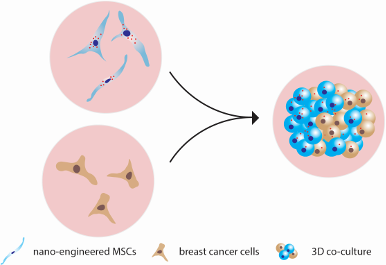
- , which could be sufficient time to release drugs into the tumour. The encapsulation of NP-linked anticancer drugs could ensure metered drug release in tumours [2]. QD linkage to photosensitisers, such as chlorin e6, causes damage to MiaPaCa2 cancer cells via light-induced cytotoxicity, demonstrating a



Bi-layer sandwich film for antibacterial catheters
Beilstein J. Nanotechnol. 2017, 8, 1982–2001, doi:10.3762/bjnano.8.199

- ]. Drug-release catheters All other trials can be subsumed under drug-release catheters being at least bacteriostatic or even bactericidal. The first trials consisted of dipping catheters into a solution of an antibiotic drug (e.g., ciprofloxacin [14]) and subsequent drying of the solvent. Although, by
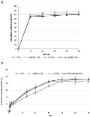
- ]). Physiological sodium salt solution, for example, never passes the limit of the solubility product at concentrations that are typical for these drug-release systems. Release rate: The coated substrates [two catheter pieces (outer diameter: 5.3 mm) with a length of 2 cm (13% of the length of a normal balloon


Development of polycationic amphiphilic cyclodextrin nanoparticles for anticancer drug delivery
Beilstein J. Nanotechnol. 2017, 8, 1457–1468, doi:10.3762/bjnano.8.145

- therefore be suggested that the surface charge of nanoparticle is directly effective on the drug release profile. Cell culture studies In order to determine the safety of blank amphiphilic CD nanoparticles and the anticancer efficacy of PCX-loaded amphiphilic CD nanoparticles, L929 mouse fibroblast cells
- differences of CD nanoparticles may be related with drug release profiles. PCX shows anticancer activity by stabilizing microtubules and blocking the cell in G2 or M phase in cell cycle [55][56]. The duration of drug release of PCX-loaded amphiphilic CD nanoparticles increases in the order of 6OCaproβCD < CS
- were prepared and used as nanometer-sized delivery systems and compared in terms of mean particle size, zeta potential, drug loading capacity and drug release profile for PCX, which is an effective anticancer agent over the wide spectrum various types of cancer. The findings strongly suggest that


Cationic PEGylated polycaprolactone nanoparticles carrying post-operation docetaxel for glioma treatment
Beilstein J. Nanotechnol. 2017, 8, 1446–1456, doi:10.3762/bjnano.8.144

- particles, and the drug release rate from the nanoparticles was slowed down to 48 h by dispersing the nanoparticles in a hydroxypropyl cellulose film. Cell culture studies revealed that docetaxel-loaded nanoparticles cause higher cytotoxicity compared to the free docetaxel solution in DMSO. Conclusion
- . Nanoparticle-based drug delivery systems can be prepared with synthetic and natural polymers. As an advantage, their surface properties can be modified to increase cellular penetration and prolonged drug release. Additionally, suitable nanoparticle-based drug delivery systems can bypass biological barriers or
- after surgical operation of glioma treatment. All formulations were characterized in terms of mean particle size, polydispersity index, zeta potential, drug loading capacity, drug release profile and cytotoxicity. When nanoparticle formulations are compared with each other, mePEG-PCL nanoparticles have




Nanoscale isoindigo-carriers: self-assembly and tunable properties
Beilstein J. Nanotechnol. 2017, 8, 313–324, doi:10.3762/bjnano.8.34

- toxicity as well as to minimize drug degradation and to provide a controllable drug release [51][52][53]. The modification of nanostructures with conjugated π–π fragments leads to the absorption of anticancer drugs via π–π stacking interaction and increases the drug-loading capacity of nanoscale soft




Chitosan-based nanoparticles for improved anticancer efficacy and bioavailability of mifepristone
Beilstein J. Nanotechnol. 2016, 7, 1861–1870, doi:10.3762/bjnano.7.178

- preparation, has been extensively studied for obtaining nanocarrier systems with a good capacity of drug encapsulation and an adjustable drug release rate [22][23]. The aim of this work was to prepare MIF-encapsulated CNs (MCNs) to regulate the drug release rate of MIF for bioavailability improvement, and
- meanwhile, enhance the antitumor effect of MIF by the auxiliary anticancer functionality of Cs. The ionic gelation technique was used to prepare MCNs. The preparation conditions for MCNs were optimized and the physiochemical properties of MCNs were characterized. Then, the in vitro drug release behavior of
- crosslinking agent for controlled drug release of CNs. In vitro anticancer effects The cytotoxicity of the MCNs was tested in four different cancer cell lines A549 (human lung adenocarcinoma), Hela (human cervical epithelioid carcinoma), RL95-2 (human endometrial carcinoma), and HepG2 (human liver


The role of morphology and coupling of gold nanoparticles in optical breakdown during picosecond pulse exposures
Beilstein J. Nanotechnol. 2016, 7, 869–880, doi:10.3762/bjnano.7.79

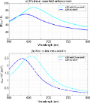
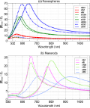
- spectroscopy [20][21], cell nanosurgery [19], drug release [62][63], fabrication of functional gold-antibody nanoconjugates [64] and imaging [65]. Schematic of the model geometry for a nanosphere trimer. The model contains three concentric domains. The most outer domain (grey) represents a combination of a




Fabrication of hybrid nanocomposite scaffolds by incorporating ligand-free hydroxyapatite nanoparticles into biodegradable polymer scaffolds and release studies
Beilstein J. Nanotechnol. 2015, 6, 2217–2223, doi:10.3762/bjnano.6.227
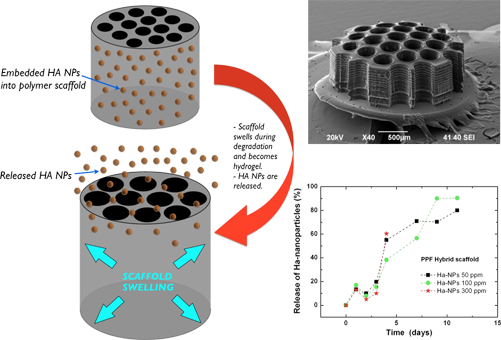
- osteoconductive and osteoinductive capabilities [5][6], made it a platform for large-scale biomedical applications, such as controlled drug release and bone tissue engineering materials [7][8]. Lee et al. [9] reported on cellular responses to crosslinkable poly(propylene fumarate)/hydroxyapatite nanocomposites


Nanofibers for drug delivery – incorporation and release of model molecules, influence of molecular weight and polymer structure
Beilstein J. Nanotechnol. 2015, 6, 1939–1945, doi:10.3762/bjnano.6.198

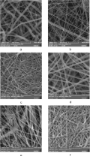
- primary factors that affect the diffusion mechanism and drug release. For homogenous nanofibers, the rate of release decreases with time, because the drug must travel progressively longer distances to diffuse to the fiber periphery, which requires more time. Contrary, the core–shell design provides the
- delivery system with the diffusion rate of the therapeutic agent stable throughout the life. The structure of the nanofibrous drug delivery system plays a key role in the drug release process. The fiber diameter, specific surface area, size and total volume of pores significantly influence the convection
- and diffusion of the liquid in which the nanofibers are immersed. Therefore, the drug release is also influenced. The great advantage of nanofibrous materials is that their structure, i.e., their fiber diameter, density and thickness of the nanofibrous layer, can be tailored to various requirements by



Analyzing collaboration networks and developmental patterns of nano-enabled drug delivery (NEDD) for brain cancer
Beilstein J. Nanotechnol. 2015, 6, 1666–1676, doi:10.3762/bjnano.6.169

- network analyses, at country, institution, and individual levels, to explore the patterns of scientific networking for a key nano area – nano-enabled drug delivery (NEDD). NEDD has successfully been used clinically to modulate drug release and to target particular diseased tissues. The data for this


Formation of substrate-based gold nanocage chains through dealloying with nitric acid
Beilstein J. Nanotechnol. 2015, 6, 1362–1368, doi:10.3762/bjnano.6.140
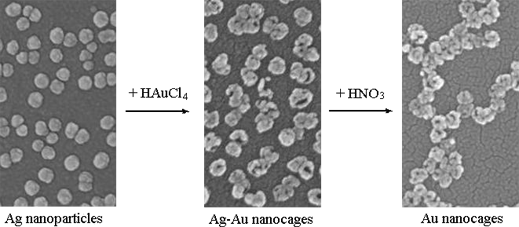
- to their solid counterparts because of the high surface area, low density, and near-infrared localized surface plasmon resonance (LSPR). All these make Au NC an attractive material for various applications in optical [4][5] and electrochemical sensing [6], immunoassay [7], drug release [8], surface

PLGA nanoparticles as a platform for vitamin D-based cancer therapy
Beilstein J. Nanotechnol. 2015, 6, 1306–1318, doi:10.3762/bjnano.6.135

- internalized by targeted cells, increasing intracellular drug delivery [20], allowing a sustained and controlled drug release over time [19]. Moreover, PLGA NPs could offer selective drug delivery to tumor tissue either by passive targeting with the enhanced permeability and retention effect (EPR) [18] or by


Silica micro/nanospheres for theranostics: from bimodal MRI and fluorescent imaging probes to cancer therapy
Beilstein J. Nanotechnol. 2015, 6, 546–558, doi:10.3762/bjnano.6.57
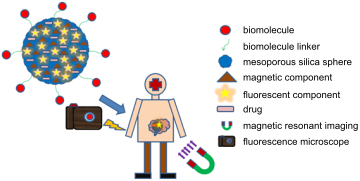
- 490 nm excitation. The loading efficiency was found to increase with increasing YVO4-MSN concentration. The drug release pattern also showed sustained drug release from the silica spheres. The cytotoxicity studies of DOX-loaded YVO4-MSN NPs were examined on two human cancerous cells, namely HeLa and
- spheres. Both FE-SEM and TEM images suggested that the average diameter of the magnetite–mesoporous silica spheres was around 150 nm. The mesoporous property of the prepared NPs was demonstrated by N2 adsorption/desorption isotherm studies and the pore size was found to be ca. 3.5 nm. The drug release
- profile of ibuprofen suggested that the drug release rate can be controlled by modifying the surface of the silica spheres. Further, Insin et al. [49] reported a sol–gel process for the synthesis of hybrid NPs embedded inside silica microspheres for fluorescence and magnetic resonance imaging. The


Filling of carbon nanotubes and nanofibres
Beilstein J. Nanotechnol. 2015, 6, 508–516, doi:10.3762/bjnano.6.53
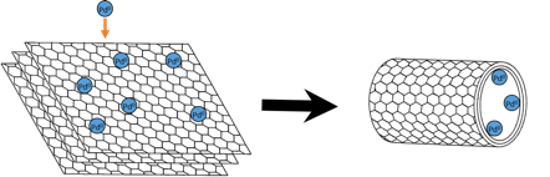
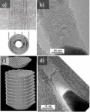
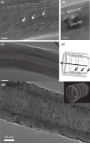
- with a focused, high energy (200 keV) electron beam results in MWCNT–Co–MWCNT junction sites [45][46]. There has been considerable interest in the filling of SWCNTs and MWCNTs for drug delivery applications, for example, tip functionalization of the filled CNT for selective drug release [47][48]. A
- , drug release, VGCNFs have not yet been evaluated. Whilst they have not demonstrated the same nanoscale interactions as CNTs (such as crossing the blood–brain barrier, which is still under investigation), they may have other applications on the larger scale and allow for higher drug storage capacity

Release behaviour and toxicity evaluation of levodopa from carboxylated single-walled carbon nanotubes
Beilstein J. Nanotechnol. 2015, 6, 243–253, doi:10.3762/bjnano.6.23

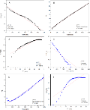
- exhibited favourable, slow, sustained-release characteristics as a drug carrier with a release period over more than 20 h. The results obtained from the drug release studies of LD at different pH values showed that the LD-loaded nanohybrid is pH activated. The release kinetics of LD from SWCNT–COOH were
- ≈38.2% as determined by UV–vis spectroscopy. Fourier transform infrared spectra indicated that the LD was successfully conjugated to SWCNT–COOH, and this was further supported by both the CHNS elemental analysis and Raman spectroscopy study. The drug release study shows that the release of LD from SWCNT
- in a parallel-displaced geometry. A schematic representation of the possible noncovalent interaction (a) sandwich or (b) parallel-displaced, between LD molecules and SWCNT–COOH is given in Scheme 1. In vitro drug release response The drug release mechanisms of LD from SWCNT–COOH were studied at room




Morphological characterization of fullerene–androsterone conjugates
Beilstein J. Nanotechnol. 2014, 5, 374–379, doi:10.3762/bjnano.5.43

- ][7], nucleotides, sugars and steroids [8][9], have allowed the solubilization of these hybrid derivatives in aqueous media, thus enhancing certain biological activities. For the potential use of C60 derivatives as drug delivery systems, the size of the particles is important. In general, fast drug
- release was observed for small particles, although these particles tended to aggregate. For this reason, a compromise between the size and the stability of dispersion is necessary in order to develop efficient systems [10]. On the other hand, androsterone [11] is an important and well-known metabolite of


Improvement of the oxidation stability of cobalt nanoparticles
Beilstein J. Nanotechnol. 2012, 3, 75–81, doi:10.3762/bjnano.3.9

- to their application potential in data storage [1] and in sensor applications [2], as well as for biomedical uses in therapy and diagnosis. By opening novel mechanisms for drug targeting [3], controlled drug release, hyperthermia [4][5] and imaging applications [6][7] there is a need for well


Synthesis and catalytic applications of combined zeolitic/mesoporous materials
Beilstein J. Nanotechnol. 2011, 2, 785–801, doi:10.3762/bjnano.2.87

- catalysts [1][2][3][4][5][11], drying agents [5][12], adsorbers [5][13], sensors [14][15], controlled-drug-release agents [6][8], column-packing material [16], food additives [17], etc. According to IUPAC (International Union of Pure and Applied Chemistry) nomenclature, nanoporous materials are classified