

Search results
Search for "evolution" in Full Text gives 705 result(s) in Beilstein Journal of Nanotechnology. Showing first 200.
Functional fibrillar interfaces: Biological hair as inspiration across scales
Beilstein J. Nanotechnol. 2024, 15, 664–677, doi:10.3762/bjnano.15.55
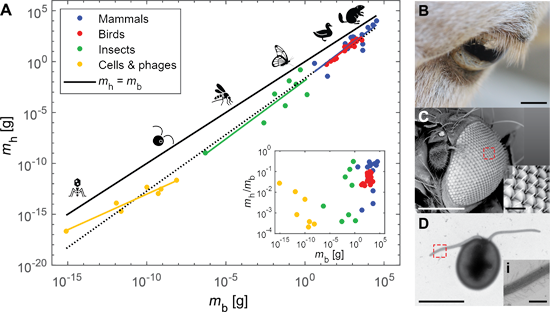
- 200 million years of independent evolution, feathers and hair follicles share numerous structural similarities, including the presence of a dermal papilla and a dermal sheath [71]. However, unlike hair, feathers also have a dermal pulp, which is essential in growth and regeneration during feather
- classifications. Future research linking form and function in microbial hairs may lead to a better understanding of their evolution, as well as providing inspiration for the development of functional fibrillar structures at the micrometer and nanometer scales. Filter feeding Locomotion is key for searching for


Laser synthesis of nanoparticles in organic solvents – products, reactions, and perspectives
Beilstein J. Nanotechnol. 2024, 15, 638–663, doi:10.3762/bjnano.15.54
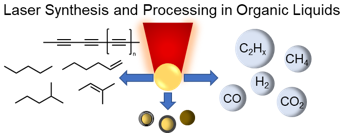
- will be discussed first, followed by hydrocarbons and carbonaceous products. Permanent gas evolution during LSPC Compared to water, the laser irradiation of organic solvents (in the absence of nanoparticles) leads to decomposition reactions that form permanent gases. Baymler et al. irradiated water
- , ethanol, isopropyl alcohol, diethyl ether, and isobutanol with nanosecond laser pulses while quantifying the formed hydrogen pressure with amperometric sensors. The organic alcohols, while having a lower number of hydrogen atoms per molecule, showed a ten times higher hydrogen evolution rate than water
- [45]. Additionally, the molecular structure of the solvent affects the hydrogen evolution rate. Ethanol and isopropyl alcohol produced greater hydrogen yields than isobutyl alcohol and diethyl ether, which was attributed to the higher ratio of hydrogen to carbon and, thus, more C–H bonds relative to C





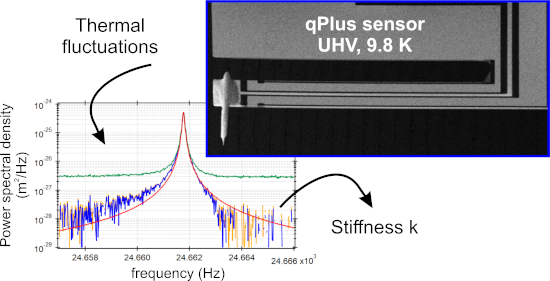
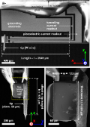
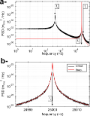
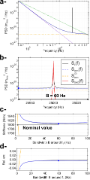
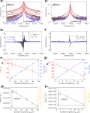
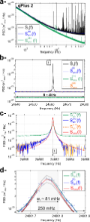
Stiffness calibration of qPlus sensors at low temperature through thermal noise measurements
Beilstein J. Nanotechnol. 2024, 15, 580–602, doi:10.3762/bjnano.15.50

Electron-induced deposition using Fe(CO)4MA and Fe(CO)5 – effect of MA ligand and process conditions
Beilstein J. Nanotechnol. 2024, 15, 500–516, doi:10.3762/bjnano.15.45
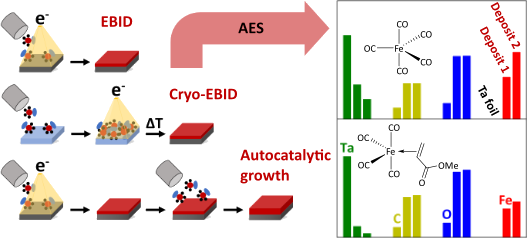
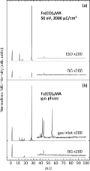
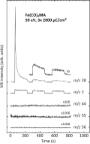
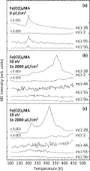
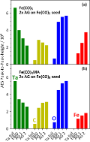
- ascribed to C–H bond cleavage within the MA ligand or in potential products formed from MA during electron irradiation. A second ESD experiment was performed under the same conditions to record the time evolution of specific m/z ratios during irradiation (Figure 3). Three irradiation steps of 2000 µC/cm2



Sidewall angle tuning in focused electron beam-induced processing
Beilstein J. Nanotechnol. 2024, 15, 447–456, doi:10.3762/bjnano.15.40
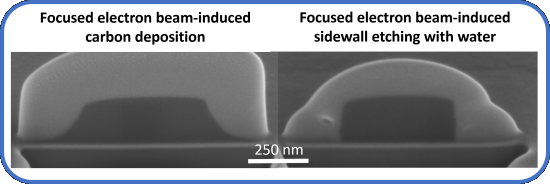
- etching the deposit from below, resulting in under-etched structures. The evolution of the sidewall angle during etching has also been experimentally observed in a scanning electron microscope by continuously monitoring the secondary electron detector signal. Keywords: electron lithography; FEBID; FEBIE
- incidence x [9]; thus, the etching is enhanced by the same factor. Directing the beam to a fixed position on the sloped sidewall, the Gaussian profile, multiplied by the local SE-yield enhancement factor, governs the etching of the deposit, given a fixed etching strength. Figure 2b illustrates the evolution
- , section S1 for more details on the simulation). Sidewall slope evolution under FEBIE To experimentally study the modification of the sidewalls of a FEBID structure, carbon structures were first deposited on a silicon substrate with a 20 nm gold–palladium layer and a 5 nm titanium adhesion layer. The




Heat-induced morphological changes in silver nanowires deposited on a patterned silicon substrate
Beilstein J. Nanotechnol. 2024, 15, 435–446, doi:10.3762/bjnano.15.39
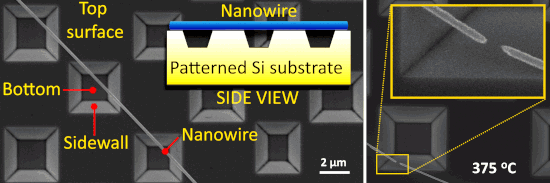
- affect the outcome of the experiment since in any case defects caused by heating/cooling (hence, tensile compression) cycles will result in reduced thermal stability of the suspended part compared to the adhered part. Note that, as mentioned earlier, the morphology evolution in the adhered parts is
- of the NW with subsequent evolution into necking and finally splitting (Figure 9b, Figure 9c). It should be noted that the goal of the MD simulations was only to qualitatively evaluate the role of the thermomechanically induced defects in the fragmentation of five-fold twinned Ag NWs. Therefore, the


Unveiling the nature of atomic defects in graphene on a metal surface
Beilstein J. Nanotechnol. 2024, 15, 416–425, doi:10.3762/bjnano.15.37
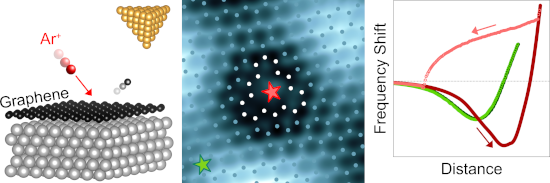
- presence of graphene [48]. The -shaped feature with minimum signal slightly below zero bias may be associated with the Dirac cone at the BZ -point. Figure 1d reveals the spatial evolution of the spectra, which shows a gradual quenching of the Ir(111) surface resonance signal accompanied by a small shift
- ). The lateral evolution of the dI/dV spectra hints at a markedly different character of defects 1 and 2, which will further be explored on the basis of the AFM results to be discussed below. They will clarify structural aspects of the defects and help understand the different spectroscopic properties
- an Ar+-induced Ir(111) surface defect [57]. In a next step, AFM imaging of the defects at different tip–surface distances was complemented by spatially resolved Δf(Δz) measurements (Figure 4). Figure 4a shows the evolution of the total vertical force recorded along the path across a type-1 defect


Classification and application of metal-based nanoantioxidants in medicine and healthcare
Beilstein J. Nanotechnol. 2024, 15, 396–415, doi:10.3762/bjnano.15.36
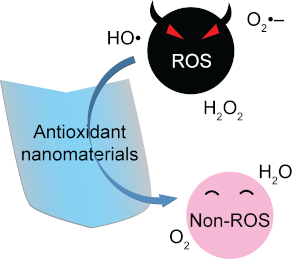
- nanotechnology, especially for reducing oxidative stress. Review Metal-based nanomaterials exhibiting antioxidant activities Preventive metal-based nanoantioxidants Along the evolution, the human body has naturally developed a complex antioxidant defense system, which uses endogenous non-enzymatic and enzymatic


Investigating ripple pattern formation and damage profiles in Si and Ge induced by 100 keV Ar+ ion beam: a comparative study
Beilstein J. Nanotechnol. 2024, 15, 367–375, doi:10.3762/bjnano.15.33
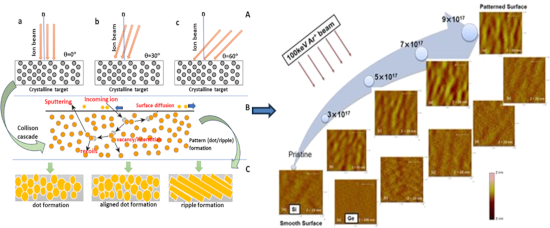
- displays two steps corresponding to the backscattering from Si and Ar for channel numbers ≈1050 and ≈1275, respectively. Defect clustering may lead to a subsequent increase of the damage peak in irradiated samples as compared to that of pristine Si and Ge samples. To understand the evolution of the lattice


Nanomedicines against Chagas disease: a critical review
Beilstein J. Nanotechnol. 2024, 15, 333–349, doi:10.3762/bjnano.15.30

- 2025 driven by the evolution of vaccines against COVID-19 based on nanomedicines and the projected huge global demand for these products [105]. However, the clinical translatability of nanomedicines is still complex. Consider, for instance, the liposomal formulation of the antifungal amphotericin B

Investigating structural and electronic properties of neutral zinc clusters: a G0W0 and G0W0Г0(1) benchmark
Beilstein J. Nanotechnol. 2024, 15, 310–316, doi:10.3762/bjnano.15.28

- PBE functional. The binding energies show the two-knee behavior also seen in metal clusters of various species. Electronic properties, such as IP, EA, and the relative hardness of the clusters, have been obtained using the G0W0@PBE in FHI-aims. The IP benchmark shows the size evolution behavior of the


![[Graphic 14]](/bjnano/content/inline/2190-4286-15-28-i15.svg?max-width=637&scale=1.18182)
Determining by Raman spectroscopy the average thickness and N-layer-specific surface coverages of MoS2 thin films with domains much smaller than the laser spot size
Beilstein J. Nanotechnol. 2024, 15, 279–296, doi:10.3762/bjnano.15.26
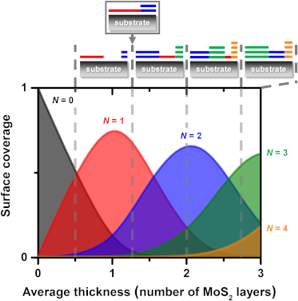
- Supporting Information File 1, the frequency and the linewidth of the Si mode as functions of the laser power are displayed (Figure S2). These two parameters are found to be insensitive to Pλ below 0.5 mW. More intriguing is the evolution of the frequency (Figure 2a) and width (Figure 2b) of the phonon modes
- expected by considering a simple thermal effect. Consequently, the results reported in Figure 2c clearly evidence photo-doping of 1L-MoS2 concomitant with a thermal effect, as already observed for MoS2 on SiO2/Si [45] as well as for graphene [42]. Furthermore, the evolution of the A′1 and E′ widths with Pλ


Ultrasensitive and ultrastretchable metal crack strain sensor based on helical polydimethylsiloxane
Beilstein J. Nanotechnol. 2024, 15, 270–278, doi:10.3762/bjnano.15.25
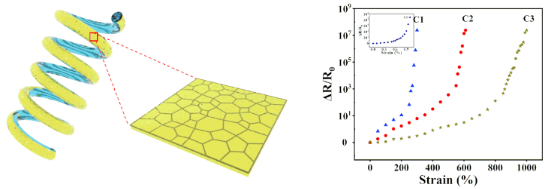
- Figure 1c. Concurrently, the microcracks propagate into channel cracks that traverse the entire width of the sample, as illustrated in Figure 1d. The crack structure evolution of the helix metal film under tensile strain ranging from 0 to 300% was observed using an optical microscope, as depicted in


Ion beam processing of DNA origami nanostructures
Beilstein J. Nanotechnol. 2024, 15, 207–214, doi:10.3762/bjnano.15.20
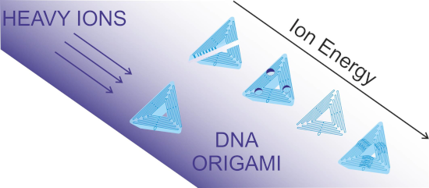
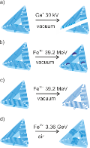
- , respectively. In vacuum, material from the structures may sublime. In air, it is plausible that the stochastic irradiation transforms into uniform changes on the structure, which can be controlled by DNA origami design. Supporting Information Height evolution upon thermal processing of DNA origami deposited


Exploring disorder correlations in superconducting systems: spectroscopic insights and matrix element effects
Beilstein J. Nanotechnol. 2024, 15, 199–206, doi:10.3762/bjnano.15.19
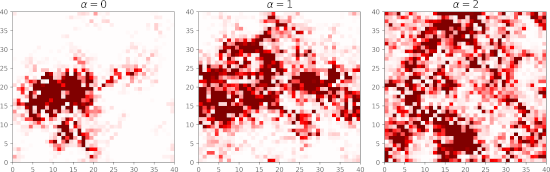
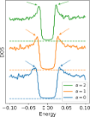
- the corresponding DOS; the graphs are shifted vertically for clarity. Dependence of the spectral gap on the disorder for various correlation strengths α. The evolution of the gap depends significantly on the level of correlations in the disorder. Notably, the gap’s dependence curve aligns closely with


Influence of conductive carbon and MnCo2O4 on morphological and electrical properties of hydrogels for electrochemical energy conversion
Beilstein J. Nanotechnol. 2024, 15, 57–70, doi:10.3762/bjnano.15.6
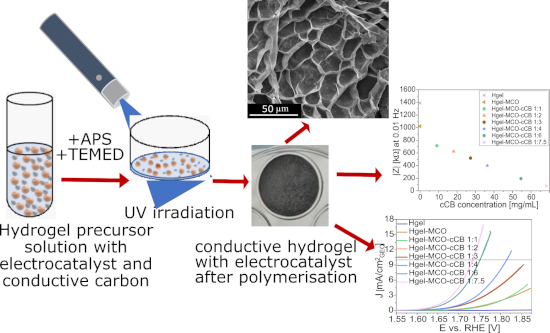
- composite acted as an electrocatalyst in the oxygen evolution reaction. Morphological studies confirmed that the added particles were incorporated and, in the case of a higher concentration of cCB particles, also bound to the surface of the structure of the hydrogel matrix. The produced composite materials
- catalytic activity of the electrode in the oxygen evolution reaction. The use of a hydrogel as a matrix to suspend the catalyst particles, and thus increase their availability through the electrolyte, seems to be an interesting and promising application approach. Keywords: electrical properties; energy
- ; hydrogel; hydrogen; oxygen evolution reaction; polymer composites; Introduction Hydrogels are defined as a group of polymeric materials with an insoluble hydrophilic structure which gives them the ability to absorb and hold large amounts of water (up to over 99 wt %) in their three-dimensional network


Measurements of dichroic bow-tie antenna arrays with integrated cold-electron bolometers using YBCO oscillators
Beilstein J. Nanotechnol. 2024, 15, 26–36, doi:10.3762/bjnano.15.3
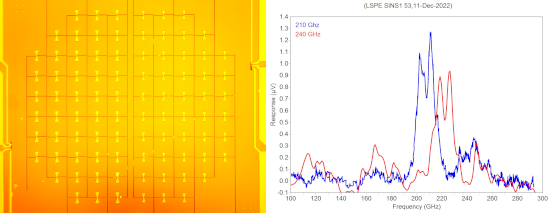
- . Keywords: cosmic microwave background; B mode; cold-electron bolometer; dichroic antenna array; dipole bow-tie antenna; Josephson junction; LSPE; Introduction The cosmic microwave background (CMB) radiation contains a lot of information about origin and evolution of our universe. The temperature and
- polarization patterns of the CMB give us an accurate picture of the age of the universe and the evolution after the Big Bang [1]. It is currently assumed that the polarization of the CMB radiation can be decomposed into an E mode and a B mode. The more interesting part of the CMB radiation polarization is the
- Chile in the Atacama desert to study the evolution of the late universe using the Sunyaev–Zeldovich effects. Three frequency bands are used in the Simons Observatory: 30/40, 90/150, and 220/280 GHz. They will be separated by universal focal-plane modules consisting of 432 pixels. It is planned to use


Fluorescent bioinspired albumin/polydopamine nanoparticles and their interactions with Escherichia coli cells
Beilstein J. Nanotechnol. 2023, 14, 1208–1224, doi:10.3762/bjnano.14.100

- with a molecular weight cut-off at 8–10 kDa to eliminate unbound labelling molecules. The dialysis was done in the dark and repeated three times yielding a total dilution of the dialysate by a factor of 106. The evolution of the dialysis was followed by measuring the absorption spectrum of the



A bifunctional superconducting cell as flux qubit and neuron
Beilstein J. Nanotechnol. 2023, 14, 1116–1126, doi:10.3762/bjnano.14.92

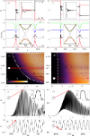
- l). Here and further, we use magnetic fluxes normalised by the quantum value, Φ0. To investigate the flux-to-flux transfer characteristics of such a system, it is convenient to interpret its evolution as the movement of a particle with “mass” M = and “momentum” p = in the potential profile defined
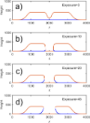
- , localised at the level with energy E0. The evolution of energy level population and instantaneous energy levels was numerically calculated for the n = 10 lowest energy levels of the quantum interferometer. As shown in Figure 2a,b, during rise and fall of the field, the instantaneous energy levels are
- , another important factor (in addition to relaxation) that influences the evolution of observable quantities for an interferometer is thermal fluctuations. It is known that the operating temperature, T, of quantum circuits with Josephson junctions is chosen much smaller than the characteristic temperature



Properties of tin oxide films grown by atomic layer deposition from tin tetraiodide and ozone
Beilstein J. Nanotechnol. 2023, 14, 1085–1092, doi:10.3762/bjnano.14.89
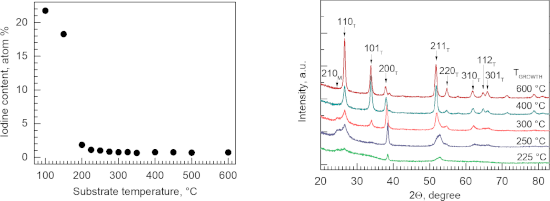
- about two times larger than for a process using SnI4 and O2. Dependence of SnO2 film GPC on the evaporation temperature of the SnI4 precursor. The cycle times were set at 5-2-5-5 s for the sequence SnI4 pulse, purge, O3 pulse, and purge. Time evolution of the QCM mass sensor signal during five


Spatial mapping of photovoltage and light-induced displacement of on-chip coupled piezo/photodiodes by Kelvin probe force microscopy under modulated illumination
Beilstein J. Nanotechnol. 2023, 14, 1059–1067, doi:10.3762/bjnano.14.87

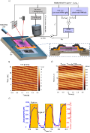
- indicates the temporal evolution of this timeline throughout the measurement process. These scans indicate the reproducibility of acquired displacement and photovoltage under modulated illumination at a single point. To analyze them, we extracted 10 line profiles depicted in blue and red for topography and


Low temperature atomic layer deposition of cobalt using dicobalt hexacarbonyl-1-heptyne as precursor
Beilstein J. Nanotechnol. 2023, 14, 951–963, doi:10.3762/bjnano.14.78
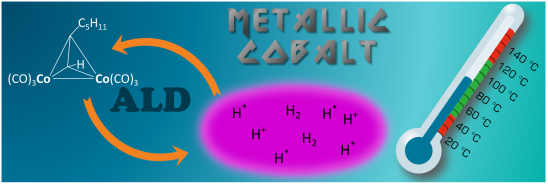
- growth rate (blue diamonds) extracted by using a linear growth approximation. XPS measurements of the CVD film deposited at 150 °C. Growth per cycle of ALD processes with [Co2(CO)6HC≡CC5H11] precursor at various temperatures. Film thickness evolution measured by in line spectroscopic ellipsometry for a


Biomimetics on the micro- and nanoscale – The 25th anniversary of the lotus effect
Beilstein J. Nanotechnol. 2023, 14, 850–856, doi:10.3762/bjnano.14.69
- prevent insects from climbing out. This surface structure is the opposite of adhesive surfaces. e) A dragonfly. Archetype for robotic applications but also known for their superhydrophobic and transparent wings. f) An example of the early evolution of superhydrophobic surfaces: the leaf of a ginkgo tree


Ultralow-energy amorphization of contaminated silicon samples investigated by molecular dynamics
Beilstein J. Nanotechnol. 2023, 14, 834–849, doi:10.3762/bjnano.14.68

- implantation of higher-energy argon ions. To elaborate the analysis of the amorphization coefficient, we plotted the variation of the thickness for each region of interest for all simulation conditions. In Figure 3, we show the evolution of the slab thickness for the amorphous and partially amorphous regions
- , and so is the implantation of the atoms from the water molecules. Their implantation depends on the energy transmitted to the water molecules via elastic collisions with argon atoms or other species in the sample. Figure 5 shows the evolution of the implantation depth of argon atoms for the different
- detailed information on the sputtering processes, and in particular on the sputtering of clusters and on the evolution of the fraction of intact water molecules can be found in Supporting Information File 1. Conclusion From all the observations made before we can distinguish several interesting cases for




A wearable nanoscale heart sound sensor based on P(VDF-TrFE)/ZnO/GR and its application in cardiac disease detection
Beilstein J. Nanotechnol. 2023, 14, 819–833, doi:10.3762/bjnano.14.67

- bottle was sealed and placed in a shaking mixer and shaken for 3 h. Next, ZnO nanoparticles (Shanghai Keyan Industrial Co., Ltd., particle size 3 ± 5 nm, content ≥99.8%) and GR filler (Shenzhen Turing Evolution Technology Co., Ltd., carbon content 98%, average diameter/thickness ratio = 9500) were added