

Search results
Search for "scanning probe microscopy" in Full Text gives 107 result(s) in Beilstein Journal of Nanotechnology.
Direct monitoring of opto-mechanical switching of self-assembled monolayer films containing the azobenzene group
Beilstein J. Nanotechnol. 2011, 2, 834–844, doi:10.3762/bjnano.2.93
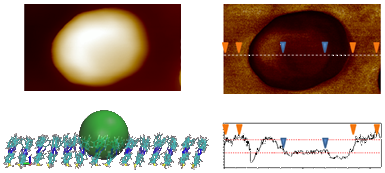
- 15 min of irradiation (Figure 9). The azobenzene SAMs were irradiated with UV light (λ = 365 nm, I = 25 mW/cm2) for 2 h and with visible light (λ = 450 nm, I = 5 mW/cm2) for 1 h. Scanning probe microscopy AFM topographies were measured before and after SAM adsorption to check the monolayer quality



Towards multiple readout application of plasmonic arrays
Beilstein J. Nanotechnol. 2011, 2, 501–508, doi:10.3762/bjnano.2.54

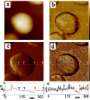
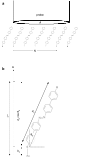
- , the signal enhancement in SERS and SEF is characterized by different dependencies on the distance between the analyte and metal surface. In order to establish rules for an analyte–metal-surface, distance dependent, signal enhancement, scanning probe microscopy (SPM)-based measurements in combination


Nanophotonics, nano-optics and nanospectroscopy
Beilstein J. Nanotechnol. 2011, 2, 499–500, doi:10.3762/bjnano.2.53
- nanophotonics, nano-optics and nanospectroscopy, and covers the field where nanoscience meets photonics, optics and spectroscopy. Since the pioneering days of scanning near-field optical microscopy [1][2], one of the main goals has been to combine scanning probe microscopy techniques with the spectroscopic
Nanoscaled alloy formation from self-assembled elemental Co nanoparticles on top of Pt films
Beilstein J. Nanotechnol. 2011, 2, 473–485, doi:10.3762/bjnano.2.51

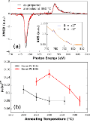
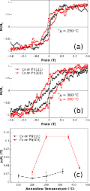
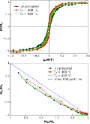
- probe microscopy techniques [5], one is left with processes relying on the self-assembly of colloids or micelles [6][7][8]. In the context of magnetic NPs, two prominent examples, both dealing with the preparation of magnetically attractive FePt NPs, which successfully demonstrated fulfillment of the
- additionally their deposition onto a specific substrate in the form of ordered arrays over reasonably large areas is required, then the number of applicable fabrication recipes dramatically decreases. Focusing on NP sizes below 15 nm and excluding purely sequential procedures such as those based on scanning




Infrared receptors in pyrophilous (“fire loving”) insects as model for new un-cooled infrared sensors
Beilstein J. Nanotechnol. 2011, 2, 186–197, doi:10.3762/bjnano.2.22

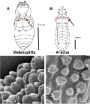
- . Experimental Morphological methods used are all based on well established light and electron microscopical procedures. Mechanical tests were conducted in a nanomechanical test system capable of normal loading as well as in situ scanning probe microscopy (SPM) (TriboScope; Hysitron, Minneapolis, USA


Defects in oxide surfaces studied by atomic force and scanning tunneling microscopy
Beilstein J. Nanotechnol. 2011, 2, 1–14, doi:10.3762/bjnano.2.1
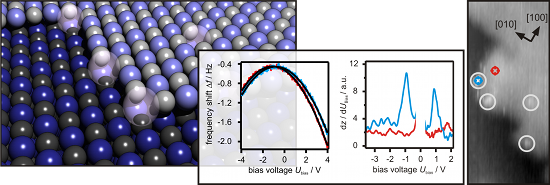
- have been measured simultaneously. The colors indicate different tip-sample distances. Note that the displacement of 4.5 Å has been chosen arbitrarily, since absolute values are generally unknown in scanning probe microscopy. b) The oscillation amplitude is constant during scan process. This excludes


Scanning probe microscopy and related methods
Beilstein J. Nanotechnol. 2010, 1, 155–157, doi:10.3762/bjnano.1.18
- . Scanning probe microscopy (SPM) uses probing tips to map properties, such as topography, local adhesive forces, elasticity, friction or magnetic properties. In the emerging fields of nanoscience and nanotechnology these types of microscopes help to characterize the nanoworld. In addition, local probes can
- the colleagues for their excellent contributions. Ernst Meyer Basel, December 2010 Scanning probe microscopy: A large familiy of microscopes, which have in common that they use local probes to characterize surfaces. AFM: Atomic Force MicroscopySTM: Scanning Tunneling Microscopy, PDM: Phase Detection

Other Beilstein-Institut Open Science Activities