Search results
Search for "titanium" in Full Text gives 304 result(s) in Beilstein Journal of Nanotechnology. Showing first 200.
Fabrication of Ag-modified hollow titania spheres via controlled silver diffusion in Ag–TiO2 core–shell nanostructures
Beilstein J. Nanotechnol. 2020, 11, 141–146, doi:10.3762/bjnano.11.12

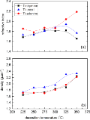
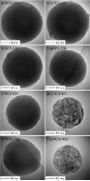
- fabrication step. The synthesized nanostructures exhibit a broadband optical absorption in the UV–vis range. Keywords: core–shell nanostructures; hollow spheres; silver diffusion; silver-modified titanium dioxide; titania; Findings In recent years, nanometer- to micrometer-sized inorganic hollow spheres
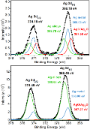
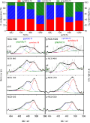
- third peak with a maximum between 358.66 and 358.78 eV and a half width of 1.36–1.40 eV was assigned to a silver alloy with titanium. Its location cannot be linked to any oxidation state of silver. Such a shift of the Ag 3d5/2 peak can only come from alloys of silver with metals of lower



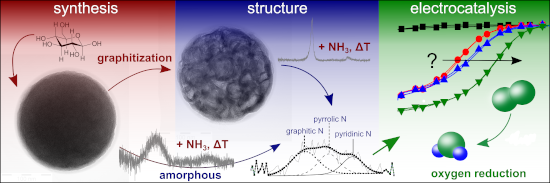
Synthesis of amorphous and graphitized porous nitrogen-doped carbon spheres as oxygen reduction reaction catalysts
Beilstein J. Nanotechnol. 2020, 11, 1–15, doi:10.3762/bjnano.11.1
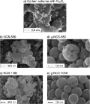
- beneficial or disadvantageous. The degree of graphitization can be increased, e.g., by higher reaction temperatures or catalytic graphitization [31][32][33]. Previously, we had reported on core–shell titanium (oxy)nitride and tantalum (oxy)nitride@N-doped carbon composite spheres, which were based on a




Mobility of charge carriers in self-assembled monolayers
Beilstein J. Nanotechnol. 2019, 10, 2449–2458, doi:10.3762/bjnano.10.235
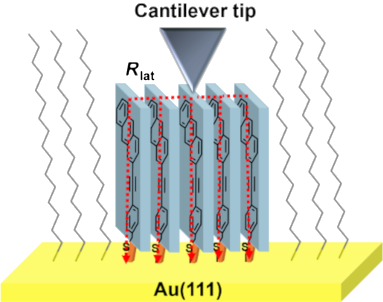
- characterized immediately after the SAM preparation. For the Near-edge X-ray absorption fine structure (NEXAFS) measurements, gold-coated silicon wafer substrates were used. Gold films of 100 nm thickness were evaporated thermally at 453 K under high-vacuum conditions (≈10−7 mbar) with 5 nm titanium as the


Semitransparent Sb2S3 thin film solar cells by ultrasonic spray pyrolysis for use in solar windows
Beilstein J. Nanotechnol. 2019, 10, 2396–2409, doi:10.3762/bjnano.10.230
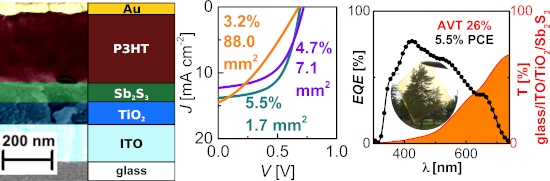
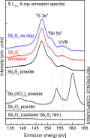
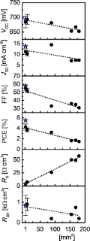
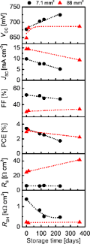
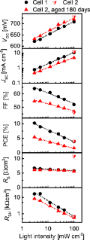
- , compact TiO2 layer was grown on glass/ITO by ultrasonic spray pyrolysis in air from 0.1 M titanium tetraisopropoxide (98% v/v) and 0.4 M acetylacetone (99% v/v) dissolved in ethanol (96.6% v/v) according to a previously published procedure [28][46][70]. After deposition, the glass/ITO/TiO2 stack was



Deterministic placement of ultra-bright near-infrared color centers in arrays of silicon carbide micropillars
Beilstein J. Nanotechnol. 2019, 10, 2383–2395, doi:10.3762/bjnano.10.229
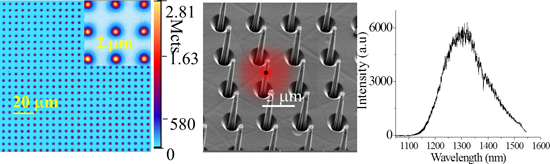
- ). After that 5 nm titanium and 100 nm nickel were deposited as a metallic hard mask. After that, the samples were etched by ICP-RIE to produced arrays of micropillars. The samples were then irradiated at room temperature with 300 keV H+ at different fluences (1016 cm−2 and 1013 cm−2) to create point


Integration of sharp silicon nitride tips into high-speed SU8 cantilevers in a batch fabrication process
Beilstein J. Nanotechnol. 2019, 10, 2357–2363, doi:10.3762/bjnano.10.226

- separate the SU8 cantilevers from the wafer. The silicon oxide layer on the tips is then stripped using buffered hydrofluoric acid. The process is completed by titanium–gold (5–20 nm) sputtering on the chip-body side of the cantilevers. This layer serves as the reflective metal coating required for the
- sharpness, 20 randomly chosen LSNT-tip SU8 cantilevers have been tested with a polycrystalline titanium roughness sample. The images were taken using a NanoScope-V controller and a Multi-Mode-V AFM with a J scanner (Bruker) in tapping mode. The imaging conditions were as follows: scan size 2 µm, number of
- with one of the LSNT-tip SU8 cantilevers. To evaluate the tip sharpness, the blind tip estimation algorithm [33] as implemented in the Gwyddion program [34][35] has been used. The blind tip estimation algorithm is used to estimate the sharpness of the tip from the image of a polycrystalline titanium


Improved adsorption and degradation performance by S-doping of (001)-TiO2
Beilstein J. Nanotechnol. 2019, 10, 2116–2127, doi:10.3762/bjnano.10.206

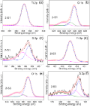
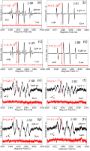
- increase in the amount of •OH and •O2− radicals. Keywords: anatase; chemical state; degradation; photocatalytic properties; S-doping; thermal chemical vapor deposition; titanium dioxide (TiO2); Introduction Anatase TiO2 with a tetragonal symmetry has widely been used for the degradation of organic




Microbubbles decorated with dendronized magnetic nanoparticles for biomedical imaging: effective stabilization via fluorous interactions
Beilstein J. Nanotechnol. 2019, 10, 2103–2115, doi:10.3762/bjnano.10.205

- tensiometric measurement. The sonicator (Vibracell, Bioblock Scientific, Illkirch, France) was equipped with a 3 mm titanium probe and operated at 20 kHz with an output power of ≈600 W (duty cycle 40%). Preparation of the microbubbles DPPC (50 mmol L−1) and Pluronic F-68 (DPPC/F-68 molar ratio 10:1) were


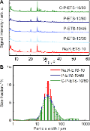
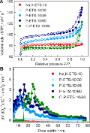
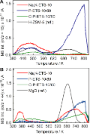
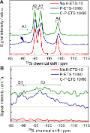
Synthesis of highly active ETS-10-based titanosilicate for heterogeneously catalyzed transesterification of triglycerides
Beilstein J. Nanotechnol. 2019, 10, 2039–2061, doi:10.3762/bjnano.10.200
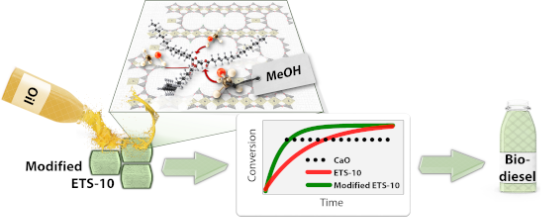
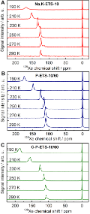
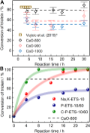
- -synthetic treatment to titanosilicates can change the state of titanium atoms from Ti(IV) to catalytically active Ti(III) [50]. Such a reduction to paramagnetic Ti in ETS-10 titanosilicates can occur as a result of high-temperature treatment under vacuum [51], treatment with H2 or CO at moderate to high
- (hierarchical) titanium silicalite-1. Despite the mesopores present in the treated sample, the conversion of methyl oleate decreased by ≈50%, which has been attributed to the decreased hydrophobicity after treatment. To address this effect directly, further studies including the measurement of water sorption
- of ETS-10, sodium silicate (Na2SiO3, 34.5–36.0 wt % SiO2, 17–19 wt % Na2O, donated by PQ corporation), titanium isopropoxide (TIP, 97 wt %, Sigma-Aldrich), hydrochloric acid (HCl, 35–37 wt %, VWR Chemicals), sodium chloride (high-purity grade, VWR Chemicals), and potassium fluoride (KF, ≥99 wt








Oblique angle deposition of nickel thin films by high-power impulse magnetron sputtering
Beilstein J. Nanotechnol. 2019, 10, 1914–1921, doi:10.3762/bjnano.10.186

- strength (at racetrack) using vanadium [30] and titanium [31] targets, respectively. Thus, utilizing HiPIMS for the deposition of ferromagnetic material can be very beneficial. Oblique deposition, sometimes referred to as glancing angle deposition (GLAD), is known as a PVD technique that leads to a film


TiO2/GO-coated functional separator to suppress polysulfide migration in lithium–sulfur batteries
Beilstein J. Nanotechnol. 2019, 10, 1726–1736, doi:10.3762/bjnano.10.168

- structure with wrinkles and folds, which is in line with previous works [39]. The EDS elemental mapping of titanium, oxygen and carbon provide additional evidence to further show the GO uniform distribution on the TiO2 particle, as shown in Figure 3i–k. Moreover, based on the Raman and TEM results, the TiO2


Novel hollow titanium dioxide nanospheres with antimicrobial activity against resistant bacteria
Beilstein J. Nanotechnol. 2019, 10, 1716–1725, doi:10.3762/bjnano.10.167
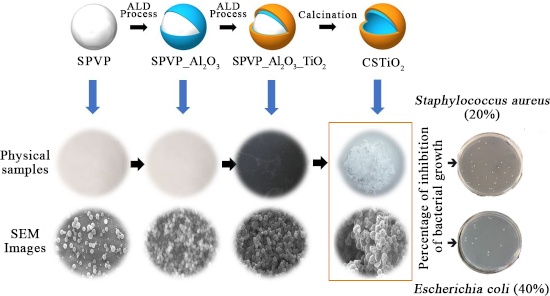
- this work, novel, hollow, calcined titanium dioxide nanospheres (CSTiO2) were successfully synthesized for the first time through the combination of electrospinning and atomic layer deposition techniques. Poly(vinylpyrrolidone) (PVP) electrosprayed spherical particles were double-coated with alumina
- and titanium dioxide, and after a calcination process, hollow nanospheres were obtained with a radius of approximately 345 nm and shell thickness of 17 nm. The structural characterization was performed using electron microscopy, and X-ray diffraction and small-angle X-ray diffraction evidenced an
- anatase titanium dioxide crystalline structure. Thermogravimetric analysis and Fourier-transform infrared spectroscopy studies demonstrated the absence of polymer residue after the calcination process. The antimicrobial properties of the developed CSTiO2 hollow nanospheres were evaluated against different


Upcycling of polyurethane waste by mechanochemistry: synthesis of N-doped porous carbon materials for supercapacitor applications
Beilstein J. Nanotechnol. 2019, 10, 1618–1627, doi:10.3762/bjnano.10.157

- electrochemical testing, a specially manufactured polyether ether ketone (PEEK) cell with spring-loaded titanium pistons was used as symmetrical full cell, as described in detail elsewhere [75]. Electrode discs with a thickness of 100–200 µm and a diameter of 10 mm were punched out of the free-standing film


Kelvin probe force microscopy work function characterization of transition metal oxide crystals under ongoing reduction and oxidation
Beilstein J. Nanotechnol. 2019, 10, 1596–1607, doi:10.3762/bjnano.10.155
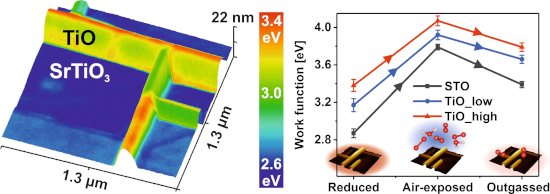
- characterization of the work function using the example of artificially formed crystalline titanium monoxide (TiO) nanowires on strontium titanate (SrTiO3) surfaces, providing a sharp atomic interface. The measured value of 3.31(21) eV is the first experimental work function evidence for a cubic TiO phase, where
- also in various heterostructures, with exotic electronic states, e.g., a two-dimensional electron gas (2DEG) on the interface with LaAlO3 [16][17]. On the other side of the transition metal oxides spectrum lies titanium monoxide, TiO, in which the titanium atoms adopt the valence state 2+, contributing
- superconductor with a superconductivity transition temperature (Tc) of 5.5 K, which is higher than previously reported results [22]. As a result of its electronic structure, titanium monoxide nanoparticles find further application in heterogeneous catalysis, e.g., for the hydrogenation of styrene [1]. Here we


BiOCl/TiO2/diatomite composites with enhanced visible-light photocatalytic activity for the degradation of rhodamine B
Beilstein J. Nanotechnol. 2019, 10, 1412–1422, doi:10.3762/bjnano.10.139

- a carrier to support a layer of titanium dioxide (TiO2) nanoparticles and bismuth oxychloride (BiOCl) nanosheets. The results show that TiO2 nanoparticles and BiOCl nanosheets uniformly cover the surface of diatomite and bring TiO2 and BiOCl into close proximity. Rhodamine B was used as the target
- [10]. As one of the most promising photocatalysts, in terms of its chemical stability, non-toxicity, photo-corrosion resistance in aqueous media and advanced oxidation properties, titanium dioxide (TiO2) has been widely studied [11][12] and employed for water splitting [13], energy storage [14], and


Imaging the surface potential at the steps on the rutile TiO2(110) surface by Kelvin probe force microscopy
Beilstein J. Nanotechnol. 2019, 10, 1228–1236, doi:10.3762/bjnano.10.122

- steps in the catalytic reaction. Keywords: catalyst; Kelvin probe force microscopy; Smoluchowski effect; step; titanium dioxide; Introduction Titanium dioxide (TiO2) has attracted considerable interest for its promising applications as a photocatalyst and as catalyst support, as well as in gas sensors
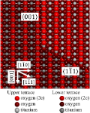
- oxygen atoms and titanium-terminated steps with in-plane oxygen atoms exposed at the steps. The steps are considered to have two types of structures: bulk-terminated steps and reconstructed steps with one additional TiO2 unit. The steps are metastable and rarely observed in common sample
- Smoluchowski-like dipole (Figure 4). On the other hand, for both and , since Ov sites exist at the step edges and the positively charged titanium atom is exposed at the steps, the local atomic dipole that is formed points upward in the same direction as the Smoluchowski-like dipole. Moreover, the oxygen atom
![[Graphic 16]](/bjnano/content/inline/2190-4286-10-122-i16.svg?max-width=637&scale=1.18182) and
and ![[Graphic 17]](/bjnano/content/inline/2190-4286-10-122-i17.svg?max-width=637&scale=1.18182) .
.

![[Graphic 38]](/bjnano/content/inline/2190-4286-10-122-i38.svg?max-width=637&scale=1.18182) and
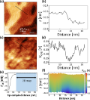
and ![[Graphic 39]](/bjnano/content/inline/2190-4286-10-122-i39.svg?max-width=637&scale=1.18182) steps. (a) Topographic image...
steps. (a) Topographic image...


![[Graphic 72]](/bjnano/content/inline/2190-4286-10-122-i72.svg?max-width=637&scale=1.18182) , b)
, b) ![[Graphic 73]](/bjnano/content/inline/2190-4286-10-122-i73.svg?max-width=637&scale=1.18182) , c) reduced
, c) reduced ![[Graphic 74]](/bjnano/content/inline/2190-4286-10-122-i74.svg?max-width=637&scale=1.18182) , and d)
, and d) ![[Graphic 75]](/bjnano/content/inline/2190-4286-10-122-i75.svg?max-width=637&scale=1.18182) steps. B...
steps. B...
Photoactive nanoarchitectures based on clays incorporating TiO2 and ZnO nanoparticles
Beilstein J. Nanotechnol. 2019, 10, 1140–1156, doi:10.3762/bjnano.10.114
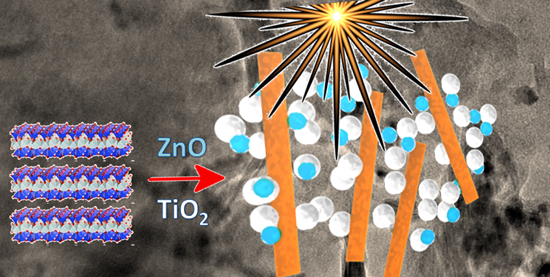
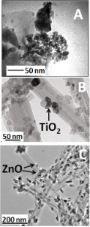
- of functional nanoarchitectures. Within this scope, clays can be of special relevance in the production of photoactive materials as they offer an advantageous way for the stabilization and immobilization of diverse metal-oxide nanoparticles. The controlled assembly under mild conditions of titanium
- ; nanoarchitectures; photocatalysts; titanium dioxide; zinc dioxide; Review Introduction: immobilization of nanoscale TiO2 and ZnO on clay minerals Nanoarchitectonics is a term coined by Japan's National Institute for Materials Science (NIMS), which refers to the nanoscale design of complex materials through a deep
- the “Web of Science” (WoS) [21] around 10,000 papers have been published in the last decade in connection with the topic of TiO2 NPs used as photocatalysts, indicating the high interest in the use of these materials for this type of applications. In fact, titanium dioxide (anatase phase) can be



Tailoring the stability/aggregation of one-dimensional TiO2(B)/titanate nanowires using surfactants
Beilstein J. Nanotechnol. 2019, 10, 1024–1037, doi:10.3762/bjnano.10.103
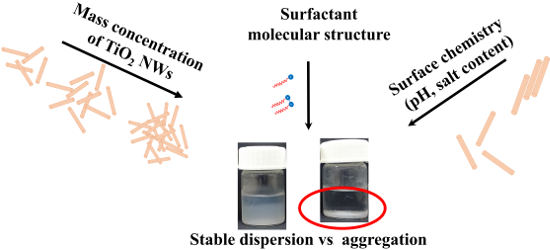
- . Keywords: 1D nanomaterials; cationic surfactants; stability; surface complexation model; titanate nanowires; Introduction Among the extensive variety of metal oxide nanomaterials, titanium dioxide nanomaterials (TNMs) (e.g., anatase, rutile, TiO2(B) and titanate) have attracted considerable attention
- other titanium oxide nanostructures [14][16]. It has been previously shown that various types of surface coatings affect NM properties, and in particular, can improve their stability and biocompatibility [13][17][18][19]. Although much is known about the aggregation of spherical TNMs in different media
- and in the presence of different additives [12][20][21][22], much less is known about 1D TNMs, such as titanium oxide nanotubes (TNTs), titanium oxide nanowires (TNWs) and titanium oxide nanorods (TNRs). As shown previously, the morphology of TNMs is expected to play a significant role in their


Rapid, ultraviolet-induced, reversibly switchable wettability of superhydrophobic/superhydrophilic surfaces
Beilstein J. Nanotechnol. 2019, 10, 866–873, doi:10.3762/bjnano.10.87

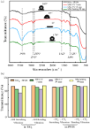
- chemicals Titanium dioxide (TiO2, rutile) with a diameter of ≈25 nm and aluminium dioxide (Al2O3) with a diameter of ≈30 nm were acquired from Shanghai Aladdin Bio-Chem Technology Corporation (Shanghai, China). 1H,1H,2H,2H-Perfluorooctyl(trimethoxy)silane (PFOS) was obtained from Shanghai Macklin



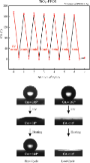
Novel reversibly switchable wettability of superhydrophobic–superhydrophilic surfaces induced by charge injection and heating
Beilstein J. Nanotechnol. 2019, 10, 840–847, doi:10.3762/bjnano.10.84

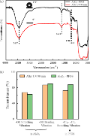
- ], temperature [12][13][14][15], pH [16][17][18], and electric field [19][20][21][22][23][24][25] stimulation. Zhang et al. [4] reported that superhydrophobic titanium dioxide surfaces become hydrophilic with a contact angle of 0° after 240 min of ultraviolet radiation. Nishimoto et al. [5] developed a method
- ] deposited thin films of titanium dioxide nanorods on glass substrates by a low-temperature hydrothermal method. The films were stored in the dark for two weeks to yield films with a contact angle of 154 ± 1.3°. Film irradiation with ultraviolet light for 2 h rendered the films superhydrophilic with a


An efficient electrode material for high performance solid-state hybrid supercapacitors based on a Cu/CuO/porous carbon nanofiber/TiO2 hybrid composite
Beilstein J. Nanotechnol. 2019, 10, 781–793, doi:10.3762/bjnano.10.78

- ), titanium tetraisopropoxide (Ti{OCH(CH3)2}4, 97%), N,N-dimethylformamide (DMF, 99.8%), copper(II) nitrate trihydrate ((CuNO3)2·3H2O, 98%), 2-propanol (IPA, 99.5%) and N-methyl-2-pyrrolidinone (NMP, 99.5%) were purchased from Sigma-Aldrich and used as received without any further purification. Synthesis of
- was dissolved in 50 mL of deionized water. Then, a dilute solution of titanium tetraisopropoxide (0.001 M) in isopropanol was added drop wise into the solution and the mixture was stirred for 30 min at room temperature. Afterwards, the desired amount of concentrated HNO3 was added to maintain a pH


An iridescent film of porous anodic aluminum oxide with alternatingly electrodeposited Cu and SiO2 nanoparticles
Beilstein J. Nanotechnol. 2019, 10, 735–745, doi:10.3762/bjnano.10.73
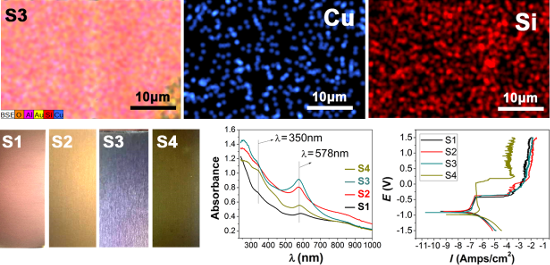
- was deposited via sputtering, yielding a colorful filter material. Different structural colors could be obtained via changing the anodization time [17]. In this context, instead of using high-purity aluminum foils and titanium foils as the substrate for the anodization treatment, which have been


Widening of the electroactivity potential range by composite formation – capacitive properties of TiO2/BiVO4/PEDOT:PSS electrodes in contact with an aqueous electrolyte
Beilstein J. Nanotechnol. 2019, 10, 483–493, doi:10.3762/bjnano.10.49
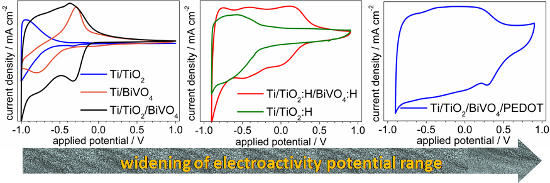
- . Obtained spectra were calibrated to give binding energy of 285.80 eV for C 1s [29][30]. Chemicals Titanium foil (Steam, 99.7%, d = 0.127 mm) was used as an electrode substrate. Chemicals of analytical grade, Bi(NO3)3·5H2O, NH4VO3, 3,4-ethylenedioxythiophene, poly(sodium 4-styrenesulfonate), NH4F were
- annealing) or titanium foil. The bismuth vanadate films were deposited for 20 min and the PLD process was carried out using a Nd:YAG laser equipped with a fourth harmonic generation (FHG) module, generating 266 nm 6 ns pulses with 4 Hz repetition. Assuming that the obtained layer is flat and continuous, its
- thickness should be equal to about 20 nm [33]. Finally, electrodes were annealed at a temperature of 450 °C for 2 h (heating rate: 2 °C·min−1) in order to obtain crystalline phases of TiO2 and BiVO4. Samples were named as Ti/TiO2/BiVO4. The BiVO4 films were also deposited directly on titanium foil for




Improving control of carbide-derived carbon microstructure by immobilization of a transition-metal catalyst within the shell of carbide/carbon core–shell structures
Beilstein J. Nanotechnol. 2019, 10, 419–427, doi:10.3762/bjnano.10.41

- impregnation of untreated titanium carbide was compared with the same loading (30 mg of nickel per gram of equivalent carbide). EDX mapping (see Figure S1 in Supporting Information File 1) of the impregnated core–shell material shows clearly the remaining core in the Ti K edge signal, while the Ni K and Cl K
- edges show that nickel chloride is homogeneously immobilized within the shell. A clustering on top of the particle seems not to take place. In contrast, the SEM image of the untreated titanium carbide shows nickel chloride crystals covering the particles. This is further corroborated through the EDS


Biocompatible organic–inorganic hybrid materials based on nucleobases and titanium developed by molecular layer deposition
Beilstein J. Nanotechnol. 2019, 10, 399–411, doi:10.3762/bjnano.10.39
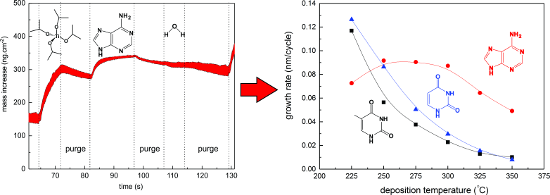
- combining titanium tetra-isopropoxide (TTIP) and the nucleobases thymine, uracil or adenine using the molecular layer deposition (MLD) approach. Such materials have potential as bioactive coatings, and the bioactivity of these films is described in our recent work [Momtazi, L.; Dartt, D. A.; Nilsen, O
- anticancer complexes for better metallo-pharmaceutical activity and toxicity reduction [8]. This work describes the growth of films based on such organic nucleotides as complexes with the biocompatible metal titanium. As thin films, such materials can be better applied as coatings on scaffolds or implants
- previous study on organic–inorganic MLD materials, in which we used amino acids as organic linkers to form titaminates [22]. We here build on that knowledge and expand the range of bioactive MLD materials to now include nucleobases as organic linkers. The films have been prepared by combining titanium