


Search results
Search for "ablation" in Full Text gives 137 result(s) in Beilstein Journal of Nanotechnology.
Diamond nanophotonics
Beilstein J. Nanotechnol. 2012, 3, 895–908, doi:10.3762/bjnano.3.100

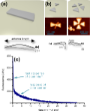
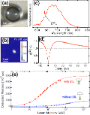
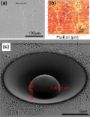
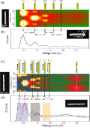
- additional refraction for the emitted fluorescence light. The ringlike ablation material at the bottom of the SIL lies within a spatial angle that is not detected by the high NA microscope objective of 0.95. With such a microscopic diamond hemisphere, fluorescence count rates up to about 480 kHz were





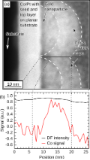
Characterization and properties of micro- and nanowires of controlled size, composition, and geometry fabricated by electrodeposition and ion-track technology
Beilstein J. Nanotechnol. 2012, 3, 860–883, doi:10.3762/bjnano.3.97
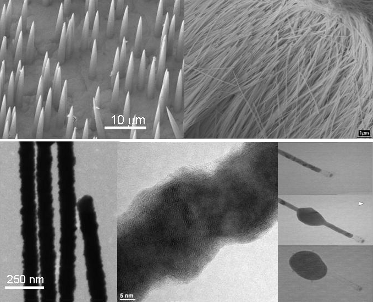
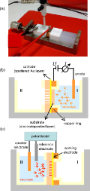
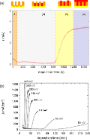
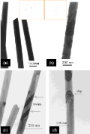
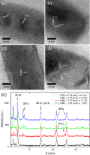
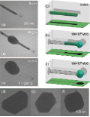
- deposition, laser ablation, or thermal evaporation. The first template-grown nanowires of amorphous Si were recently reported by using ionic liquids [100][101]. Ionic liquids have proved to be a good alternative electrolyte to fabricate materials such as Al, Ti, Si, or Ge, which cannot be electrodeposited in








Tuning the properties of magnetic thin films by interaction with periodic nanostructures
Beilstein J. Nanotechnol. 2012, 3, 831–842, doi:10.3762/bjnano.3.93

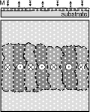
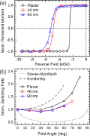
- . After the preparation of the non-close-packed PS nanostructure, subsequent growth of magnetic films can be carried out in standard deposition chambers under ultrahigh-vacuum conditions. The percolated magnetic films discussed below were deposited either by pulsed laser ablation (Fe films) or e-beam


Influence of the diameter of single-walled carbon nanotube bundles on the optoelectronic performance of dry-deposited thin films
Beilstein J. Nanotechnol. 2012, 3, 692–702, doi:10.3762/bjnano.3.79

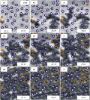
- sample-preparation routes. For example, Hecht et al. induced mechanical damage to liquid-suspended SWCNT bundles synthesized with the arc discharge and laser ablation methods, and were thus able to control the bundle lengths and diameters to some extent [14]. Geng et al. conducted a more thorough
- comparison between the performances of SWCNT networks from chemical vapor deposition (CVD), HiPCO, laser ablation, and arc discharge sources; although, again involving liquid suspensions [15]. While these initial studies have been steps in the right direction, the damage induced by sample preparation and the


Assessing the plasmonics of gold nano-triangles with higher order laser modes
Beilstein J. Nanotechnol. 2012, 3, 674–683, doi:10.3762/bjnano.3.77

- ], photopolymerisation [6] and near-field ablation [3][10][11] have been performed. It was found that the material of the triangles plays a distinct role [9], as do the triangles' edge length and height [3][8][10][11] and the material of the underlying substrate [12]. Additionally, nano-particles and nano-particle


Synthesis and electrical characterization of intrinsic and in situ doped Si nanowires using a novel precursor
Beilstein J. Nanotechnol. 2012, 3, 564–569, doi:10.3762/bjnano.3.65

- achieve NWs with tailored properties, namely chemical vapor deposition (CVD) [11], metal–organic CVD [12], molecular-beam epitaxy [13] and laser ablation techniques [14]. In this work we focus on the well-established VLS growth mechanism [15][16], which has shown remarkable potential in the fabrication of


Directed deposition of silicon nanowires using neopentasilane as precursor and gold as catalyst
Beilstein J. Nanotechnol. 2012, 3, 535–545, doi:10.3762/bjnano.3.62

- nanosized wires (NW) of silicon including thermal evaporation [9], molecular beam epitaxy [10], laser ablation [11], chemical vapor deposition (CVD) [12] and CVD in combination with the vapor–liquid–solid (VLS) method [13]. In the VLS mechanism, small solid metal particles catalyze the decomposition of the


Substrate-mediated effects in photothermal patterning of alkanethiol self-assembled monolayers with microfocused continuous-wave lasers
Beilstein J. Nanotechnol. 2012, 3, 65–74, doi:10.3762/bjnano.3.8

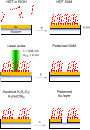
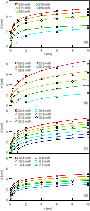
- complications, such as surface melting and substrate ablation. Hence, the procedure has to be carefully optimized in order to ensure selective processing of the SAM [11][24]. Calculated surface-coverage profiles at a typical laser pulse length of τ = 1 ms are displayed in Figure 7. Clearly, an increase in the




Nanoscaled alloy formation from self-assembled elemental Co nanoparticles on top of Pt films
Beilstein J. Nanotechnol. 2011, 2, 473–485, doi:10.3762/bjnano.2.51

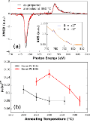
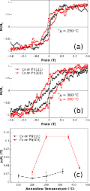
- ) substrates fixed at a distance of 30 mm from the target. To reduce particulate formation, the target was rotated as well as periodically tilted during the ablation process. To allow calibration of the deposition rate, a movable quartz crystal monitor can be placed at exactly the substrate position. More
- details on the PLD apparatus, including its UHV chamber, are given in [22][23]. By monitoring the deposition rate as a function of the laser power, an ablation threshold of 2.5 J/cm2 was determined for Pt. Standard deposition was performed at 5 J/cm2 resulting in a Pt deposition rate of 1 nm/min. Standard




Zirconium nanoparticles prepared by the reduction of zirconium oxide using the RAPET method
Beilstein J. Nanotechnol. 2011, 2, 198–203, doi:10.3762/bjnano.2.23

- production of metallic zirconium is the Kroll process [6]. In this reaction zirconium is produced by the reduction of zirconium tetrachloride with an active metal such as magnesium at 800–900 °C. Elsewhere in the literature, the preparation of metallic Zr nanoparticles by ultrafast laser ablation of a
- zirconium rod in isopropyl alcohol has been described [7]. This process produces a colloidal solution of zirconium nanoparticles. Moreover, it was shown that the size distribution of nanoparticles can be greatly reduced by employing femtosecond laser pulses for ablation. A plasma induced cathodic discharge



Room temperature synthesis of indium tin oxide nanotubes with high precision wall thickness by electroless deposition
Beilstein J. Nanotechnol. 2011, 2, 119–126, doi:10.3762/bjnano.2.14

- development of applications in optoelectronics, sensors and biomedical sciences [4][5][6]. Miscellaneous methods for the fabrication of ITO nanostructures, such as the post calcination method [7], alkaline hydrolysis [8] or pulsed laser ablation [9] have been developed and used. For fabricating metal


Flash laser annealing for controlling size and shape of magnetic alloy nanoparticles
Beilstein J. Nanotechnol. 2010, 1, 55–59, doi:10.3762/bjnano.1.7

- samples, a 3 nm-thick layer of a-Al2O3 was deposited over the NPs to protect them from air oxidation. After the synthesis, the sample was irradiated by using the same laser as the one used for the PLD experiment. A pulse frequency of 1 Hz was used and the laser energy was chosen well below the ablation





