Search results
Search for "antibacterial" in Full Text gives 138 result(s) in Beilstein Journal of Nanotechnology.
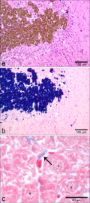
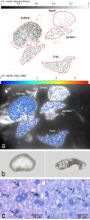
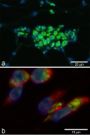
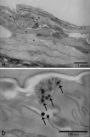
Overview about the localization of nanoparticles in tissue and cellular context by different imaging techniques
Beilstein J. Nanotechnol. 2015, 6, 263–280, doi:10.3762/bjnano.6.25
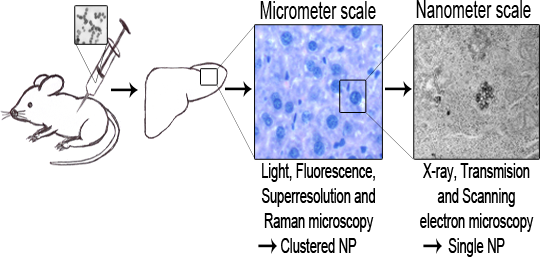
- manifold. For example, nanomaterials find application in surgical implants to improve tissue formation or due to their antibacterial action, they may be useful for gene or drug delivery systems as well as diagnostic imaging tools [3][4][5][6][7]. On the other hand, due to the entirely new properties of NP


Nanobioarchitectures based on chlorophyll photopigment, artificial lipid bilayers and carbon nanotubes
Beilstein J. Nanotechnol. 2014, 5, 2316–2325, doi:10.3762/bjnano.5.240

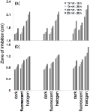
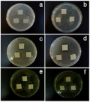
- radical scavenging ability (affording an antioxidant activity of 73.25%) and enhanced biocidal ability, offering inhibition zones of 12.4, 11.3 and 10.2 mm in diameter, against Escherichia coli, Staphylococcus aureus and Enterococcus faecalis, respectively. Keywords: antibacterial activity; antioxidant
- , which has been exploited in the preparation of anti-aging cosmetics and sunscreen creams to protect skin against free radicals formed by the body or by UV sunlight [10]. The goal of this work is to achieve antioxidant and antibacterial bionanomaterials based on liposomes and carbon nanotubes, which
- standard sample at t = 5 s, and I is the maximum CL intensity for a sample at t = 5 s [29]. Three measurements were performed for each sample in order to accurately evaluate the antioxidant activity. Antibacterial assay The antibacterial activity of the samples was tested against Gram-positive and Gram


Biopolymer colloids for controlling and templating inorganic synthesis
Beilstein J. Nanotechnol. 2014, 5, 2129–2138, doi:10.3762/bjnano.5.222
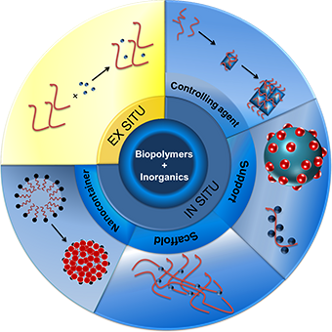
- ” geometries. In a very recent work, Taheri et al. [63] have presented the formation of potato starch capsules decorated with silver nanoparticles, which could have applications as drug carriers or antibacterial coatings. The capsules are prepared in an inverse (water-in-oil) miniemulsion and the surfactant
- supercritical CO2 and subsequent calcination. Scaffold templating can also be achieved with starch and even with peptides. Thakore et al. [13] synthesized Cu, Ag, and Cu–Ag alloy nanoparticles in a matrix of starch through a green route and studied the antibacterial activity. Hexagonal silica platelets were


Effect of silver nanoparticles on human mesenchymal stem cell differentiation
Beilstein J. Nanotechnol. 2014, 5, 2058–2069, doi:10.3762/bjnano.5.214

- of Duisburg-Essen, Universitaetsstr. 5-7, 45117 Essen, Germany 10.3762/bjnano.5.214 Abstract Background: Silver nanoparticles (Ag-NP) are one of the fastest growing products in nano-medicine due to their enhanced antibacterial activity at the nanoscale level. In biomedicine, hundreds of products
- contact with tissues and cells. Despite incorporation of Ag-NP as an antibacterial agent in different products, the toxicological and biological effects of silver in the human body after long-term and low-concentration exposure are not well understood. In the current study, we investigated the effects of
- (osteoblasts). Conclusion: Aside from the well-studied antibacterial effect of silver, little is known about the influence of nano-silver on cell differentiation processes. Our results demonstrate that ionic or nanoparticulate silver attenuates the adipogenic and osteogenic differentiation of hMSCs even at non


PVP-coated, negatively charged silver nanoparticles: A multi-center study of their physicochemical characteristics, cell culture and in vivo experiments
Beilstein J. Nanotechnol. 2014, 5, 1944–1965, doi:10.3762/bjnano.5.205

- its well-known antibacterial action. However, there are increasing concerns about potential risks to humans and to the environment, especially in the case of silver nanoparticles [12][13][14][15][16][17][18][19]. The assessment of the physicochemical and biological properties of silver nanoparticles
- production and the manufacture of nanoparticle-containing materials. However, since the antibacterial properties of silver nanoparticles and silver salts promote an increased use in personal care products, aerosolized silver nanoparticles and silver salts in spray products such as deodorants or
- effects, such as cytotoxicity and/or (pro-)inflammatory responses are only induced by higher concentrations of silver nanoparticles. Interaction of silver nanoparticles with the human skin barrier and keratinocytes Silver is widely used in dermatology and health care as antibacterial and anti-inflammatory




Microstructural and plasmonic modifications in Ag–TiO2 and Au–TiO2 nanocomposites through ion beam irradiation
Beilstein J. Nanotechnol. 2014, 5, 1419–1431, doi:10.3762/bjnano.5.154
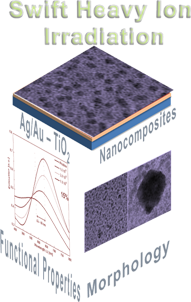
- , antibacterial coatings, photocatalysts, and implants [13][14][15][16][17][18]. The different properties of metal–TiO2 nanocomposites mainly depend on the metal volume filling fraction and the stoichiometry of the matrix. Generally, once the nanocomposites are prepared their properties are fixed. It is therefore


DFT study of binding and electron transfer from colorless aromatic pollutants to a TiO2 nanocluster: Application to photocatalytic degradation under visible light irradiation
Beilstein J. Nanotechnol. 2014, 5, 1016–1030, doi:10.3762/bjnano.5.115

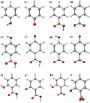
- ][10]. The assumption of a surface CTC in the visible light catalysis was supported by subsequent work on various other types of systems, such as phenolic compounds [11][12], fluoroquinolone antibacterial agents [13], and various colorless aromatic pollutants [14]. Despite the extensive experimental




Antimicrobial properties of CuO nanorods and multi-armed nanoparticles against B. anthracis vegetative cells and endospores
Beilstein J. Nanotechnol. 2014, 5, 789–800, doi:10.3762/bjnano.5.91
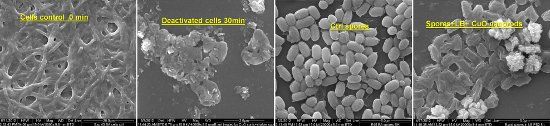
- a large number of gram-positive and gram-negative bacteria [16]. CuO nanostructures were reported as potential antibacterial agents by other groups as well [17][18][19][20]. Trapalis et al. [17] and Akhavan et al. [18] reported CuO–SiO2 composite thin film and CuO/Cu(OH)2 nanostructure, respectively
- , generated on copper foil as effective antibacterial against E. coli bacteria when the bacterial suspension drop was tested on these surfaces. Perelshtein et al. [19] have reported antibacterial CuO-cotton textile against E. coli and S. aureus. Gao et al. [20] reported strong antibacterial activity of CuO
- nanostructures comparable to established antibiotics as well as their photocatalytic potential. However, we have not come across any report on bactericidal potential of CuO nanoparticles against B. anthracis cells and spores. The earlier findings inspired us to evaluate antibacterial activity of noncorrosive CuO


An ultrasonic technology for production of antibacterial nanomaterials and their coating on textiles
Beilstein J. Nanotechnol. 2014, 5, 532–536, doi:10.3762/bjnano.5.62

- , Israel 10.3762/bjnano.5.62 Abstract A method for the production of antibacterial ZnO nanoparticles has been developed. The technique combines passing an electric current with simultaneous application of ultrasonic waves. By using high-power ultrasound a cavitation zone is created between two zinc
- electrodes. This leads to the possibility to create a spatial electrical discharge in water. Creation of such discharge leads to the depletion of the electrodes and the formation of ZnO nanoparticles, which demonstrate antibacterial properties. At the end of this reaction the suspension of ZnO nanoparticles
- the surface of textile at very high velocities. Fabrics coated with ZnO nanoparticles by using the developed method showed good antibacterial activity against E. coli. Keywords: antibacterial textile; cavitation; electrical discharge in liquid; nanoparticle; ultrasound; Introduction Currently, the


New hybrid materials based on poly(ethyleneoxide)-grafted polysilazane by hydrosilylation and their anti-fouling activities
Beilstein J. Nanotechnol. 2013, 4, 671–677, doi:10.3762/bjnano.4.75

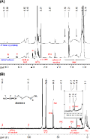
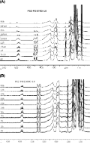
- surface is approximately equal, the relative effectiveness of these two types of PEO is controlled by the length of the PEO chain. The PEO(2000 g/mol)-graft-PSZ coatings are more efficient than the PEO(750 g/mol)-graft-PSZ coatings for the bacterial anti-adhesion. Keywords: antibacterial; hybrid





Photocatalytic antibacterial performance of TiO2 and Ag-doped TiO2 against S. aureus. P. aeruginosa and E. coli
Beilstein J. Nanotechnol. 2013, 4, 345–351, doi:10.3762/bjnano.4.40

- indirect optical band gap of 3.2 eV, while the rutile phase has a direct band gap of 3.06 eV and an indirect one of 3.10 eV [7]. However, crude nanoparticles are amorphous in nature, with decreased surface area, and show a fast recombination rate of electrons and holes. Finally the antibacterial activity
- acid-catalyzed sol–gel technique. The prepared particles were characterized by X-ray diffraction (XRD), transmission electron microscopy (TEM), ultraviolet visible spectroscopy (UV–vis) and photoluminescence (PL). Furthermore, the antibacterial activity of the TiO2 and Ag-TiO2 nanoparticles were
- killing of the bacteria investigated here. The antibacterial activity of annealed samples is slightly more than crude TiO2, because after annealing at 450 °C the amorphous phase of the nanoparticle is converted to both anatase and rutile phases, and shows an indirect band gap of 3.2 eV, which is similar


Electrospinning preparation and electrical and biological properties of ferrocene/poly(vinylpyrrolidone) composite nanofibers
Beilstein J. Nanotechnol. 2013, 4, 189–197, doi:10.3762/bjnano.4.19

- model organisms. The nanofibers fabricated by this method showed obvious antibacterial activity. Electrochemical properties were characterized based on cyclic voltammetry measurements. The CV results showed redox peaks corresponding to the Fc+/Fc couple, which suggested that Fc molecules encapsulated
- inside PVP nanofibers retian their electrochemical activity. The properties and facile preparation method make the Fc/PVP nanofibers promising for antibacterial and sensing applications. Keywords: composites; electrochemistry; electrospinning; membranes; porous materials; Introduction Electrospinning
- a polymer provides different properties compared with applying Fc alone. The incorporation of Fc in a polymeric matrix can improve the dispersion of Fc, increasing the catalyst effect and antibacterial activity of hybrid nanofibers. However, the current reports mainly focus on the preparation and


Paper modified with ZnO nanorods – antimicrobial studies
Beilstein J. Nanotechnol. 2012, 3, 684–691, doi:10.3762/bjnano.3.78

- ) nanoparticles embedded into a paper matrix have been reported as exhibiting antibacterial properties [4]. Wallpaper prepared by using zinc oxide nanoparticle (~20 nm) coatings has been reported to render antibacterial surfaces that inhibit growth of bacteria such as Escherichia coli (E. coli) [5]. An increase
- in cellular internalization of ZnO nanoparticles has also been observed by Appierot et al. [6] in a study of their antibacterial effect on E. coli and S. aureus. This work reports on an antimicrobial paper containing zinc oxide (ZnO) nanorods grown by a hydrothermal process, and which can be used for
- and H2O2 are harmful to the cells of living organisms and are the major contributors to antibacterial activity [11][12][13]. ZnO nanoparticles are reported to have significant antifungal properties against B. cinerea and P. expansum, and the inhibitory effects were found to increase with an increase