Search results
Search for "dynamic" in Full Text gives 816 result(s) in Beilstein Journal of Nanotechnology. Showing first 200.
Green synthesis of biomass-derived carbon quantum dots for photocatalytic degradation of methylene blue
Beilstein J. Nanotechnol. 2024, 15, 755–766, doi:10.3762/bjnano.15.63
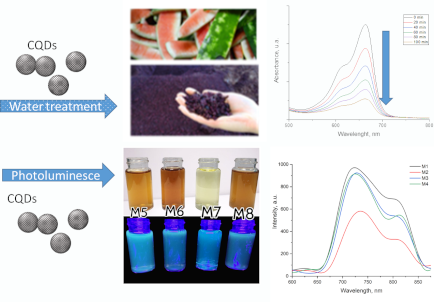
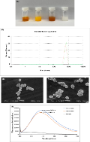
- 24 h, CQDs were successfully synthesized. A comprehensive characterization of the CQDs was performed using UV–visible spectroscopy, Fourier-transform infrared spectroscopy, dynamic light scattering, Raman spectroscopy, and luminescence spectroscopy, confirming their high quality. The photocatalytic
- catalytic activity in MB degradation, while those prepared with water as a solvent did not show significant catalytic activity. The samples were also characterized using UV–visible spectra, Fourier-transform infrared spectroscopy (FTIR), Raman spectroscopy, dynamic light scattering (DLS), and
- (Figure 1a). Samples M1 and M5 exhibit a barely noticeable band between 250 and 300 nm, a typical peak was not observed for both samples probably due to the presence of some carbon impurity that hinder the detection of the π–π* transition around 270 nm. Dynamic light scattering Figure 2 shows the size


Effect of repeating hydrothermal growth processes and rapid thermal annealing on CuO thin film properties
Beilstein J. Nanotechnol. 2024, 15, 743–754, doi:10.3762/bjnano.15.62
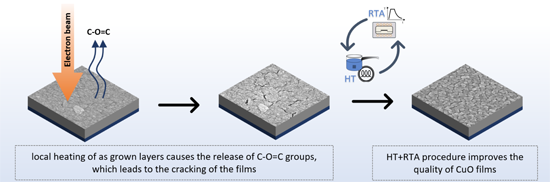
- procedure. The absence of notable changes in crystallographic structure also implies that the organic compounds present in the films after hydrothermal processes do not integrate into the CuO crystal lattice. Rather, they become entrapped between grains during the dynamic film formation process. This


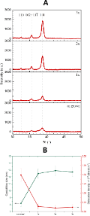


Stiffness calibration of qPlus sensors at low temperature through thermal noise measurements
Beilstein J. Nanotechnol. 2024, 15, 580–602, doi:10.3762/bjnano.15.50
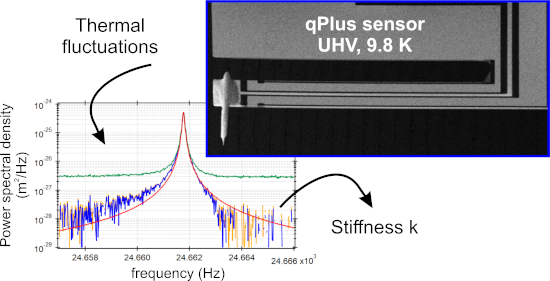
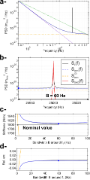
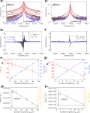
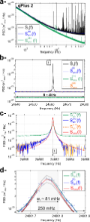
- are linked by the equipartition theorem, which states that the energy transferred from a thermal bath to a dynamic system equals kBT/2 for each of its degrees of freedom, kB being the Boltzmann constant and T the temperature of the thermostat. Here, as discussed in [35][48][56], the probe is described

Radiofrequency enhances drug release from responsive nanoflowers for hepatocellular carcinoma therapy
Beilstein J. Nanotechnol. 2024, 15, 569–579, doi:10.3762/bjnano.15.49
- diameters were 156 nm, 177 nm, and 199 nm, respectively (Figure 2e). The average size obtained from TEM was different from the sizes found by dynamic light scattering (DLS). The reason is that the TEM image depicts the size of the sample in the dry state, while the DLS method depicts the size of the


Cholesterol nanoarchaeosomes for alendronate targeted delivery as an anti-endothelial dysfunction agent
Beilstein J. Nanotechnol. 2024, 15, 517–534, doi:10.3762/bjnano.15.46
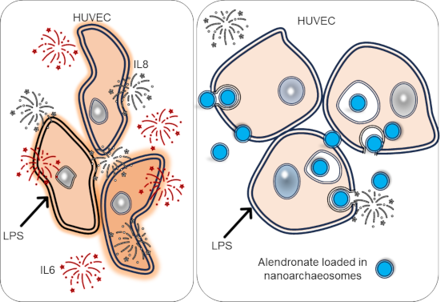
- with sufficient effectivity under dynamic conditions [26]. However, simple in vitro experimental settings employing static conditions could anticipate both potential toxicity and therapeutic effects. In this context, new natural biomaterials such as archaeolipids are being explored with growing
- Bligh and Dyer method [77] by a colorimetric phosphate microassay [75]. Size and ζ potential of nanovesicles were determined by dynamic light scattering and phase analysis light scattering, respectively, using a Zetasizer Nano ZS apparatus (Malvern Instruments Ltd, UK). To prepare RhPE-labeled





Heat-induced morphological changes in silver nanowires deposited on a patterned silicon substrate
Beilstein J. Nanotechnol. 2024, 15, 435–446, doi:10.3762/bjnano.15.39
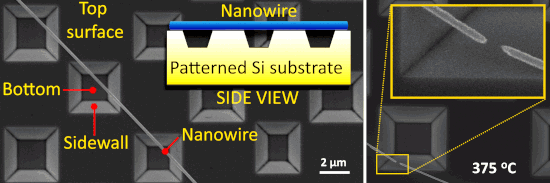
- and suspended parts are involved in fragmentation. According to our understanding, such behavior is related to mechanical stresses that arise in nanowires as an interplay between thermal expansion and frictional forces. The finite element method and molecular dynamic simulations gave good qualitative


Comparative electron microscopy particle sizing of TiO2 pigments: sample preparation and measurement
Beilstein J. Nanotechnol. 2024, 15, 317–332, doi:10.3762/bjnano.15.29

- particle size distribution from dynamic light scattering measurements [20] was adapted to the results from the electron microscopy measurements. The SSA of all five samples was calculated from the measured particle size distributions according to three different models, based on MinFeret, ECD, and using


Ultrasensitive and ultrastretchable metal crack strain sensor based on helical polydimethylsiloxane
Beilstein J. Nanotechnol. 2024, 15, 270–278, doi:10.3762/bjnano.15.25
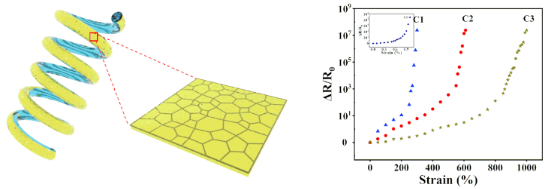
- index is increased, the turning point of the sensor exhibits an expansion, consequently leading to an enlargement of the overall linear range. As depicted in Figure 2c, the helical strain sensor underwent testing under dynamic strain conditions. The sensor was exposed to strain from 0 to 200%, followed
- within the tested frequency range, indicating the helical sensor’s sensitivity and stability across a wide range of frequencies. Furthermore, the helical sensor exhibits dynamic durability, as it maintains a steady electrical response and mechanical integrity during long-term stretch and release cycles


Design, fabrication, and characterization of kinetic-inductive force sensors for scanning probe applications
Beilstein J. Nanotechnol. 2024, 15, 242–255, doi:10.3762/bjnano.15.23
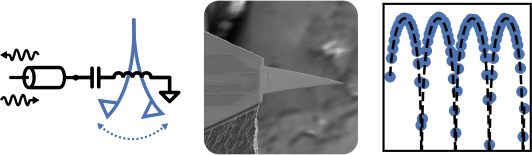
- highly desirable. Furthermore, we would like the integrated sensor package, that is, transducer and detector, to be easily exchangeable, as AFM tips are frequently damaged when scanning over unknown surface features. Dynamic AFM is typically operated in two alternative modes of scanning feedback, namely



Multiscale modelling of biomolecular corona formation on metallic surfaces
Beilstein J. Nanotechnol. 2024, 15, 215–229, doi:10.3762/bjnano.15.21
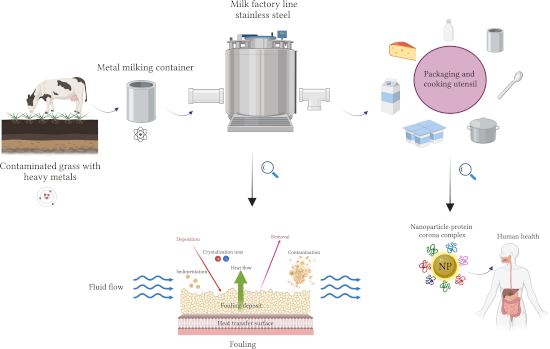
- the outer surface of macroscropic and micro- and nano-sized particulate after packaging. It also highlights the dynamic interactions at the bionano interface associated with potential human health hazards. Through biomolecule adsorption, change of conformation, and surface chemistry, foreign materials
- engage in a complex interplay of dynamic physicochemical interactions, kinetics, and thermodynamic exchanges that can lead to undesirable outcomes [1][8][9][10]. In a more general context, the importance in understanding the mechanism of bionano interactions arises from the increasing awareness and





Nanocarrier systems loaded with IR780, iron oxide nanoparticles and chlorambucil for cancer theragnostics
Beilstein J. Nanotechnol. 2024, 15, 180–189, doi:10.3762/bjnano.15.17
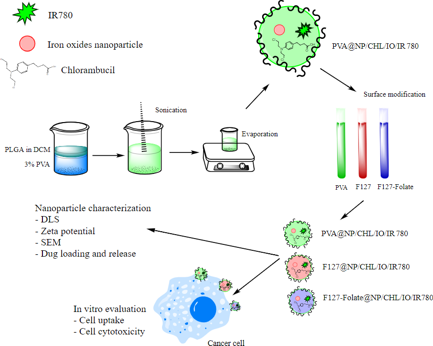
- cells. Hydrodynamic size and zeta potential Dynamic light scattering (DLS) and zeta potential spectra were obtained for three replicates on a nanoPartical Horiba SZ-100 (Japan) with the scattering angle of 90° to determine the size distribution and stability of the nanoparticles. The DLS measurements


Modification of graphene oxide and its effect on properties of natural rubber/graphene oxide nanocomposites
Beilstein J. Nanotechnol. 2024, 15, 168–179, doi:10.3762/bjnano.15.16
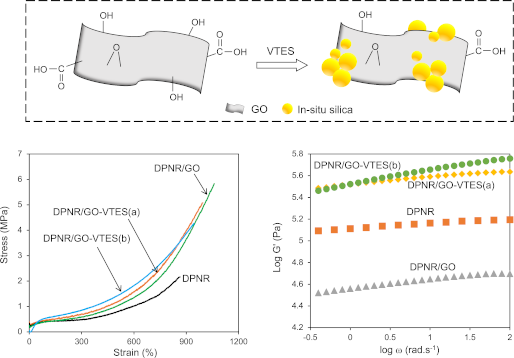
- nanocomposites prepared with the same amount of GO, GO-VTES(a), and GO-VTES(b) were characterized with tensile tests and dynamic mechanical tests. The stress at break of DPNR/GO-VTES(a) and DPNR/GO-VTES(b) was 5.2 MPa and 4.3 MPa, respectively, which were lower than that of DPNR/GO. However, it exhibited higher
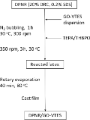
- room temperature with a speed test of 200 mm/min. Dynamic mechanical analysis (DMA) of the graft copolymer was measured with a MCR 301 (Anton Paar Physica, Japan) analyzer using a 12 mm parallel plate (PP12) measuring system. First, the samples were heated to 80 °C in gaseous N2 and kept for 40 min for
- chemical interaction between GO and NR. Dynamic mechanical properties Dynamic mechanical properties of composite samples reveal how much energy is stored or lost during applied cyclic shearing force. Figure 11 shows the dependence of the storage modulus (G'), loss modulus (G''), and loss tangent (tan δ) of






Enhanced feedback performance in off-resonance AFM modes through pulse train sampling
Beilstein J. Nanotechnol. 2024, 15, 134–143, doi:10.3762/bjnano.15.13

- Mustafa Kangul Navid Asmari Santiago H. Andany Marcos Penedo Georg E. Fantner Laboratory for Bio- and Nano-Instrumentation, Swiss Federal Institute of Technology Lausanne (EPFL), Lausanne CH-1015, Switzerland 10.3762/bjnano.15.13 Abstract Dynamic atomic force microscopy (AFM) modes that operate
- the application of this AFM method when gentle and non-damaging imaging is required, for instance on soft biological materials [1]. In order to make the instrument technique suitable for imaging fragile samples, several dynamic modes that rely on the resonance characteristics of the cantilever have
- been introduced [2][3]. Although these methods are gentler than contact mode, interpreting and controlling the vertical force exerted on the sample is not straightforward. To achieve a better tip–sample force control, Rosa-Zeiser et al. [4] presented an off-resonance dynamic mode called pulsed force


Assessing phytotoxicity and tolerance levels of ZnO nanoparticles on Raphanus sativus: implications for widespread adoptions
Beilstein J. Nanotechnol. 2024, 15, 115–125, doi:10.3762/bjnano.15.11

- on Raphanus sativus (R. sativus) concerning its tolerance levels, toxicity, and accumulation. ZnO NPs were synthesized by the wet chemical method and characterized by powder X-ray diffraction (PXRD), Fourier-transform infrared (FTIR) spectroscopy, ultraviolet–visible (UV–vis) spectroscopy, dynamic
- synthesized ZnO NPs were characterized via several techniques such as powder X-ray diffraction (PXRD), Fourier-transform infrared (FTIR) spectroscopy, solid-UV–vis spectroscopy, dynamic light scattering (DLS), and scanning electron microscopy (SEM). Then the potential phytotoxicity of the synthesized ZnO NPs


Development and characterization of potential larvicidal nanoemulsions against Aedes aegypti
Beilstein J. Nanotechnol. 2024, 15, 104–114, doi:10.3762/bjnano.15.10
- , and 21 days after preparation. Signs of instability such as creaming, sedimentation, and phase separation were recorded, as well as physical aspects such as color, transparency, and fluidity. Dynamic light scattering analysis The average hydrodynamic diameter and polydispersity index (PdI) of the NEs
- were evaluated over a period of 60 days using dynamic light scattering, and the zeta potential was determined via electrophoretic mobility in a Zetasizer 3000 HSA (Malvern Instruments) device, using a 10 mW HeNe laser operated at 633 nm with a detection angle of incidence of 173° at 25 °C. Data


New application of bimetallic Ag/Pt nanoplates in a colorimetric biosensor for specific detection of E. coli in water
Beilstein J. Nanotechnol. 2024, 15, 95–103, doi:10.3762/bjnano.15.9

- previously published E. coli detection methods. The findings were compared to those of previous specified situations, proving that this technique gives an increased dynamic range and appropriate LOD. This biosensor offers several advantages such as quick reaction, high sensitivity, ease of use, low cost, and
- lambda 25 UV–vis spectrometer was employed for UV–vis absorption measurement in the range of 200–800 nm. The morphology and shape of NPLs were studied using a field-emission scanning electron microscope (Supra 400VP, Zeiss, Oberkochen, Germany). Dynamic light scattering experiments were carried out at


Measurements of dichroic bow-tie antenna arrays with integrated cold-electron bolometers using YBCO oscillators
Beilstein J. Nanotechnol. 2024, 15, 26–36, doi:10.3762/bjnano.15.3
- the leakage resistance. We now test various ways to reduce the aluminum roughness. Also, the roughness strongly depends on the deposition rate. The oxidation process affects the barrier properties as well; perhaps with dynamic oxidation [26] (with constant pumping) one can try to achieve better


Fluorescent bioinspired albumin/polydopamine nanoparticles and their interactions with Escherichia coli cells
Beilstein J. Nanotechnol. 2023, 14, 1208–1224, doi:10.3762/bjnano.14.100

- measured by dynamic light scattering (DLS) using a Zetasizer Nano ZS from Malvern Panalytical (Malvern, UK). Measurements were performed while taking into account a refractive index of 1.73 − 0.02i for PDA (the imaginary part corresponds to the absorption coefficient) at a wavelength of 589 nm, that is



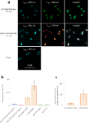
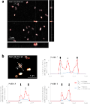
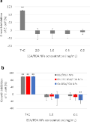
Curcumin-loaded albumin submicron particles with potential as a cancer therapy: an in vitro study
Beilstein J. Nanotechnol. 2023, 14, 1127–1140, doi:10.3762/bjnano.14.93
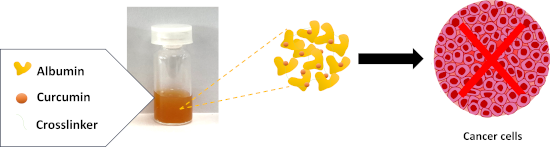
- albumin proteins [30]. CUR showed strong binding affinity towards HSA, likely at the tryptophan residue, which is present in the hydrophobic cavities of HSA [23][31]. The final CUR-HSA-MPs are obtained after dissolution of the MnCO3 template with EDTA. Characterization of CUR-HSA-MPs Dynamic light




A bifunctional superconducting cell as flux qubit and neuron
Beilstein J. Nanotechnol. 2023, 14, 1116–1126, doi:10.3762/bjnano.14.92

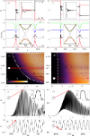
- adiabatic approximation, we can form the density matrix of the system in the instantaneous basis |ψn(t)⟩ as In the Born–Markov approximation, the dissipative dynamic of a quantum system is described by an adiabatic generalised equation for the density matrix [49]. In terms of the instantaneous basis in the



Dual-heterodyne Kelvin probe force microscopy
Beilstein J. Nanotechnol. 2023, 14, 1068–1084, doi:10.3762/bjnano.14.88

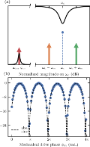
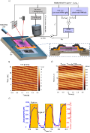
- mode (DHe-KPFM spectroscopy), and 2D dynamic images can be acquired in data cube mode. The capabilities of DHe-KPFM in terms of time-resolved measurements, surface photovoltage (SPV) imaging, and detection of weak SPV signals are demonstrated through a series of experiments on difference surfaces: a
- referred to as the amplitude (modulus) spectrum in the following. Obviously, by linearity of the Fourier transform, each component of the “amplitude spectrum” (including the static term) is proportional to the amplitude (or magnitude) of the SPV. We will see later on how static (SPV magnitude) and dynamic




Spatial mapping of photovoltage and light-induced displacement of on-chip coupled piezo/photodiodes by Kelvin probe force microscopy under modulated illumination
Beilstein J. Nanotechnol. 2023, 14, 1059–1067, doi:10.3762/bjnano.14.87

- these micro/nano devices is to scrutinize their structure and the interaction between their different components. This can be done by high-resolution characterization techniques that simultaneously probe dynamic properties of different parts of the device. This enables the decoupling of the roles of
- ] is a powerful and versatile technique to study fundamental and functional characteristics of materials and devices at the nanoscale, with application in physics, materials science, engineering, and biology. It can operate in either static (contact mode) or dynamic (tapping and noncontact mode) modes
- be used to measure contact potential difference (CPD) between the tip and the sample [18][19][20]. In particular, time-dependent KPFM [21][22][23] allows us to determine temporal changes of CPD and understand the dynamic behavior of functional devices at the nanoscale. Kelvin probe force microscopy


Experimental investigation of usage of POE lubricants with Al2O3, graphene or CNT nanoparticles in a refrigeration compressor
Beilstein J. Nanotechnol. 2023, 14, 1041–1058, doi:10.3762/bjnano.14.86
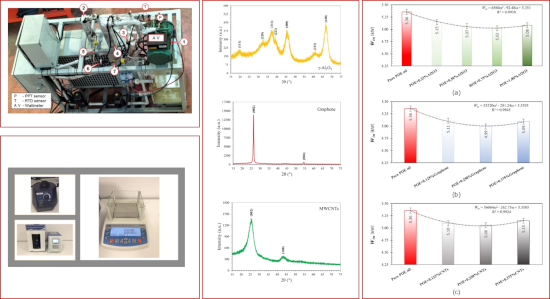
- using pure oil. Moreover, density and dynamic viscosity of the nanolubricant samples used in the experiments were also measured, and their kinematic viscosity, which is an important parameter for lubricants, was calculated. It was determined that the kinematic viscosity continuously increased with
- viscosity, ν, was defined as the ratio of the dynamic viscosity to the density according to Equation 1. The density, ρ, of the nanolubricants was measured with the FPS2800 fluid property sensor. At the same time, the dynamic viscosity, µ, of the nanolubricants was measured using the FPS 2800 fluid property
- error analysis. The kinematic viscosity is calculated by Equation 1 with the help of the data obtained by measuring the density and dynamic viscosity values. Therefore, there is a need to determine the effect of uncertainties in the measured data of the calculated kinematic viscosity value. Thus, the





Upscaling the urea method synthesis of CoAl layered double hydroxides
Beilstein J. Nanotechnol. 2023, 14, 927–938, doi:10.3762/bjnano.14.76

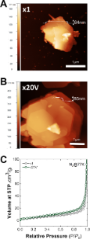
- measurements. Despite the acute differences in the magnetic behavior of Co-based LDH and simonkolleite-like α-LH [46][54][55], the impurities do not lead to significant changes beyond slight variations in the DC magnetic susceptibility and the out-of-phase contribution of the dynamic susceptibility (Figure S7


Two-dimensional molecular networks at the solid/liquid interface and the role of alkyl chains in their building blocks
Beilstein J. Nanotechnol. 2023, 14, 872–892, doi:10.3762/bjnano.14.72

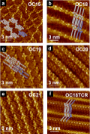
- resolution. (ii) Post-reaction is available by external stimuli such as the addition of metal ions for metal coordination, light irradiation for photoreaction, and post-blending of other molecules. (iii) The dynamic process of the 2D structural change (caused by the external stimuli) can be followed in situ
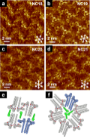
- structures (OCn < CCn, n = even, Figure 13d). In situ addition of the blend partner enabled the alteration of the blend ratio, offering direct observation of the dynamic process of 2D structural changes in both ways, that is, from star to lozenge, from twist-like to linear structures, and vice versa. These
- structure of the Py-C14/FI-C14 blend; (f, g) honeycomb structure formed by the Py-C14/FI-C14/COR blend. The white arrows indicate the HOPG lattice directions. Figure 7 was adapted from [100], (“Dynamic host–guest behavior in halogen-bonded two-dimensional molecular networks investigated by scanning