


Search results
Search for "dynamics" in Full Text gives 567 result(s) in Beilstein Journal of Nanotechnology. Showing first 200.
Coherent amplification of radiation from two phase-locked Josephson junction arrays
Beilstein J. Nanotechnol. 2022, 13, 1445–1457, doi:10.3762/bjnano.13.119
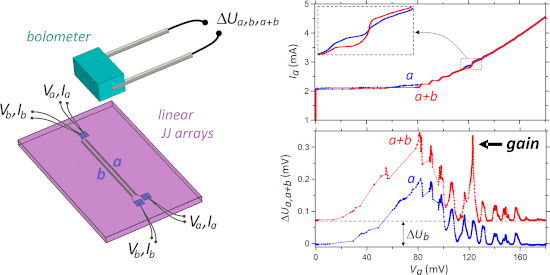
- synchronization inside each array. The latter effect removes the limit of two for the gain factor. Finally, for better understanding, we performed numerical simulations of the inner dynamics for two interacting arrays. Our simulations confirm that two arrays can be phase-locked by a common EM field. They also
- a complex phenomenon, which cannot be reduced to a simple constructive interference of two independent sources. For a better understanding of the phase locking dynamics, we perform numerical modelling. Figure 6a demonstrates the general view of the considered model for on-chip synchronization. It
- of the opposite long side. All lumped elements are connected by ideal conductors located at the edges of mesh. The gap between two arrays is 0.1 mm. The JJs are described by the RSJ model [20]. The corresponding equations of junction dynamics are solved self-consistently with Maxwell equations, which


Straight roads into nowhere – obvious and not-so-obvious biological models for ferrophobic surfaces
Beilstein J. Nanotechnol. 2022, 13, 1345–1360, doi:10.3762/bjnano.13.111
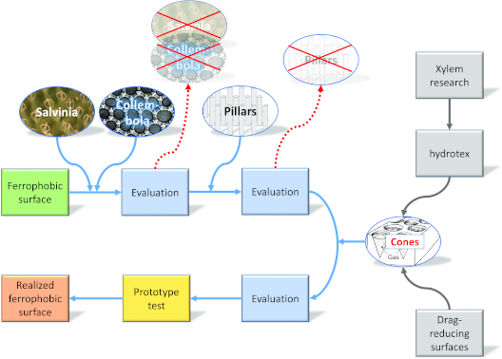
- structure, which can easily be described in terms of analytic functions. When a sheet of liquid iron flows over the tuyère surface, a complex interaction between the gas in the recesses and the liquid evolves. It is, of course, hopeless to try to describe the interaction dynamics in terms of analytic


Bending and punching characteristics of aluminum sheets using the quasi-continuum method
Beilstein J. Nanotechnol. 2022, 13, 1303–1315, doi:10.3762/bjnano.13.108
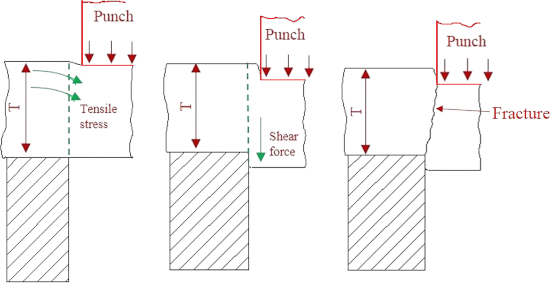
- , since it is very challenging to experimentally control every parameter in the nanoscale, the atomistic computational simulation methods are often used. The most commonly used simulation method is molecular dynamics (MD), which has been conducted to investigate many nanoscale processes [22][23]. Although





Studies of probe tip materials by atomic force microscopy: a review
Beilstein J. Nanotechnol. 2022, 13, 1256–1267, doi:10.3762/bjnano.13.104
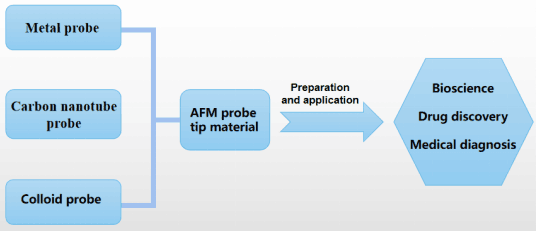
- without compromising the carbon nanotubes' aspect ratio, strength and size. The mechanical response of these composite beams under bending is studied in molecular dynamics simulations and nanomanipulation experiments. The behavior of this system has been studied at both theoretical and experimental levels
- understanding interactions in various domains to study adhesion phenomena, particle-surface interactions, mechanical properties, suspensions, liquid dynamics, and boundary slips. Colloidal gold probe Colloidal gold particles [48][49] have the advantage of stable adsorption of proteins without significant
- adjustments are made to its cantilever dynamics, the calibration accuracy of CPs does not fluctuate when the additional mass of the ball is the same as the cantilever. In the type of large CPs, applying the homogeneity theorem for topless cantilever beams to Equation 1 can achieve accurate calibration. These
Nonlinear features of the superconductor–ferromagnet–superconductor φ0 Josephson junction in the ferromagnetic resonance region
Beilstein J. Nanotechnol. 2022, 13, 1155–1166, doi:10.3762/bjnano.13.97
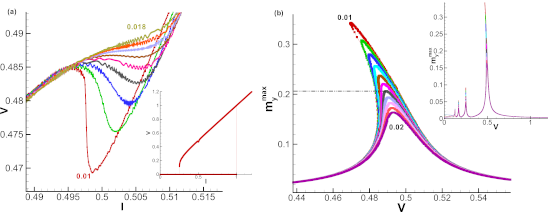
- , 141980, Russia Moscow Institute of Physics and Technology, Dolgoprudny, 141700, Moscow Region, Russia Physics Department, Menofiya University, Faculty of Science, 32511, Shebin Elkom, Egypt 10.3762/bjnano.13.97 Abstract We demonstrate the manifestations of nonlinear features in magnetic dynamics and I–V
- characteristics of a φ0 Josephson junction in the ferromagnetic resonance region. We show that at small values of the system parameters damping, spin–orbit interaction, and Josephson-to-magnetic energy ratio, the magnetic dynamics is reduced to the dynamics of a scalar Duffing oscillator driven by the Josephson
- –voltage (I–V) characteristics by magnetic dynamics in the ferromagnet, in particular, to create a DC component in the superconducting current [6][7][8]. A remarkable manifestation of this coupling is the possibility to stimulate a magnetization reversal in the ferromagnetic layer by applying a current


![[Graphic 14]](/bjnano/content/inline/2190-4286-13-97-i38.svg?max-width=637&scale=1.18182) at differ...
at differ...


![[Graphic 18]](/bjnano/content/inline/2190-4286-13-97-i42.svg?max-width=637&scale=1.18182) (V) on α in the damping parameter interval [0.001–0.12]....
(V) on α in the damping parameter interval [0.001–0.12]....

Rapid fabrication of MgO@g-C3N4 heterojunctions for photocatalytic nitric oxide removal
Beilstein J. Nanotechnol. 2022, 13, 1141–1154, doi:10.3762/bjnano.13.96
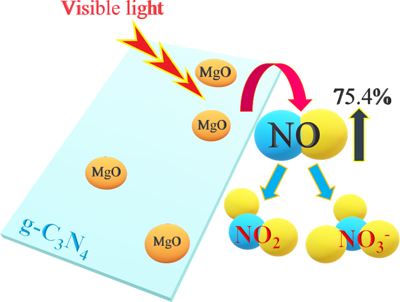
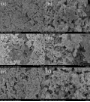
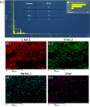
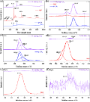
- and urea and, subsequently, characterized. Charge transfer dynamics in the heterojunction and band structure were investigated to understand the effect of the heterojunction on the photocatalytic activity. Finally, the photocatalytic pathway of the MgO@g-C3N4 heterojunction was studied via trapping





Effects of focused electron beam irradiation parameters on direct nanostructure formation on Ag surfaces
Beilstein J. Nanotechnol. 2022, 13, 1004–1010, doi:10.3762/bjnano.13.87

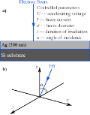
- irradiation and the material of the surface. However, the effects on growth dynamics of numerous irradiation parameters, such as beam current or angle of incidence, have not yet been studied in detail. We explore the effects of focusing, angle of incidence, and current of the electron beam on the size and
- LiAlSi glasses [28] and TiO2 [29]. In one of our previous studies [30] we investigated the growth dynamics of nanodots on various metal surfaces (Al, Ag, Cu, Cr, and Mo) under focused EB irradiation in an SEM vacuum chamber. Similar to the previously discussed study, an influence of the surface material




Influence of water contamination on the sputtering of silicon with low-energy argon ions investigated by molecular dynamics simulations
Beilstein J. Nanotechnol. 2022, 13, 986–1003, doi:10.3762/bjnano.13.86

- by molecular dynamics (MD) simulations how one of the most commonly found residual contaminations in vacuum chambers (i.e., water adsorbed on a silicon surface) influences sputtering by 100 eV argon ions. The incidence angle was changed from normal incidence to close to grazing incidence. For the
- ; molecular dynamics; silicon; simulations; water; Introduction Focused ion beams (FIB) play an increasingly important role in materials research areas such as nanoanalysis (e.g., secondary ion mass spectrometry (SIMS) [1][2][3] and sample preparation for transmission electron microscopy (TEM) [4], atom
- extreme cases. Nowadays, very little is known about the influence of contaminations on the amorphization process under ion irradiation. Thanks to molecular dynamics (MD) simulations, a wide range of materials properties and process parameters can be reproduced [27][28][29]. In this paper, we are using MD




Comparing the performance of single and multifrequency Kelvin probe force microscopy techniques in air and water
Beilstein J. Nanotechnol. 2022, 13, 922–943, doi:10.3762/bjnano.13.82
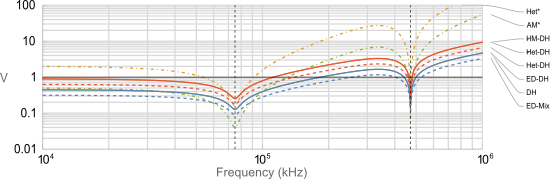
- resolution [13][15][16][17][18][19]. These advances have enabled investigations mapping light-induced surface potential dynamics [20], ferroelectric domains [19], individual quantum dots [21][22], and even submolecular charge distributions [23][24][25][26][27]. These applications demonstrate that KPFM is
Ultrafast signatures of magnetic inhomogeneity in Pd1−xFex (x ≤ 0.08) epitaxial thin films
Beilstein J. Nanotechnol. 2022, 13, 836–844, doi:10.3762/bjnano.13.74
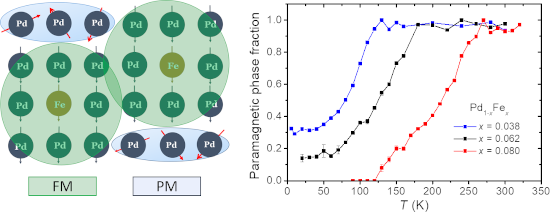
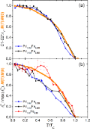
- magnetic inhomogeneities in thin films. Individual constituents can be characterized by specific relaxation components that can be used to detect magnetic inhomogeneities and track their evolution. In addition, the peculiarities of the magnetization dynamics in magnetically inhomogeneous systems themselves
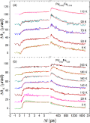
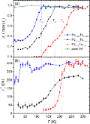
- are of interest. In our recent work, using the example of a thin epitaxial film of Pd0.94Fe0.06, it was demonstrated [37] that the dynamics of the reflection coefficient and the angle of rotation of the polarization plane in magneto-optical Kerr effect (MOKE) measurements after a photoexcitation with
- angles were ≈2° and ≈18°. The relaxation of the electronic subsystem was monitored by the relative change in the reflection coefficient (∆R/R). Ultrafast dynamics of the magnetization was analyzed by the deviation of the angle of rotation of the polarization plane of the probing light from the


Modeling a multiple-chain emeraldine gas sensor for NH3 and NO2 detection
Beilstein J. Nanotechnol. 2022, 13, 721–729, doi:10.3762/bjnano.13.64
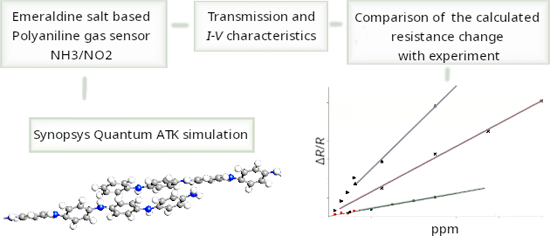
- gradient approximated (GGA) Perdew–Burke–Ernzerhof (PBE) exchange–correlation functional was used. Guo et al. [5] investigated the graphene/polyaniline adsorption energy of NH3, CO, NO, and H2 using DFT and molecular dynamics computations. From this, graphene/PANI is highly sensitive to NH3 in comparison
- chosen fixed positions of ammonia and nitrogen dioxide molecules. We have computed the local energy minima through molecular dynamics, which results in the optimized position and orientation of the gas molecule. The spatial orientation of the gas molecules was estimated by these optimizations. Next, one
- as well. The I–V characteristics were computed for several molecule positions near the doped and near the undoped nitrogen atoms, see above. The molecule orientation was estimated through molecular dynamics optimization. The resistance from the linear part of the I–V characteristics was used to


Direct measurement of surface photovoltage by AC bias Kelvin probe force microscopy
Beilstein J. Nanotechnol. 2022, 13, 712–720, doi:10.3762/bjnano.13.63

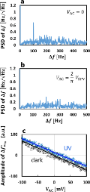
- . Indeed, there remains an issue that the modulation frequency has the constraint of a transfer function of cantilever dynamics and the bandwidth of the PLL. We believe that this issue will be solved by future work such as using a heterodyne detection scheme [65][66][67]. It is noted that AC-KPFM observes
- it would be useful to operate AC-KPFM with a heterodyne detection scheme [65][66][67] in order to reduce a photothermal effect on the cantilever dynamics [68][69] and measure the fast SPV phenomena. The AC-KPFM method is utilized not only for SPV measurements, but also for direct measurements of



Design and selection of peptides to block the SARS-CoV-2 receptor binding domain by molecular docking
Beilstein J. Nanotechnol. 2022, 13, 699–711, doi:10.3762/bjnano.13.62

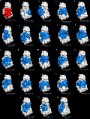
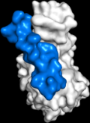
- variants of SARS-CoV-2. This research work will be focused on the molecular docking of peptides by molecular dynamics, in addition to an analysis of the possible interaction of these peptides with physiological proteins. This methodology could be extended to design peptides that are active against other




A superconducting adiabatic neuron in a quantum regime
Beilstein J. Nanotechnol. 2022, 13, 653–665, doi:10.3762/bjnano.13.57

- , Russia Federal State Unitary Enterprise All-Russia Research Institute of Automatics named after N.L. Dukhov, 101000 Moscow, Russia 10.3762/bjnano.13.57 Abstract We explore the dynamics of an adiabatic neural cell of a perceptron artificial neural network in a quantum regime. This mode of cell operation
- work, we account for this by considering the neuron cell operation in a quantum regime. We investigate the dynamics of this cell in search of conditions that provide the required sigmoid activation function (conversion of the input magnetic flux into the average output current), suitable for the
- the dynamics of the neuron. The range of the operating parameters for the proposed neuron circuit under the action of unipolar magnetic flux pulses is found. Finally, the influence of the dissipation on the features of the dynamic processes and characteristics of the cell is revealed. Methods Neuron


Fabrication and testing of polymer microneedles for transdermal drug delivery
Beilstein J. Nanotechnol. 2022, 13, 629–640, doi:10.3762/bjnano.13.55
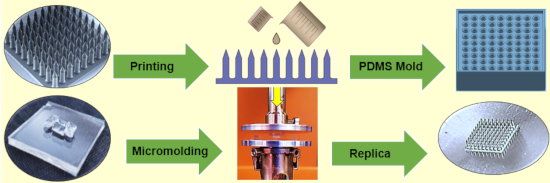
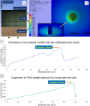
- simulation model was performed using ANSYS (2020 R1, ANSYS, Canonsburg, Pennsylvania, USA) Explicit Dynamics. The skin was assumed to be comprised of three layers (1) stratum corneum, (2) dermis, and (3) hypodermis with 26 μm, 2 mm, and 1.1 mm thicknesses, respectively. An Ogden (first-order) model [32] was
- BD Ultra-Fine™ 4 mm Pen Needle on porcine back skin, along with (3) Explicit Dynamics simulation of single MN insertion on a three-layered skin model. The comparisons between the results found for insertion force and quasi-static buckling test showed sufficient margins of safety (SM ≫ 1), indicating
- recorded during insertion based on c) FEA Explicit Dynamics simulation, and d) in vitro experiment using a BD Ultra-Fine™ 4 mm Pen Needle on porcine skin. Confocal images of cryo-sectioned porcine back skin showing MN array penetration: a) control test without MNs or fluorescein solution, b) MN array patch



Comparative molecular dynamics simulations of thermal conductivities of aqueous and hydrocarbon nanofluids
Beilstein J. Nanotechnol. 2022, 13, 620–628, doi:10.3762/bjnano.13.54
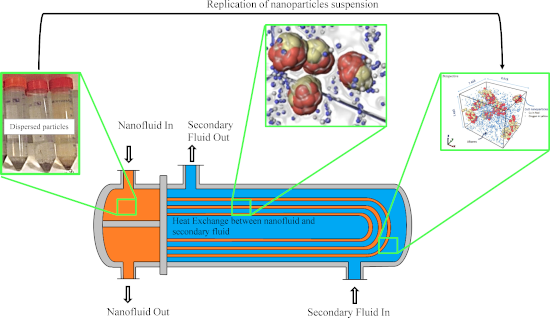
- ., alkane) the thermal conductivity was increased three times (from 0.1 to 0.4 W·m−1·K−1). This approach to determine the thermal conductivity of metal oxide nanoparticles in aqueous and nonaqueous fluids using visual molecular dynamics and interactive autocorrelations demonstrate a great tool to quantify
- thermophysical properties of nanofluids using a simulation environment. Moreover, this comparison introduces data on aqueous and nonaqueous suspensions in one study. Keywords: alkanes; aqueous solutions; CuO; hydrocarbon solutions; molecular dynamics simulation; nanoparticles; thermal conductivity
- molecules [1]. The molecular dynamics (MD) simulation method is a tool that has been used to effectively predict nanofluid thermal properties with relative accuracy [38][39][40][41][42]. The method relies on computationally solving basic equations of Newton’s laws of motion for interacting particles at the


Quantitative dynamic force microscopy with inclined tip oscillation
Beilstein J. Nanotechnol. 2022, 13, 610–619, doi:10.3762/bjnano.13.53
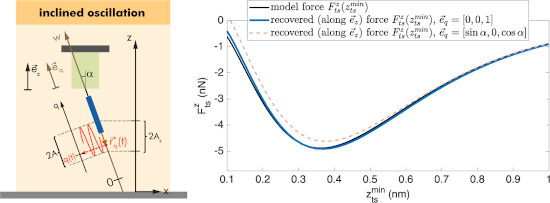
- displacement qs with turning points qs + A and qs − A (Figure 1d). The momentary tip position at time t can either be described as the displacement q(t) or as the position zts(t), whereby the lower turning point is the point of strongest tip–surface interaction. While the tip position and sensor dynamics can


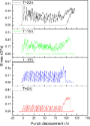
![[Graphic 38]](/bjnano/content/inline/2190-4286-13-53-i79.svg?max-width=637&scale=1.18182) and the axis w....
and the axis w....


Approaching microwave photon sensitivity with Al Josephson junctions
Beilstein J. Nanotechnol. 2022, 13, 582–589, doi:10.3762/bjnano.13.50
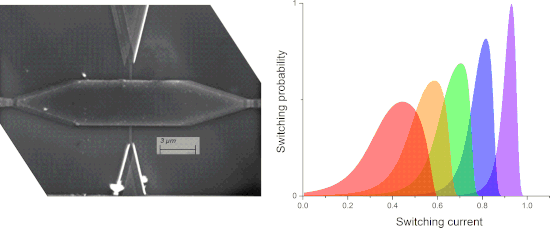
- samples in a single-shot regime and outline the junction parameter range where approaching single photon sensitivity is possible. Results and Discussion In this section, we describe our experimental setup, as well as the measurement results and comparison with theory. To study the dynamics of a SIS tunnel


Investigation of electron-induced cross-linking of self-assembled monolayers by scanning tunneling microscopy
Beilstein J. Nanotechnol. 2022, 13, 462–471, doi:10.3762/bjnano.13.39
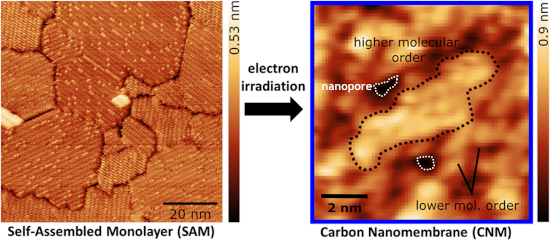
- with a scanning tunneling microscope. As the irradiation dose was increased, the cross-linked regions continued to grow and a large number of subnanometer voids appeared. Their equivalent diameter is 0.5 ± 0.2 nm and the areal density is ≈1.7 × 10¹⁷ m−2. Supported by classical molecular dynamics
- cross-linked regions appear darker than the structurally ordered domains. At high doses, subnanometer-sized voids are formed preferably in regions of lower structural order and lower density in the monolayer. The formation of carbon nanomembranes was also modeled using classical molecular dynamics
- were analyzed by using an empirical fit. The lateral distribution of subnanometer voids was analyzed by partitioning the surface area into small segments and counting the number of voids in each segment. Classical molecular dynamics simulations The formation of a CNM was modelled using classical


Electrostatic pull-in application in flexible devices: A review
Beilstein J. Nanotechnol. 2022, 13, 390–403, doi:10.3762/bjnano.13.32
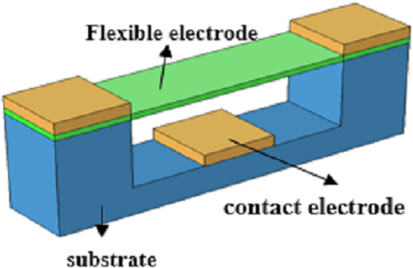
- et al. [33] used molecular dynamics to compare the adsorption energies of GR-Au and GR-GR structures. The GR-GR structure has a higher adsorption energy of 307 mJ/m2. Mizuta et al. [7][35] assumed that the use of a GR-GR electrode structure could avoid the uncontrollable microscale interactions


Controllable two- and three-state magnetization switching in single-layer epitaxial Pd1−xFex films and an epitaxial Pd0.92Fe0.08/Ag/Pd0.96Fe0.04 heterostructure
Beilstein J. Nanotechnol. 2022, 13, 334–343, doi:10.3762/bjnano.13.28

- ): 0 Oe → −36 Oe. In both cases, on a time scale of approx. 1000 s, there are no noticeable changes in the magnetic moment of the steady states of the heterostructure. This is fundamentally different from the dynamics of the magnetization of the polycrystalline Pd0.99Fe0.01 film, in which significant


Thermal oxidation process on Si(113)-(3 × 2) investigated using high-temperature scanning tunneling microscopy
Beilstein J. Nanotechnol. 2022, 13, 172–181, doi:10.3762/bjnano.13.12
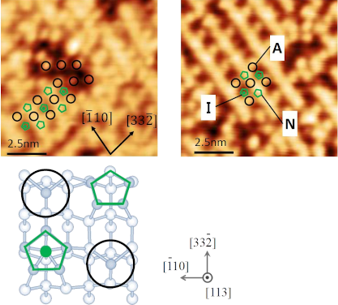
- ) has been used as the ideal tool to investigate reaction dynamics on surfaces. In our previous studies, we applied our VT-STM to investigate hydrogen diffusion [5] and titanium silicide formation [6] on Si(001). In our previous studies of oxidation on Si(113), we investigated the electronic states of
- ) substrate dramatically, so that it was close to that of Si(001) [1]. To gain insight into the origin of this remarkable reduction in Dit, it is necessary to understand the dynamic processes that occur during thermal oxidation more precisely. To this end, we observed the reaction dynamics during thermal
- towards a thin film regime. Conclusion We investigated three oxidation growth modes – oxidation, etching, and transition modes – in the third of which both oxidation and etching occur. Reaction dynamics in the oxidation of Si(113)-(3 × 2) was observed in real time using VT-STM. Nucleation of the oxide and
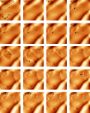


Influence of magnetic domain walls on all-optical magnetic toggle switching in a ferrimagnetic GdFe film
Beilstein J. Nanotechnol. 2022, 13, 74–81, doi:10.3762/bjnano.13.5

- radiation beamtime. Funding This work was supported by the Deutsche Forschungsgemeinschaft via the CRC/TRR 227 “Ultrafast Spin Dynamics”, project A07.


Nanoscale friction and wear of a polymer coated with graphene
Beilstein J. Nanotechnol. 2022, 13, 63–73, doi:10.3762/bjnano.13.4
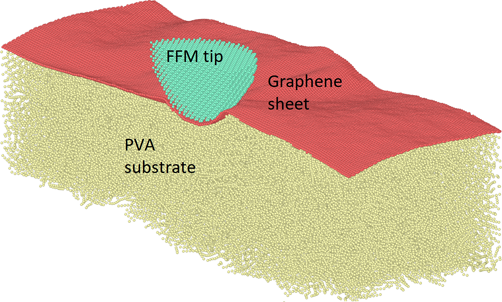
- challenging problem due to the complex viscoelastic properties and structure. Using molecular dynamics simulations, we investigate how a graphene sheet on top of the semicrystalline polymer polyvinyl alcohol affects the friction and wear. Our setup is meant to resemble an AFM experiment with a silicon tip. We
- the polymer chains and reduces the indentation depth. Keywords: friction; graphene; molecular dynamics; polymer; Introduction Graphene is a two dimensional material that has remarkable properties, both electronic [1][2] and mechanical [3][4]. Even before anything was known about graphene, the
- . [27][28] show that graphene has a strong effect on the structure and dynamics of the polymer chains near the interface. In this work, we aim to develop our understanding of the frictional behavior of a polymer coated with graphene by using molecular dynamics simulations of a single sliding asperity at


Effect of lubricants on the rotational transmission between solid-state gears
Beilstein J. Nanotechnol. 2022, 13, 54–62, doi:10.3762/bjnano.13.3

- are taken into account due to high pressure at intermediate sliding velocities. On the macroscopic scale, the hydrodynamics of the fluid can be analyzed by computational fluid dynamics (CFD) [6][7], which is based on solving the Navier–Stokes equation [8][9] or Reynold equation [10] for the thin-film
- and velocity distribution are not well defined and one has to resort to an atomistic description, for example, via molecular dynamics (MD) simulations. Also, the contact mechanics at the nanoscale is very different from the macroscopic case since specific pair interactions have to be taken into
- only for better visibility since the actual thickness of the lubricant layer is 5.0–5.5 nm to ensure that the gears are immersed. Finally, the whole system is optimized by using the conjugate gradient method implemented within LAMMPS [58]. Molecular dynamics In this study, we use LAMMPS to perform the





