Search results
Search for "iron oxide" in Full Text gives 173 result(s) in Beilstein Journal of Nanotechnology.
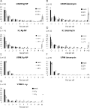
Surfactant-controlled composition and crystal structure of manganese(II) sulfide nanocrystals prepared by solvothermal synthesis
Beilstein J. Nanotechnol. 2015, 6, 2319–2329, doi:10.3762/bjnano.6.238

- in the presence of StAc, similar to the case of Fe(CO)5 and oleic acid that give an iron oleate intermediate in the synthesis of iron oxide NCs [49]. Second, the formation of γ-MnS NCs seems to be related to the basicity of amines but it only occurs when a carboxylic acid is also present. This


An adapted Coffey model for studying susceptibility losses in interacting magnetic nanoparticles
Beilstein J. Nanotechnol. 2015, 6, 2173–2182, doi:10.3762/bjnano.6.223

- applications in biomedicine, in particular for hyperthermia-based treatments. Recent medical researches show that the heat generation of iron oxide nanoparticles in an alternating magnetic field activates an immune system response to tumors [1]. In magnetic nanoparticle systems for hyperthermia applications
- ], for SLP measured for iron oxide (Table 1 and Table 2). Table 2 shows that the calculated SLP values determined by the common discrete orientation model are far from the measured results. Conclusion In this paper, we adapted the Coffey analytical model to local magnetic fields. Then we compared this


NanoE-Tox: New and in-depth database concerning ecotoxicity of nanomaterials
Beilstein J. Nanotechnol. 2015, 6, 1788–1804, doi:10.3762/bjnano.6.183

- oxide (CuO), and iron oxide (FeOx; Fe2O3, Fe3O4). Altogether, NanoE-Tox database consolidates data from 224 articles and lists altogether 1,518 toxicity values (EC50/LC50/NOEC) with corresponding test conditions and physico-chemical parameters of the ENMs as well as reported toxicity mechanisms and
- Information File 1) revealed that the majority of the papers concerned the applications of carbon nanotubes (36,609 papers, 40%), followed by Ag nanoparticles (NPs; 16,970, 19%), TiO2 NPs (11,802, 13%), and iron oxide NPs (10,479, 11%) while the most common fields of application were sensors (28,027 papers
- : carbon nanotubes (CNTs), fullerenes, silver (Ag), titanium dioxide (TiO2), zinc oxide (ZnO), cerium dioxide (CeO2), copper oxide (CuO), and iron oxide (FeOx; Fe2O3, Fe3O4). Furthermore, all these ENMs, except CuO, are listed by the Organisation for Economic Co-operation and Development (OECD) Working


A facile method for the preparation of bifunctional Mn:ZnS/ZnS/Fe3O4 magnetic and fluorescent nanocrystals
Beilstein J. Nanotechnol. 2015, 6, 1743–1751, doi:10.3762/bjnano.6.178

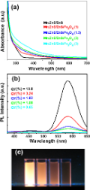
- diameters fit well with the calculated crystallite sizes deduced from the application of the Scherrer formula (Table 1). The increase in size observed from 3.8 ± 0.7 nm to 4.4 ± 0.9 nm confirms the growth of the iron oxide shell around the Mn:ZnS/ZnS core and indicates that the thickness of the Fe3O4 layer
- could be related to the quantum confinement effects of nanocrystals and to the diamagnetic contribution of the ZnS core. At 2 K, all bifunctional nanoparticles exhibited hysteresis with remnance magnetization, MR, at 9 T and coercivity, HC, indicating a dominant ferromagnetic nature of the iron oxide
- fields increased with the iron oxide layer thickness, where the highest HC value of 0.18 T was measured for Mn:ZnS/ZnS/Fe3O4 QDs (3). Thus, the nanocrystals become magnetically harder with an increasingly open hysteresis loop with increasing thickness of the magnetite shell. The values of MR and M9T




Synthesis, characterization and in vitro biocompatibility study of Au/TMC/Fe3O4 nanocomposites as a promising, nontoxic system for biomedical applications
Beilstein J. Nanotechnol. 2015, 6, 1677–1689, doi:10.3762/bjnano.6.170

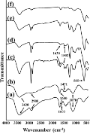
- Institute, Tehran University of Medical Sciences, Tehran, Iran, Faculty of Chemistry, Nanoscience and Nanotechnology Research Center, Razi University, Kermanshah, Iran 10.3762/bjnano.6.170 Abstract The unique properties and applications of iron oxide and Au nanoparticles have motivated researchers to
- engineering, as well as the in the design of sensors and biosensors [11][12][13][14][15][16][17]. Although all nanoparticles containing a magnetic core are considered as magnetic nanoparticles, the most commonly used are iron oxide nanoparticles, which are mostly synthesized in the form of magnetite (Fe3O4
- distribution, facile and low cost synthesis process, and ease of surface modification, biological and medical applications using uncoated iron oxide nanoparticles are limited because of their tendency to aggregate and oxidize [9][19]. Covering their surface with organic molecules (e.g., biodegradable polymers




Structural and magnetic properties of iron nanowires and iron nanoparticles fabricated through a reduction reaction
Beilstein J. Nanotechnol. 2015, 6, 1652–1660, doi:10.3762/bjnano.6.167

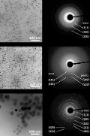
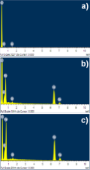
- investigated nanostructures are covered by a thin iron oxide layer (Figure 1b and Figure 1d) because pure iron is very reactive in the presence of even small amounts of oxygen. The thickness of this layer is around 3 nm, which is consistent with the literature [13]. Energy dispersive X-ray (EDX) spectra of
- nanomaterial. It has been already reported that the iron oxide layer at the surface of nanoparticles shows a tendency towards the similar crystallographic orientation as the underlying Fe core [21]. Thus, it is believed that amorphous iron, which lies between the crystalline iron core and iron oxide layer of
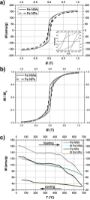
- the thin iron oxide films, which are distorted according to Mössbauer spectroscopy results. Magnetic measurements It is well known that the properties of magnetic nanomaterials depend on several features, such as: chemical composition, shape and dimension of nano-object [9][21]. Moreover, magnetic



The convenient preparation of stable aryl-coated zerovalent iron nanoparticles
Beilstein J. Nanotechnol. 2015, 6, 1192–1198, doi:10.3762/bjnano.6.121
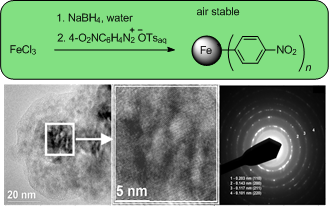
- salt structure, and ability to form stable covalent bonding with surfaces. ADSs have been used to modify metal NPs such as platinum, gold [14], palladium [15], aluminum [16], titanium [17] and iron oxide [18] surfaces. Quite a few works regarding the modification of Fe-based carbon-coated materials


Silica micro/nanospheres for theranostics: from bimodal MRI and fluorescent imaging probes to cancer therapy
Beilstein J. Nanotechnol. 2015, 6, 546–558, doi:10.3762/bjnano.6.57
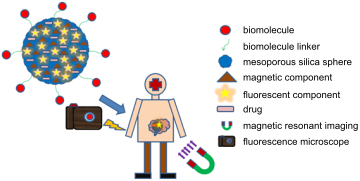
- NPs can be maximized. In our earlier review, we have compiled the literature reports on the biological studies of the hybrid nanocomposite materials, exclusively composed of luminescent quantum dots (QDs) and magnetically active iron oxide as bimodal imaging agents [2]. In this sense, nanostructured
- using different contrast agents (CAs). The ideal CA should be stable, tissue specific, less toxic with longer shelf life and a reasonable clearing period. The most common MRI CAs are paramagnetic chelated lanthanide complexes (positive contrast, T1-enhanced) and superparamagnetic iron oxide NPs
- MCF-7. Studies suggested that the cytotoxicity effect on MCF-7 was higher as compared to HeLa cells. Moreover, to induce the magnetic behavior, arginine-coated iron oxide NPs were mixed with DOX-loaded YVO4-MSN NPs. This biphasic mixture was studied for hyperthermia treatment in which the whole


Hematopoietic and mesenchymal stem cells: polymeric nanoparticle uptake and lineage differentiation
Beilstein J. Nanotechnol. 2015, 6, 383–395, doi:10.3762/bjnano.6.38

- cells, including stem cells, in order to study homing and engraftment [1][2] or to deliver drugs. Labeling with iron-containing particles provides the possibility to track the cell fate in vivo by using noninvasive magnetic resonance imaging (MRI). Superparamagentic iron oxide particles (SPIONs) are
- previously demonstrated [18]. In addition to the good uptake properties, the polystyrene particles did not have any cytotoxic effect (Figure 1B). The biodegradable PLLA nanoparticles also showed good uptake and no cytotoxic effects (Figure 1A,B). This was also true for nanoparticles with iron oxide
- literature, the interaction of hHSCs and nanoparticles is poorly investigated, probably due to the lack of adequate material in many laboratories. There are some studies with particles containing iron for cell labeling for MRI measurements. In different studies with the MRI contrast agent Ferridex® (iron


Biological responses to nanoscale particles
Beilstein J. Nanotechnol. 2015, 6, 380–382, doi:10.3762/bjnano.6.37
- used in this study were those of current, wide-spread technological importance, such as metals (e.g., silver, gold, platinum), oxides (e.g., silica, iron oxide, cerium oxide, manganese oxide), polymers (e.g., polystyrene) and quantum dots (II/VI semiconductors). Naturally occurring and industrially
Comparative evaluation of the impact on endothelial cells induced by different nanoparticle structures and functionalization
Beilstein J. Nanotechnol. 2015, 6, 300–312, doi:10.3762/bjnano.6.28

- , was cytotoxic to many cell lines [11][12][13][14], rendering an appropriate coating of gold nanoparticles indispensable for biocompatibility. Metal oxide based nanoparticles such as iron oxide and manganese oxide are ideal tools for MRI applications. They are easy to synthesize and they showed
- ]. Indeed, iron oxide nanoparticles with a positively charged surface coating showed a higher uptake level but also a lower stability compared to negative and neutral particles [53]. The stronger agglomeration behavior of positively or neutrally charged nanoparticles was also detectable in our studies and




Overview about the localization of nanoparticles in tissue and cellular context by different imaging techniques
Beilstein J. Nanotechnol. 2015, 6, 263–280, doi:10.3762/bjnano.6.25
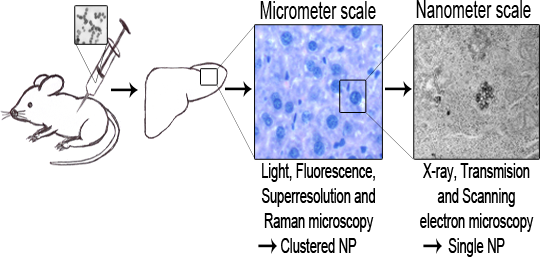
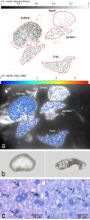
- the biological context [33]. In this overview, we introduce and compare different imaging techniques for localizing inorganic NP like silica and iron oxide NP as well as organic NP such as polymer dendritic polyglycerol sulfates (dPGS) and chitosan NP. Importantly, all techniques described can be used
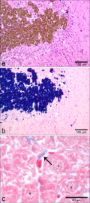
- or electronic devices that are known to induce granuloma formation and fibrosis in the lung following intratracheal exposure appear as grey structures when forming aggregates in tissue sections stained according to standard protocols [43][44]. Aggregated iron oxide nanoparticles are visible as brown
- deposits in HE-stained sections of glioblastomas (Figure 1a), a common brain tumor with high clinical relevance [45]. Such particles have similarly been visualized after targeting prostate cancer cells in humans [46]. Iron oxide nanoparticles have been introduced as diagnostic tool or for the treatment of



Tailoring the ligand shell for the control of cellular uptake and optical properties of nanocrystals
Beilstein J. Nanotechnol. 2015, 6, 232–242, doi:10.3762/bjnano.6.22

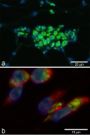
- about glycol-conjugated strategies using click chemistry is provided in [39]. The encapsulation of inorganic nanoparticles like iron oxide particles or QDs in the as functionalized PI-b-PEGs did not change the properties of the material, as it has already been observed for regular PI-b-PEG. This
- ). First, a general investigation of the toxicity of various nanocontainers (QDs, iron oxide particles, differently sized and functionalized PI-b-PEG) was performed, using standard WST8- and LDH-assays. In a region between 0.1–1.0 µmol/L none of the tested constructs showed any toxicity or influence on the
- one hand do not show any unspecific interaction with the cells under default conditions with serum containing medium. On the other hand, the nanocontainers are in a good size range and can in general be internalized by the cells. First experiments in tumor targeting with antibody coupled QDs and iron






Caveolin-1 and CDC42 mediated endocytosis of silica-coated iron oxide nanoparticles in HeLa cells
Beilstein J. Nanotechnol. 2015, 6, 167–176, doi:10.3762/bjnano.6.16

- development of new therapies for numerous diseases. For example iron oxide nanoparticles are in clinical use already in the thermotherapy of brain cancer. Although it has been shown, that tumor cells take up these particles in vitro, little is known about the internalization routes. Understanding of the
- underlying uptake mechanisms would be very useful for faster and precise development of nanoparticles for clinical applications. This study aims at the identification of key proteins, which are crucial for the active uptake of iron oxide nanoparticles by HeLa cells (human cervical cancer) as a model cell
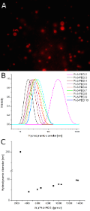
- line. Cells were transfected with specific siRNAs against Caveolin-1, Dynamin 2, Flotillin-1, Clathrin, PIP5Kα and CDC42. Knockdown of Caveolin-1 reduces endocytosis of superparamagnetic iron oxide nanoparticles (SPIONs) and silica-coated iron oxide nanoparticles (SCIONs) between 23 and 41%, depending


Multifunctional layered magnetic composites
Beilstein J. Nanotechnol. 2015, 6, 134–148, doi:10.3762/bjnano.6.13

- matrix. The amount of magnetite nanoparticles formed inside the synthesized hybrid material was determined by thermogravimetric measurements. The initial and final degradation temperatures have been determined from the thermogram curves. The loading of the composite material with iron oxide nanoparticles
- (Figure 5). We note the presence of iron oxide nanoparticles homogeneously distributed in between the layers after one (Figure 5a) and four reaction cycles (Figure 5b). Moreover, it can also be seen that the number of particles after one reaction cycle is significantly lower than after four reaction
- ferrihydrite could be present. In this study we could not recognize a direct formation of magnetite through an amorphous or ferrihydrite precursor stage. However, the transformation of amorphous iron oxide species into magnetite was observed before and is also likely to happen in this synthesis set-up [36





The distribution and degradation of radiolabeled superparamagnetic iron oxide nanoparticles and quantum dots in mice
Beilstein J. Nanotechnol. 2015, 6, 111–123, doi:10.3762/bjnano.6.11

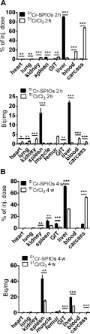
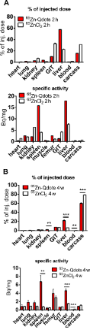
- , Germany Institute of Physical Chemistry and Electrochemistry, Technical University of Dresden, Bergstr. 66b, 01069 Dresden, Germany 10.3762/bjnano.6.11 Abstract 51Cr-labeled, superparamagnetic, iron oxide nanoparticles (51Cr-SPIOs) and 65Zn-labeled CdSe/CdS/ZnS-quantum dots (65Zn-Qdots) were prepared
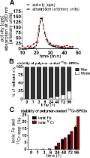
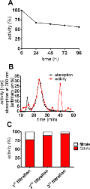
- isotopes and basic parameters regarding their biodistribution and degradation were studied. It was previously shown that oleic acid-stabilized, hydrophobic, monodisperse, iron oxide cores can easily incorporate water-free 59FeCl3 [24]. This results in the stable labeling of the core and allows a quasi “on
- the iron oxide core of SPIOs under similar experimental conditions was unsuccessful. However, a distinct incorporation of 65ZnCl2 occurred when CdSe/CdS/ZnS core/shell/shell quantum dots were synthesized (Figure 1). Both hydrophobic nanoparticle cores were encapsulated using the same polymer to render





The fate of a designed protein corona on nanoparticles in vitro and in vivo
Beilstein J. Nanotechnol. 2015, 6, 36–46, doi:10.3762/bjnano.6.5

- Chemistry, University Hamburg, Grindelallee 117, 20146 Hamburg, Germany Molecular and Cellular Oncology, ENT/University Medical Center Mainz, Langenbeckstr. 1, 55101 Mainz, Germany 10.3762/bjnano.6.5 Abstract A variety of monodisperse superparamagnetic iron oxide particles (SPIOs) was designed in which the
- used as model hydrophobic monodisperse iron oxide nanoparticles, obtained from a high-temperature synthesis, which were transferred into aqueous medium by encapsulation with the well-characterized amphiphilic polymer, poly(maleic anhydride-alt-1-octadecene) [24][25]. These particles are negatively
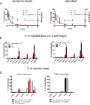
- . In vivo experiments For the in vivo experiments the polymer-coated SPIOs were labelled also in the iron oxide core with 59Fe [27]. Two batches of 59Fe-labelled SPIOs were incubated with 125I-mouse transferrin in the presence or without EDC. Excess free transferrin was removed by filtration using a


Intake of silica nanoparticles by giant lipid vesicles: influence of particle size and thermodynamic membrane state
Beilstein J. Nanotechnol. 2014, 5, 2468–2478, doi:10.3762/bjnano.5.256
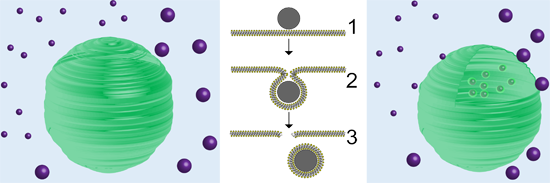
- . Scavenger receptors are known to mediate the uptake of a big diversity of negatively charged cargo. For instance, Lunov et al. [50] show that scavenger receptor A plays a crucial role in the uptake of 20 nm iron oxide particles by macrophages. They derive from their data, that up to 20 receptors are


Functionalized polystyrene nanoparticles as a platform for studying bio–nano interactions
Beilstein J. Nanotechnol. 2014, 5, 2403–2412, doi:10.3762/bjnano.5.250

- used superparamagnetic iron oxide nanoparticles. Keywords: amino groups; apoptosis; carboxyl groups; cell proliferation; leukemia cell lines; macrophages; mTOR; polystyrene nanoparticles; Review Applications of polystyrene Polystyrene, one of the most extensively used types of plastic [1], is an
- recognition and internalization of particulate matter including nanoparticles. As a consequence, macrophages accumulate with time a main portion of nanoparticles incorporated by the body [25]. Thus, the clinically approved superparamagnetic iron oxide (SPIO) MRI contrast agent ResovistTM is taken up after


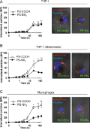


Nanoparticle interactions with live cells: Quantitative fluorescence microscopy of nanoparticle size effects
Beilstein J. Nanotechnol. 2014, 5, 2388–2397, doi:10.3762/bjnano.5.248
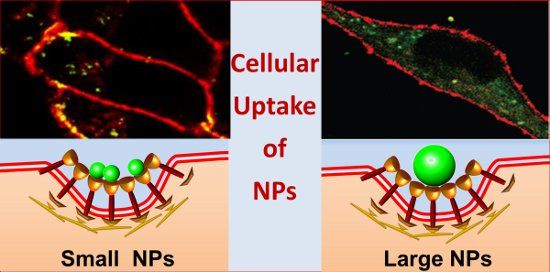
- . Based on studies of the uptake of carboxydextran-coated superparamagnetic iron oxide NPs of 20 and 60 nm by human macrophages, Lunov et al. [49] developed a mathematical model that predicts the wrapping times of different NPs. In addition, the relation between membrane elasticity, cytoskeletal forces


Interaction of dermatologically relevant nanoparticles with skin cells and skin
Beilstein J. Nanotechnol. 2014, 5, 2363–2373, doi:10.3762/bjnano.5.245

- toxicity were also shown for iron oxide nanoparticles [44]. In our group, we established protocols for the detection of free radicals in cells and in whole skin by electron paramagnetic resonance (EPR) spectroscopy. To detect nanoparticle-induced free radicals in cells, EPR on cell suspensions by using the


Inorganic Janus particles for biomedical applications
Beilstein J. Nanotechnol. 2014, 5, 2346–2362, doi:10.3762/bjnano.5.244
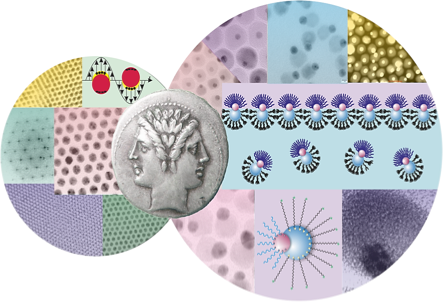
- the formation of the heterodimers, cube shape or cloverleaf shape particles were obtained (Figure 12); the iron oxide phase was always Fe3O4, independent of the domain morphology. The wet chemical approach was utilized as well to control the formation of either Co@Fe2O3 or CoFe2O4 [59]. As displayed
- magnetic nanoparticles in the late 1970’s for the first time [83]. Nowadays, superparamagnetic iron oxide nanoparticle-based MRI contrast agents are used in clinical applications [84]. Further, iron oxide based nanoparticles are in focus of research for their application as MRI contrast agents, including
- resonance. Additionally, the gold nanoparticles exhibit a strong X-ray absorption, which can be used to increase the contrast in CT diagnostics [90], as shown by the combination of gold nanoparticles with iron oxide to create multifunctional hetero-nanoparticles for simultaneous MRI and CT imaging [66][91






Nanoencapsulation of ultra-small superparamagnetic particles of iron oxide into human serum albumin nanoparticles
Beilstein J. Nanotechnol. 2014, 5, 2259–2266, doi:10.3762/bjnano.5.235

- particles of iron oxide (USPIO) are used as contrast agents in magnetic resonance imaging, their encapsulation into the protein matrix enables the synthesis of diagnostic and theranostic agents by surface modification and co-encapsulation of active pharmaceutical ingredients. The present investigation deals
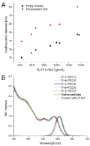
- = 6 nm). Additionally, the specific (mass dependant) magnetization of the particles was determined at a temperature of 300 K (Figure 2). Surface modification of magnetite nanoparticles Iron oxide nanoparticles were chemically modified by using a combination of citrate and tetramethylammonium hydroxide
- desolvation in absence and in presence of USPIO. The particle size and zeta potential observed by dynamic light scattering (DLS) measurements significantly increased with the amount of iron oxide particles present during the desolvation process (ANOVA). Particles with the highest content of iron oxide were


Biopolymer colloids for controlling and templating inorganic synthesis
Beilstein J. Nanotechnol. 2014, 5, 2129–2138, doi:10.3762/bjnano.5.222
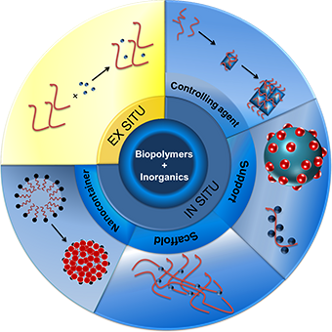
- ] demonstrated the synthesis of iron oxide nanoparticles in a semi-interpenetrating polymer network of alginate and poly(N-isopropylacrylamide). Gold and AuNi alloy gelatin nanocomposites were developed by Brayner et al. [84]. A gelatin network incorporating metallic nanoparticles was obtained after reduction of


PVP-coated, negatively charged silver nanoparticles: A multi-center study of their physicochemical characteristics, cell culture and in vivo experiments
Beilstein J. Nanotechnol. 2014, 5, 1944–1965, doi:10.3762/bjnano.5.205

- astrocytes against silver nanoparticle-induced toxicity is consistent with the reported tolerance of astrocytes against the potential toxicity of large amounts of accumulated iron oxide nanoparticles [107], whereas astrocytes are quite vulnerable to copper oxide nanoparticles [106]. Cultured astrocytes