


Search results
Search for "peptides" in Full Text gives 128 result(s) in Beilstein Journal of Nanotechnology.
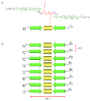
Self-organizing bioinspired oligothiophene–oligopeptide hybrids
Beilstein J. Nanotechnol. 2011, 2, 525–544, doi:10.3762/bjnano.2.57

- of amyloidogenic peptides to self-assemble and form extremely stable and tough nanostructures has been realized, and thus they are now actively probed as building blocks for various nanotechnology applications by covalently binding them to synthetic moieties [7][8][9][10], and engineering fusion
- peptides to other molecular compounds. Conjugates of synthetic and natural macromolecules are of great current interest because of their promising biomedical, microelectronic, and other advanced technological applications [7][8][9][10][14][15]. Covalent attachment of synthetic polymer blocks to
- of particular interest. The conjugation of oligothiophenes and amyloidogenic peptides may result in new compounds that supplement the potentially semiconducting, optical, and electroluminescent properties of oligo- and polythiophenes with the self-assembling, specific binding, and stimuli responsive




Detection of interaction between biomineralising proteins and calcium carbonate microcrystals
Beilstein J. Nanotechnol. 2011, 2, 222–227, doi:10.3762/bjnano.2.26

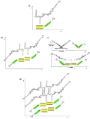
- this mechanism, it would be advantageous to characterise the different proteins purified from bio-composites by their ability to bind to different minerals selectively. Such a characterisation assay or protocol is even useful for the design of peptides mimicking the biomineralisation process. It would
- be possible to evaluate the synthesis results of different peptides in terms of their mineral or ceramic binding capability. Turning to proteins purified from nacre from a marine shell or of a shell forming animal, it would be helpful to determine which proteins are involved in nacre or shell


Magnetic nanoparticles for biomedical NMR-based diagnostics
Beilstein J. Nanotechnol. 2010, 1, 142–154, doi:10.3762/bjnano.1.17

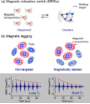
- spontaneous aggregation, which could mimic target-induced clustering; 3) have high magnetization and transverse relaxivity (r2) to induce pronounced T2 changes; and 4) have good surface chemistry to simplify conjugational procedures for attaching affinity molecules, such as antibodies and peptides. The MNPs


Other Beilstein-Institut Open Science Activities



