


Search results
Search for "superparamagnetic" in Full Text gives 129 result(s) in Beilstein Journal of Nanotechnology.
Flash laser annealing for controlling size and shape of magnetic alloy nanoparticles
Beilstein J. Nanotechnol. 2010, 1, 55–59, doi:10.3762/bjnano.1.7

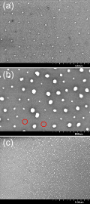
- heat sink. Of course, FCC disordered NPs are not usable for information storage applications because of their superparamagnetic state. However, we have previously reported [21] that between 600 °C and 700 °C, the temperature is high enough to transform FCC NPs into chemically ordered NPs and low enough


Uniform excitations in magnetic nanoparticles
Beilstein J. Nanotechnol. 2010, 1, 48–54, doi:10.3762/bjnano.1.6

- 10.3762/bjnano.1.6 Abstract We present a short review of the magnetic excitations in nanoparticles below the superparamagnetic blocking temperature. In this temperature regime, the magnetic dynamics in nanoparticles is dominated by uniform excitations, and this leads to a linear temperature dependence of
- inelastic neutron scattering. Keywords: collective magnetic excitations; Mössbauer spectroscopy; neutron scattering; spin waves; superparamagnetic relaxation; Review Introduction One of the most important differences between magnetic nanoparticles and the corresponding bulk materials is that the magnetic
- dynamics differ substantially. The magnetic anisotropy energy of a particle is proportional to the volume. For very small particles at finite temperatures it may therefore be comparable to the thermal energy. This results in superparamagnetic relaxation, i.e., thermally induced reversals of the


![[Graphic 3]](/bjnano/content/inline/2190-4286-1-6-i22.png?max-width=637&scale=1.18182) as a function of temperature for particles of magneti...
as a function of temperature for particles of magneti...


Preparation and characterization of supported magnetic nanoparticles prepared by reverse micelles
Beilstein J. Nanotechnol. 2010, 1, 24–47, doi:10.3762/bjnano.1.5

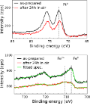
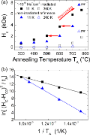
- = 5∙10–6 emu, MR = 26%, HC = 150 Oe, respectively. This value of the coercive field is typical for Co NPs [32]. An MR of 26%, which is only about half the value expected for Stoner-Wohlfarth NPs, suggests that already a significant amount of NPs is in the superparamagnetic state at T = 29 K. Comparing






Preparation, properties and applications of magnetic nanoparticles
Beilstein J. Nanotechnol. 2010, 1, 21–23, doi:10.3762/bjnano.1.4
- magnetic NPs, which are in the focus of the present Thematic Series entitled “Preparation, properties and applications of magnetic nanoparticles”. While the most notable feature of magnetic NPs, their superparamagnetic behavior, has already been reported by Neel as early as 1949 [6], this phenomenon
- road map of storage density opened the horizon towards the magic Tbits/inch2 goal, the idea of using densely packed magnetic NPs for that purpose immediately brought back and spread the awareness of their related superparamagnetic behavior. Trivially, data storage at ambient temperature over a time
Other Beilstein-Institut Open Science Activities



