


Search results
Search for "supramolecular" in Full Text gives 135 result(s) in Beilstein Journal of Nanotechnology.
Dimer/tetramer motifs determine amphiphilic hydrazine fibril structures on graphite
Beilstein J. Nanotechnol. 2012, 3, 658–666, doi:10.3762/bjnano.3.75
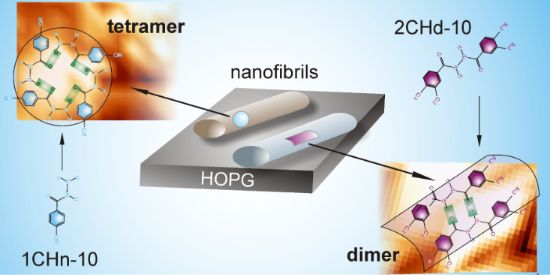
- mobility and the mostly amorphous local packing. Therefore, it is essential to synthesize optimized materials, explore supramolecular routes towards new functional structures, and understand processes of structure formation at interfaces [8][9]. The knowledge about the internal structure of the columns
- are one-dimensional structures with only a few nanometres in diameter. The control of supramolecular self-assembly to achieve functional nanostructures depends on careful design at the molecular level, and elucidation of their internal structure is important in aiding the design and to increase the


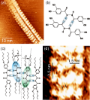


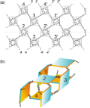
Parallel- and serial-contact electrochemical metallization of monolayer nanopatterns: A versatile synthetic tool en route to bottom-up assembly of electric nanocircuits
Beilstein J. Nanotechnol. 2012, 3, 134–143, doi:10.3762/bjnano.3.14

- Information Supporting Information File 10: Serial CET trial experiments and comparison of imaging results obtained under different SFM imaging conditions. Acknowledgements This research was supported by the Israel Science Foundation (grant No. 643/09), the G. M. J. Schmidt Minerva Center of Supramolecular


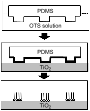
Self-assembled monolayers and titanium dioxide: From surface patterning to potential applications
Beilstein J. Nanotechnol. 2011, 2, 845–861, doi:10.3762/bjnano.2.94

- function, to charge conduction), and, no less important, the ability to form tailored three-dimensional supramolecular arrays by attaching a specific molecule or a particle to an external functional group. Being adsorbed on the surface of titanium dioxide or in its vicinity, organic self-assembled
- many ways, from the study of fundamental issues in TiO2 photocatalysis to the growth of supramolecular structures; from serving as a tool for patterning to suggesting means to obtain the selective photocatalytic degradation of highly toxic contaminants. This potential for synergism between self



Mechanical characterization of carbon nanomembranes from self-assembled monolayers
Beilstein J. Nanotechnol. 2011, 2, 826–833, doi:10.3762/bjnano.2.92

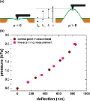
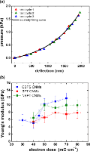
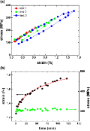
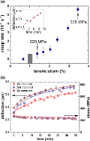
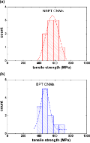
- Xianghui Zhang Andre Beyer Armin Golzhauser Department of Physics, Physics of Supramolecular Systems and Surfaces, Bielefeld University, 33615 Bielefeld, Germany 10.3762/bjnano.2.92 Abstract This paper reports on the mechanical characterization of carbon nanomembranes (CNMs) with a thickness of 1

STM visualisation of counterions and the effect of charges on self-assembled monolayers of macrocycles
Beilstein J. Nanotechnol. 2011, 2, 674–680, doi:10.3762/bjnano.2.72

- in supramolecular interactions and lead eventually to the formation of specific supramolecular complexes [10]. However, while counterions constitute an elegant way to modify electronic properties of molecules at the liquid–solid interface, their role in 2D self-assembly has been given little


Self-organizing bioinspired oligothiophene–oligopeptide hybrids
Beilstein J. Nanotechnol. 2011, 2, 525–544, doi:10.3762/bjnano.2.57

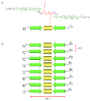
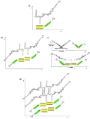
- adopted by various polymer bioconjugates are shown in Figure 1. Moreover, the interplay between different interactions may also suggest a dependence of the supramolecular organization on the external conditions, such as temperature, solvent quality, pH value, etc. [17]. While the chemical structure of the
- , which may lead, for instance, to the twist of the fibrils induced by an increase in backbone dynamics [30]. Computer simulations provide an important opportunity to shed light on the possible supramolecular organization patterns, their stability and the governing interplay of intermolecular interactions
- offers a means to construct new ordered supramolecular nanostructures and soft materials through self-organization, and such structures may exhibit a rich polymorphism over nanometer length-scales. The design of such hybrid molecules is a unique strategy, which aims to create smart nanomaterials that




Inorganic–organic hybrid materials through post-synthesis modification: Impact of the treatment with azides on the mesopore structure
Beilstein J. Nanotechnol. 2011, 2, 486–498, doi:10.3762/bjnano.2.52

- by narrow mesopore size distributions, high specific surface areas and large pore volumes, is the application of cooperative self-assembly processes between supramolecular aggregates of organic molecules, oligomers or polymers and inorganic species such as alkoxysilanes for silica-based materials [4
- manipulation of the dimensions and the state of aggregation of the supramolecular aggregates will directly influence the structural properties of the resulting inorganic porous material, and research efforts are devoted to the control of the structural properties through the synthesis conditions. For ordered


Septipyridines as conformationally controlled substitutes for inaccessible bis(terpyridine)-derived oligopyridines in two-dimensional self-assembly
Beilstein J. Nanotechnol. 2011, 2, 405–415, doi:10.3762/bjnano.2.46

- ], bithiophene–fluorenone conjugated oligomers [20], a 2,6-di(acetylamino)pyridine substituted conjugated module [21], and a molecular hexapod having a benzene core and six oligo(p-phenylene vinylene) legs [22]. The conformers can have an impact on the expression or suppression of chirality of the supramolecular


Intermolecular vs molecule–substrate interactions: A combined STM and theoretical study of supramolecular phases on graphene/Ru(0001)
Beilstein J. Nanotechnol. 2011, 2, 365–373, doi:10.3762/bjnano.2.42

- interaction; large organic molecules; substrate–adsorbate interaction; supramolecular structure; Introduction It is well known that the formation of highly ordered 2D supramolecular networks on smooth surfaces, such as metal substrates or highly oriented pyrolytic graphite (HOPG), is mainly governed by the
- variations in that interaction, play a minor role. These interactions mainly determine the orientation of the resulting supramolecular structure with respect to the underlying substrate lattice [3][6][10][11][12][13][14]. This is mainly due to the fact that lateral variations in the interaction between the
- agreement with the experimental findings. These results illustrate the detail of microscopic understanding that can be extracted from combined STM experiments and state-of-the-art calculations. They also support the validity of structural concepts for the self assembly of supramolecular networks for cases


Organic–inorganic nanosystems
Beilstein J. Nanotechnol. 2011, 2, 363–364, doi:10.3762/bjnano.2.41
- on top of a substrate. This specific case is immediately generalized to the idea of depositing molecular, macromolecular or supramolecular organic species on top of inorganic platforms. By exploiting molecular self-organization, one finally arrives at a functional system with novel properties. Much



