

Search results
Search for "surfactants" in Full Text gives 190 result(s) in Beilstein Journal of Nanotechnology.
Intercalation and structural aspects of macroRAFT agents into MgAl layered double hydroxides
Beilstein J. Nanotechnol. 2016, 7, 2000–2012, doi:10.3762/bjnano.7.191

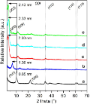
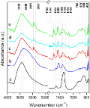
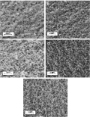
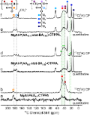
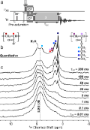
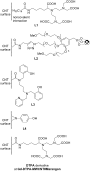
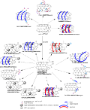
- proximity to the initial Al sites (and their connected OH) and the time during which the spin-diffusion processes. Similar approaches have been used to characterize, e.g., surfactants interacting with silica surfaces [47][48]. Figure 8c shows the results of a series of such an experiment conducted using



A dioxaborine cyanine dye as a photoluminescence probe for sensing carbon nanotubes
Beilstein J. Nanotechnol. 2016, 7, 1991–1999, doi:10.3762/bjnano.7.190
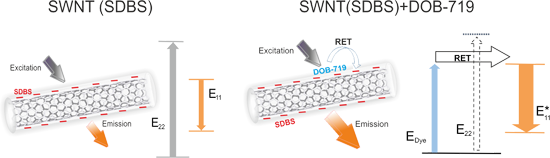
- sidewall with π-conjugated organic compounds [9][10][11][12]. Considering sensors, particular attention has to be paid to the PL enhancement in aqueous media, like the complexation and resonant energy transfer (RET) from cyanine dyes to the SWNTs covered by anionic surfactants in water [12]. However, a
- ) water in the presence of 6.5 mg sodium dodecylbenzene sulfonate (SDBS). We selected SDBS among other ionic surfactants because of its high efficiency in dispersing SWNTs [27][28]. The above dispersions were exposed to ultrasonication (NanoRuptor, Diagenode) for 1 h at 21 kHz and 250 W. Then, the


Facile fabrication of luminescent organic dots by thermolysis of citric acid in urea melt, and their use for cell staining and polyelectrolyte microcapsule labelling
Beilstein J. Nanotechnol. 2016, 7, 1905–1917, doi:10.3762/bjnano.7.182

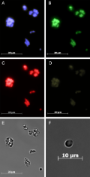
- polydispersity index, (in the 100 μg/mL colloidal solution of O-dots, the hydrodynamic diameter was about 300 ± 200 nm), and negative zeta-potential (in the range of pH 5.0…9.0, ζ = −31…−35 mV, see Supporting Information File 1, Figure S16). Such behaviour resembles the properties of surfactants that are prone



Polystyrene-block-poly(ethylene oxide) copolymers as templates for stacked, spherical large-mesopore silica coatings: dependence of silica pore size on the PS/PEO ratio
Beilstein J. Nanotechnol. 2016, 7, 1454–1460, doi:10.3762/bjnano.7.137
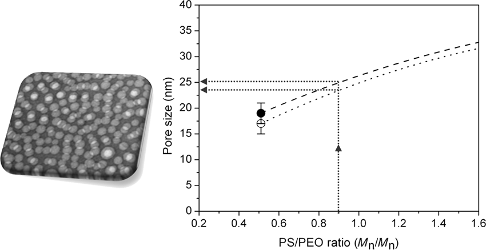
- directly and clearly correlated to the adopted porogen, but sometimes the template behavior and its effect on pore generation remain unclear. Concerning soft templating, this procedure is related to the use of amphiphilic, low molecular weight surfactants or supramolecular cooperative macromolecules, which


Fabrication and characterization of branched carbon nanostructures
Beilstein J. Nanotechnol. 2016, 7, 1260–1266, doi:10.3762/bjnano.7.116

- MWCNTs. As no surfactants or expensive polymers are needed for this process, it can be described as inexpensive and easy and it results in clean b-MWCNTs (Figure 3). The yield is estimated (using the methodology by Dai et al. [31]) to be about 60% branched MWCNTs. The Y-branched MWCNTs fabricated here


Reasons and remedies for the agglomeration of multilayered graphene and carbon nanotubes in polymers
Beilstein J. Nanotechnol. 2016, 7, 1174–1196, doi:10.3762/bjnano.7.109
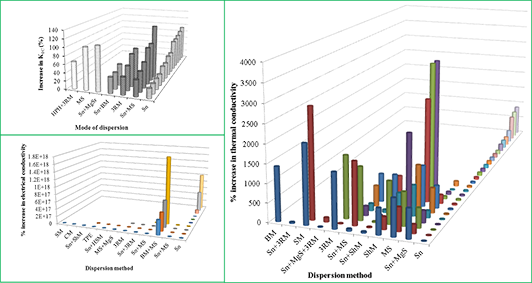
- the theoretical value. Hence, the catalytic CVD process is nearly ideal [42]. Remedies for agglomeration The dispersion state of nano-fillers can be tailored in two ways. Firstly, in the uncured state, the dispersion can be improved by using surfactants, mechanical mixing, or surface modification
- can make the SWNTs soluble in common organic solvents [36]. Functionalization with diazonium compounds can make SWNTs water-soluble [36]. The differently functionalized CNTs show varying dispersibility in different surfactants [2][54][57]. However, it has been shown that functionalization does not
- wrapping the filler with polymers. The wrapping process involves π–π interactions and van der Waals interactions [2][40]. Surfactants have also been used to functionalize MLG and CNTs. Surfactants are physically adsorbed on the surface of CNTs. It lowers the surface tension of MLG and CNTs diminishing the




Multiwalled carbon nanotube hybrids as MRI contrast agents
Beilstein J. Nanotechnol. 2016, 7, 1086–1103, doi:10.3762/bjnano.7.102
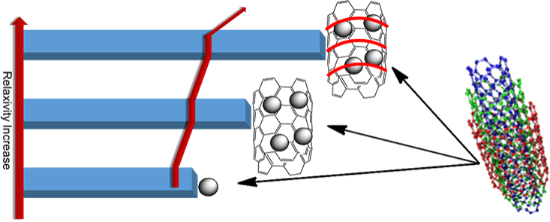
- effect” leads to higher r2 [32][37]. The net effect of this last transformation leads to an increase of the r2/r1 ratio, which is a desired effect for a T2 CA MRI candidate. Further coating with polymeric surfactants may decrease r2 (PM-b-PEG/SPIO@oMWCNT#Liu). However, it has other serious advantages
- highest r2 results (Table 1) are those registered in the poloxamers (Pluronic®), oMWCNT#Ding and SPIO/oMWCNT#Wang, or in agarose gel (MSC/Pol/MWCNT#Vittorio). The relaxivity here is higher than that for Endorem®, which is a routinely used SPIO T2 MRI CA. The non-ionic surfactants gave doubled relaxivity
- in studies on pristine SWCNTs as compared to ionic surfactants such as SDBS [19]. This effect resulted from better access of the water molecules to the nanotube surface, especially to the end of the CNT, where the residual iron nanoparticles are mainly located. The helically wrapping non-ionic



Assembling semiconducting molecules by covalent attachment to a lamellar crystalline polymer substrate
Beilstein J. Nanotechnol. 2016, 7, 784–798, doi:10.3762/bjnano.7.70

- stabilized colloids, self-assembly at the air–water interface has been demonstrated to be an efficient route to generate close packed monolayers with virtually crystalline order up to sizes of square-centimeters [7]. While repulsive forces introduced by surfactants are often used to support the assembly
- process [7][11], we refrained from adding surfactants as we wanted to avoid to have surfactant molecules included in the monolayers transferred onto a solid substrate. Accordingly, we spread CPE45 nanocrystals from a 1:1 methanol–water dispersion onto a water surface at pH 11. After Langmuir–Schäfer


Surface coating affects behavior of metallic nanoparticles in a biological environment
Beilstein J. Nanotechnol. 2016, 7, 246–262, doi:10.3762/bjnano.7.23
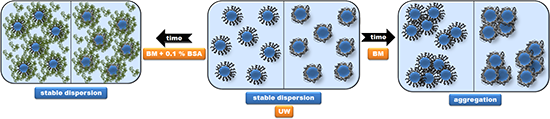
- biological media, may be achieved by electrostatic or steric repulsions [30][31][32]. Various types of surface coatings have been shown to affect NP properties, particularly to improve their biocompatibility and stability against agglomeration [30][33][34][35]. Proteins or biologically-compatible surfactants
- coatings, (b) to employ coatings of different chemical functionality, i.e., polymers, surfactants, small ionic molecules, (c) to include coatings of different hydrophilic–hydrophobic balance in molecular structure. The selected coating agents enabled us to investigate the influence of electrostatic and/or
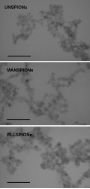
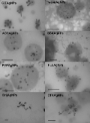
- 1 and Figures 4–6. One would have expected that the stabilization would have been more effective using ionic coating agents when compared to non-ionic surfactants and polymers, but the explanation for the agglomeration behavior of the investigated AgNPs and SPIONs is not as straightforward. For




Characterisation of thin films of graphene–surfactant composites produced through a novel semi-automated method
Beilstein J. Nanotechnol. 2016, 7, 209–219, doi:10.3762/bjnano.7.19

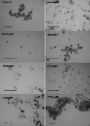
- Lane, Chichester, West Sussex, PO19 6PE, UK 10.3762/bjnano.7.19 Abstract In this paper we detail a novel semi-automated method for the production of graphene by sonochemical exfoliation of graphite in the presence of ionic surfactants, e.g., sodium dodecyl sulfate (SDS) and cetyltrimethylammonium
- bromide (CTAB). The formation of individual graphene flakes was confirmed by Raman spectroscopy, while the interaction of graphene with surfactants was proven by NMR spectroscopy. The resulting graphene–surfactant composite material formed a stable suspension in water and some organic solvents, such as
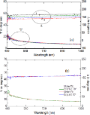
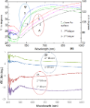
- ionic surfactants is described in detail. The composite graphene-surfactant materials produced were characterised with NMR and Raman spectroscopy to confirm the formation of graphene. Thin films of graphene composites were deposited using the techniques of Langmuir-Blodgett (LB) and electrostatic layer



Synthesis and applications of carbon nanomaterials for energy generation and storage
Beilstein J. Nanotechnol. 2016, 7, 149–196, doi:10.3762/bjnano.7.17
- there is a charge transfer between the solvent and the graphite layers allowing the exfoliation to take place. Therefore, the graphene sheets could be positively or negatively charged with varying donor and acceptor numbers depending on the solvents. Surfactants and polymers can also contribute to















Green and energy-efficient methods for the production of metallic nanoparticles
Beilstein J. Nanotechnol. 2015, 6, 2354–2376, doi:10.3762/bjnano.6.243
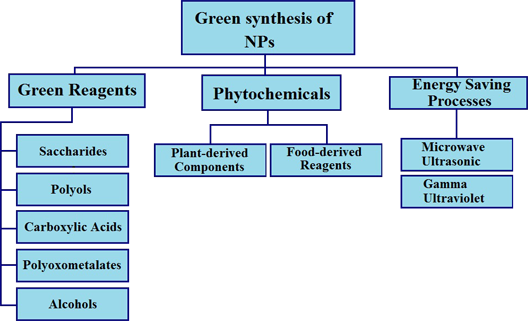
- methods involve the use of dispersants, surfactants or chelating agents to prevent the agglomeration of particles. Most of these reagents can be considered environmental pollutants, if they are going to be used in large scale production [16]. As a consequence, there have been growing concerns about the
- surfactants, i.e., cationic (cetyltrimethylammonium chloride, CTAC), anionic (sodium dodecylsuphate, SDS) and non-ionic (Tween 80) at 20 °C on fundamental characteristics of Ag NPs. They found that in comparison to unmodified NPs, non-ionic surfactants can improve the polydispersity from 8.5 to 2.5%, and
- ionic surfactants can reduce the zeta potential of Ag NPs from −20 to −50 mV, which is favorable for stabilization. They concluded that non-ionic surfactants can form a layer with inhibition function to prevent the formation of other nuclei and consequently lead to monodisperse NPs [100]. Lu et al


Surfactant-controlled composition and crystal structure of manganese(II) sulfide nanocrystals prepared by solvothermal synthesis
Beilstein J. Nanotechnol. 2015, 6, 2319–2329, doi:10.3762/bjnano.6.238

- the surfactants adsorbed on the NCs. Keywords: manganese oxide; manganese sulfide; nanocrystal; polymorphism control; solvothermal synthesis; sulfur; surfactant; Introduction Manganese(II) sulfide (MnS) is a wide bandgap (Eg ≈ 3 eV) [1], p-type, antiferromagnetic semiconductor that crystallizes in
- successful when carboxylic acids were not present in the reaction mixture. In a previous investigation of the solvothermal synthesis of MnS NCs from Mn(II) oleates [23], it was shown that in the absence of free surfactants, an excess of sulfur (S/Mn ≥ 2) is needed to avoid the formation of MnO along with (or
- in place of) MnS NCs. We further pursued this investigation aiming at finding the sulfur concentration required to produce MnS NCs when different Mn precursors are used and free surfactants are added. In the majority of literature reports that the synthesis of MnS NCs leads to structurally pure


Silica-coated upconversion lanthanide nanoparticles: The effect of crystal design on morphology, structure and optical properties
Beilstein J. Nanotechnol. 2015, 6, 2290–2299, doi:10.3762/bjnano.6.235

- particles. The most widely used of these, wet-chemical methods, involve thermal decomposition of rare earth organic acid precursors, typically metal trifluoroacetates, acetylacetonates, oleates or acetates, in non-aqueous media in the presence of surfactants and at high temperatures [19]. In addition to
- their effect on reaction temperature and time, the advantages of trifluoroacetates include the rapid formation of reactive fluoride compounds and the ability to control morphology, shape, crystal phase and size depending on the ratios of the starting reagents (i.e., organic precursors, surfactants and
- solvents) [20]. The surfactants, e.g., oleylamine (OM) and oleic acid, typically consist of polar capping groups and long hydrocarbon chains. Other synthetic methods include the hydro(solvo)thermal technique, which involves mixing lanthanide and fluoride salts (e.g., NH4F) in a high-boiling point solvent






Fabrication of hybrid nanocomposite scaffolds by incorporating ligand-free hydroxyapatite nanoparticles into biodegradable polymer scaffolds and release studies
Beilstein J. Nanotechnol. 2015, 6, 2217–2223, doi:10.3762/bjnano.6.227
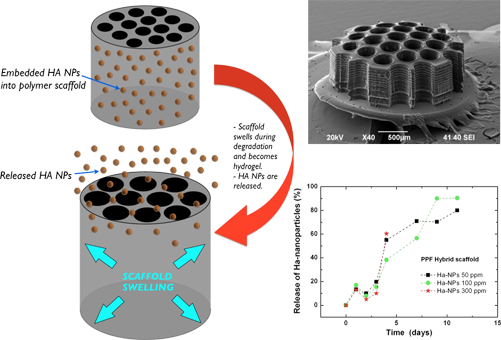
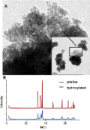
- ], combustion preparation [11] and various wet chemistry techniques [12][13]. However, these routes have drawbacks regarding the synthesis attributed to the use of hazardous surfactants that are not suitable for biomedical applications [14]. Pulsed laser ablation of solid targets in liquids (PLAL) for the


Selective porous gates made from colloidal silica nanoparticles
Beilstein J. Nanotechnol. 2015, 6, 2105–2112, doi:10.3762/bjnano.6.215

- [25][26]. Conventional procedures for the synthesis of mesoporous silica involve the use of amphiphilic templates [27][28][29][30]. Either low molecular weight surfactants or polymers have been used as structure-directing agents in the preparation of organic–inorganic hybrid solutions and they have


Temperature-dependent breakdown of hydrogen peroxide-treated ZnO and TiO2 nanoparticle agglomerates
Beilstein J. Nanotechnol. 2015, 6, 1897–1903, doi:10.3762/bjnano.6.193

- larger, strongly bonded micrometer size aggregates. For their effective use, the NPs should remain stable and agglomeration should be avoided during any application process. This agglomeration can be chemically and physically prevented to a certain degree [5][6]. The use of surfactants is one of the most
- common ways of increasing the NP dispersion in aqueous media. Polymers such as polystyrene, poly(methyl methacrylate) (PMMA), and poly(acrylic acid) are also widely used to obtain dispersed NPs in aqueous environments [7][8][9]. Although the use of surfactants can provide better dispersion, they




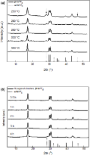
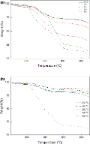
Thermal treatment of magnetite nanoparticles
Beilstein J. Nanotechnol. 2015, 6, 1385–1396, doi:10.3762/bjnano.6.143

- conditions, such as the synthesis time, temperature, concentration of the reactants and added surfactants, must be maintained. Furthermore, it has been observed that the size of the particles increases with extended synthesis time [8]. On the other hand, the particle size can be modified by using surfactants




Addition of Zn during the phosphine-based synthesis of indium phospide quantum dots: doping and surface passivation
Beilstein J. Nanotechnol. 2015, 6, 1237–1246, doi:10.3762/bjnano.6.127

- source of indium with various carbonic acids as surfactants in nonpolar solvents. This method leads to relatively narrow particle size distributions with mean diameters of about 1–7 nm, a high crystallinity of the nanoparticles and the temporal stability of the optical properties. It is well established




The convenient preparation of stable aryl-coated zerovalent iron nanoparticles
Beilstein J. Nanotechnol. 2015, 6, 1192–1198, doi:10.3762/bjnano.6.121
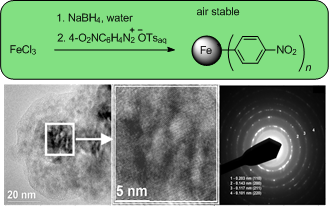
- utilization of different surfactants and stabilizers [27]. However, none of these approaches lead to covalent grafting. In our recent work, the principle of the surface interaction of ZVI NPs and arenediazonium tosylates (ADTs) was demonstrated [28]. However, the mechanism of the modification process and the


Conformal SiO2 coating of sub-100 nm diameter channels of polycarbonate etched ion-track channels by atomic layer deposition
Beilstein J. Nanotechnol. 2015, 6, 472–479, doi:10.3762/bjnano.6.48
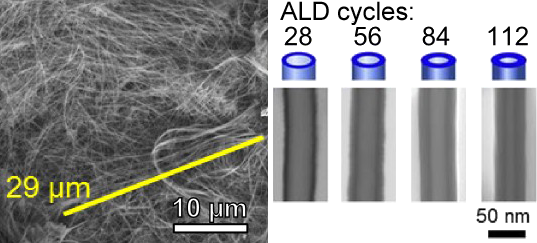
- narrow size distribution [4][5][6]. Typically, polymers such as polycarbonate (PC), polyethylene terephthalate, and polyimide are employed as templates. Hydrophilicity is sometimes improved by immersing the etched membrane in a surfactant solution such as polyvinylpyrrolidone. The addition of surfactants


Nanoparticle shapes by using Wulff constructions and first-principles calculations
Beilstein J. Nanotechnol. 2015, 6, 361–368, doi:10.3762/bjnano.6.35

- -principles calculations, is a powerful tool for the analysis and prediction of the shapes of nanoparticles and tailor the properties of shape-inducing species. Keywords: density functional theory (DFT); hydrogen storage; multi-scale simulations; nanoparticles; surface energies; surfactants; Wulff
- analysis and the prediction of findings in microscopy experiments. We then present three recent extensions to this methodology: (a) the atomistic Wulff construction that allows for the detailed analysis of nanoparticles at the atomic level; (b) the inclusion of surfactants that gives rise to nanoparticles
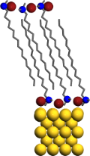
- with surfactants Metal-only nanoparticles or metal-adsorbate interactions have been the leading force that has helped the evolution of the presented methodology for the shape of nanocrystals. However, recent developments to design colloidal suspensions of nanoparticles with interesting physical and



Comparative evaluation of the impact on endothelial cells induced by different nanoparticle structures and functionalization
Beilstein J. Nanotechnol. 2015, 6, 300–312, doi:10.3762/bjnano.6.28

- elongated shape of gold nanoparticle rods and gold@metal oxide Janus particles leads to a stronger reduction in cell metabolic activity. 2) Endothelial cells react sensitively towards positively charged surfaces, e.g., caused by the surfactants NH2 and CyA. 3) Internalization of nanoparticles is driven by a




The effect of surface charge on nonspecific uptake and cytotoxicity of CdSe/ZnS core/shell quantum dots
Beilstein J. Nanotechnol. 2015, 6, 281–292, doi:10.3762/bjnano.6.26

- QDs was redissolved in 10 mL of hexane and sonicated for 5 minutes in order to purify the sample from the excess of surfactants. The clear supernatant was precipitated again with ethanol and centrifuged for another 5 minutes. Finally, the purified nanoparticles were redissolved in chloroform. Coating





Kelvin probe force microscopy in liquid using electrochemical force microscopy
Beilstein J. Nanotechnol. 2015, 6, 201–214, doi:10.3762/bjnano.6.19

- be effectively described by Equation 2. The extension of KPFM to operation in ionically-active liquids provides an opportunity to study, e.g., multi-layered charge structures in non-polar electrified interfaces and electrochemical potentials of thin layers and surfactants. In isopropanol or milli-Q


![[Graphic 6]](/bjnano/content/inline/2190-4286-6-19-i11.png?max-width=637&scale=1.18182) response collected 200 nm above a grounded Au electrode in (a, b, c) air, (d, e, f) decane an...
response collected 200 nm above a grounded Au electrode in (a, b, c) air, (d, e, f) decane an...


![[Graphic 22]](/bjnano/content/inline/2190-4286-6-19-i27.png?max-width=637&scale=1.18182) spectra [bias-on] collected 500 nm above HOPG in aqueous solutions of increasing salt concent...
spectra [bias-on] collected 500 nm above HOPG in aqueous solutions of increasing salt concent...

![[Graphic 25]](/bjnano/content/inline/2190-4286-6-19-i30.png?max-width=637&scale=1.18182) spectra [bias-on] collected 500 nm above (a) HOPG and (b) Au in milli-Q water (vertical color...
spectra [bias-on] collected 500 nm above (a) HOPG and (b) Au in milli-Q water (vertical color...

![[Graphic 27]](/bjnano/content/inline/2190-4286-6-19-i32.png?max-width=637&scale=1.18182) spectra [bias-on] recorded 500 nm above a HOPG/Au boundary in milli-Q water. T...
spectra [bias-on] recorded 500 nm above a HOPG/Au boundary in milli-Q water. T...