


Search results
Search for "thermal decomposition" in Full Text gives 129 result(s) in Beilstein Journal of Nanotechnology.
Extended X-ray absorption fine structure of bimetallic nanoparticles
Beilstein J. Nanotechnol. 2011, 2, 237–251, doi:10.3762/bjnano.2.28
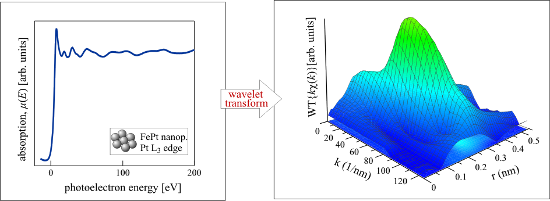
- nanoparticles follows the approach by S. Sun et al. [84] by the reduction of platinum diacetylacetonate, Pt(acac)2 and thermal decomposition of iron pentacarbonyl, Fe(CO)5, in hexadecane-1,2-diol at about 300 °C. The chemical reactions were initiated in the presence of the surfactants oleic acid and oleyl amine
- the dispersion. Subsequent annealing of the nanoparticles has been tried as a route to obtain nanoparticles in the L10 state. Due to the thermal decomposition of the ligand shell during the annealing process and the enhanced mobility of the nanoparticles at elevated temperatures, this procedure leads



Room temperature synthesis of indium tin oxide nanotubes with high precision wall thickness by electroless deposition
Beilstein J. Nanotechnol. 2011, 2, 119–126, doi:10.3762/bjnano.2.14

- substrate in aqueous solutions containing urea [19]. Crystalline zinc oxide films were prepared in alkaline aqueous solutions containing ethane-1,2-diamine as a chelating agent [20]. Well aligned ZnO microrods within a thin film were formed by the thermal decomposition of an amino complex based on Zn2+ and


Magnetic nanoparticles for biomedical NMR-based diagnostics
Beilstein J. Nanotechnol. 2010, 1, 142–154, doi:10.3762/bjnano.1.17

- ][21][22][23][24][25]. A variety of chemical methods, ranging from traditional wet chemistry to high-temperature thermal decomposition, have been employed to synthesize MNPs. Colloidal iron oxide nanoparticles, which are used as clinical magnetic resonance imaging (MRI) contrast agents, are generally
- , magnetization can vary significantly among nanoparticles of similar sizes. More recently, high quality MNPs have been prepared through thermal decomposition of organometallic precursors, in nonhydrolytic organic solutions containing surfactants [15][16][27][28][29]. Monomers are generated via high-temperature
- thermal decomposition of precursors. Above a supersaturation level, these monomers then aggregate to induce nucleation and nanoparticle growth. By tuning the growth conditions during this procedure (such as precursor choice, monomer concentration, growth temperature and time), it is possible to control


Magnetic coupling mechanisms in particle/thin film composite systems
Beilstein J. Nanotechnol. 2010, 1, 101–107, doi:10.3762/bjnano.1.12

- . Experimental Iron oxide NPs were prepared by thermal decomposition of metal-oleate complexes [40]. As-prepared, particles with mean diameter of 20 nm and 7% size distribution were coated with a ~2 nm thick layer of oleic acid and dissolved in toluene. The NP dispersion, with a concentration of approximately 50


Other Beilstein-Institut Open Science Activities



