Search results
Search for "toxicity" in Full Text gives 421 result(s) in Beilstein Journal of Nanotechnology. Showing first 200.
Metal-organic framework-based nanomaterials as opto-electrochemical sensors for the detection of antibiotics and hormones: A review
Beilstein J. Nanotechnol. 2023, 14, 631–673, doi:10.3762/bjnano.14.52
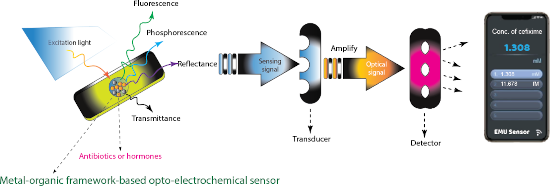
- developing luminescent sensors include their toxicity, ease of aggregation, photobleachability, and low capacity for adsorption of the target analyte. Numerous luminescent materials, including semiconductors, metal complexes, metal-based fluorescent nanoparticles, MOFs, and inorganic phosphors doped with


ZnO-decorated SiC@C hybrids with strong electromagnetic absorption
Beilstein J. Nanotechnol. 2023, 14, 565–573, doi:10.3762/bjnano.14.47
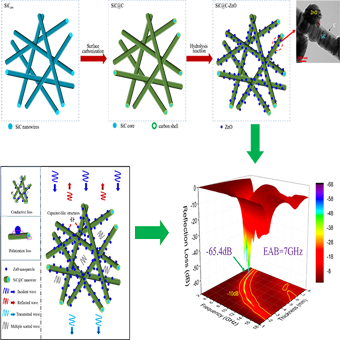
- materials due to their high content of surface functional groups. Among dielectric materials, zinc oxide possesses the outstanding characteristics of low cost, non-toxicity, excellent thermodynamic stability and photostability, and unique semiconducting properties. Hence, it is widely used in the fields of


Nanoarchitectonics to entrap living cells in silica-based systems: encapsulations with yolk–shell and sepiolite nanomaterials
Beilstein J. Nanotechnol. 2023, 14, 522–534, doi:10.3762/bjnano.14.43
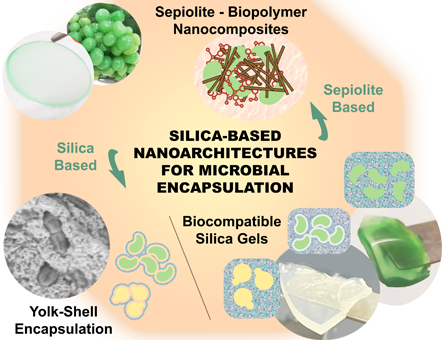
- it very attractive for various applications [34][36][37] including its controlled modification by assembling diverse components from biological origin [27][28][38][39][40]. According to the World Health Organization, this natural silicate is classified with “inadequate evidence” of toxicity and


Quercetin- and caffeic acid-functionalized chitosan-capped colloidal silver nanoparticles: one-pot synthesis, characterization, and anticancer and antibacterial activities
Beilstein J. Nanotechnol. 2023, 14, 362–376, doi:10.3762/bjnano.14.31

- proven to be effective against bacteria and viruses [6][35]. Toxicologists extensively studied silver nanoparticles. Despite studies suggesting a toxicity of silver nanoparticles, this issue is still unresolved [36]. However, silver nanoparticles have become more popular in recent years due to their
- Gram-negative bacteria and Gram-positive bacteria. More specifically, Ch/Q- and Ch/CA-Ag NPs exhibited a bit higher inhibitions against P. aeruginosa. Consequently, such combinations may provide several advantages in targeted drug delivery systems, such as minimal toxicity to normal cells and enhanced


The steep road to nonviral nanomedicines: Frequent challenges and culprits in designing nanoparticles for gene therapy
Beilstein J. Nanotechnol. 2023, 14, 351–361, doi:10.3762/bjnano.14.30
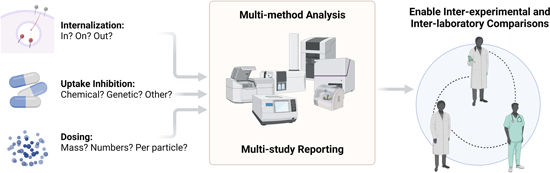
- . Transferrin [1] can be used as a maker for clathrin-mediated endocytosis (CME), bodipy-lactosylceramide (LacCer) can be used for caveolae-mediated endocytosis, and dextran with large molecular masses can be used for macropinocytosis [36]. Moreover, concentration should be optimized (Table 2) and toxicity

Polymer nanoparticles from low-energy nanoemulsions for biomedical applications
Beilstein J. Nanotechnol. 2023, 14, 339–350, doi:10.3762/bjnano.14.29
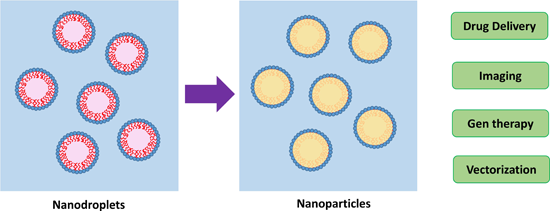
- the solvent can also be removed by selective diffusion [22]. The emulsion solvent evaporation method enables the use of biocompatible polymers, thermolabile compounds, and low-toxicity surfactants. The nanoparticle size can be tuned by formulation parameters and since the nanoparticles are directly
- (higher toxicity) as a result of higher monomer concentration. No hemolytic effect was observed. Summary and Outlook Tailored nanoemulsions with controlled size and colloidal stability can be produced by low-energy methods after careful selection of formulation parameters such as type and concentration of




Overview of mechanism and consequences of endothelial leakiness caused by metal and polymeric nanoparticles
Beilstein J. Nanotechnol. 2023, 14, 329–338, doi:10.3762/bjnano.14.28

- therapeutic targets and strategies to improve drug delivery through controlling and regulating NanoEL. Nevertheless, the NanoEL mechanism also carries some limitations that result from an incomplete understanding of NP metabolism and toxicity, and the possibility of their participation in the unintended
- understanding of NP metabolism, NP toxicity, or their possible participation in unintended bidirectional vascular permeability, which may contribute to the formation of cancer metastases. For this reason, NPs with different physicochemical properties, which can cross the endothelial barrier in a controlled
- nutrient molecules to NPs could change the toxicity of NPs (NP protein corona), and the physiological conditions, such as blood flow and physiological stretch, will also play a role [37][38][39]. NanoEL mechanism Adherens junctions between endothelial cells are maintained by a complex set of proteins


Bismuth-based nanostructured photocatalysts for the remediation of antibiotics and organic dyes
Beilstein J. Nanotechnol. 2023, 14, 291–321, doi:10.3762/bjnano.14.26
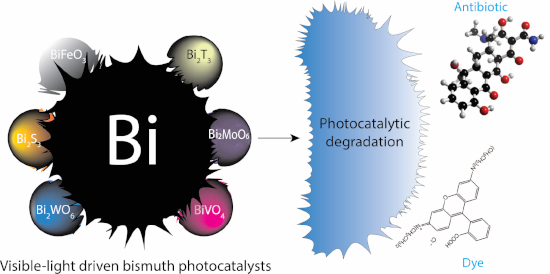
- photocatalytic activity [101][102][103][104]. Bi2WO6 has an orthorhombic structure, a high Curie temperature of about 900 °C, and a narrow bandgap of 2.6–2.8 eV [103]. Other desirable physical and chemical characteristics of Bi2WO6 include comparatively low toxicity, piezoelectricity, non-linear dielectric


Recent progress in cancer cell membrane-based nanoparticles for biomedical applications
Beilstein J. Nanotechnol. 2023, 14, 262–279, doi:10.3762/bjnano.14.24

- Application of cancer cell membrane-encapsulated NPs Regarding current therapies, patients respond differently to the same treatment because of different degrees of disease progression and individual differences and inevitably suffer from a certain degree of toxicity and side effects. Therefore, it is
- therapeutic benefits and lower normal tissue toxicity. Different types of applications related to cancer cell membranes are summarized in Table 2 and detailed in the following sections. 4.1 Traditional oncology treatment Although various treatments for cancer have emerged, surgical resection, radiotherapy
- by enhancing proton relaxation in tissues [120]. Among them, superparamagnetic iron oxides (SPIONs) are widely used with numerous advantages, such as small size, colloidal stability, low toxicity, magnetic heating properties, and enhanced molecular MRI [121]. However, SPIONs cannot be effectively


Nanotechnology – a robust tool for fighting the challenges of drug resistance in non-small cell lung cancer
Beilstein J. Nanotechnol. 2023, 14, 240–261, doi:10.3762/bjnano.14.23
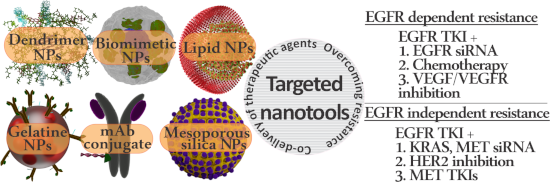
- underlined the importance of an improved classification of lung cancer into specific subtypes that qualify for specialized therapeutic strategies. Tyrosine kinase inhibitors (TKIs) have demonstrated enhanced efficacy and reduced toxicity in EGFR-sensitive patients compared to classical chemotherapy
- environments either for higher uptake or reduced toxicity. In brief, the ABC triblock terpolymers comprised identical A and C segments. Yet, different functionalities in the middle PAGE block (B) are directly correlated to the combination and the number of functionalities and, therefore, easily adjusted to
- Pang and co-workers. Clinical studies point to the serious toxicity of conventional application, which might be mitigated with nanotools for co-delivery of therapy for the dual inhibition of VEGF and EGFR pathways. The designed nanocarrier was composed of a polycaprolactone core with bevacizumab and


Cyclodextrins as eminent constituents in nanoarchitectonics for drug delivery systems
Beilstein J. Nanotechnol. 2023, 14, 218–232, doi:10.3762/bjnano.14.21
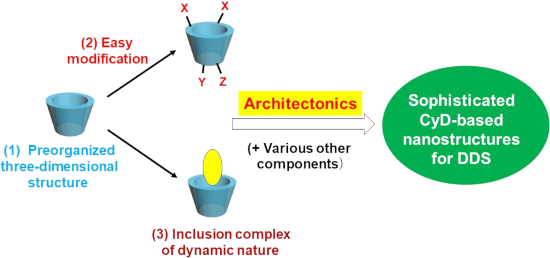
- , respectively. The inside of the cavity is apolar in nature, and thus apolar guests of suitable size are preferentially accommodated to form inclusion complexes. The CyD/guest ratio in inclusion complexes is usually 1:1. Very importantly for practical applications in DDSs, CyDs show no toxicity to the human
- ) light is more advantageous than UV and visible light, since it penetrates more efficiently into tissues, and the toxicity is marginal. However, most photoisomerizable dyes (azobenzenes and arylazopyrazoles) require UV or visible light and are incompatible with NIR. The most straightforward strategy is




Batch preparation of nanofibers containing nanoparticles by an electrospinning device with multiple air inlets
Beilstein J. Nanotechnol. 2023, 14, 141–150, doi:10.3762/bjnano.14.15

- easily sink down, resulting in an uneven distribution of nanoparticles in the obtained fibers [17]. Due to their stable physical and chemical properties, good biocompatibility, excellent photoelectric properties, non-toxicity, strong antibacterial activity and low price, ZnO nanoparticles can be used in


Two-step single-reactor synthesis of oleic acid- or undecylenic acid-stabilized magnetic nanoparticles by thermal decomposition
Beilstein J. Nanotechnol. 2023, 14, 11–22, doi:10.3762/bjnano.14.2

- chemical and physical properties. One such area is biomedicine [1]. Especially iron oxide-based nanoparticles, due to their biodegradation, low toxicity, and enhanced oxidative resistance compared to metallic nanoparticles, show high potential in biomedical applications [2][3][4]. Up to now, iron oxide


Photoelectrochemical water oxidation over TiO2 nanotubes modified with MoS2 and g-C3N4
Beilstein J. Nanotechnol. 2022, 13, 1541–1550, doi:10.3762/bjnano.13.127

- semiconductors, TiO2 nanotube arrays (TNAs) of 2–100 nm in diameter and 1–2 μm in length, are often used for efficient PEC applications exploiting advantages such as chemical stability, less toxicity and suitable cost [18][19][20][21]. However, there are two disadvantages affecting directly their photocatalytic


Facile preparation of Au- and BODIPY-grafted lipid nanoparticles for synergized photothermal therapy
Beilstein J. Nanotechnol. 2022, 13, 1432–1444, doi:10.3762/bjnano.13.118

- of strong NIR absorption [3]. However, particles with larger size are likely to have long resident times and slow elimination in tissues, which may lead to long-term toxicity. Commercially available AuNPs with particle sizes of 10–30 nm can be synthesized by the classical Turkevich method [4]. Rats
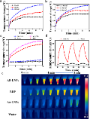
- characteristics could reduce the systemic toxicity of AB-LNPs on normal tissues. To check whether free BDP is stable during the release experiment, the content of BDP in PBS (pH 7.4 or 5.4) was measured using UV–vis spectroscopy. The content of free BDP showed little change over a period of 36 h (Figure 3d
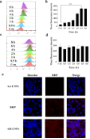
- , similar to BDP, AB-LNPs demonstrated slight dose-dependent toxicity to 4T1 cells. No obvious toxicity was found in AB-LNPs when the concentrations of BDP and Au were 10 μM and below. Under laser irradiation, the viability of cells treated with AB-LNPs decreased significantly in comparison to BDP or Au




Orally administered docetaxel-loaded chitosan-decorated cationic PLGA nanoparticles for intestinal tumors: formulation, comprehensive in vitro characterization, and release kinetics
Beilstein J. Nanotechnol. 2022, 13, 1393–1407, doi:10.3762/bjnano.13.115
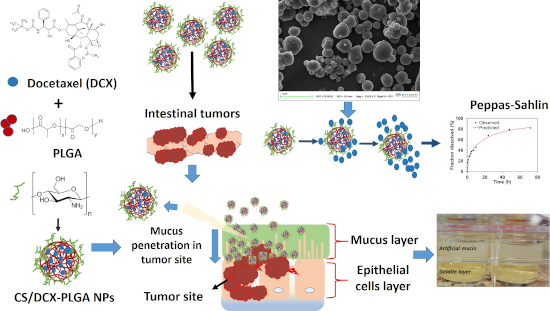
- . Pharmaceutically, clinical failure due to a drug’s wide biodistribution and non-selective toxicity is one of the major challenges of chemotherapy. In addition, parenteral drug administration in chronic diseases that require long-term drug use, such as intestinal tumors, is challenging in terms of patient
- considering the doubling time and the in vitro release profiles of the NPs [10]. PLGA NP formulations loaded with DCX have been found to show considerable toxicity on HT-29 colon cancer cells. As illustrated in Figure 6, the HT-29 cell line treated with DCX-PLGA NPs and CS/DCX-PLGA NP formulations show 71.1


Near-infrared photoactive Ag-Zn-Ga-S-Se quantum dots for high-performance quantum dot-sensitized solar cells
Beilstein J. Nanotechnol. 2022, 13, 1337–1344, doi:10.3762/bjnano.13.110
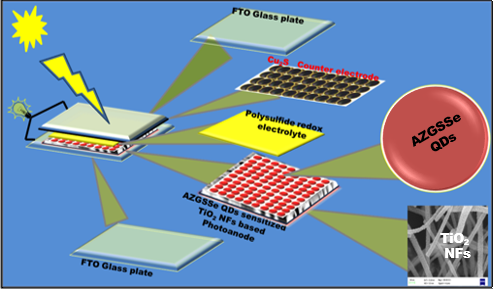
- lead and cadmium have been used as sensitizers in QDSCs. However, due to the high toxicity and low efficiency, research moved to group I-III-VI QDs such as Cu-In-Se, Cu-In-S, Ag-In-Se, Ag-In-S, Ag-Ga-S, and Ag-Ga-S. Even though their light-harvesting capability is still limited by a high number of


Studies of probe tip materials by atomic force microscopy: a review
Beilstein J. Nanotechnol. 2022, 13, 1256–1267, doi:10.3762/bjnano.13.104
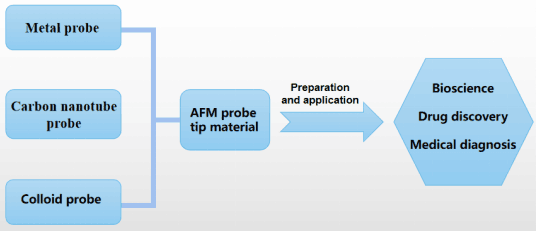
- ]. In particular, metal nanoclusters exhibit excellent photostability, large Stokes shifts, and low toxicity compared to quantum dots and organic dyes. Researchers increasingly use them in analytical detection fields such as metal ions, small biological molecules, drug delivery, and bioimaging [22][23
Application of nanoarchitectonics in moist-electric generation
Beilstein J. Nanotechnol. 2022, 13, 1185–1200, doi:10.3762/bjnano.13.99
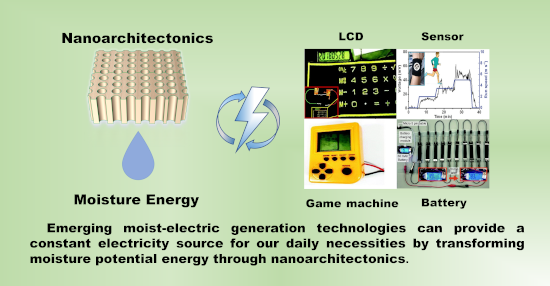
- ). There are also PVA@DA/PVDF NF composites that can efficiently generate instantaneous voltages up to 0.5 V from ambient moisture (Figure 10j). However, because of different issues regarding daily practical applications, such as sweat corrosion, biological toxicity on human skin, and the need for suitable


Microneedle-based ocular drug delivery systems – recent advances and challenges
Beilstein J. Nanotechnol. 2022, 13, 1167–1184, doi:10.3762/bjnano.13.98

- composition of the formulation. The most common side effects in this case include local toxicity, tissue damage, eyeball perforation, optic nerve injury, occlusion of central retinal artery or vein, direct retinal toxicity during accidental puncture of the muscles, just to mention the most important [89][90
- through adjusting the polymer crosslinking ratio [147]. Moreover, the polymers usually employed in this type of formulation are biocompatible, which decreases the toxicity risk [144]. 2.2 Microneedle manufacturing methods The selection of a manufacturing technique should take into account the intended use


Rapid fabrication of MgO@g-C3N4 heterojunctions for photocatalytic nitric oxide removal
Beilstein J. Nanotechnol. 2022, 13, 1141–1154, doi:10.3762/bjnano.13.96
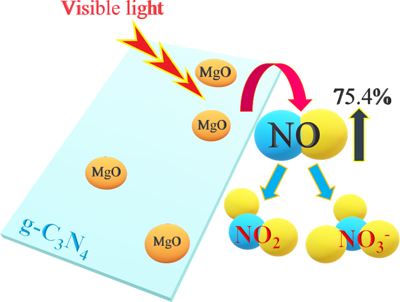
- oxide with wide bandgap (3.5–5 eV), high availability, non-toxicity, low cost, and native structural defects [18][19]. The large bandgap energy is the limitation of MgO, reducing the photocatalytic performance and applicability of MgO [20]. Various efforts have been made to enhance the absorption in the





Green synthesis of zinc oxide nanoparticles toward highly efficient photocatalysis and antibacterial application
Beilstein J. Nanotechnol. 2022, 13, 1108–1119, doi:10.3762/bjnano.13.94

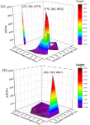
- , proteins, DNA, and amino acids [39][40][41]. The O2 causes biomembrane oxidation reactions, damaging tissues [42]. Furthermore, it is reasonable to explain that the additional toxicity that causes bacterial death is due to the fact that zinc solubilization releases Zn2+ ions which can infiltrate into




Recent advances in green carbon dots (2015–2022): synthesis, metal ion sensing, and biological applications
Beilstein J. Nanotechnol. 2022, 13, 1068–1107, doi:10.3762/bjnano.13.93
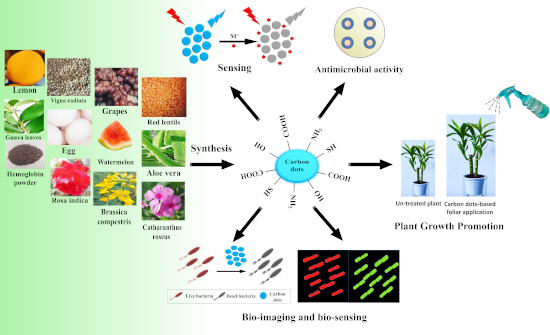
- as a dual sensor for tetracycline and ʟ-lysine. The fluorescence of CDs is quenched by adding tetracycline and regained by introducing ʟ-lysine [18]. Palmyra leaves were utilized by Athinarayanan et al. for the production of CDs. The cellular toxicity of the CDs was analyzed, and the CDs were found
- eco-friendly and cost-effective method for creating highly luminous CDs from cotton by pyrolysis and microwave treatments. The CDs exhibit high fluorescence QY, great biocompatibility, low toxicity, and adequate stability. The CDs have found applications in various fields, including multicolor imaging




Spindle-like MIL101(Fe) decorated with Bi2O3 nanoparticles for enhanced degradation of chlortetracycline under visible-light irradiation
Beilstein J. Nanotechnol. 2022, 13, 1038–1050, doi:10.3762/bjnano.13.91
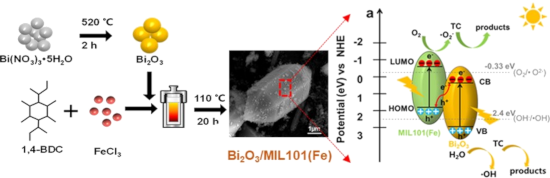
- iron and bridged terephthalic acid molecules. It has high hydrothermal stability, low cost, good hydrophilicity, non-toxicity, and environmental friendliness [20][34]. Most importantly, MIL101(Fe) contains abundant iron-oxo (Fe-O) clusters, which makes it a photocatalyst with visible-light response [19


Bioselectivity of silk protein-based materials and their bio-inspired applications
Beilstein J. Nanotechnol. 2022, 13, 902–921, doi:10.3762/bjnano.13.81

- , slow biodegradation, low immunogenicity, and non-toxicity, making them ideally suited for tissue engineering and biomedical applications. Furthermore, recombinant production technologies allow for application-specific modification to develop adjustable, bioactive materials. The present review focusses
- by extraordinary properties including excellent biocompatibility, slow biodegradation, low immunogenicity, and non-toxicity, making them ideally suited for tissue engineering and biomedical applications [105][106][107]. This review focuses on achievements made with silk-based protein materials and