Search results
Search for "washing" in Full Text gives 275 result(s) in Beilstein Journal of Nanotechnology. Showing first 200.
Thermal control of the defunctionalization of supported Au25(glutathione)18 catalysts for benzyl alcohol oxidation
Beilstein J. Nanotechnol. 2019, 10, 228–237, doi:10.3762/bjnano.10.21
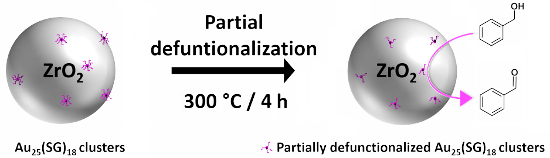
- nanoparticles or bulk gold. Impregnation of the clusters on ZrO2 nanoparticles was done by adding ZrO2 powder to an aqueous solution of Au25(SG)18, stirred for 15 min and then centrifuged to collect the powder without further washing. The composite material Au25(SG)18@ZrO2 comprised of 0.7% Au was calcined at




New micro/mesoporous nanocomposite material from low-cost sources for the efficient removal of aromatic and pathogenic pollutants from water
Beilstein J. Nanotechnol. 2019, 10, 119–131, doi:10.3762/bjnano.10.11
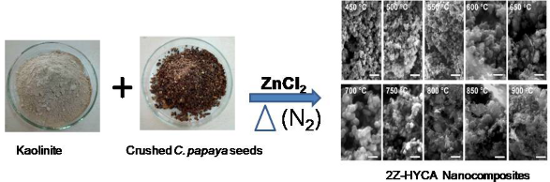
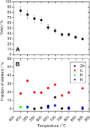
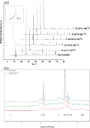
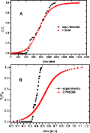
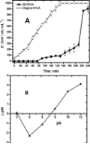
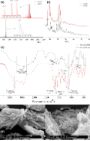
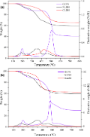
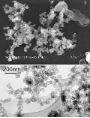
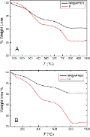
- nanocomposite particles with increasing temperature after acid washing. All scale bars = 1 μm. TGA and DTA curves for 2Z-HYCA nanocomposites prepared at various temperatures. Experimental breakthrough curve for the adsorption of 4-nitrophenol onto 2Z-HYCA@650 °C (Co = Concentration of 4-nitrophenol at time 0




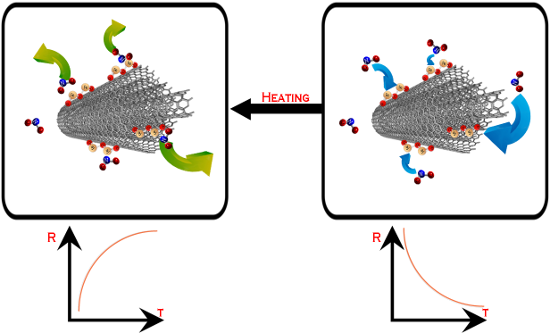
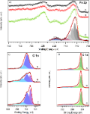
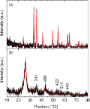
Wet chemistry route for the decoration of carbon nanotubes with iron oxide nanoparticles for gas sensing
Beilstein J. Nanotechnol. 2019, 10, 105–118, doi:10.3762/bjnano.10.10
- employing a magnetic stirrer [19][26][27]. When the acidic treatment was completed, the resulting black slurry was filtered out from the acidic mixture using vacuum filtration and then washed with DI water for several washing cycles until the pH was neutralized. Then, the neutral black slurry was dried in a




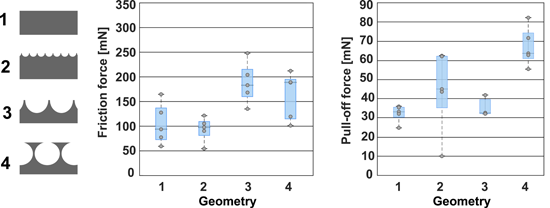
Pull-off and friction forces of micropatterned elastomers on soft substrates: the effects of pattern length scale and stiffness
Beilstein J. Nanotechnol. 2019, 10, 79–94, doi:10.3762/bjnano.10.8





A novel polyhedral oligomeric silsesquioxane-modified layered double hydroxide: preparation, characterization and properties
Beilstein J. Nanotechnol. 2018, 9, 3053–3068, doi:10.3762/bjnano.9.284

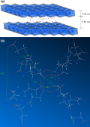
- combustion of a small amount of unbounded residual SDBS at lower temperature (around 186 °C) and the thermal decomposition of intercalated SDBS segments at higher temperature (around 467 °C). The excess SDBS is believed hard to be completely removed by simple purification procedures such as washing with
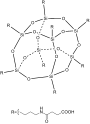
- washing with cold methanol. The residue was then recrystallized in methanol, filtrated, and dried in vacuum (40 °C, 24 h). The final product was obtained as a white powder with a yield of 43%. The synthesis of octa-substituted carboxy-terminated POSS (OCPS) was carried out via acylation of OAPS with
- washing with chloroform and THF. The crude product was further purified by being resolved in formic acid and reprecipitated in water, filtrated and washed with water until the pH value of the filtrate was 7. The solid was then dried in vacuum (40 °C, 24 h), to give a white powder with a yield of 69







Ternary nanocomposites of reduced graphene oxide, polyaniline and hexaniobate: hierarchical architecture and high polaron formation
Beilstein J. Nanotechnol. 2018, 9, 2936–2946, doi:10.3762/bjnano.9.272

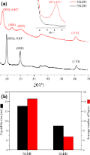
- graphene oxide Graphene oxide was prepared by graphite oxidation according to a modified Hummers method [66][67]. The viscous gel-like dispersion of graphite oxide obtained after oxidation and purification (centrifugation and washing) was diluted with deionized water and the resulting dispersions were high
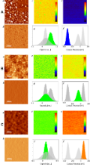
- /washing cycles (14000 rpm, 20 min and HCl solution pH 2.6) to obtain dispersions of a total concentration of 1.0 mg·mL−1. Characterization The AFM images were recorded with a Bruker Dimension FastScan probe microscope, operating in tapping mode, with aluminium-coated Si tips (Bruker). Samples were



In situ characterization of nanoscale contaminations adsorbed in air using atomic force microscopy
Beilstein J. Nanotechnol. 2018, 9, 2925–2935, doi:10.3762/bjnano.9.271

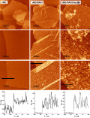
- manufacturing processes, as well as contamination induced by the Gel-Pak containers employed for chip transport and storage [22][23]. A variety of cleaning procedures have been proposed to recover the ideal tip as manufactured initially. These procedures range from less aggressive methods, such as washing with


Layered calcium phenylphosphonate: a hybrid material for a new generation of nanofillers
Beilstein J. Nanotechnol. 2018, 9, 2906–2915, doi:10.3762/bjnano.9.269
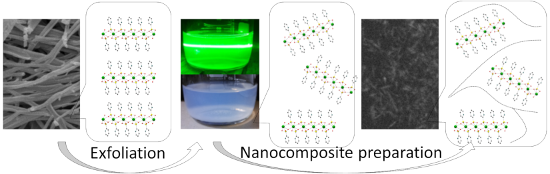
- course of the reaction, the pH decreases to about 8 during the first 15 minutes and then remains the same. Thus, it is recommended to start at pH 10 when working with higher volumes, even if it means a few more rounds of washing to remove ammonium in the final step. Second, it is appropriate and


Nanocellulose: Recent advances and its prospects in environmental remediation
Beilstein J. Nanotechnol. 2018, 9, 2479–2498, doi:10.3762/bjnano.9.232
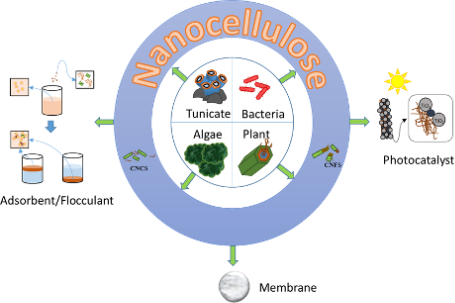
- fabricate dicarboxylic acid nanocellulose flocculant and examine its effectiveness in the treatment of municipal wastewater (removal of turbidity and chemical oxygen demand (COD)). In another study, cotton microfibers were subjected to acid treatment, washing, and filtration to produce nanocellulose


Droplet-based synthesis of homogeneous magnetic iron oxide nanoparticles
Beilstein J. Nanotechnol. 2018, 9, 2413–2420, doi:10.3762/bjnano.9.226
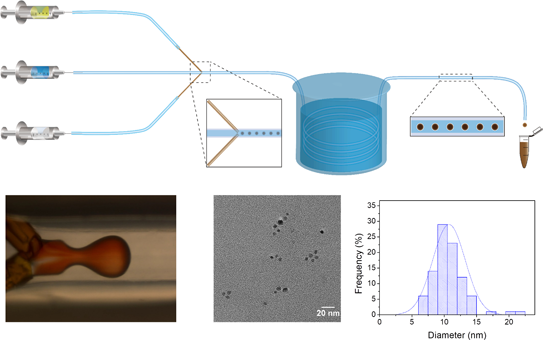
- ,D in Supporting Information File 1), finding the same spinel crystalline planes as previously reported in literature for Fe3O4 nanopowders [32]. Hence, the synthesized particles are crystalline. Regarding the yield of the reaction both synthesis delivered comparable nanoparticle yields after washing


Hydrothermal-derived carbon as a stabilizing matrix for improved cycling performance of silicon-based anodes for lithium-ion full cells
Beilstein J. Nanotechnol. 2018, 9, 2381–2395, doi:10.3762/bjnano.9.223
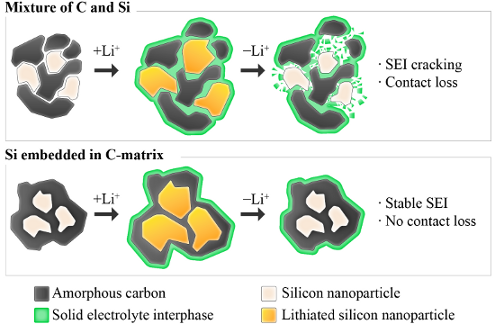
- -type) was used to investigate the morphology of the synthesized composite materials. Cycled electrodes were analyzed after washing with DMC and drying in an argon filled glovebox. Multiple areas per sample were analyzed using an Auriga CrossBeam workstation from Zeiss at an acceleration voltage of 3 kV

Block copolymers for designing nanostructured porous coatings
Beilstein J. Nanotechnol. 2018, 9, 2332–2344, doi:10.3762/bjnano.9.218
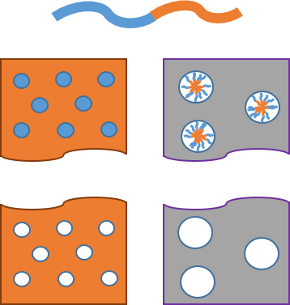
- PS-b-PEO copolymers, Mao et al. [59] demonstrated that the chemical etching of the minority component leads to the formation of a well-ordered nanoporous system by selective removal of the PEO domains by simple ether cleavage by washing with aqueous hydrogen iodine. This strong acid was selected for
- moieties. In this study, the metallo-complex selected is Ru(II)-terpyridine bis-complex. By washing the film with a Ce(IV)-containing acid solution, the Ru(II) complex between the blocks is oxidized into Ru(III) that is able to form only a monocomplex with the terpyridine ligands, thus breaking one metallo
- . However, as the solvent evaporates, the ordering front propagates through the films, thus extending the ordered microdomain growth following the solvent gradient direction (namely, perpendicular to the surface). Since PEO is water soluble, it can be easily removed by simply heating and washing with water


The structural and chemical basis of temporary adhesion in the sea star Asterina gibbosa
Beilstein J. Nanotechnol. 2018, 9, 2071–2086, doi:10.3762/bjnano.9.196

- , the sections were incubated for 1 h in Dylight488-conjugated-streptavidin (Vector Laboratories) diluted 1:300 in BSA-T at room temperature. After three washing steps in TBS-T, the sections were mounted in Mowiol and analysed with a Leica DM5000 or a Zeiss Axioscope A1 microscope, or with a Leica SP5




Synthesis of a MnO2/Fe3O4/diatomite nanocomposite as an efficient heterogeneous Fenton-like catalyst for methylene blue degradation
Beilstein J. Nanotechnol. 2018, 9, 1940–1950, doi:10.3762/bjnano.9.185
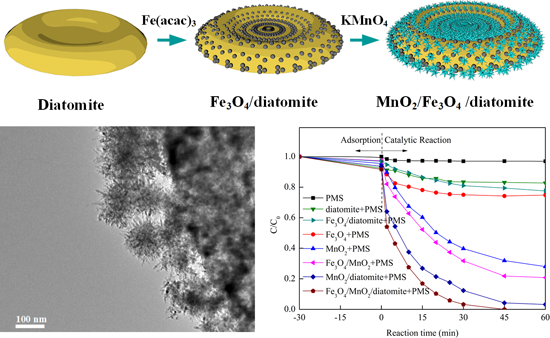
- catalyst Raw diatomite was purified by acid-washing in 2 M HCl solution at 75 °C for 4 h according to [20]. The Fe3O4/diatomite composite was prepared through thermal decomposition and in situ loading [3]. Typically, 0.4 g of purified diatomite was first put into 60 mL TREG under magnetic stirring for 30
- for 30 min with subsequent ultrasound dispersion for 5 min, followed by dissolving 0.35 g KMnO4 into the mixture. The resulting mixture was transferred into a 100 mL autoclave and kept at 160 °C for 12 h under slight stirring. Finally, the MnO2/Fe3O4/diatomite nanocomposite was obtained after washing
- , a broad peak at around 22.5° is observed due to the amorphous structure of SiO2. No other obvious diffraction peaks are detected, suggesting that after the washing, the raw diatomite is highly pure. Six peaks at 29.9°, 35.3°, 43.2°, 53.3°, 57.00° and 62.4° are observed in the pattern of Fe3O4


Uniform cobalt nanoparticles embedded in hexagonal mesoporous nanoplates as a magnetically separable, recyclable adsorbent
Beilstein J. Nanotechnol. 2018, 9, 1770–1781, doi:10.3762/bjnano.9.168

- pure CoAl LDH was performed under N2 at 800 °C for 2 h with a heating rate of 2 °C/min and the obtained product was a layered double oxide (LDO). The carbonized NPLs were soaked in 1 M HCl solution for 24 h to dissolve the Co nanoparticles, followed by washing with ultrapure water and then drying at
- practical application. In order to qualify as a good absorbent, the material must not only possess high adsorption efficiency but it should be easily recyclable to reduce the cost of the adsorption process. The desorption experiments are carried out by simply washing the adsorbents with ethanol three times


Nanocomposites comprised of homogeneously dispersed magnetic iron-oxide nanoparticles and poly(methyl methacrylate)
Beilstein J. Nanotechnol. 2018, 9, 1613–1622, doi:10.3762/bjnano.9.153

- amount of the PMMA, especially low molecular mass fractions, are soluble and were removed during washing of the nanocomposites. The dispersion of NP-PMMA nanoparticles in the nanocomposites is uniform, regardless of their content (Figure 4). In the NC-1 sample, the nanoparticles were predominantly


Surface characterization of nanoparticles using near-field light scattering
Beilstein J. Nanotechnol. 2018, 9, 1228–1238, doi:10.3762/bjnano.9.114
- are attached to the chip through the o-rings that are sealed around the through-holes on the back of the chip. Therefore, flow control is attained through a pressure-regulated vacuum pump. The microfluidic chips can be reused by washing with buffer of 1% pluronic F-68 surfactant in 0.22 μm filtered




Heterostuctures of 4-(chloromethyl)phenyltrichlorosilane and 5,10,15,20-tetra(4-pyridyl)-21H,23H-porphine prepared on Si(111) using particle lithography: Nanoscale characterization of the main steps of nanopatterning
Beilstein J. Nanotechnol. 2018, 9, 1211–1219, doi:10.3762/bjnano.9.112
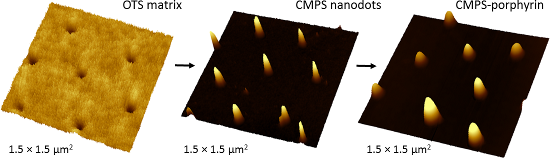
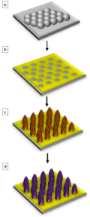
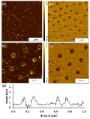
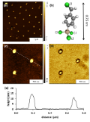
- silica spheres of the surface mask. The spheres were then removed with a washing step to produce a hexagonal pattern of nanoholes within the OTS film (Figure 1b), conforming to the arrangement of the surface mask. Samples with nanoholes within OTS were then placed in a solution of CMPS and either toluene


Review on nanoparticles and nanostructured materials: history, sources, toxicity and regulations
Beilstein J. Nanotechnol. 2018, 9, 1050–1074, doi:10.3762/bjnano.9.98

- with the trade name Silver Nano™ in their washing machines, air conditioners, refrigerators, air purifiers and vacuum cleaners, which use ionic Ag NPs [34]. NPs and NSMs are extensively used in auto production: as fillers in tires to improve adhesion to the road, fillers in the car body to improve the



Single-crystalline FeCo nanoparticle-filled carbon nanotubes: synthesis, structural characterization and magnetic properties
Beilstein J. Nanotechnol. 2018, 9, 1024–1034, doi:10.3762/bjnano.9.95

- -filtered and washed with about 20 mL of washing agent (acetone and distilled water of a volumetric ratio of 1:1). The solid residue was then dried for 24 h at a temperature of 108 °C and reduced under hydrogen and argon atmosphere (50 vol % Ar + 50 vol % H2) at a temperature of 500 °C for 4 h to convert
- stirring. The flask with the mixture was placed in an oil bath and heated to a temperature of around T ≈ 65 °C for 4 h. The mixture was then naturally cooled down to room temperature and washed with about 20 mL washing agent of acetone and distilled water of a volumetric ratio of 1:1. The samples were then
- , such as precursor concentration, CNT mass, sonication time, type and volume of washing agents, annealing temperature and time, resulted in filling of the CNTs with Fe50Co50 nanoparticles in a well-defined manner. These approaches can be extended to the filling of many other kinds of magnetic


Enzymatically promoted release of organic molecules linked to magnetic nanoparticles
Beilstein J. Nanotechnol. 2018, 9, 986–999, doi:10.3762/bjnano.9.92

- a thermomixer (650 rpm) at 37 °C for 72 h. The sample was then washed several times with MeOH using both magnetic washing and centrifugation (Eppendorf 15,000 rpm 10 min each) recovering the washings in a volumetric 10 mL flask. The sample, before being injected in the HPLC-VWD, was preconcentrated
- , 920 μL of a 0.5 mg/mL trypsin stock solution (corresponding to 136 μg/μmol) were added. The final volume was adjusted to 1 mL with TRIS buffer. The sample was kept under shaking in a thermomixer (650 rpm) at 37 °C for 72 h. The sample was then washed several times with MeOH using both magnetic washing



Facile chemical routes to mesoporous silver substrates for SERS analysis
Beilstein J. Nanotechnol. 2018, 9, 880–889, doi:10.3762/bjnano.9.82
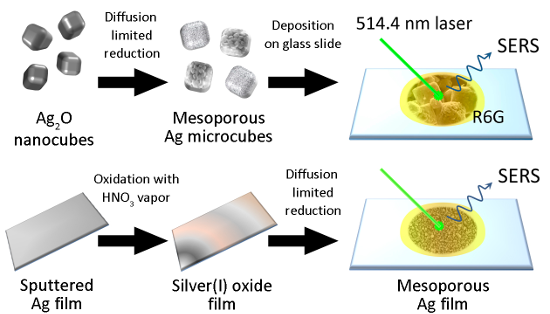
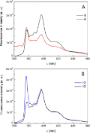
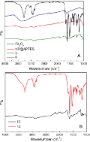
- role as surfactant, partly blocking the nucleation at (100) facets if the prevalent growth mechanism is normal or lateral layer-by-layer growth [28]. Presumably, the PVP adsorbates remained at the Ag2O crystallite surface after the washing procedure. Remarkably, the porous polyhedron-like silver
- . After multiple centrifugation steps of the precipitate and washing with ≈1 L of MilliQ pure water, the product was ready for the following syntheses. The dry product, which is appropriate for storage and further dispersion in water, could be produced freeze drying. All the Ag particle synthesis was


Comparative study of antibacterial properties of polystyrene films with TiOx and Cu nanoparticles fabricated using cluster beam technique
Beilstein J. Nanotechnol. 2018, 9, 861–869, doi:10.3762/bjnano.9.80

- resistant against washing out in procedures. It has recently been shown that the deposition of metal NPs using the cluster beam technique is an efficient approach in the formation of polymer composite films with antibacterial properties. The composites can be formed by either incorporation of particles
- that the surface cluster density is not changed after the deposition of bacteria and the following washing of the samples over a few cycles of the experiments. Such example is presented in Figure 2 for Ti NPs. Ti clusters produced by magnetron sputtering were either left untreated or oxidized in two
- environmental conditions and to the solutions used for bacteria deposition and the following washing. An investigation of these mechanisms requires an additional more detailed study. Finally, it would be of practical interest to evaluate the antibacterial efficiency of our approach compared to standard




Noble metal-modified titania with visible-light activity for the decomposition of microorganisms
Beilstein J. Nanotechnol. 2018, 9, 829–841, doi:10.3762/bjnano.9.77

- , clothes and dental treatment). For example, slowly released nanosilver has been used in a variety of domestic appliances, such as washing machines (e.g., Samsung SilverNanoHealth technology). Moreover, antibacterial properties of noble metals have been applied for medical purposes, including healing of


Cyclodextrin-assisted synthesis of tailored mesoporous silica nanoparticles
Beilstein J. Nanotechnol. 2018, 9, 693–703, doi:10.3762/bjnano.9.64

- at 80 °C for 3 h. For the synthesis of pristine MSNs, the particles were synthesized without CD addition. The nanoparticles were later purified by washing with a mixed solution of acetic acid and methanol with a ratio of 1:3 to remove weakly adsorbed CDs and CTAC moieties from the surface and pores