


Search results
Search for "zinc oxide" in Full Text gives 128 result(s) in Beilstein Journal of Nanotechnology.
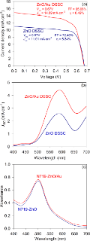
Highly efficient ZnO/Au Schottky barrier dye-sensitized solar cells: Role of gold nanoparticles on the charge-transfer process
Beilstein J. Nanotechnol. 2011, 2, 681–690, doi:10.3762/bjnano.2.73

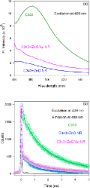
- for Basic Sciences, Sector - III, Block - JD, Salt Lake, Kolkata 700098, India 10.3762/bjnano.2.73 Abstract Zinc oxide (ZnO) nanorods decorated with gold (Au) nanoparticles have been synthesized and used to fabricate dye-sensitized solar cells (DSSC). The picosecond-resolved, time-correlated single
- the ZnO/Au interface. For large area DSSC (1 cm2), ~130% enhancement in PCE (from 0.50% to 1.16%) was achieved after incorporation of the Au nanoparticles into the ZnO nanorods. Keywords: dye-sensitized solar cell; gold nanoparticle; picosecond spectroscopy; Schottky barrier; zinc oxide nanorod
- electrons is high at each interface. Law et al. [5] proposed the use of single crystalline zinc oxide (ZnO) nanowires instead of the widely used titanium oxide (TiO2) porous thin film to reduce the probability of electron recombination in the DSSC by providing a direct pathway for the electrons to diffuse



Room temperature synthesis of indium tin oxide nanotubes with high precision wall thickness by electroless deposition
Beilstein J. Nanotechnol. 2011, 2, 119–126, doi:10.3762/bjnano.2.14

- below yields open end nanotubes with well defined outer diameter and wall thickness. In the past, zinc oxide films were mostly preferred and were synthesized using electroless deposition based on aqueous solutions. All these methods previously developed, are not adaptable in the case of ITO nanotubes
- growth mechanism of the ITO-NTs was proposed on the basis of the experimental results. Previously zinc oxide films have been prepared by electroless deposition in aqueous solutions under different conditions as shown in Table 1. Ito et al. obtained highly oriented crystalline films, grown directly on a
- substrate in aqueous solutions containing urea [19]. Crystalline zinc oxide films were prepared in alkaline aqueous solutions containing ethane-1,2-diamine as a chelating agent [20]. Well aligned ZnO microrods within a thin film were formed by the thermal decomposition of an amino complex based on Zn2+ and


Enhanced visible light photocatalysis through fast crystallization of zinc oxide nanorods
Beilstein J. Nanotechnol. 2010, 1, 14–20, doi:10.3762/bjnano.1.3

- ][3][4]. Optical absorption in the ultraviolet region (peaking around 220 nm) [5] and low photoefficiency [6][7] are factors that deter the wide scale use of TiO2 for photocatalytic activities under sunlight. Zinc oxide (ZnO), with a high surface reactivity owing to a large number of native defect
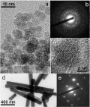
- diameters of 5 to 7 nm in size (Figure 1a). Measurements of the lattice fringe widths on the high-resolution TEM micrographs (see Figure 1c) confirm the wurtzite structure of the zinc oxide crystallites. Fringe widths of 0.28 nm, 0.16 nm and 0.19 nm measured on different images show the dominance of the


Other Beilstein-Institut Open Science Activities



