


Search results
Search for "hydrophobicity" in Full Text gives 159 result(s) in Beilstein Journal of Nanotechnology.
Recrystallization of tubules from natural lotus (Nelumbo nucifera) wax on a Au(111) surface
Beilstein J. Nanotechnol. 2011, 2, 261–267, doi:10.3762/bjnano.2.30
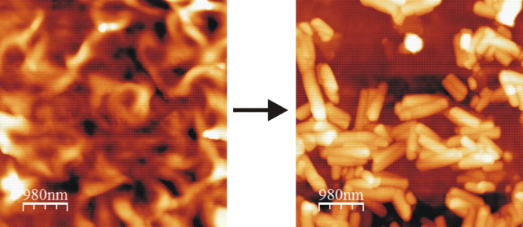
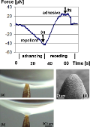
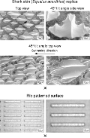
- HOPG (non-polar) to horizontally oriented tubules on polar substrates, e.g., silicon, alumina, or glass, they concluded that surface polarity is responsible for tubule orientation. They also demonstrated an increase in the hydrophobicity of the HOPG surface covered with tubules by measuring the contact
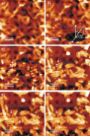

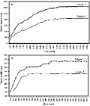
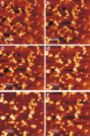
Hierarchically structured superhydrophobic flowers with low hysteresis of the wild pansy (Viola tricolor) – new design principles for biomimetic materials
Beilstein J. Nanotechnol. 2011, 2, 228–236, doi:10.3762/bjnano.2.27

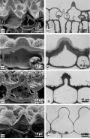
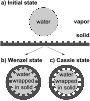
- geometrically enhances its hydrophobicity. In the Cassie–Baxter model [12] air remains trapped below the droplet in the surface cavities, which also leads to a superhydrophobic behavior, because the droplet sits partially on air [13]. The Wenzel model describes homogeneous wetting by the following equation



Superhydrophobicity in perfection: the outstanding properties of the lotus leaf
Beilstein J. Nanotechnol. 2011, 2, 152–161, doi:10.3762/bjnano.2.19
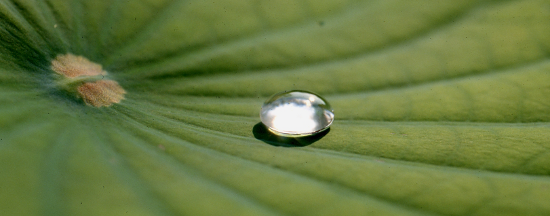
- heterogeneous contact between surface and water. The contact area depends on the hydrophobicity of the surface and on the pressure of the water or on the kinetic energy or velocity of the striking water drops. At low pressures, caused by resting or rolling water droplets, the contact area is determined by the
- measurements are the standard tool for the determination of hydrophobicity. But the measurement of very high contact angles is often inaccurate due to difficulties in the determination of the exact drop shape [16], particularly on uneven leaf surfaces. For many superhydrophobic plant surfaces, the contact
- many platelet-shaped epicuticular waxes, can present the OH-group on the surface, e.g., if they are in contact with a polar environment (water). Holloway (1969) [19] studied the hydrophobicity and water contact angles of various plant waxes and pure wax components. He found the highest contact angles







Capillary origami: superhydrophobic ribbon surfaces and liquid marbles
Beilstein J. Nanotechnol. 2011, 2, 145–151, doi:10.3762/bjnano.2.18
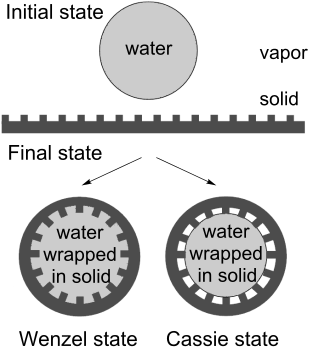
- ribbon up against gravity and wrap itself. Figure 1 and Figure 2 are illustrative of the ability of capillary forces to deform, fold and bend substrates. The concepts of capillary origami and droplet wrapping also have implications for our understanding of the definition of hydrophobicity and its
- , in an absolute sense, be considered hydrophilic [11]. That work also discussed why for a partially wetting droplet to be observed there is necessarily an assumption of some rigidity of the substrate, so that the usual definition of relative hydrophobicity (and relative hydrophilicity) through contact



Manipulation of gold colloidal nanoparticles with atomic force microscopy in dynamic mode: influence of particle–substrate chemistry and morphology, and of operating conditions
Beilstein J. Nanotechnol. 2011, 2, 85–98, doi:10.3762/bjnano.2.10
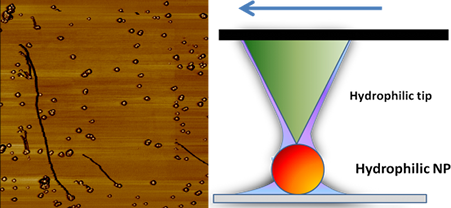
- often heterogeneous in their chemical composition, functionalized nanoparticles provide good model systems to study and tune the mobility of nano-objects on these substrates. As a next step, the role of the hydrohilicity and hydrophobicity of the functional grafting on spherical Au nanoparticles is


Biomimetics inspired surfaces for drag reduction and oleophobicity/philicity
Beilstein J. Nanotechnol. 2011, 2, 66–84, doi:10.3762/bjnano.2.9

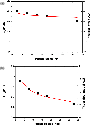
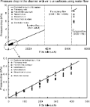
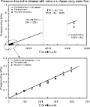
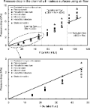
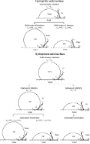
- mentioned earlier and shown in Table 1, the introduction of roughness increases the hydrophobicity of the surfaces responsible for reduction in drag or pressure drop. The hierarchical structure with highest contact angle and lowest static contact angle hysteresis provided the lowest pressure drop. It is
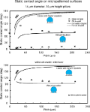
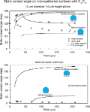
- hierarchical structures show much higher slip lengths of 91 and 103 µm, respectively, which implies the boundary slip increases with increasing hydrophobicity of solid surfaces. Slip length measurements have also been made on the nanoscale on hydrophilic and hydrophobic surfaces with various degrees of
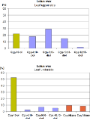
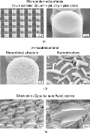
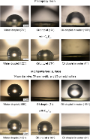
- hydrophobicity using a dynamic AFM method [16][33]. Data on one hydrophilic, one hydrophobic, and one superhydrophobic surface are presented in Table 2. Mica was taken as the hydrophilic surface. Hydrophobic and superhydrophobic surfaces were fabricated by deposition of evaporated plant wax on smooth epoxy








Single-pass Kelvin force microscopy and dC/dZ measurements in the intermittent contact: applications to polymer materials
Beilstein J. Nanotechnol. 2011, 2, 15–27, doi:10.3762/bjnano.2.2
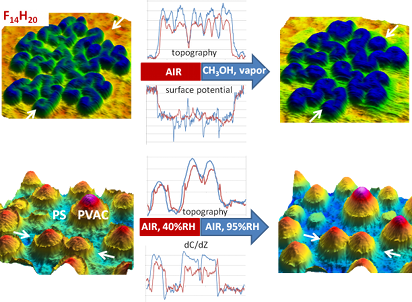
- hydrophobic surface of PS-enriched domains. The droplets are characterized by a relatively large wetting angle that indicates hydrophobicity of the underlying locations. Compared to surface potential studies the use of dC/dZ measurements was relatively limited by studies of organic layers [23] and water





Fabrication and spectroscopic studies on highly luminescent CdSe/CdS nanorod polymer composites
Beilstein J. Nanotechnol. 2010, 1, 94–100, doi:10.3762/bjnano.1.11

- present, the NRs were dispersed at several concentrations in a monomer mixture of lauryl methacrylate (LMA) with the cross-linking agent ethylene glycol dimethacrylate (EGDM) and the liquid UV-initiator Darocure® 4265. LMA provides the hydrophobicity required preventing agglomeration, and by changing the
- amount of cross-linker either flexible (<20 wt % EGDM) or rigid nanocomposites could be fabricated. In our second method we fabricated thin polymer films using a radical free drop-casting process. Cellulose triacetate (CTA) was chosen as polymer because of its high transparency, hydrophobicity and


Preparation and characterization of supported magnetic nanoparticles prepared by reverse micelles
Beilstein J. Nanotechnol. 2010, 1, 24–47, doi:10.3762/bjnano.1.5

- polymer and precursor materials. Commercially available diblock-co-polymers were used exclusively (Polymer Source Inc., Canada) of the type PS(x)-b-P2VP(y) or PS(x)-b-P4VP(y), where x and y denote the number of monomers per block and, thus, determine the length of each block. Due to the hydrophobicity of






Other Beilstein-Institut Open Science Activities



