Search results
Search for "ion beam" in Full Text gives 233 result(s) in Beilstein Journal of Nanotechnology. Showing first 200.
Magnetic switching of nanoscale antidot lattices
Beilstein J. Nanotechnol. 2016, 7, 733–750, doi:10.3762/bjnano.7.65
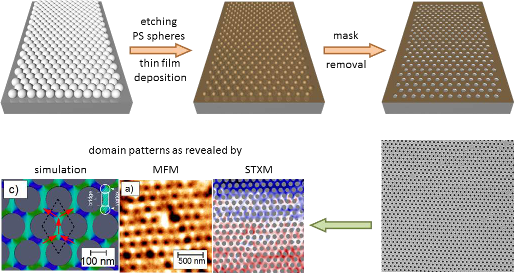
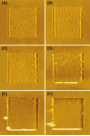
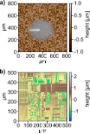
- – into thin films. Such antidots act as an inner surface of the materials leading to strong variations of optical [1][2], electrical [3][4], superconducting [5][6], or magnetic properties [7]. Nowadays, top-down approaches like e-beam lithography [8][9] or focused ion beam milling (FIB) [10] and bottom



Cantilever bending based on humidity-actuated mesoporous silica/silicon bilayers
Beilstein J. Nanotechnol. 2016, 7, 637–644, doi:10.3762/bjnano.7.56
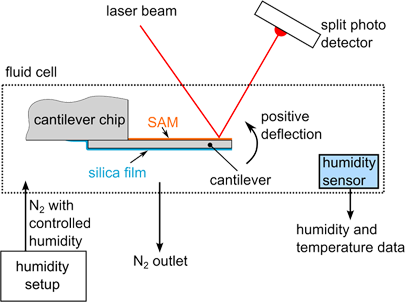
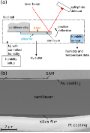
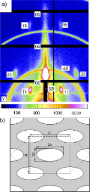
- actuation experiment was prepared with focused ion beam (FIB) cutting using an AURIGA Crossbeam Workstation (Zeiss). Scanning electron microscopy (SEM) images of the sample cross-section were taken with the same instrument with the electron microscope operated at a voltage of 2 keV. GISAXS: measurements and


Hydration of magnesia cubes: a helium ion microscopy study
Beilstein J. Nanotechnol. 2016, 7, 302–309, doi:10.3762/bjnano.7.28
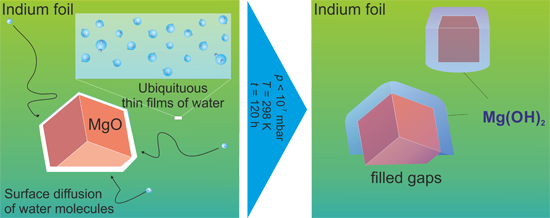
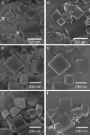
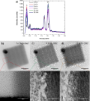
- , for both types of samples (i.e., when the indium foil was used as received or subjected to vacuum drying prior to imaging). The cubes selected for the measurements had an estimated maximum tilt angle of 30° relative to the incident ion beam. This does not change the edge length increase factor (L2/L1
- not be avoided. In addition, fluctuations in the beam current may have occurred. However, the contrast changes observed may also be indicative of chemical modifications; since SEs in the HIM are generated almost exclusively from the primary ion beam, they carry information about the surface chemistry



Nanoscale rippling on polymer surfaces induced by AFM manipulation
Beilstein J. Nanotechnol. 2015, 6, 2278–2289, doi:10.3762/bjnano.6.234
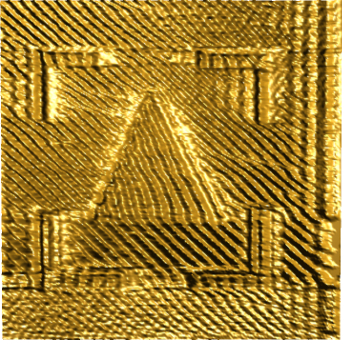
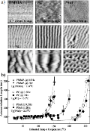
- behavior can be obtained by sliding loads on unpaved roads, ski slopes and rail tracks. Similarly, ion-beam sputtering on metal or semiconductor substrates can produce ripples on the microscale and nanoscale. The first example, reported in the literature, showed that low energy ion erosion of glass
- patterns can be tuned by varying the energy of the ions and ranges from a few tens of nanometers up to a few micrometers, with ion beam energies ranging from 0.1 to 100 keV. In particular two types of patterns are observed: ripples oriented either parallel or perpendicular to the direction of the ion beam




Near-field visualization of plasmonic lenses: an overall analysis of characterization errors
Beilstein J. Nanotechnol. 2015, 6, 2069–2077, doi:10.3762/bjnano.6.211

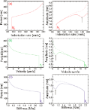
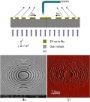
- elliptical slits. The focusing performance of the structures was studied before [22]. The structures can be fabricated and measured by using focused ion beam (FIB) direct writing technique and near-field scanning optical microscope (NSOM) respectively, as shown in Figure 1. However, from the point of view of
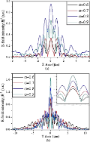
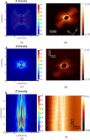
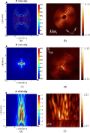
- the sample, and θ is the tilt angle of the sample. FIB nanofabrication error Stigmation Stigmation is generated in the ion column of the FIB machine due to asymmetrical voltage applied on the stigmator consisting of octopole electrodes. The ion beam is distorted due to the asymmetrical voltage
- distribution on the electrodes. The energy spreading is asymmetrical and produces an elliptical spot of the ion beam instead of the normal circular spot. Theoretically, it can be expressed as Equation 1 [28]: where B is the magnetic field, q is the velocity of an ion, M is the mass, V is the accelerating


Focused particle beam-induced processing
Beilstein J. Nanotechnol. 2015, 6, 1883–1885, doi:10.3762/bjnano.6.191
- direction, Yuri Petrov and Oleg Vyvenko have exploited reflected helium ions for high-resolution imaging with “chemical contrast” [11]. Hongzhou Zhang and coworkers have utilized a focused helium ion beam to modify and mill thin silicon foils [12], which constitutes pioneering work in HIM towards
Surface engineering of nanoporous substrate for solid oxide fuel cells with atomic layer-deposited electrolyte
Beilstein J. Nanotechnol. 2015, 6, 1805–1810, doi:10.3762/bjnano.6.184
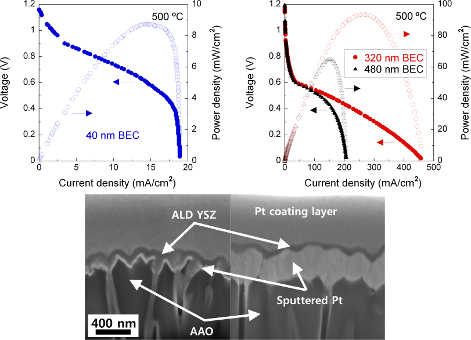
- deposited on BECs with different thicknesses, whose cross-sectional microstructure was investigated by focused ion beam and field emission scanning electron microscopy (FIB/FE-SEM) imaging: the BECs were 40 nm and 320 nm in thickness. In case of the thinner BEC, a significant amount of ALD YSZ certainly
- -deposited (ALD) yttria-stabilized zirconia (YSZ) electrolyte and 60 nm-thick top electrode catalyst (sputtered porous Pt cathode). (A) Focused ion beam-prepared field emission scanning electron microscopy (FE-SEM) cross-sectional images for 50 nm-thick ALD YSZ films deposited on 80 nm pore AAO supported 40


Lower nanometer-scale size limit for the deformation of a metallic glass by shear transformations revealed by quantitative AFM indentation
Beilstein J. Nanotechnol. 2015, 6, 1721–1732, doi:10.3762/bjnano.6.176

- metallic glass samples and relate them to our results. We will then discuss alternative concepts leading to homogeneous flow and finally the role of strain rates. The investigation of the plastic flow of micro- and nano-fabricated test samples prepared from metallic glasses by focus ion beam (FIB) with



Imaging of carbon nanomembranes with helium ion microscopy
Beilstein J. Nanotechnol. 2015, 6, 1712–1720, doi:10.3762/bjnano.6.175

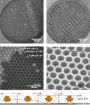
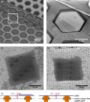
- partial and a fully covered opening. CNM charging due to the positively charged He+ ion beam and the emission of negatively charged secondary electrons can only result in positive charging regardless of the secondary electron yield of the CNMs. A positively charged sample will hinder the emission of
- , which was demonstrated with CNMs. Experimental Helium ion microscopy (HIM) was performed with a Carl Zeiss Orion Plus® microscope. The helium ion beam was operated at a current between 0.1–2.7 pA. The secondary electrons were collected by an Everhart–Thornley detector at 500 V grid voltage. For some




Atomic scale interface design and characterisation
Beilstein J. Nanotechnol. 2015, 6, 1708–1711, doi:10.3762/bjnano.6.174
- , France Department of Applied Physics, Aalto University, Finland Institute of Ion Beam Physics and Materials Research, Helmholtz Zentrum Dresden-Rossendorf, Germany 10.3762/bjnano.6.174 Keywords: carbon; first-principles simulations; interface; nanomaterials; nanoscale; oxides; spectromicroscopy; While
Formation of pure Cu nanocrystals upon post-growth annealing of Cu–C material obtained from focused electron beam induced deposition: comparison of different methods
Beilstein J. Nanotechnol. 2015, 6, 1508–1517, doi:10.3762/bjnano.6.156
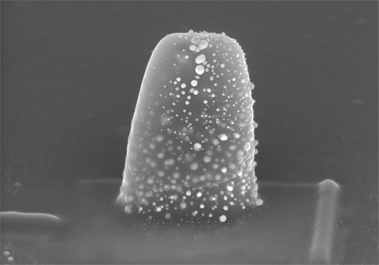
- at room temperature was shown by Chiang et al. [36]. It led to 99 atom % pure Cu films. H2/Ar microplasma-assisted FEBID increased the Cu content from 12 atom % to 41 atom % but also caused extended halo deposits [39]. Ga+ ion beam deposition showed that heating the substrate surface has a crucial




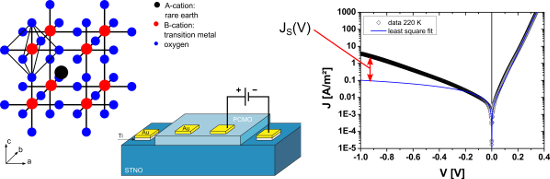
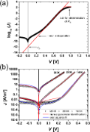
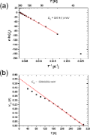
Current–voltage characteristics of manganite–titanite perovskite junctions
Beilstein J. Nanotechnol. 2015, 6, 1467–1484, doi:10.3762/bjnano.6.152
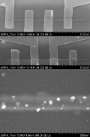
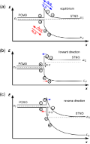
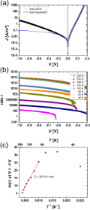
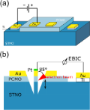
- acceleration voltages did not result in measureable EBIC in our setup. A cross-section lamella of the sample was prepared by means of a focused ion beam microscope. An EBIC scan across the p–n interface is shown in Figure 3b, together with a simulated EBIC linescan, taking into account only the generation





Peptide-equipped tobacco mosaic virus templates for selective and controllable biomineral deposition
Beilstein J. Nanotechnol. 2015, 6, 1399–1412, doi:10.3762/bjnano.6.145
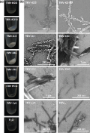
- 1.0 ns allowed for high mass resolution. The primary ion beam was rastered across a 500 × 500 µm2 field of view on the sample, and 128 × 128 data points were recorded. Primary ion doses were kept below 1011 ions/cm2 (static SIMS limit). The spectra were calibrated against C−, CH−, CH2−, and Au-, or on




Scalable, high performance, enzymatic cathodes based on nanoimprint lithography
Beilstein J. Nanotechnol. 2015, 6, 1377–1384, doi:10.3762/bjnano.6.142
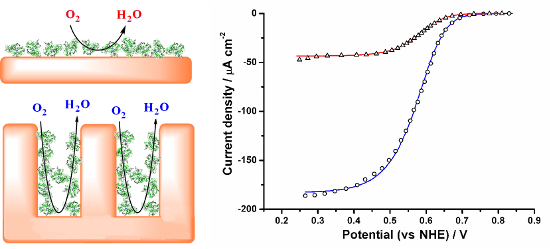
- taken using a Nova NanoLab 600 Dual Beam focused ion beam and scanning electron microscope (FIB-SEM) from FEI Company (Hillsboro, Oregon, USA). The images were taken with an immersion lens at an acceleration voltage of 30 kV and a beam current of 2.4 nA. AFM images were obtained using a Multimode VIII


Influence of the shape and surface oxidation in the magnetization reversal of thin iron nanowires grown by focused electron beam induced deposition
Beilstein J. Nanotechnol. 2015, 6, 1319–1331, doi:10.3762/bjnano.6.136

- with a width of 250 nm and nominal thicknesses of 10 and 45 nm were fabricated using a focused Ga+ ion beam and standard lift-out procedures in an FEI Helios 600 Nanolab. The slices were cut perpendicular to the nanowire length to analyze their cross-sectional width profile. The morphology and


Structural transitions in electron beam deposited Co–carbonyl suspended nanowires at high electrical current densities
Beilstein J. Nanotechnol. 2015, 6, 1298–1305, doi:10.3762/bjnano.6.134

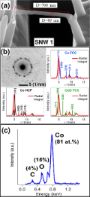
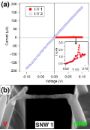
- Strata DB235M) combining a Ga-ion focused ion beam (FIB) with a thermal field emission SEM, equipped with a Co–carbonyl (Co2(CO)8) GIS operated at room temperature (RT). The GIS is mounted at a polar angle of 52° and an azimuthal angle of 115° with respect to the sample surface. An injection nozzle with

Magnetic properties of iron cluster/chromium matrix nanocomposites
Beilstein J. Nanotechnol. 2015, 6, 1158–1163, doi:10.3762/bjnano.6.117

- newly developed UHV cluster ion beam deposition apparatus, which is described elsewhere [2]. Fe clusters are produced in a Haberland-type magnetron sputtering/gas aggregation cluster source. Extracted anions are accelerated by electrostatic lenses and mass-separated in a 90° sector magnet. The mass
- energy-filtered transmission electron microscopy (EFTEM) and scanning transmission electron microscopy (STEM) micrographs of the Fe distribution for a 10 vol % Fe1000/Cr sample, specifically prepared for TEM. To avoid subsequent focused ion beam cutting and possible oxidation, the sample was deposited on


Scanning reflection ion microscopy in a helium ion microscope
Beilstein J. Nanotechnol. 2015, 6, 1125–1137, doi:10.3762/bjnano.6.114

- to make the ion beam paths visible. The detection of SEs excited from the conductive sample occurred when the bias was switched off, as the SEs excited from the conductive sample exceeded the signal of the RI-to-SE converter. For insulating samples, the SE signal from the sample could not be detected
- estimation of the divergence angle of the He-ion beam from the pixel size and the depth of focus. The depth of focus is defined as the distance between the edges of the in-focused part of the image plane divided by the tangent of the grazing angle. From the image in Figure 2, the depth of focus can be
- details of the calculation procedure will be described in the next section. Discussion Contrast formation in scanning reflection ion microscopy The results presented in the previous sections showed that imaging using an incident ion beam at low grazing angles exhibits following properties: RI detection is


High sensitivity and high resolution element 3D analysis by a combined SIMS–SPM instrument
Beilstein J. Nanotechnol. 2015, 6, 1091–1099, doi:10.3762/bjnano.6.110

- crystal orientation and the local angle of incidence of the ion beam influence local sputter yields [6]. In case the sample is constituted of different materials, the situation is worsened due to preferential sputtering phenomena. As a consequence, the produced 3D images are affected by uncertainties on
- instrument based on a Cameca NanoSIMS 50 is presented in detail elsewhere [6][7]. The sample was sputtered with a Cs+ primary ion beam at 16 keV impact energy, normal incidence and sample currents between 1.4 and 2.5 pA. The raster frame was set to 256 × 256 pixels. Depending on the analysis, the dwell time
- in Figure 4d, it is clearly noticeable that the topography of the TaN structure is changing. Due to the higher impact angle of the primary ion beam on the ridge’s edge compared to the ridge’s top surface or the trenches, the erosion rate is considerably higher in this area. The ridges therefore


Patterning technique for gold nanoparticles on substrates using a focused electron beam
Beilstein J. Nanotechnol. 2015, 6, 1010–1015, doi:10.3762/bjnano.6.104

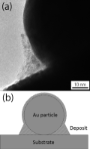
- structures with gold and silver nanoparticles using a nanomanipulator. This technique is fascinating, but it may be a time-consuming process for production of relatively large circuits. Nanostructures have also been fabricated using focused ion beam- or focused electron beam-induced deposition [1][7




Effects of swift heavy ion irradiation on structural, optical and photocatalytic properties of ZnO–CuO nanocomposites prepared by carbothermal evaporation method
Beilstein J. Nanotechnol. 2015, 6, 928–937, doi:10.3762/bjnano.6.96
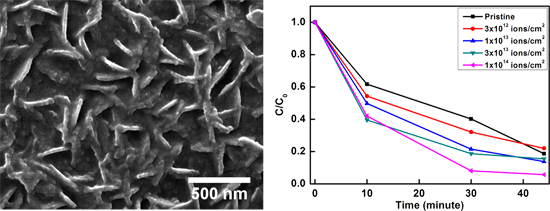
- lateral mass flow leading to the formation of larger nanorod like structures with increased width and distinct facets, as can be seen in Figure 1c and Figure 1d. The photocatalysis studies were carried out by taking MB and MO as model organic dyes to demonstrate the capability of ion beam engineering to
- powders were purchased from Merck, India, while Cu powder was purchased from Loba Chemie. Methylene blue (MB) and methyl orange (MO) were procured from SRL, India. All chemicals used were of analytical grade and were used without any further purification. Synthesis and ion beam engineering of ZnO–CuO



Electron-stimulated purification of platinum nanostructures grown via focused electron beam induced deposition
Beilstein J. Nanotechnol. 2015, 6, 907–918, doi:10.3762/bjnano.6.94

- ]. Additionally, FEBID is a more gentle technique as compared to similar techniques (e.g., ion beam induced deposition (IBID)) which is beneficial for many applications. The major drawback to FEBID is the purity of the final deposits which results from unwanted precursor fragments left after dissociation. The
- grown to a thickness of ca. 400 nm and subsequently purified at 25 °C at various times from 1 to 12 min. After curing, the pads were sectioned using gallium focused ion beam milling to reveal the Pt layer thickness as a function of purification time. The SEM micrographs in Figure 2 depict the bright
- parameters during deposition. As the layer is extremely thin (a few monolayers) it can also be easily removed ex situ by with a brief focused ion beam etch. Microstructure Transmission electron microscopy (TEM) images of the as-deposited and cured PtCx EBID patterns were taken to compare the microstructure




Hollow plasmonic antennas for broadband SERS spectroscopy
Beilstein J. Nanotechnol. 2015, 6, 492–498, doi:10.3762/bjnano.6.50

- (SERS) and are activated by a wide range of excitation wavelengths. The three-dimensional hollow nanoantennas were produced on an optical resist by a secondary electron lithography approach, generated by fast ion-beam milling on the polymer and then covered with silver in order to obtain plasmonic
- accordance with calculations derived from the FEM method. Experimental Hollow three-dimensional electric field enhancing structures were obtained through an innovative fabrication method based on secondary electron lithography, generated by ion beam milling. The detailed process has been discussed elsewhere
- in depth [23]. Briefly, a layer of optical resist (Shipley S1813) is deposited by spin coating on the top of a silicon nitride membrane. The structure of the antenna is defined from the backside of the membrane by focused ion beam milling (FEI, NanoLab 600 dual beam system) using a gallium ion source


A scanning probe microscope for magnetoresistive cantilevers utilizing a nested scanner design for large-area scans
Beilstein J. Nanotechnol. 2015, 6, 451–461, doi:10.3762/bjnano.6.46

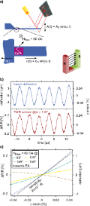
- prepared by a sequence of MEMS techniques including photolithography, reactive ion etching (RIE), ion beam etching (IBE) and wet etching. The cantilevers used in this study were 300 to 350 μm long and 40 μm wide. To ease the fabrication process thicknesses ranging from 10 μm to 20 μm were chosen. The
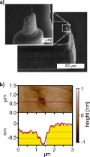
- focused ion beam and electron beam deposition, tips can be manually been grown on the apex of the cantilever [59]. The use of such tips enables high lateral resolution as tip radii as small as 30 nm can be achieved. The advantage of this approach is that the tip is subsequently grown and without altering
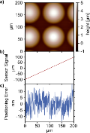
- different angles of the bias field towards the easy axis. The bias field has a strong influence on the strain sensitivity of the TMR sensor. a) To improve lateral resolution, tips with a tip radius of 30 nm were grown by a combination of focused ion beam and electron beam deposition deposition. b) Atomic


Electrical properties of single CdTe nanowires
Beilstein J. Nanotechnol. 2015, 6, 444–450, doi:10.3762/bjnano.6.45

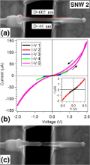
- . Focused ion beam-induced metallization was used to produce individual nanowires with electrical contacts and electrical measurements were performed on these individual nanowires. The influence of a bottom gate was investigated and it was found that surface passivation leads to improved transport
- combination of lithography and focused ion beam-induced metallization (FIBIM). The electrical properties were determined for individual nanowires prepared under different conditions. Further, the effect of a bottom gate on the charge carriers transported through the nanowire channel was examined. It was also
- nanowire suspension was placed on Si/SiO2 substrates on which interdigitated Ti/Au electrodes were patterned by photolithography (Figure 4). FIBIM is a direct patterning method employed for the design of metallic nanostructures. The method is based on the interaction of an ion beam with the surface