Search results
Search for "light absorption" in Full Text gives 170 result(s) in Beilstein Journal of Nanotechnology.
Enhancement of photocatalytic H2 evolution of eosin Y-sensitized reduced graphene oxide through a simple photoreaction
Beilstein J. Nanotechnol. 2014, 5, 801–811, doi:10.3762/bjnano.5.92

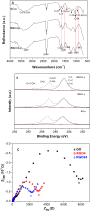
- interaction between EY and GO/RGOx, the fluorescence spectra of the mixture of EY and GO or RGOx were measured, as shown in Figure 4. The inset of Figure 4 displays a strong fluorescence peak of EY (about 6.8 × 10³ a.u.) at 542 nm. This can be attributed to the large visible light absorption by its conjugated
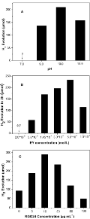
- 0.7 μmol. This may be due to the deceleration of the light absorption of EY by RGO24, which results in the formation of few photo-excited electrons at low concentrations of dye. When the EY concentration increases to 5.0 × 10⁻⁴ mol L−1, more and more EY molecules adsorb at RGO24, which can effectively
- to RGO. Moreover, excess EY in solution may not only screen the light absorption of EY-RGO but also produce self-quenching, which greatly decreases the utilization efficiency of the incident light [20][50]. Thus, the photocatalytic activity decreases at 1.0 × 10⁻³ mol L−1 EY. Figure 7C shows the





Visible light photooxidative performance of a high-nuclearity molecular bismuth vanadium oxide cluster
Beilstein J. Nanotechnol. 2014, 5, 711–716, doi:10.3762/bjnano.5.83

- photocatalysts is a well-established method which gives access to materials for which light absorption, catalytic activity and selectivity can be tuned by structural and chemical modifications [1][2][3][4][5][6]. Prime examples for this approach are molecular metal oxides, so-called polyoxometalates (POMs) [7][8
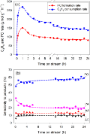
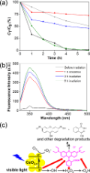
- nm, making the cluster attractive for visible light absorption. When compared with a prototype pure vanadium oxide cluster such as [H3V10O28]3−, the increase in extinction coefficient and the higher visible light absorption are obvious, see Figure 1. Photooxidative decomposition of the model
- compound features a near-visible LMCT absorption band with ε335 = 15940 M−1 cm−1. In contrast, the pure vanadium oxide cluster [H3V10O28]3− features significantly reduced visible-light absorption (black line). Photooxidative performance of 1 under anaerobic (blue triangles) and aerobic (red circles


Nanostructure sensitization of transition metal oxides for visible-light photocatalysis
Beilstein J. Nanotechnol. 2014, 5, 696–710, doi:10.3762/bjnano.5.82
- conducted direct femtosecond measurements of the electron transfer process from CdS to TiO2 and found that this process could be completed on a time constant of 2 picoseconds, resulting in a significantly slower recombination of the charge carriers generated upon light absorption in CdS [19]. Improved
- the band alignment between CdS and CdSe, the co-sensitized ZnO nanowire arrayed photoanode exhibited almost the entire visible-light absorption and fast electron transfer from CdSe quantum dots to ZnO nanowires and thereby the IPCE value can reach 45% at 0 V vs Ag/AgCl, as demonstrated in Figure 4c
- semiconductor family for photocatalytic applications. The synergistic effect of doping and sensitization is also applied to certain wide-bandgap transition metal oxides. It is found that doping with photosensitization can dramatically change the visible-light absorption and significantly enhance the




Effects of the preparation method on the structure and the visible-light photocatalytic activity of Ag2CrO4
Beilstein J. Nanotechnol. 2014, 5, 658–666, doi:10.3762/bjnano.5.77

- the smaller particle size, higher surface area, relatively stronger light absorption, and blue-shift absorption edge, which result in the adsorption of more MB molecules, a shorter diffusion process of more photogenerated excitons, and a stronger oxidation ability of the photogenerated holes
- ]. Moreover, there is an obvious blue shift of the absorption edge for the S-M sample, which should be explained in terms of the small size effect [60][61]. In contrast, a weaker light absorption and red shift of the absorption edge are observed for the S-H sample (Figure 5b), because it has the largest
- within 90 min. The S-P and S-H samples exhibit a lower activity with rate constants of 0.020 and 0.012 min−1, respectively. P25 is a mixed-phase TiO2 containing 25% rutile, whit a band gap of 3.0 eV, which results in a weak visible-light absorption up to about 413 nm. Therefore, P25 still shows some


Enhanced photocatalytic activity of Ag–ZnO hybrid plasmonic nanostructures prepared by a facile wet chemical method
Beilstein J. Nanotechnol. 2014, 5, 639–650, doi:10.3762/bjnano.5.75
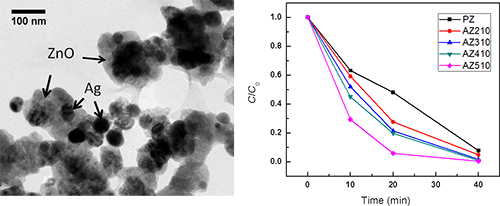
- towards the degradation of MB can be understood as follows: The SPR of Ag nanoparticles helps in extending the light absorption of ZnO from near UV to the visible region, leading to an improved sun-light utilization efficiency. In addition, decoration with Ag nanoparticles significantly improves the


High activity of Ag-doped Cd0.1Zn0.9S photocatalyst prepared by the hydrothermal method for hydrogen production under visible-light irradiation
Beilstein J. Nanotechnol. 2014, 5, 587–595, doi:10.3762/bjnano.5.69

- optimum amount of Ag doping showed the highest hydrogen production rate of 3.91 mmol/h, which was 1.7 times higher than that of undoped Cd0.1Zn0.9S. With the Ag doping, a red shift in the optical response was observed, leading to a larger portion of the visible light absorption than that of without doping
- ], and Sr [17] has been a good attempt to increase the visible-light absorption of the Cd1−xZnxS photocatalyst. The use of Ag species as a good dopant for various types of photocatalysts has been also reported [18][19][20], including its use to modify Cd1−xZnxS [21][22][23]. Cd1−xZnxS modified by Ag2S


Artificial sunlight and ultraviolet light induced photo-epoxidation of propylene over V-Ti/MCM-41 photocatalyst
Beilstein J. Nanotechnol. 2014, 5, 566–576, doi:10.3762/bjnano.5.67

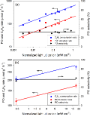
- used to verify the crystalline structure of the photocatalyst. Diffraction peaks were assigned by comparison to known crystalline phases. The light absorption of the photocatalyst was characterized by ultraviolet–visible light spectroscopy (Varian Cary-100). The X-ray absorption near edge spectroscopy





Mesoporous cerium oxide nanospheres for the visible-light driven photocatalytic degradation of dyes
Beilstein J. Nanotechnol. 2014, 5, 517–523, doi:10.3762/bjnano.5.60

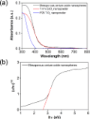
- transformation) of the cerium oxide nanospheres, CeO2 (commercially available 7 nm) nanopowder, and TiO2 (commercially available Degussa P25) nanoparticles are illustrated in Figure 2a. As expected, the cerium oxide sample displayed stronger visible light absorption than both commercially available 7 nm CeO2 and
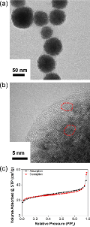
- enhanced visible light absorption has been exploited for driving the photocatalytic degradation of RhB in aqueous solutions (vide infra). The transmission electron microscopy (TEM) images of the cerium oxide sample supported the mesoporous nature and nanosphere morphology of the material (Figure 3a). The
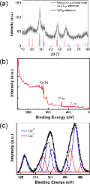
- the preparation of the earth-abundant, relatively affordable, mixed valence cerium oxide. The cerium oxide has been characterized with a suite of structural, spectroscopic, and electron microscopy techniques, confirming the high surface area, mesoporous nature, and visible-light absorption properties

One-step synthesis of high quality kesterite Cu2ZnSnS4 nanocrystals – a hydrothermal approach
Beilstein J. Nanotechnol. 2014, 5, 438–446, doi:10.3762/bjnano.5.51

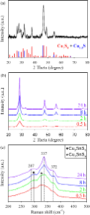
- was formed by the diffusion of Zn2+ and Sn4+ cations to the lattice of Cu2−xS during the hydrothermal reaction. The as-synthesized CZTS nanocrystals exhibited strong light absorption over the range of wavelength beyond 1000 nm. The band gap of the material was determined to be 1.51 eV, which is
- has a theoretical band gap of 1.5 eV and has high light absorption coefficient (>104 cm−1) in the range of visible and near infrared irradiation of solar spectrum [2][3][4]. Shockley–Queisser balanced calculations have predicted that the theoretical efficiency of PVs using light absorbers like CZTS is
- above analysis, a schematics showing the formation mechanism for CZTS compound in the hydrothermal reaction is shown in Figure 8. The UV–visible spectra of the hydrothermal samples synthesized at different reaction time are shown in Figure 9. It is found that the onset for light absorption of the




Atomic layer deposition, a unique method for the preparation of energy conversion devices
Beilstein J. Nanotechnol. 2014, 5, 245–248, doi:10.3762/bjnano.5.26
- which can be performed by ALD materials may be rationalized if a few common themes are recognized, which run like a common thread through this Thematic Series: ALD for a direct device function, such as light absorption in solar cells, ion conduction and electrocatalysis in fuel cells, or lithium uptake


Study of mesoporous CdS-quantum-dot-sensitized TiO2 films by using X-ray photoelectron spectroscopy and AFM
Beilstein J. Nanotechnol. 2014, 5, 68–76, doi:10.3762/bjnano.5.6

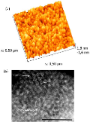
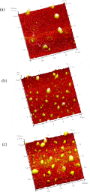
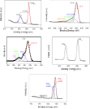
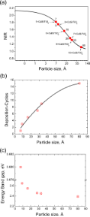
- increase in the absorbance observed for successive deposition cycles confirms the growth of the CdS particles. No significant increase in the absorbance was observed after 15 deposition cycles. The band gap of the films was determined by extrapolating the fitting line of the onset light absorption to zero


Many-body effects in semiconducting single-wall silicon nanotubes
Beilstein J. Nanotechnol. 2014, 5, 19–25, doi:10.3762/bjnano.5.2

- excitation and optical absorption properties. It is well-known that density functional theory (DFT) often fails in describing the properties of light absorption. This process requires a description of two-particle properties, which certainly goes beyond single-electron excitations that can be described at


Preparation of NiS/ZnIn2S4 as a superior photocatalyst for hydrogen evolution under visible light irradiation
Beilstein J. Nanotechnol. 2013, 4, 949–955, doi:10.3762/bjnano.4.107
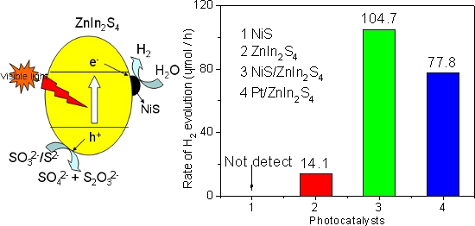
- visible light. ZnIn2S4 is a ternary chalcogenide with a suitable band gap (2.34–2.48 eV) well corresponding to the visible light absorption. ZnIn2S4 exhibits two distinct polymorphs based on cubic and hexagonal lattices [16], which can be controlled synthesized via a facile hydrothermal method using


Template based precursor route for the synthesis of CuInSe2 nanorod arrays for potential solar cell applications
Beilstein J. Nanotechnol. 2013, 4, 868–874, doi:10.3762/bjnano.4.98
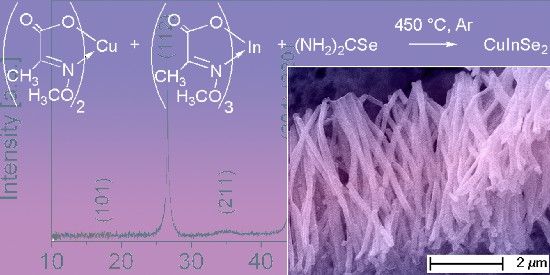
- purity and crystallinity, and a stoichiometric composition of the CISe ternary semiconductor compound. Keywords: CIS; light absorption; nanocasting; nanorod arrays; precursor synthesis; Introduction Polycrystalline heterojunction solar cells with a columnar morphology of the photovoltaic active layer
- unique ability for independent adjustment of light absorption (by nanowire length) and charge separation (by nanowire diameter). Nanowire-based photovoltaic layers will allow the fabrication of low-cost small size energy devices with economical use of materials. Very recently, Schoen et al. reported the
- the elements are present in the correct stoichiometry [14]. Secondly, the method allows to lower the conversion temperature and to reduce the particle size. Thus, the products usually contain small particles of large surface area, which is favourable for visible light absorption. Finally, the


Kelvin probe force microscopy of nanocrystalline TiO2 photoelectrodes
Beilstein J. Nanotechnol. 2013, 4, 418–428, doi:10.3762/bjnano.4.49
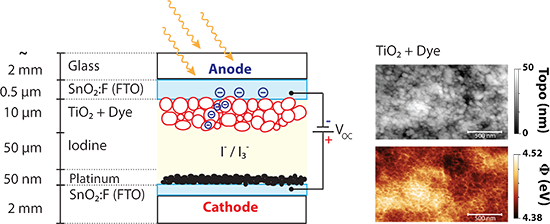
- system with KPFM, the surface photovoltage (SPV) can be measured on the nanometer scale and is referred to as microscopic SPV. A microscopic SPV is caused by an electron generation upon light absorption at either the surface space-charge region or at the electric field of a buried interface that is


Photoresponse from single upright-standing ZnO nanorods explored by photoconductive AFM
Beilstein J. Nanotechnol. 2013, 4, 208–217, doi:10.3762/bjnano.4.21

- holes move toward the surface in the electric field of the surface depletion region and recombine with the electrons there . This results in an excess of electrons, which were generated by the light absorption contributing to the photocurrent when the sample is biased. This model implies also that the



Influence of the diameter of single-walled carbon nanotube bundles on the optoelectronic performance of dry-deposited thin films
Beilstein J. Nanotechnol. 2012, 3, 692–702, doi:10.3762/bjnano.3.79

- distribution and diameters (dtube) can contribute both to conductivity and light-absorption properties [27][29]. UV–vis–NIR absorption spectroscopy is a versatile tool that can be used to define both dtube and, to a limited extent, metallicity [30]. The fitting of semiconducting (E11 and E22) and metallic (M11
- the light-absorption properties [27][29]. SWCNTs of small dtube have their first-order metallic-transition peaks (M11) located around 550 nm (2.3 eV), whereas for larger dtube SWCNTs the peaks are shifted to lower energies (higher wavelengths). This slightly lowers the absorbance at the reference
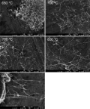


Low-temperature synthesis of carbon nanotubes on indium tin oxide electrodes for organic solar cells
Beilstein J. Nanotechnol. 2012, 3, 524–532, doi:10.3762/bjnano.3.60

- particles with a typical size of >2 µm. As a consequence, the film surface would segregate and change its chemical ratio. The film conductivity will in turn significantly decrease, as will the optical transmittance, on account of a stronger light absorption and scattering caused by those metallic


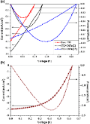


Reduced electron recombination of dye-sensitized solar cells based on TiO2 spheres consisting of ultrathin nanosheets with [001] facet exposed
Beilstein J. Nanotechnol. 2012, 3, 378–387, doi:10.3762/bjnano.3.44

- the DSC made from paste B is due to the availability of more TiO2 particles in the film, which can absorb more dye molecules, leading to a stronger light absorption. The Jsc of the DSC made from paste B was further increased from 15.6 mA/cm2 (Figure 2b, curve C) to 18.2 mA/cm2 when the TiO2 film was


Enhanced visible light photocatalysis through fast crystallization of zinc oxide nanorods
Beilstein J. Nanotechnol. 2010, 1, 14–20, doi:10.3762/bjnano.1.3

- recombination rate is lower than the rate of electron transfer to adsorbed molecules. There are reports on the enhancement of visible light absorption in ZnO by doping with, e.g., cobalt (Co) [18], manganese (Mn) [19], lead (Pb) and silver (Ag) [16], etc. Photocatalytic activity comparable to doped ZnO was also