
Search results
Search for "photocatalysis" in Full Text gives 160 result(s) in Beilstein Journal of Nanotechnology.
Structural, optical and photocatalytic properties of flower-like ZnO nanostructures prepared by a facile wet chemical method
Beilstein J. Nanotechnol. 2013, 4, 763–770, doi:10.3762/bjnano.4.87

- efficiency to photocatalytically degrade of MB. Keywords: ageing; nanoparticles; nanosheets; photocatalysis; ZnO; Introduction Water contamination due to hazardous water soluble organic dyes and chemicals poses a severe threat to the environment. The excess azo dyes in effluents from textile and dyeing
- treatment, these azo dyes may generate carcinogenic compounds such as aromatic amines. Because of this, purification and detoxification of industrial waste water has been one of the major challenges. Several methods such as adsorption, filtration, sedimentation and photocatalysis are used for the removal of
- synthesized by Umar et al. [31] for an efficient photocatalysis and the fabrication of efficient dye sensitized solar cells. Shi et al. [33] fabricated flower-like ZnO on ZnO nanorods without use of any surfactant. Self-supported ZnO photocatalysts in the form of plates were prepared by Yassitepe et al. [24


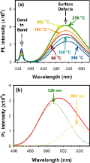
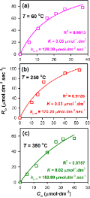
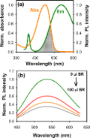
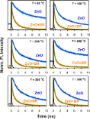
Modulation of defect-mediated energy transfer from ZnO nanoparticles for the photocatalytic degradation of bilirubin
Beilstein J. Nanotechnol. 2013, 4, 714–725, doi:10.3762/bjnano.4.81
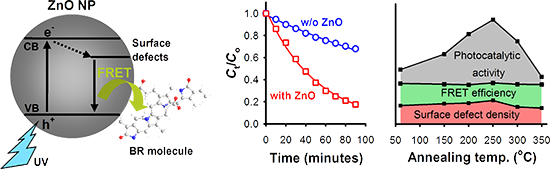
- 10.3762/bjnano.4.81 Abstract In recent years, nanotechnology has gained significant interest for applications in the medical field. In this regard, a utilization of the ZnO nanoparticles for the efficient degradation of bilirubin (BR) through photocatalysis was explored. BR is a water insoluble byproduct
- ; Förster resonance energy transfer (FRET); neonatal jaundice; oxygen vacancy; photocatalysis; phototherapy; zinc oxide nanoparticles; Introduction Bilirubin (BR) is a yellow-orange pigment which is a byproduct of the normal heme catabolism in mammals. In the human body, 250–400 mg BR is produced every day
- the numerous nanostructured materials, zinc oxide (ZnO) is one of the most promising materials for applications in the medical field, because of its biocompatibility, biodegradability and non-toxicity [9]. Moreover, ZnO can degrade various organic compounds efficiently through photocatalysis [10][11

Photocatalytic antibacterial performance of TiO2 and Ag-doped TiO2 against S. aureus. P. aeruginosa and E. coli
Beilstein J. Nanotechnol. 2013, 4, 345–351, doi:10.3762/bjnano.4.40

- photocatalysis efficiency of TiO2 and Ag-doped TiO2 was tested by the percentage viability reduction of bacterial colonies under visible-light irradiation. The viability of P. aeruginosa was reduced to zero at 40 mg/30 mL culture of Ag-doped TiO2 (7%) while S. aureus and E. coli showed zero viability at 60 mg/30


Paper modified with ZnO nanorods – antimicrobial studies
Beilstein J. Nanotechnol. 2012, 3, 684–691, doi:10.3762/bjnano.3.78

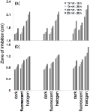
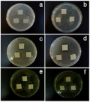
- the paper samples are 102% and 70%, and for Aspergillus niger, 224% and 183% of the sample area, under similar lighting conditions. Keywords: antimicrobial; nanorod; paper; photocatalysis; zinc oxide; Introduction Deterioration of library materials due to fungal growth is a worldwide problem and a
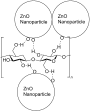
- various applications, such as facemasks, tissues, wallpapers and writing paper. The antimicrobial effect of the ZnO nanorods grown on the paper matrix results from the slow seepage of Zn2+ ions assisted by atmospheric humidity or through the injection of free electrons resulting from photocatalysis [7][8
- ]. Cellulose fibers used for papermaking are hygroscopic in nature [9][10] and this property was used to our advantage when developing the antimicrobial paper. The adsorbed moisture can be utilized for the production of hydroxyl radicals (·OH) and/or hydrogen peroxide (H2O2) through photocatalysis. Both ·OH




Mesoporous MgTa2O6 thin films with enhanced photocatalytic activity: On the interplay between crystallinity and mesostructure
Beilstein J. Nanotechnol. 2012, 3, 123–133, doi:10.3762/bjnano.3.13
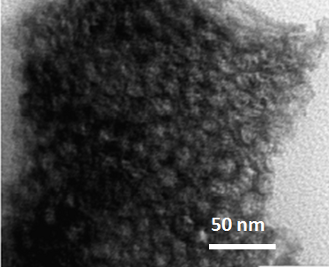
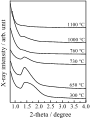
- -developed mesostructure. It has been often stated that the performance of mesoporous metal oxides requires both features to be optimized at the same time, but to the best of our knowledge no systematic study has been performed in the field of photocatalysis. Various oxides with high crystallization
- temperatures above 760 °C. Such an advanced mesostructure can be achieved by special block copolymers such as KLE or polymers of the poly(isobutylene)-b-poly(ethylene oxide) type, which show similar properties in terms of structure and photocatalysis (see Supporting Information File 1). With increasing






Self-assembled monolayers and titanium dioxide: From surface patterning to potential applications
Beilstein J. Nanotechnol. 2011, 2, 845–861, doi:10.3762/bjnano.2.94

- areas of photovoltaics, microelectronics, microelectromechanics, photocatalysis, corrosion prevention and even biomedicine should be regarded as appetizers paving the way for further studies to be performed. Keywords: photocatalysis; remote degradation; self-assembled monolayers; titanium dioxide
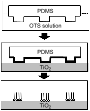
- often observed both in the liquid phase and in the gas phase, suggesting, albeit not proving [11][12] the need for adsorption as a prerequisite for photocatalysis. Self-assembled monolayers (SAMs) being chemisorbed in an ordered manner on surfaces such as metals (Au, Ag), oxides (SiO2, Al2O3, TiO2) and
- many ways, from the study of fundamental issues in TiO2 photocatalysis to the growth of supramolecular structures; from serving as a tool for patterning to suggesting means to obtain the selective photocatalytic degradation of highly toxic contaminants. This potential for synergism between self



Approaches to nanostructure control and functionalizations of polymer@silica hybrid nanograss generated by biomimetic silica mineralization on a self-assembled polyamine layer
Beilstein J. Nanotechnol. 2011, 2, 760–773, doi:10.3762/bjnano.2.84

- that the photocatalysis-active anatase titania component in the silica@titania composite nanograss surface plays a vital role in the induction of the change of surface wettability, from a superhydrophobic to a superhydrophilic state. Conclusion In summary, we have successfully demonstrated that the


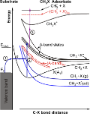
Femtosecond time-resolved photodissociation dynamics of methyl halide molecules on ultrathin gold films
Beilstein J. Nanotechnol. 2011, 2, 618–627, doi:10.3762/bjnano.2.65

- great importance in several research areas and applications connected to surface chemistry and catalysis. Photostability, photooxidation, and photocatalysis are important concepts in this respect that attract considerable interest in the fields of nanotechnology and surface engineering [1][2]. The


Low-temperature solution growth of ZnO nanotube arrays
Beilstein J. Nanotechnol. 2010, 1, 128–134, doi:10.3762/bjnano.1.15

- that of other crystal shapes, and therefore have potential for applications in photocatalysis, field emission, solar cells, and chemical sensors [15][16][17][18][19][20][21]. Compared with other synthetic techniques to obtain ZnO nanotubes, low-temperature solution growth process has been generally


Enhanced visible light photocatalysis through fast crystallization of zinc oxide nanorods
Beilstein J. Nanotechnol. 2010, 1, 14–20, doi:10.3762/bjnano.1.3

- Abstract Hydrothermally grown ZnO nanorods have inherent crystalline defects primarily due to oxygen vacancies that enhance optical absorption in the visible spectrum, opening up possibilities for visible light photocatalysis. Comparison of photocatalytic activity of ZnO nanorods and nanoparticle films on
- creation in nanostructured photocatalysts could be an attractive solution for visible light photocatalysis. Keywords: defects; nanoparticle; nanorod; photocatalysis; pollutant; ZnO; Introduction Photocatalysis is a light induced catalytic process whereby photogenerated electron-hole pairs in a
- semiconductor undergo redox reactions with molecules adsorbed onto the surface, thereby breaking them into smaller fragments. Photocatalysis with metal-oxide-semiconductor nanostructures has been an area of intense research over the last couple of decades with titania (TiO2) receiving the most attention [1][2