


Search results
Search for "pollutants" in Full Text gives 159 result(s) in Beilstein Journal of Nanotechnology.
Effects of the preparation method on the structure and the visible-light photocatalytic activity of Ag2CrO4
Beilstein J. Nanotechnol. 2014, 5, 658–666, doi:10.3762/bjnano.5.77

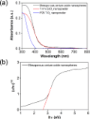
- areas are beneficial for the enhancement of photocatalytic performance by facilitating the absorption of pollutants for degradation. UV–vis spectroscopy measurements A comparison of UV–vis diffuse reflectance spectra (DRS) and the corresponding colours of the Ag2CrO4 samples are displayed in Figure 5
- Ag2CrO4 toward the degradation of other organic pollutants under visible-light irradiation. Experimental Preparation of Ag2CrO4 photocatalysts All chemicals were analytical grade and used without further purification. Deionized (DI) water was used in all experiments. The Ag2CrO4 photocatalysts were


Mesoporous cerium oxide nanospheres for the visible-light driven photocatalytic degradation of dyes
Beilstein J. Nanotechnol. 2014, 5, 517–523, doi:10.3762/bjnano.5.60

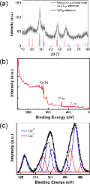
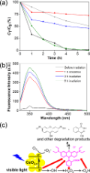
- , suggesting that the mechanism of photocatalytic activity under visible-light irradiation involves predominantly hydroxyl radicals as the active species. Keywords: cerium oxide; dye degradation; mesoporous; photocatalysis; visible light; Introduction The degradation of organic pollutants by affordable and
- ambient conditions and react with water and air to form reactive oxygen species such as •OH, •OOH, H2O2, and O2− for example [1][2][4][5][6]. These reactive oxygen species can subsequently decompose organic pollutants. Recent developments in nanotechnology have enhanced the performance of photocatalytic
- dye-sensitized solar cells to the oxidative degradation of pollutants [7][8][9][10][11]. Despite being cheap, chemically robust, and generally non-toxic, TiO2 has a wide band gap of more than 3.0 eV, which means that photocatalytic processes that use TiO2 as the sensitizer can only absorb UV radiation

Applicability and costs of nanofiltration in combination with photocatalysis for the treatment of dye house effluents
Beilstein J. Nanotechnol. 2014, 5, 476–484, doi:10.3762/bjnano.5.55

- separation of pollutants to be retained and removed. Different concepts have been described in literature. The use of particulate catalysts, require a recirculation of the catalyst, and it is in addition necessary to uncouple the hydraulic residence time from the residence time of the organic compounds in


Study of mesoporous CdS-quantum-dot-sensitized TiO2 films by using X-ray photoelectron spectroscopy and AFM
Beilstein J. Nanotechnol. 2014, 5, 68–76, doi:10.3762/bjnano.5.6

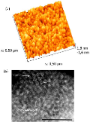
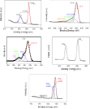
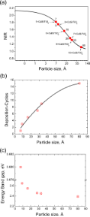
- photosensitized solar cells with high quantum yields [1][2][3][4] and the photocatalytic degradation of pollutants [5][6]. CdS, currently used as an efficient visible-light sensitizer, is a semiconductor that possesses a small band gap (2.4 eV) and suitable potential energies. The electron transfer between QDs



Structural, optical and photocatalytic properties of flower-like ZnO nanostructures prepared by a facile wet chemical method
Beilstein J. Nanotechnol. 2013, 4, 763–770, doi:10.3762/bjnano.4.87

- industries are usually resistant to biodegradation. Due to their stability and large degree of organics present in them, these pollutants pose severe ecological problems by depleting the dissolved oxygen content of water and releasing toxic compounds that endanger the aquatic life. During an anaerobic
- these toxic chemicals. Photocatalytic degradation, in which the organic pollutants are degraded through photocatalytic oxidation and reduction reactions in the presence of a photocatalyst, is one of the most promising and clean processes used for water purification. Nanostructured semiconductor
- photocatalysts such as ZnO and TiO2 have attracted significant attention in recent years because of their wide-spread application in environmental remediation [1][2]. These photocatalysts have a high efficiency for the degradation of toxic organic pollutants that originate from the effluents of textile and


Functionalised zinc oxide nanowire gas sensors: Enhanced NO2 gas sensor response by chemical modification of nanowire surfaces
Beilstein J. Nanotechnol. 2012, 3, 368–377, doi:10.3762/bjnano.3.43
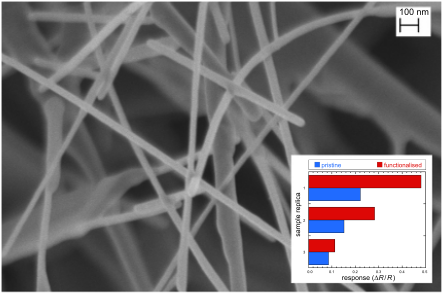
- investigated for practical applications such as the detection of gas leaks and the environmental monitoring of gaseous pollutants. Since the earliest reports in this field, research efforts were focussed on improving gas response, selectivity, and sensor stability, and on their practical use, yet further



Self-assembled monolayers and titanium dioxide: From surface patterning to potential applications
Beilstein J. Nanotechnol. 2011, 2, 845–861, doi:10.3762/bjnano.2.94

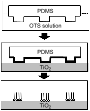
- ; Introduction Photocatalytic degradation of pollutants is attracting increasing attention. In this context, anatase-phase titanium dioxide is regarded as the photocatalyst of choice, due to its low cost, nontoxicity, and relatively high efficiency, which make it suitable not only for air and water



Template-assisted formation of microsized nanocrystalline CeO2 tubes and their catalytic performance in the carboxylation of methanol
Beilstein J. Nanotechnol. 2011, 2, 776–784, doi:10.3762/bjnano.2.86

- ]. Due to its extraordinary thermal and chemical stability, it is a promising material for catalytic, environmental and energy applications, such as in solid oxide fuel cells (SOFCs) [4][5], or for the elimination of pollutants from automobile exhaust gases, or for fluid catalytic cracking or


Enhanced visible light photocatalysis through fast crystallization of zinc oxide nanorods
Beilstein J. Nanotechnol. 2010, 1, 14–20, doi:10.3762/bjnano.1.3

- during synthesis is an attractive option for visible light photocatalysis and further results with different pollutants will be presented in succeeding reports. ZnO, apart from having specific structural properties, can also be grown on any type of substrates, such as glass, alumina, polyethylene


Other Beilstein-Institut Open Science Activities



