Search results
Search for "porosity" in Full Text gives 258 result(s) in Beilstein Journal of Nanotechnology. Showing first 200.
Understanding the performance and mechanism of Mg-containing oxides as support catalysts in the thermal dry reforming of methane
Beilstein J. Nanotechnol. 2018, 9, 1162–1183, doi:10.3762/bjnano.9.108
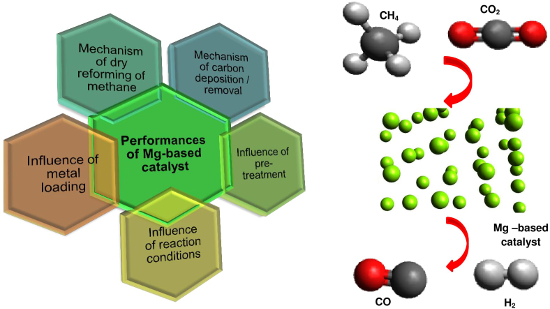
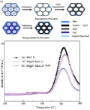
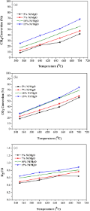
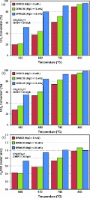
- stability in stabilizing the zirconia tetragonal phase, improved basicity sites for the support, and decreased reducibility of Ni2+. Li et al. [118] designed a Ni@Ni–Mg phyllosilicate core–shell catalyst using the hydrothermal treatment of Ni@SiO2 with Mg(NO3)2. The alkalinity and porosity of the catalyst






Comparative study of sculptured metallic thin films deposited by oblique angle deposition at different temperatures
Beilstein J. Nanotechnol. 2018, 9, 954–962, doi:10.3762/bjnano.9.89

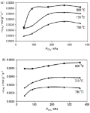
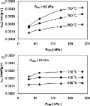
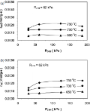
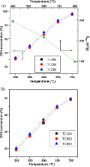
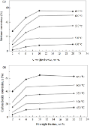
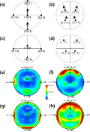
- temperature affect the columnar tilt angles and the porosity of the sculptured thin films. Exemplarily for tilted Al columns deposited at 77 K and at 300 K, in-plane pole figure measurements are carried out. A tendency to form a biaxial texture as well as a change in the crystalline structure depending on the
- substrate temperature is found for those films. Keywords: biaxial texture; metallic tilted columns; oblique angle deposition; porosity; shadowing; thin films; Introduction The ability to produce highly porous metallic thin films is a substantial issue for a large number of applications [1]. For instance
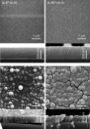
- columnar morphology, the relation between tilt angle β, porosity P and incidence angle θ is in focus of this paper. Further, the influence of surface diffusion and changes in the crystalline structure are studied. Results and Discussion Morphology and texture Figure 1 shows tilted Al columns that are



Facile chemical routes to mesoporous silver substrates for SERS analysis
Beilstein J. Nanotechnol. 2018, 9, 880–889, doi:10.3762/bjnano.9.82
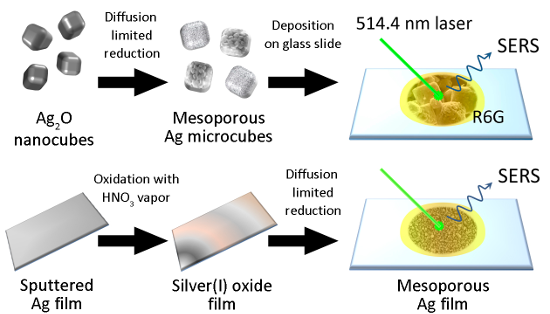
- , while in presence of PVP, the average particle diameter was 33 ± 10 nm. The characteristic feature of the crystallites was sphere-like or ellipse shaped. PVP produced no macroporous aggregates, because no large single crystals of Ag2O were in the film, but improved the porosity of the Ag film (Figure 2b


A review of carbon-based and non-carbon-based catalyst supports for the selective catalytic reduction of nitric oxide
Beilstein J. Nanotechnol. 2018, 9, 740–761, doi:10.3762/bjnano.9.68

- catalysts have been widely studied due to their high surface area, porosity, ability to regenerate and be reused, and good support properties [17]. Several metal oxides were impregnated with carbon-based materials such as carbon nanotubes (CNTs), activated carbon (AC), activated carbon nanofibres (ACNFs
- (TPO) Table 1 summarises the typical characterisation approach for SCR-NH3 catalysts. Carbon-based materials as catalyst supports for NO removal Carbonious materials have rich physical and chemical properties, which lend to their high porosity and good surface chemistry. In line with this, carbon-based
- carbon (AC), and graphene (GR) are among the most typical choices for carbon-based supports. Several features can be seen when applying carbon-based materials as a catalyst support. The dispersion of the active phase over the support increases due to the large surface area and high porosity [64][66]. The
Synthesis and characterization of two new TiO2-containing benzothiazole-based imine composites for organic device applications
Beilstein J. Nanotechnol. 2018, 9, 721–739, doi:10.3762/bjnano.9.67
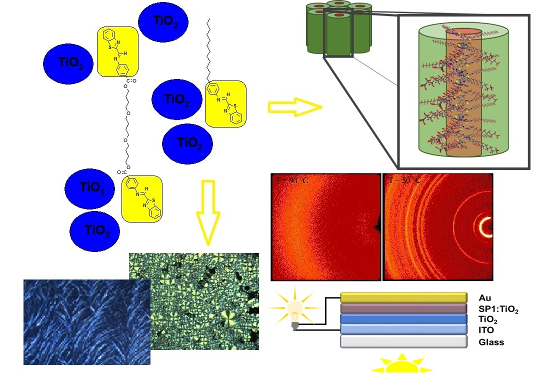
- ) experiments [34]. The average grain size of the obtained titanium dioxide was found to be about 170 nm based on XRD, scanning electron microscopy (SEM) and atomic force microscopy (AFM) results [34]. In this paper we investigated selected physical parameters of TiO2 such as surface area and porosity. To
- calculate the surface area, the Brunauer–Emmett–Teller (BET) theory was applied, while for porosity, the evaluation employing the Barrett–Joyner–Halenda (BJH) method was used. The International Union of Pure and Applied Chemistry (IUPAC) defines six types of physical sorption isotherms (I–VI), where the
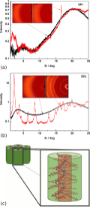
- shape analysis of isotherm gives information about the characterization of surface area and porosity of the material [44]. The obtained titanium dioxide isotherms are shown in Figure 1a. The results revealed that the shape of the TiO2 isotherm is a combination of type II and type IV. Type II sorption







Cyclodextrin-assisted synthesis of tailored mesoporous silica nanoparticles
Beilstein J. Nanotechnol. 2018, 9, 693–703, doi:10.3762/bjnano.9.64

- the particles synthesized at 0.75% (w/v) β-CD, MSNs prepared at 0.25% (w/v) revealed particle aggregates (Figure S4, Supporting Information File 1). HRTEM images of the particles evidenced porosity in both particles. The nanoparticles were also synthesized at various CTAC concentrations at the

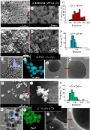


Mechanistic insights into plasmonic photocatalysts in utilizing visible light
Beilstein J. Nanotechnol. 2018, 9, 628–648, doi:10.3762/bjnano.9.59
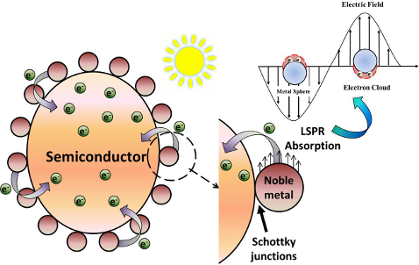
- visible and near infrared (NIR) spectrum. But in order to show enhanced plasmonic photocatalysis performance, the understanding of the material system plays a vital role. This includes the type of noble metal and semiconductor photocatalyst together with their morphology, porosity, crystallinity, contact





Ultralight super-hydrophobic carbon aerogels based on cellulose nanofibers/poly(vinyl alcohol)/graphene oxide (CNFs/PVA/GO) for highly effective oil–water separation
Beilstein J. Nanotechnol. 2018, 9, 508–519, doi:10.3762/bjnano.9.49

- ) was synthesized by a facile and green approach. The resulting CNF/PVA/GO aerogels were synthesized through an environmentally friendly freeze-drying process and then carbonized to yield CNF/PVA/GO carbon aerogels with low density (18.41 mg cm−3), high porosity (98.98%), a water contact angle of 156
- environment, CNFs with a high aspect ratio and high surface area have potential for forming a 3D network structure. As a result, research on cellulose aerogels has attracted more and more attention because of its outstanding properties such as high porosity, low thermal conductivity and low density [9][10
- aerogels with high porosity, small hole size and low surface energy. Obviously, the absorption capacity difference of the carbon aerogels was largely determined by the density of the carbon aerogel and surface tension of the solvents and oils. Additionally, the density, which demonstrates the quantity of




Photocatalytic and adsorption properties of TiO2-pillared montmorillonite obtained by hydrothermally activated intercalation of titanium polyhydroxo complexes
Beilstein J. Nanotechnol. 2018, 9, 364–378, doi:10.3762/bjnano.9.36

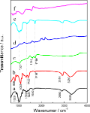
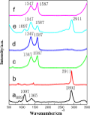
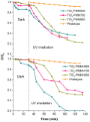
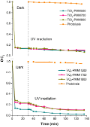
- treated sample is consistent with its increased porosity (see Table 5 below). The fact of increasing the amount of titanium on the surface of hydrothermally treated pillared samples compared to the samples without treatment is confirmed by the results of an elemental analysis using EDS spectra (Figure 5a
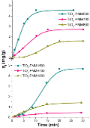
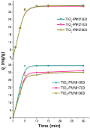
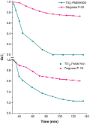
- decreases for both dyes. The TiO2-PMMH500 sample removes virtually 100% MO and 97.5% RhB from solution in 100 minutes. The considerably higher decolorization rate in this case can be explained by the higher degree of crystallinity for pillars and higher porosity (Table 5), which is known to greatly affect
- . Porosimetric measurements were carried out by low-temperature nitrogen adsorption–desorption using a specific surface area and porosity analyzer ASAP 2020 (Micromeritics, USA); prior to measurements the samples were degassed at 180 °C and residual pressure of 5–10 Pa for 3.5 h. An analysis of the sample





Review: Electrostatically actuated nanobeam-based nanoelectromechanical switches – materials solutions and operational conditions
Beilstein J. Nanotechnol. 2018, 9, 271–300, doi:10.3762/bjnano.9.29
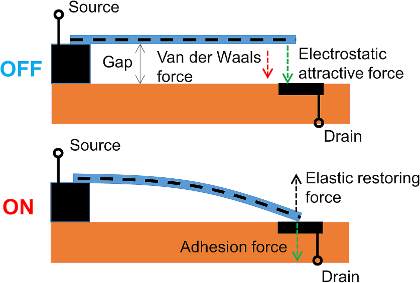
- difficult to fabricate due to their high intrinsic stress, large surface roughness and grain size, inherent porosity, and low strength. To date, there are rather few reports on metallic NEM switches [17][18][114][115]. Molybdenum is attractive as a NEM switch material due to its high melting temperature


Synthesis and characterization of electrospun molybdenum dioxide–carbon nanofibers as sulfur matrix additives for rechargeable lithium–sulfur battery applications
Beilstein J. Nanotechnol. 2018, 9, 262–270, doi:10.3762/bjnano.9.28

- nanofibers have extremely high specific surface area because of their small diameter and their porosity which exhibits excellent pore interconnectivity [25][26]. To the best of our knowledge, no articles related to using MoO2–CNFs as a sulfur matrix in Li–S batteries have been published so far. In the


Gas-assisted silver deposition with a focused electron beam
Beilstein J. Nanotechnol. 2018, 9, 224–232, doi:10.3762/bjnano.9.24

- the k-ratios of each element were determined. The atomic composition of the deposit was calculated with the SAMx STRATAGem thin-film analysis software. Although this software corrects the EDX for the thin film geometry it does not take into account the porosity (open granularity) of the film. However


Liquid-crystalline nanoarchitectures for tissue engineering
Beilstein J. Nanotechnol. 2018, 9, 205–215, doi:10.3762/bjnano.9.22

- induced 2D and 3D aligned cell growth in response to the lamellar molecular structure of LCE matrices, with tunable porosity and crosslinking density [99][100][101]. In addition, the 3D anisotropic cell scaffolds can be fabricated by using nematic LCE microspheres as building blocks by tuning elastic
- modulus, porosity, surface roughness, and local anisotropy [102]. LC hydrogels and implants in nematic and smectic-A phases LC-ordered anisotropic gels have great potential to be directly applied to regenerative medicine therapeutics, due to their intrinsic tissue compatibility. Thermally or


Bombyx mori silk/titania/gold hybrid materials for photocatalytic water splitting: combining renewable raw materials with clean fuels
Beilstein J. Nanotechnol. 2018, 9, 187–204, doi:10.3762/bjnano.9.21
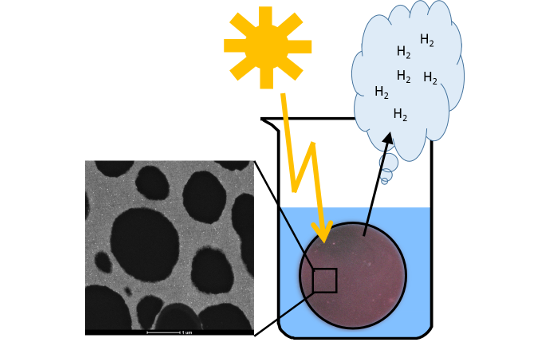
- , ideally a scaffold with a high porosity, and good chemical and mechanical stability to enable access of all reactants to the catalytically active sites over extended periods of time. Moreover, a suitable photocatalyst should ideally use a scaffold from renewable materials; ideally the scaffold should be
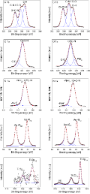
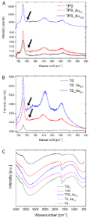
- very broad pore diameter distribution. The cumulative pore volume indicates a very undefined porosity with pore sizes mainly in the range of 200 nm and 50 µm. In contrast, in the case of monolithic TPS samples (i.e., samples that were not ground prior to analysis), the pore size distribution is
- different. Pores created between powder particles by grinding (pores bigger than 4–6 µm) cannot be detected here. As a result, the residual porosity appears more distinct, showing pores with a diameter below 10 nm and in the range of 200 nm and ca. 5 µm. Both TS samples (ground and monolithic) have a




Amplified cross-linking efficiency of self-assembled monolayers through targeted dissociative electron attachment for the production of carbon nanomembranes
Beilstein J. Nanotechnol. 2017, 8, 2562–2571, doi:10.3762/bjnano.8.256
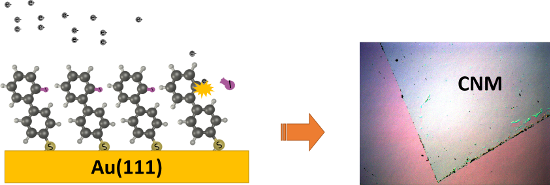
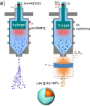
- the 2-I-BPT CNM transferred onto a TEM grid. (b) Magnification of (a) shows grid holes covered by a mechanically stable CNM with a distinct porosity (inset, green box). Acknowledgements This work was financially supported by the German Bundesministerium für Bildung und Forschung. This work was


Synthesis of metal-fluoride nanoparticles supported on thermally reduced graphite oxide
Beilstein J. Nanotechnol. 2017, 8, 2474–2483, doi:10.3762/bjnano.8.247

- porosity TRGO is an attractive carrier material for the immobilization of very small nanoparticles [8][9][10][11][12]. In 2009, the first nanoparticles@TRGO were synthesized by heating graphite oxide with Pt, Ru or Pd complexes under a nitrogen atmosphere [13]. Alternatively, salts of palladium and other


Comparing postdeposition reactions of electrons and radicals with Pt nanostructures created by focused electron beam induced deposition
Beilstein J. Nanotechnol. 2017, 8, 2410–2424, doi:10.3762/bjnano.8.240

- . Consistent with the EDS data shown in Figure 2, all of the chlorine atoms have again been removed. However, although the shape of the deposit remains unchanged, the surface morphology has changed significantly, with a large amount of granularity and increased porosity, giving it a honeycombed appearance
- these changes were fairly modest (Figure 2), but more extensive structural transformations were observed in the samples depicted in Figures 3–5. In general these structural transformations can be characterized by an increase in porosity and the formation of a honeycomb-like structure, although in one
- to remove chlorine from PtCl2 (Figures 2–4). This indicates that AH was able to diffuse (and therefore react) throughout the deposit. In part the ease of hydrogen atom diffusion within the deposit can be ascribed to its extremely small size (atomic radius = 37 pm [52]). The porosity of the purified




Systematic control of α-Fe2O3 crystal growth direction for improved electrochemical performance of lithium-ion battery anodes
Beilstein J. Nanotechnol. 2017, 8, 2032–2044, doi:10.3762/bjnano.8.204

- electrode had a layer thickness of around 30 μm and a mass loading of around 2.5 mg cm−2. The porosity of the electrode was estimated to be around 30% by calculating the ratio between theoretical volume and the real volume of the electrode. The electrode was assembled into a coin cell (CR2016) with lithium


Advances and challenges in the field of plasma polymer nanoparticles
Beilstein J. Nanotechnol. 2017, 8, 2002–2014, doi:10.3762/bjnano.8.200
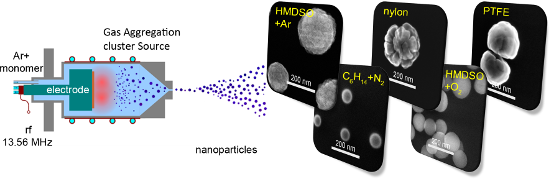
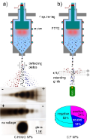
- columns inclined towards the direction of the deposition. Obviously, the porosity of the coatings is greatly increased when it is deposited over the preseeded NPs. This approach also offers the possibility to combine different materials, and hence, to independently tune the surface morphology and the






Bi-layer sandwich film for antibacterial catheters
Beilstein J. Nanotechnol. 2017, 8, 1982–2001, doi:10.3762/bjnano.8.199

- conformal. This means it needs to exhibit a certain constant porosity along the capillary, i.e., a certain and reliable thickness along the catheter, irrespective of whether the surface of the bottom layer is bent or parallel to the wall. Since the exterior wall surface of the catheter is in intimate
- the capillary. Another challenge is that the degree of porosity depends on the preparation conditions for the protecting layer, in particular of its thickness. The vague expression porosity must be brought into a quantitative relation to the thickness and to the release rate of Ag+ ions. Thickness
- influence on the porosity, and the influence of the above properties on the release rate of antibacterial Ag+ ions. Experimental Silver film Deposition The deposition of metallic silver is an electroless reaction in aqueous solution. Silver ions are reduced by a saccharide (glucose or maltose) at elevated


Fabrication of carbon nanospheres by the pyrolysis of polyacrylonitrile–poly(methyl methacrylate) core–shell composite nanoparticles
Beilstein J. Nanotechnol. 2017, 8, 1897–1908, doi:10.3762/bjnano.8.190

- point of nitrogen using a surface area and porosity analyzer (ASAP2020, Micromeritics). The specific surface area of the samples was calculated according to BET theory. The pore size of carbon nanospheres was calculated from the desorption branch of nitrogen isotherms using the Barret–Joyner–Halenda



Near-infrared-responsive, superparamagnetic Au@Co nanochains
Beilstein J. Nanotechnol. 2017, 8, 1680–1687, doi:10.3762/bjnano.8.168

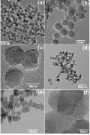
- , behaved as a soft template for chain growth [47], as described below. Notably, the shells appear to possess varying porosity. Consequently, it is plausible that Co2+ and AuCl4− ions continuously diffused through the shell during the galvanic replacement reaction and thereby gave rise to the formation of


Nanotopographical control of surfaces using chemical vapor deposition processes
Beilstein J. Nanotechnol. 2017, 8, 1250–1256, doi:10.3762/bjnano.8.126

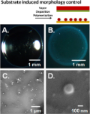
- solid monomer and polymerization. Following the deposition process, the solid monomer is removed via sublimation, leading to membrane structures with dual-scale porosity. The growth rate and the pore size of the resulting membrane can be controlled by the reactor parameters, such as deposition time




A top-down approach for fabricating three-dimensional closed hollow nanostructures with permeable thin metal walls
Beilstein J. Nanotechnol. 2017, 8, 1231–1237, doi:10.3762/bjnano.8.124

- permeability (e.g., role of porosity, pore size control, diffusion constants, effect of Al thickness and degree of oxidation), which is beyond the scope of this preliminary proof-of-concept work, should provide deeper insight into the mechanisms of the demonstrated emptying process. Figure 3a shows the


Hierarchically structured nanoporous carbon tubes for high pressure carbon dioxide adsorption
Beilstein J. Nanotechnol. 2017, 8, 1135–1144, doi:10.3762/bjnano.8.115
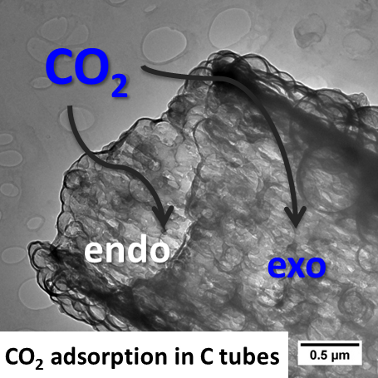
- [49] might be one reason for the observed changes in the pore size distribution. Interestingly, changes in the pore structure induced by the high pressure CO2 adsorption are similar to the porosity changes caused by thermal annealing (Table 1). Annealing, similar to high pressure CO2 adsorption, leads