

Search results
Search for "resolution" in Full Text gives 1331 result(s) in Beilstein Journal of Nanotechnology. Showing first 200.
Exfoliation of titanium nitride using a non-thermal plasma process
Beilstein J. Nanotechnol. 2024, 15, 631–637, doi:10.3762/bjnano.15.53
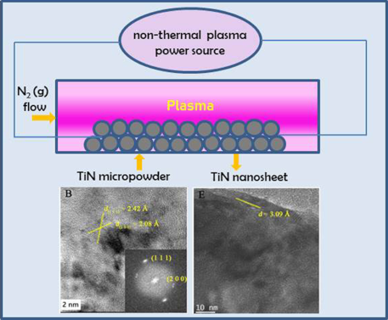
- the same exfoliation method. These combined findings highlight the structural changes during the non-thermal plasma exfoliation process, further supporting the successful transformation of bulk TiN into nanosheets. Figure 3 shows high-resolution transmission electron microscopy (HRTEM) images of TiN
- higher transparency to the microscope beam is observed, indicating fewer scattering centers. When comparing Figure 3a and Figure 3d, it is clear that the initial compact 3D TiN blocks underwent a transformation and evolved into plate-like thin layers. The high-resolution image in Figure 3f shows a



AFM-IR investigation of thin PECVD SiOx films on a polypropylene substrate in the surface-sensitive mode
Beilstein J. Nanotechnol. 2024, 15, 603–611, doi:10.3762/bjnano.15.51
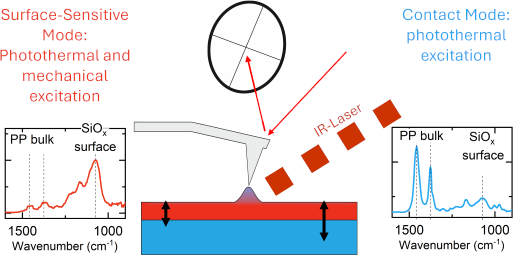
- Photothermal AFM-IR nanospectroscopy is a technique that combines the chemical information from infrared (IR) spectroscopy with the high spatial resolution of atomic force microscopy (AFM). For this, the sample is illuminated with a tunable IR laser [1]. When a suitable IR wavelength is chosen, resonant
- of spatial resolution. In ATR-IR spectroscopy, the resolution is theoretically limited by λ/2, which corresponds to several µm [3]. In contrast, the development of new and powerful tunable IR laser sources, such as optical parametric oscillator (OPO) and quantum cascade lasers (QCL), enabled a
- nanoscale resolution of AFM-IR down to 10 nm [3]. Nowadays, the limit of the spatial resolution is given by the apex of the AFM tip. One of the first AFM-IR demonstrations was reported in 2005 by Dazzi et al. [4], who presented AFM-IR spectra of single bacterial cells. Further on, this technique became more


Stiffness calibration of qPlus sensors at low temperature through thermal noise measurements
Beilstein J. Nanotechnol. 2024, 15, 580–602, doi:10.3762/bjnano.15.50
- University, CNRS, Centrale Marseille, FSCM (FR1739), CP2M, 13397 Marseille, France 10.3762/bjnano.15.50 Abstract Non-contact atomic force microscopy (nc-AFM) offers a unique experimental framework for topographical imaging of surfaces with atomic and/or sub-molecular resolution. The technique also permits
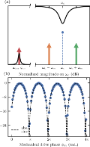
- possible to quantify the interatomic interaction forces that develop between the tip and the surface acquired in spectroscopic data cube modes [7][8] with both high sensitivity and high spatial resolution. Recently, the force sensitivity has been pushed forward, and forces as low as 100 fN have been
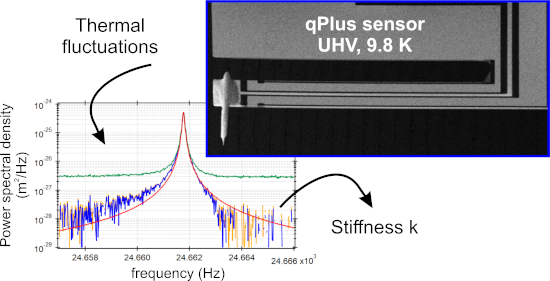
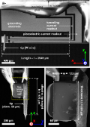
- -Omicron, operated at 9.8 K. We use commercial qPlus sensors purchased from Scienta-Omicron. Scanning electron microscopy (SEM) pictures of one of these probes are shown in Figure 1. SEM analysis was performed with a Zeiss GeminiSEM 500 ultrahigh-resolution FESEM at 15 kV. Secondary electron detection was

Radiofrequency enhances drug release from responsive nanoflowers for hepatocellular carcinoma therapy
Beilstein J. Nanotechnol. 2024, 15, 569–579, doi:10.3762/bjnano.15.49
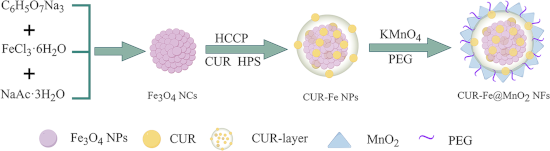
- sample was added to ethanol and ultrasonically dispersed. Then the dispersed liquid was added dropwise to the copper net. After drying, the US FEI Tecnai F20 TEM was used at an accelerated voltage of 200 kV to capture the morphology in high resolution. Zeta potentials and hydrodynamic diameters were


Directed growth of quinacridone chains on the vicinal Ag(35 1 1) surface
Beilstein J. Nanotechnol. 2024, 15, 556–568, doi:10.3762/bjnano.15.48
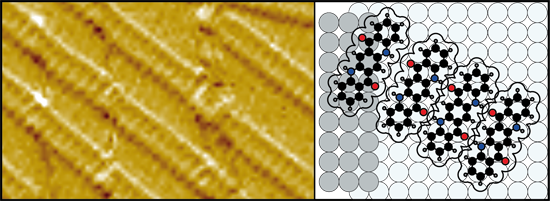
- ) can be seen (red circles in Figure 2a), while in the other 50% of all cases, it looks as if the chain grows undistorted across the Ag step (light blue circles). For a closer look, a zoom-in onto chains at Ag step edges with molecular resolution is displayed in the inset. The blue circle highlights a
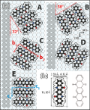
- of three QA chains at a Ag step edge, which was chosen for the high molecular resolution. (b) Small-scale STM image (UBias = 1.5 V, I = 25 pA) showing two of the four azimuthal orientations A and D, as well as two chains in the new orientation E (red lines). The black dashed lines indicate the


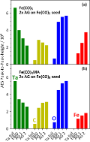
Electron-induced deposition using Fe(CO)4MA and Fe(CO)5 – effect of MA ligand and process conditions
Beilstein J. Nanotechnol. 2024, 15, 500–516, doi:10.3762/bjnano.15.45

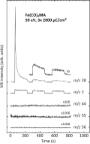
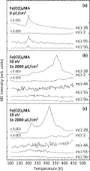

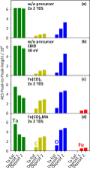
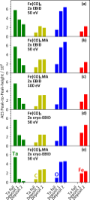

Aero-ZnS prepared by physical vapor transport on three-dimensional networks of sacrificial ZnO microtetrapods
Beilstein J. Nanotechnol. 2024, 15, 490–499, doi:10.3762/bjnano.15.44
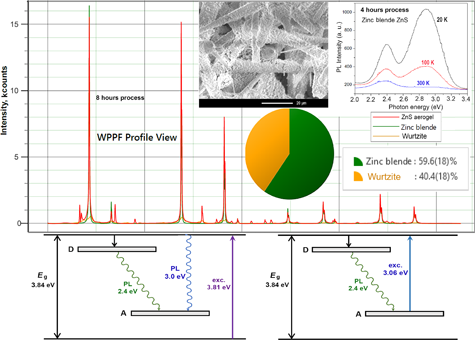
- selected to focus the light on the sample surface. The system calibration was performed on a monocrystalline Si wafer with the main peak measured at 521 cm−1. A 1200 gr/mm grating with a resolution of 1 cm−1 was utilized. SEM images of ZnS microtetrapods obtained from ZnO microtetrapods after a



Photocatalytic degradation of methylene blue under visible light by cobalt ferrite nanoparticles/graphene quantum dots
Beilstein J. Nanotechnol. 2024, 15, 475–489, doi:10.3762/bjnano.15.43
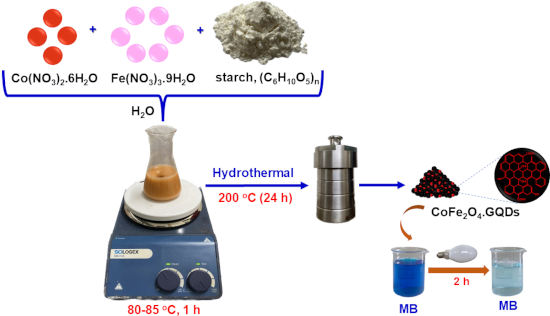
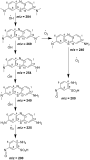
- (Japan). High-resolution transmission electron microscopy (HR-TEM) observation was performed with a JEM 1010. The intermediates in the MB degradation were determined by using an Agilent 1100 LC/MS-MS system with an electron spray ionization source combined with an ion trap. Synthesis of CoFe2O4, CoFe2O4




Sidewall angle tuning in focused electron beam-induced processing
Beilstein J. Nanotechnol. 2024, 15, 447–456, doi:10.3762/bjnano.15.40
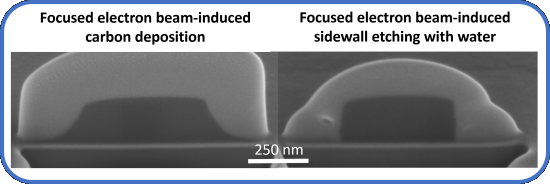
- simply varying the etch position on the sidewall using the top view SE image for reference, the slope of the deposit can be tuned from negative (outward) to positive (inward). The evolution has been studied in detail by high-resolution imaging in a TEM. A surprising trend not indicated by the simple
- : Additional experimental data. Acknowledgements Considerable parts of this paper originate from Hari, S., ‘High resolution resist-free lithography in the SEM’, doctoral thesis (chapter 6), Delft University of Technology, Netherlands, 2017. Funding This work is supported by NanoNextNL, a micro- and




Heat-induced morphological changes in silver nanowires deposited on a patterned silicon substrate
Beilstein J. Nanotechnol. 2024, 15, 435–446, doi:10.3762/bjnano.15.39
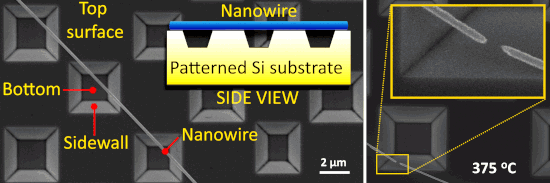
- number of split events per length of either adhered or suspended part. The number of splits was calculated from SEM images of the large areas (approx. 120 × 80 µm) taken with maximum picture resolution (6144 × 4415). This ensured that there was no bias in choosing individual NWs for analysis, but all NWs


Investigating ripple pattern formation and damage profiles in Si and Ge induced by 100 keV Ar+ ion beam: a comparative study
Beilstein J. Nanotechnol. 2024, 15, 367–375, doi:10.3762/bjnano.15.33
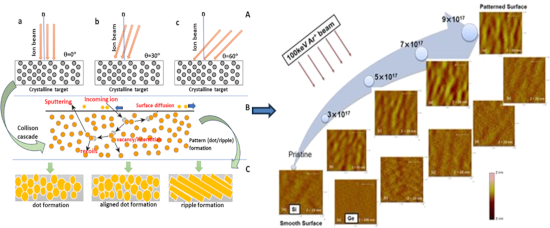
- electron microscopy; Introduction Scientific research varying from electronics to photonics, homeland security, high-resolution parallel patterning of magnetic media, biotechnology, and medicine are based upon nanotechnology. These applications require nanopatterning techniques to fabricate devices or
- in a controlled manner on a wide variety of substrates with required dimensions. There are reports from 1960’s, by Cunningham et al. [1] and Navez et al. [2], on the production of submicron and nanoscale patterns by IBS. However, with the availability of high-resolution tools such as atomic force
- ions (He+ ≈1–2 MeV). It impinges on the target material which provides good mass and depth resolution and also probes smaller radiation damages [35]. The damage produced by ion implantation in semiconductors consists of randomly distributed atoms displaced from their regular lattice sites up to a depth


Comparative electron microscopy particle sizing of TiO2 pigments: sample preparation and measurement
Beilstein J. Nanotechnol. 2024, 15, 317–332, doi:10.3762/bjnano.15.29

- nm, setting the requirements for the measurement conditions. These must allow the smallest particles to be imaged with sufficient resolution and record a field of view such that it does not cut off a significant fraction of the largest particles. With a resolution of 1.4 nm/pixel and a field of view
- calculated, and the result is given in Table 1. The larger particles are therefore systematically underrepresented in any EM measurement. As such, any microscopic measurement is biased towards smaller particles because of simple geometric constraints; the higher the resolution and the smaller the field of
- hand. Both particle size distributions show two maxima, one for primary particles and one for aggregates and agglomerates. Re-dispersion destroys agglomerates that formed overnight and increases the number of primary particles. SEM top-view image; in-lens SE detector, resolution: 0.99 nm/pixel, field


Vinorelbine-loaded multifunctional magnetic nanoparticles as anticancer drug delivery systems: synthesis, characterization, and in vitro release study
Beilstein J. Nanotechnol. 2024, 15, 256–269, doi:10.3762/bjnano.15.24
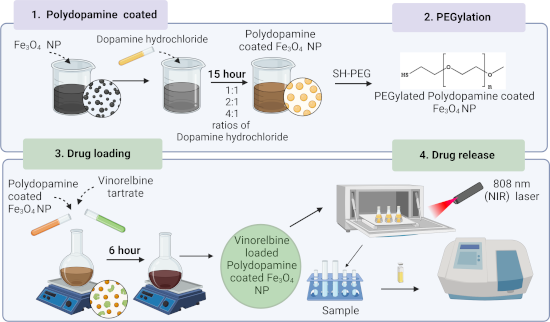
- -resolution analytical electron microscope (FE-SEM, Thermo Scientific, Apreo 2S LoVac) and a scanning transmission electron microscope (STEM, Phillips XL, 30 ESEM-FEG/EDAX) operating at 120 kV acceleration voltage. The structure of the nanoparticles was analyzed by X-ray diffraction (XRD, PANalytical, Xpert


Design, fabrication, and characterization of kinetic-inductive force sensors for scanning probe applications
Beilstein J. Nanotechnol. 2024, 15, 242–255, doi:10.3762/bjnano.15.23
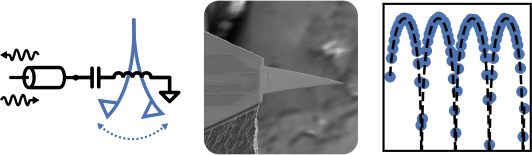
- microscopy (SPM), the tip plays a fundamental role in the achievable lateral resolution of the image. The focused electron-beam induced deposition (FEBID) [34] technique has been adapted to fabricate tips for SPM, for example, to enhance commercial platinum–iridium alloy (Pt-Ir)-coated conductive tips [35

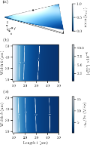


Quantitative wear evaluation of tips based on sharp structures
Beilstein J. Nanotechnol. 2024, 15, 230–241, doi:10.3762/bjnano.15.22
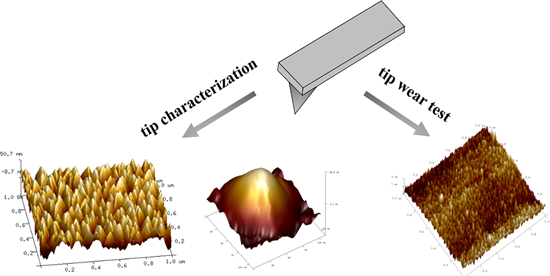
- . Orji et al. [14] utilized a transmission electron microscope (TEM) to image a tip and derived its tapered shape from the TEM image. Electron microscopic observation offers the advantages of high precision and resolution, enabling accurate acquisition of morphological information about the tip. However




Ion beam processing of DNA origami nanostructures
Beilstein J. Nanotechnol. 2024, 15, 207–214, doi:10.3762/bjnano.15.20
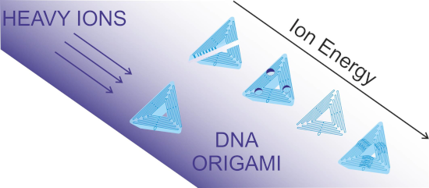
- nanoparticle binding [50][51] can be used to bring metallic materials to the surface at unprecedented resolution. Irradiation of such metal–DNA origami nanostructures with ion beams can be used to manufacture metallic nanostructures with sub-nanometer resolution. Finally, the localized DNA origami height


Graphene removal by water-assisted focused electron-beam-induced etching – unveiling the dose and dwell time impact on the etch profile and topographical changes in SiO2 substrates
Beilstein J. Nanotechnol. 2024, 15, 190–198, doi:10.3762/bjnano.15.18
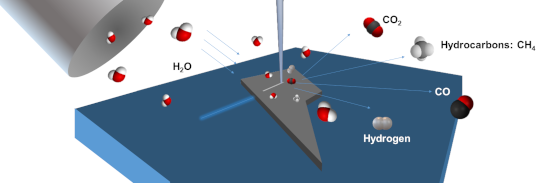
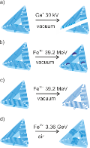
- processes using the so-called focused electron-beam-induced etching (FEBIE), with a spatial resolution of ten nanometers. Nanopatterning graphene with such a method in one single step and without using a physical mask or resist is a very appealing approach. During the process, on top of graphene
- communication devices. All those future technologies will require high-precision lithography techniques with excellent lateral resolution, high throughput, and minimized possibility of material damage. In the last decade, several approaches have been made to provide the most suitable method for patterning
- shape control are very limited in those cases. Conventional electron beam lithography (EBL) reaches the resolution of a few nanometers. However, it leaves residual resists on the surface [9], which strongly affects electrical transport properties [10]. A similar high resolution can be achieved with e


Enhanced feedback performance in off-resonance AFM modes through pulse train sampling
Beilstein J. Nanotechnol. 2024, 15, 134–143, doi:10.3762/bjnano.15.13

- at frequencies far away from the resonance frequency of the cantilever (off-resonance tapping (ORT) modes) can provide high-resolution imaging of a wide range of sample types, including biological samples, soft polymers, and hard materials. These modes offer precise and stable control of vertical


In situ optical sub-wavelength thickness control of porous anodic aluminum oxide
Beilstein J. Nanotechnol. 2024, 15, 126–133, doi:10.3762/bjnano.15.12
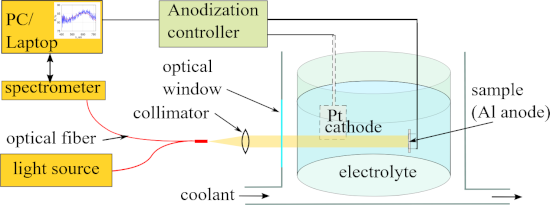
- , temperature, voltage, and sample geometry) were found to be less than 1 nm/s. Together with spectrum acquisition, data transfer, and other tasks, it was possible to extract hPAAO values at 0.2 s intervals, which resulted in sub-nanometer sampling resolution of hPAAO. However, it is important to note that


Influence of conductive carbon and MnCo2O4 on morphological and electrical properties of hydrogels for electrochemical energy conversion
Beilstein J. Nanotechnol. 2024, 15, 57–70, doi:10.3762/bjnano.15.6
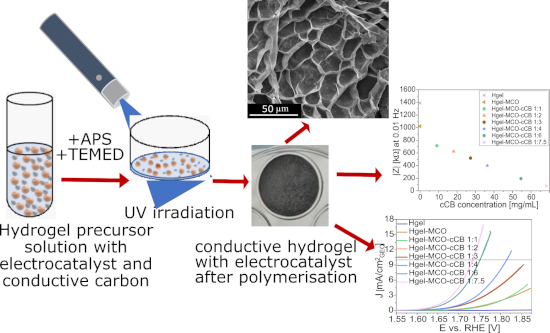
- present material functional groups, FTIR spectroscopy in attenuated total reflectance (ATR) mode was used (Bruker Vertex70 FT-IR Spectrometer). The FTIR analysis was carried out in a wavenumber range of 400–4000 cm−1 and with a resolution of 2 cm−1 and eight scans were made for each sample. Transmittance


TEM sample preparation of lithographically patterned permalloy nanostructures on silicon nitride membranes
Beilstein J. Nanotechnol. 2024, 15, 1–12, doi:10.3762/bjnano.15.1

- –iron alloy (80 atom % Ni and 20 atom % Fe) that has a small coercive field (Hc) [17] and low magnetostriction (λs) [18], as well as high permeability and high saturation magnetization (Ms) [19]. TEM offers high spatial resolution for magnetic imaging. TEM-based magnetic imaging techniques such as
- advantageous in terms of structural resolution, process simplicity, and the absence of resist residues [21]. We have fabricated ferromagnetic nanodisks on a conventional TEM grid from TedPella® using three different fabrication methods. In the first method, a bilayer of positive PMMA resist yielded an undercut
- structure. The resist was patterned using an electron beam, which offers higher resolution than other sources (e.g., UV light) because of the smaller wavelength of electrons. Since the use of an ultrasonic bath will destroy the free-standing membrane, the undercut must be deliberately made larger to ensure


unDrift: A versatile software for fast offline SPM image drift correction
Beilstein J. Nanotechnol. 2023, 14, 1225–1237, doi:10.3762/bjnano.14.101

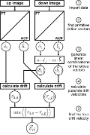
- autocorrelation is superior for images containing very few unit cells. In between these extremes, there is a range where both methods work well as shown in our examples in Figure 2. The dependence of the optimal transformation for peak extraction on the image size is caused by the finite resolution of the
- series After discussing the performance of unDrift under different experimental conditions, we now demonstrate the applicability to long image series spanning several hundred SPM images with an example shown in Figure 5. The presented series comprises 530 high-resolution AFM images recorded at the
- directions. Extraction of lattice vectors from images exhibiting periodic structures. (a, d) High-resolution AFM images showing atomic resolution at the calcite (10.4)–water interface. (b, e) Fourier transform images of the real-space images shown in (a) and (d). The maxima in the Fourier transforms are


Fluorescent bioinspired albumin/polydopamine nanoparticles and their interactions with Escherichia coli cells
Beilstein J. Nanotechnol. 2023, 14, 1208–1224, doi:10.3762/bjnano.14.100

- high-resolution fluorescence imaging (high-resolution confocal microscopy). Also, the capacity of the pristine and fluorescent NPs to inhibit the growth of bacterial cells was evaluated through minimal inhibitory concentration (MIC) tests. The MIC value was also determined for Staphylococcus aureus (S
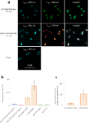
- inversely related to NP size [36]. The accumulation of pristine and fluorescent BSA/PDA NPs was evaluated by standard and high-resolution fluorescence confocal microscopy after 24 h of contact of NPs with E. coli cells. Obviously, bacteria without NPs and bacteria with pristine BSA/PDA NPs were not detected
- ), a low fluorescence signal was detected in the 460–541 nm and 415–482 nm ranges with the standard and the high-resolution microscope, respectively (Supporting Information File 1, Figure S7a). In part, it may result from the fluorescence of Ox-BSA/PDA NPs at λexc = 405 nm; however, it is more probably



A combined gas-phase dissociative ionization, dissociative electron attachment and deposition study on the potential FEBID precursor [Au(CH3)2Cl]2
Beilstein J. Nanotechnol. 2023, 14, 1178–1199, doi:10.3762/bjnano.14.98



Spatial variations of conductivity of self-assembled monolayers of dodecanethiol on Au/mica and Au/Si substrates
Beilstein J. Nanotechnol. 2023, 14, 1169–1177, doi:10.3762/bjnano.14.97

- applied method uses conductive atomic force microscopy (CAFM). In this technique, a conductive probe is used in an AFM, which allows for imaging the surface topography (and other characteristics such as adhesion and stiffness) with lateral resolution while simultaneously being able to measure current
- coating on a non-conductive probe in contrast to the CoCr-coated Si probes. This is at the cost of lateral resolution due to the larger radius of the probe apex. All measurements presented here were carried out in the Quantitative Imaging (QI™) mode by JPK. A sketch of the procedure is shown in Figure 1