
Search results
Search for "targeting" in Full Text gives 206 result(s) in Beilstein Journal of Nanotechnology. Showing first 200.
Carbon nanomaterials sensitize prostate cancer cells to docetaxel and mitomycin C via induction of apoptosis and inhibition of proliferation
Beilstein J. Nanotechnol. 2017, 8, 1307–1317, doi:10.3762/bjnano.8.132
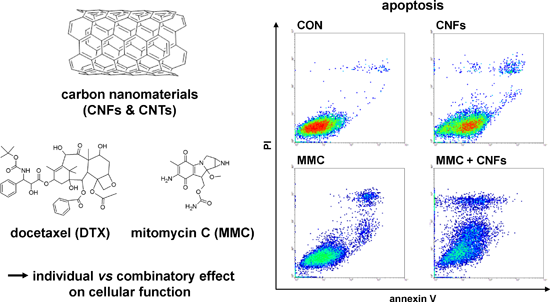
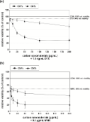
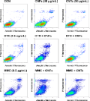
- various therapeutic drugs and to be internalized by cells. Furthermore, the functionalization with targeting ligands against cancer cell-specific molecules such as antibodies, peptides or aptamers represents another advantage of carbon nanomaterials [9][10][11][12]. We and others have previously shown
- complex drug delivery systems at the tumor site would minimize systemic resorption and deleterious effects to healthy tissues. Carbon nanomaterials such as CNFs and CNTs represent a much investigated option for such biomedical applications. In addition to facilitate a passive targeting, various studies


Bright fluorescent silica-nanoparticle probes for high-resolution STED and confocal microscopy
Beilstein J. Nanotechnol. 2017, 8, 1283–1296, doi:10.3762/bjnano.8.130
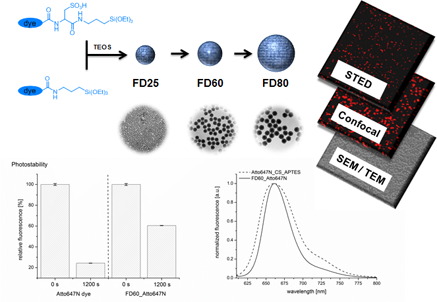
- components and structures are not only important in the nanomedical field but also in nanotoxicology. Due to the fact that more and more nano-based materials come to market and are developed for everyday use, the latter discipline is targeting the effects of engineered nanomaterials on living organisms [15


Evaluation of quantum dot conjugated antibodies for immunofluorescent labelling of cellular targets
Beilstein J. Nanotechnol. 2017, 8, 1238–1249, doi:10.3762/bjnano.8.125
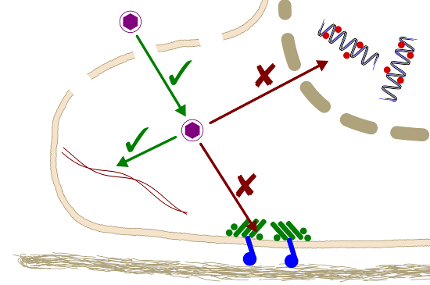
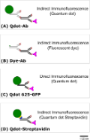
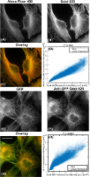
- bright fluorescent Qdot signal in the cytosol. Assessing nuclear accessibility of Qdots: Fluorescent in situ hybridisation (FISH) is another application where specific intracellular targeting is required. Like many applications, FISH benefits from bright photostable probes, and indeed several studies



Nano-engineered skin mesenchymal stem cells: potential vehicles for tumour-targeted quantum-dot delivery
Beilstein J. Nanotechnol. 2017, 8, 1218–1230, doi:10.3762/bjnano.8.123
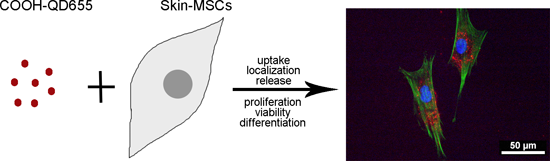
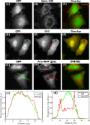
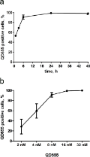
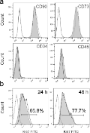
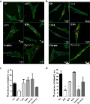
- MSCs to assess their potential use as vectors for the targeting of SC or other tumours. Results Optimal QD labelling conditions for MSCs The concentration-dependent cytotoxicity of QDs was analysed in MSC cultures after 24 and 48 h using a colorimetric CCK-8 assay, which measures intracellular





Nanoscale isoindigo-carriers: self-assembly and tunable properties
Beilstein J. Nanotechnol. 2017, 8, 313–324, doi:10.3762/bjnano.8.34

- nanoparticles For the preparation of solid isoindigo nanoparticles (SIPs), the method of nanoprecipitation was used. Precipitation is a commonly used technique in pharmaceutical technology [42][55][56]. This method is documented for protein encapsulation [57], hydrophobic drugs [58], and also for targeting




Chitosan-based nanoparticles for improved anticancer efficacy and bioavailability of mifepristone
Beilstein J. Nanotechnol. 2016, 7, 1861–1870, doi:10.3762/bjnano.7.178

- the gastrointestinal absorption and bioavailability of nanoparticles designed for oral administration was closely related to the properties of the composition and the ingredient for specific targeting [30], the influencing factors of the size of MCNs were not studied in this work. In vitro release


Antitumor magnetic hyperthermia induced by RGD-functionalized Fe3O4 nanoparticles, in an experimental model of colorectal liver metastases
Beilstein J. Nanotechnol. 2016, 7, 1532–1542, doi:10.3762/bjnano.7.147

- alternating magnetic field in order to achieve hyperthermia. The evolution of an in vivo model has been described, resulting in a significant reduction in tumor viability. Keywords: magnetite nanoparticles; magnetic hyperthermia; RGD functionalization; tumor targeting; Introduction Colorectal liver


Viability and proliferation of endothelial cells upon exposure to GaN nanoparticles
Beilstein J. Nanotechnol. 2016, 7, 1330–1337, doi:10.3762/bjnano.7.124
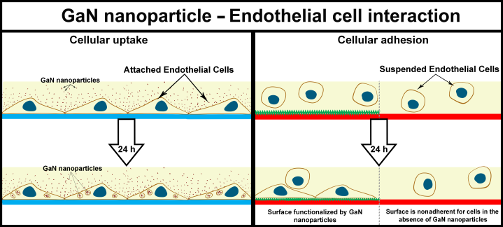
- result of chemical instability and involves an increase of Zn2+ in the culture medium [21]. After three days of incubation, GaN nanoparticles were observed in close association with porcine endothelial cells. These findings are promising with regard to targeting endothelial cells with nanoparticles [22
- ]. Cell targeting with nanoparticles could be applied in diseases affecting vascular structures. In such a case, nanoparticles could be injected in a highly vascularized area, like in some eye diseases that affect the posterior eye, where intraocular injection procedures could harm healthy tissue and
- cause vision-threatening complications [23][24][25]. Cellular therapies that involve targeting of nanoparticle-loaded endothelial cells to sites of arterial injury using an external electric or magnetic field, could speed up re-endothelialization by promoting integration into the new endothelial layer



Multiwalled carbon nanotube hybrids as MRI contrast agents
Beilstein J. Nanotechnol. 2016, 7, 1086–1103, doi:10.3762/bjnano.7.102
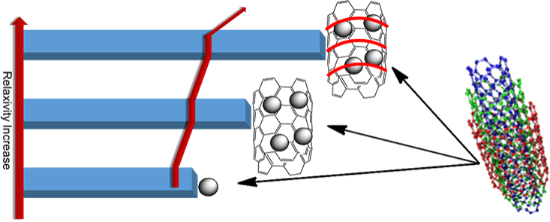
- their potential as CAs exclusively in one of the MRI modes (T1 or T2). Further requirements consisted in better biocompatibility with the targeting of tumor cells, coupling with stem cells as well as crossing the cell membrane and blood–brain barrier. Finally, involving CNT activity in other diagnostic
- on their specificity of targeting to desired organs [49][50]. However, the negative CAs, routinely represented by SPIOs [46], also have their targets. The acceleration efficiency is expressed by the relaxivities r1 and r2, which are calculated as the reciprocal relaxation time effect caused by a unit
- exhibit high over-expression of the folate receptor, the targeting effect was remarkable and was found to reach 64% signal enhancement in reference to 45% for the non-functionalized hybrids. Lamanna and Vittorio were able to localize the marked cells by their darkened contrast and emphasized the unique

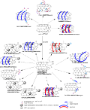


Novel roles for well-known players: from tobacco mosaic virus pests to enzymatically active assemblies
Beilstein J. Nanotechnol. 2016, 7, 613–629, doi:10.3762/bjnano.7.54
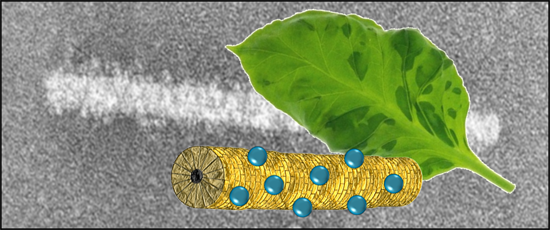
- dyes for imaging purposes either tracing the virus itself, or targeting specific cells or organs [73][74][75][76], antigens for the development of vaccines as reviewed in great detail [77][78][79], drugs or imaging reagents for increasingly elaborated biomedical applications [80][81][82] with numerous
- , energy conversion, plasmonics or magnetic resonance imaging [82][92][100][114][115][116][117][118][119][120][121], and as carrier rods for effector peptides for distinct purposes from affinity binding, intravital targeting up to cell-culture supports [105][111][117][122][123][124], or as antigens for


Investigating organic multilayers by spectroscopic ellipsometry: specific and non-specific interactions of polyhistidine with NTA self-assembled monolayers
Beilstein J. Nanotechnol. 2016, 7, 544–553, doi:10.3762/bjnano.7.48

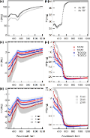
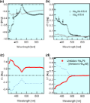
- as the delivery of polymeric gene vehicles [29] or for the design of NTA-functionalized fluorescent probes able to track cellular events in situ by targeting specific His-tagged proteins [30][31]. Beyond selectivity, the reversibility of the NTA–Ni(II)-His coupling upon reaction with competitive



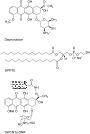
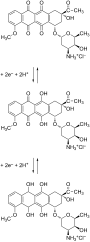
Comparison of the interactions of daunorubicin in a free form and attached to single-walled carbon nanotubes with model lipid membranes
Beilstein J. Nanotechnol. 2016, 7, 524–532, doi:10.3762/bjnano.7.46
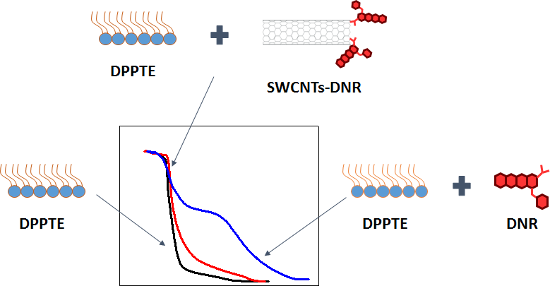
- between targeting agents and their receptors, such as for example folates and transferrin [7][8]. Additionally, liposomes are also prepared in such a way that simultaneous loading of two drugs into a liposome in order to improve the efficiency of the treatment is possible [9]. Dual drug loading is also
- -stranded DNA or RNA sequences showing high specificity and affinity to their targets, which were employed as molecular targeting agents for targeted drug transport. Carbon nanotubes (CNTs) are among the promising drug delivery systems. They attract scientists’ attention due to their properties such as




pH-Triggered release from surface-modified poly(lactic-co-glycolic acid) nanoparticles
Beilstein J. Nanotechnol. 2015, 6, 2504–2512, doi:10.3762/bjnano.6.260

- ] or improved drug targeting. These optimization procedures are generally performed after particle assembly, since the nanoparticle formation is influenced by many parameters and often limited by minor changes in the experimental setup. However, several further surface modifications are well


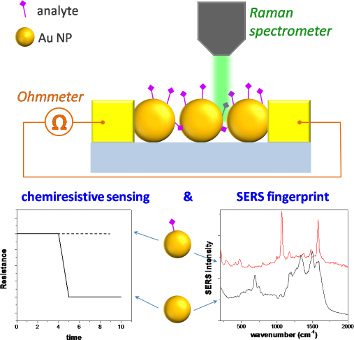
Chemiresistive/SERS dual sensor based on densely packed gold nanoparticles
Beilstein J. Nanotechnol. 2015, 6, 2498–2503, doi:10.3762/bjnano.6.259
- folic acid molecules. Folic acid is a low molecular weight vitamin compound, which has been shown to be an effective targeting vector of various cancer cell lines which over-express folate receptors [7]. It also proved to be an effective capping ligand for linking onto various polymer backbones or


Analyzing collaboration networks and developmental patterns of nano-enabled drug delivery (NEDD) for brain cancer
Beilstein J. Nanotechnol. 2015, 6, 1666–1676, doi:10.3762/bjnano.6.169

- conjugates and so on [6][7][8]. Among these, the brain tumor-targeting drug delivery systems, which increase drug accumulation in the tumor region and reduce toxicity in the normal brain and peripheral tissue, are a promising new approach [9]. Collaboration fosters interactions between different actors


Natural and artificial binders of polyriboadenylic acid and their effect on RNA structure
Beilstein J. Nanotechnol. 2015, 6, 1338–1347, doi:10.3762/bjnano.6.138

- under investigation. A possibility to achieve the desired selectivity involves the conjugation of these binders with molecules (targeting agents) specific for receptors overexpressed on cancer cells in analogy to the work of Guaragna et al. concerning folate-conjugated drugs [21]. In this way the
- delivery of these molecular tools can be selectively directed towards cancer cells and, after their internalization, the anticancer activity could be exerted either by the entire conjugate or by the free binder after loss of the targeting agent. Thus, due to the importance of poly(rA) binders, for example
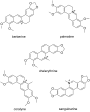
- these alkaloids show interesting binding abilities towards RNA structures and are currently the object of scientific investigation with the aim to develop drugs based on RNA targeting [22][23]. Among the various isoquinoline alkaloids able to bind poly(rA), particular relevance is attributed to





PLGA nanoparticles as a platform for vitamin D-based cancer therapy
Beilstein J. Nanotechnol. 2015, 6, 1306–1318, doi:10.3762/bjnano.6.135

- targeting gene expression via both genomic and nongenomic pathways [1]. Although known as an important regulator of calcium homeostasis and bone mineralization [3], several studies support that vitamin D also plays a major role in tumor pathogenesis, progression and therapy [2]. Calcitriol is also regarded
- internalized by targeted cells, increasing intracellular drug delivery [20], allowing a sustained and controlled drug release over time [19]. Moreover, PLGA NPs could offer selective drug delivery to tumor tissue either by passive targeting with the enhanced permeability and retention effect (EPR) [18] or by
- active targeting, using functionalized NPs [21]. Thus, the drug toxicity on healthy cells could be reduced, increasing NPs accumulation in the target tissues [19]. Although several studies on vitamin D3 encapsulation for food fortification have been conducted, very few works reported the use of


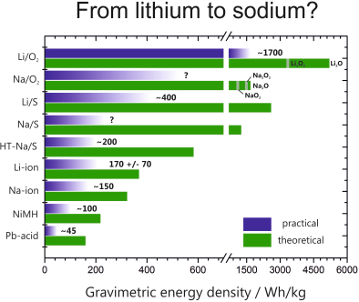
From lithium to sodium: cell chemistry of room temperature sodium–air and sodium–sulfur batteries
Beilstein J. Nanotechnol. 2015, 6, 1016–1055, doi:10.3762/bjnano.6.105


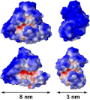
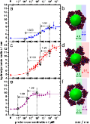
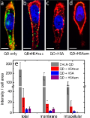
Protein corona – from molecular adsorption to physiological complexity
Beilstein J. Nanotechnol. 2015, 6, 857–873, doi:10.3762/bjnano.6.88

- an HSA or transferrin corona both reduced the amount of endocytosed NPs with the exact causes for this behavior remaining uncertain. Also focusing on the transferrin corona, Salvati, Dawson and co-workers were able to demonstrate how transferrin-functionalized NPs can lose their targeting
- -functionalized NPs shielding transferrin from binding to both its cognate receptors on cells and also to soluble transferrin receptors. While NPs were still taken up by the cells, the targeting specificity of transferrin was lost. These findings underline very well, the complexity of the situation where even
- protein mediated cell-targeting suffers from corona formation under physiological conditions. Future approaches need to work around these effects and a detailed mechanistic knowledge is needed in order to do so. In a different approach, Treuel, Nienhaus and co-workers [4] studied the uptake of DHLA coated



Silica micro/nanospheres for theranostics: from bimodal MRI and fluorescent imaging probes to cancer therapy
Beilstein J. Nanotechnol. 2015, 6, 546–558, doi:10.3762/bjnano.6.57
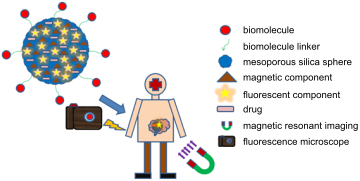
- chemically modified with different targeting agents for a specific delivery of these nanocomposites. 2.1 Lanthanide complexes as both magnetic and fluorescent probe The electronic and magnetic properties of the lanthanide complexes are governed by 4f electrons. In some of the lanthanide complexes, the
- cytometry, confocal microscopy and MRI studies suggested that the prepared nanocomposites can be used for targeting cancer cells that overexpress folic acid. Similar strategies were also used by Peng et al. [22] by using an iridium(III) complex as fluorescent agent. Hu et al. [23] reported the synthesis of
- silica-encapsulated hydrophobic Mn3O4 NPs in which the silica surface was further modified by fluorescent rhodamine B and aptamer (AS411) as a targeting ligand. The in vitro confocal imaging and in vivo MRI studies showed that NPs specifically targeted the cancer cells. The histopathological and


Hollow plasmonic antennas for broadband SERS spectroscopy
Beilstein J. Nanotechnol. 2015, 6, 492–498, doi:10.3762/bjnano.6.50

- ][18] and magnetic field enhancement [19]. In these various disciplines, the rise of a trend targeting high performance spectroscopy techniques for biomolecules and cells can be recognized. Raman spectroscopy has already been implemented for whole live cell imaging [20] as well as its biological


Influence of size, shape and core–shell interface on surface plasmon resonance in Ag and Ag@MgO nanoparticle films deposited on Si/SiOx
Beilstein J. Nanotechnol. 2015, 6, 404–413, doi:10.3762/bjnano.6.40

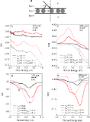
- accurate targeting of the experimental NP height is not needed, and the chosen value of 5 nm is a good compromise to be used for both tAg = 0.8 nm and tAg = 3.3 nm. Firstly, we considered the system composed of bare Ag NPs with a nominal thickness of tAg =0.8 nm (Figure 3e, continuous black curve). Good



Comparative evaluation of the impact on endothelial cells induced by different nanoparticle structures and functionalization
Beilstein J. Nanotechnol. 2015, 6, 300–312, doi:10.3762/bjnano.6.28

- positive). Gold nanoparticles exhibit strong light scattering and absorption at their resonance wavelength due to their plasmonic properties [1][2]. Thus, these particles are used for optical imaging approaches [3][4]. Moreover, applications as contrast media for CT [5][6] and for selective cell targeting
- excellent magnetization curves leading to T2 and T1 relaxivities during MRI [15][16][17][18][19][20]. Owing to their magnetic properties, they can particularly be used for hyperthermia applications and magnetic targeting through the body [21][22][23][24][25][26][27]. An assembly of multiple nanoparticles to




Overview about the localization of nanoparticles in tissue and cellular context by different imaging techniques
Beilstein J. Nanotechnol. 2015, 6, 263–280, doi:10.3762/bjnano.6.25
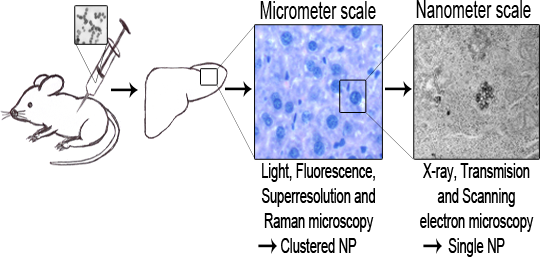
- models following exposure with silica nanoparticles (SiO2-NP) [12][13][14]. Inorganic SiO2-NP hold great potential for several biomedical applications, including the selective targeting of cancer cells as well as drug or gene delivery systems due to their favorable biocompatibility and modification
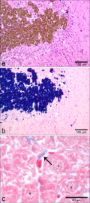
- deposits in HE-stained sections of glioblastomas (Figure 1a), a common brain tumor with high clinical relevance [45]. Such particles have similarly been visualized after targeting prostate cancer cells in humans [46]. Iron oxide nanoparticles have been introduced as diagnostic tool or for the treatment of
- various cancers [45][46][47][48]. In several applications, they have proven to possess excellent tumor-targeting efficacy [49]. Likewise, titanium dioxide nanoparticles, essential components of sunscreens, were visualized as yellow-brown particles on superficial stratum corneum layers in HE-stained skin


Tailoring the ligand shell for the control of cellular uptake and optical properties of nanocrystals
Beilstein J. Nanotechnol. 2015, 6, 232–242, doi:10.3762/bjnano.6.22

- samples, bearing the amino functions showed no unspecific interaction with the cell membrane, which qualifies the nanocontainers in a first step as versatile tools for specific targeting, since no unspecific background has to be expected. Figure 10 shows exemplarily the confocal microscopy images for the
- the neutral and positively charged nanocontainers were taken up by the cells, the negatively charged nanocontainers showed no interaction with the cells at all. From these experiments can be concluded, that the as prepared nanocontainers are suitable for specific targeting attempts, since they on the
- one hand do not show any unspecific interaction with the cells under default conditions with serum containing medium. On the other hand, the nanocontainers are in a good size range and can in general be internalized by the cells. First experiments in tumor targeting with antibody coupled QDs and iron