


Search results
Search for "bacteria" in Full Text gives 182 result(s) in Beilstein Journal of Nanotechnology.
Paper modified with ZnO nanorods – antimicrobial studies
Beilstein J. Nanotechnol. 2012, 3, 684–691, doi:10.3762/bjnano.3.78

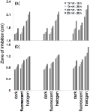
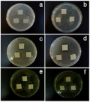
- three model microbes, Gram-positive bacteria Staphylococcus aureus, Gram-negative bacteria Escherichia coli and common airborne fungus Aspergillus niger. No viable bacterial colonies or fungal spores could be detected in the areas surrounding test samples of the antimicrobial paper. Gram-negative
- bacteria Escherichia coli were found to be inhibited in an area that is 239% and 163% the area of the paper sample under different room lighting conditions, i.e., halogen and fluorescent lamp illumination, respectively. For Gram-positive bacteria Staphylococcus aureus the zones of inhibition surrounding
- cause of extensive damage to precious books and manuscripts [1][2]. In relation to this, documents in hospitals and research centers are carriers of infectious agents, such as disease-causing bacteria and viruses. Extreme care needs to be taken especially by people working in such organizations while




FTIR nanobiosensors for Escherichia coli detection
Beilstein J. Nanotechnol. 2012, 3, 485–492, doi:10.3762/bjnano.3.55
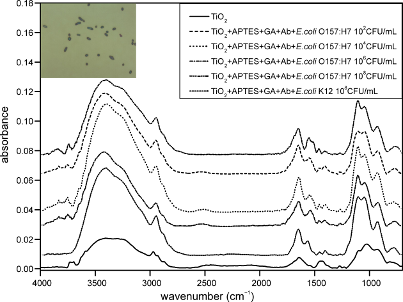
- conventional methods for the detection and identification of pathogens [7][8] are mostly based on (i) culture and colony counting methods (which involve counting of bacteria) [9]; (ii) immunology-based methods (which involve antigen–antibody interactions) [10]; and (iii) the polymerase chain reaction (PCR
- important to prevent and identify problems related to health and safety. Lately, micro- and nanosystems for bacteria and food sample analysis have been developed as innovative tools for the detection of foodborne pathogens in the food and drink industries [14][15][16][17][18][19][20][21]. In particular
- , different optical biosensors were created for rapid detection of pathogenic bacteria, using fluorescence or surface plasmon resonance (SPR) because of their sensitivity [22][23]. For fluorescence analysis, antibodies (Ab) are conjugated with fluorescent compounds and used in combination with classical


Mapping mechanical properties of organic thin films by force-modulation microscopy in aqueous media
Beilstein J. Nanotechnol. 2012, 3, 464–474, doi:10.3762/bjnano.3.53
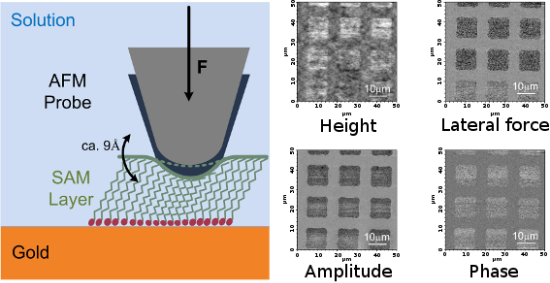
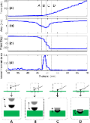
- domain of staphylococcal protein A. Protein A is a surface protein found on the cell wall of staphylococcus aureus bacteria and contains five domains for IgG-binding (SpA-N). One of the domains is named the B-domain and its structure and folding behavior have been well studied [54]. Specifically, we use



Biomimetics inspired surfaces for drag reduction and oleophobicity/philicity
Beilstein J. Nanotechnol. 2011, 2, 66–84, doi:10.3762/bjnano.2.9

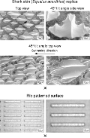
- , nanodevices, and processes which provide desirable properties. Hierarchical structures with dimensions of features ranging from the macroscale to the nanoscale are extremely common in nature and possess properties of interest. There are a large number of objects including bacteria, plants, land and aquatic
- understanding of the functions provided by objects and processes found in nature can guide us to imitate and produce nanomaterials, nanodevices, and processes [2]. There are a large number of objects (bacteria, plants, land and aquatic animals, seashells etc.) with properties of commercial interest. Natural
- from marine fouling and play a role in defense against adhesion and growth of marine organisms, e.g., bacteria and algae [11][23]. If oil is present on the surfaces in air or water, surfaces are known to be oleophobic and may exhibit self-cleaning and anti-fouling properties. Many sea animals including








Magnetic interactions between nanoparticles
Beilstein J. Nanotechnol. 2010, 1, 182–190, doi:10.3762/bjnano.1.22

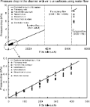
- direction in a double chain of 24 ~70 nm magnetite (Fe3O4) particles in magnetotactic bacteria [33], and it has resolved magnetic flux closure in small rings of 5–7 Co particles with a diameter of about 25 nm [32]. Influence of exchange coupling between nanoparticles on magnetic relaxation In a perfect



Magnetic nanoparticles for biomedical NMR-based diagnostics
Beilstein J. Nanotechnol. 2010, 1, 142–154, doi:10.3762/bjnano.1.17

- /drugs, bacteria, and tumor cells, have been quantified. More recently, the capabilities of DMR technology have been further advanced with new developments such as miniaturized nuclear magnetic resonance detectors, better magnetic nanoparticles and novel conjugational methods. These developments have
- wide range of targets including DNA/mRNA, proteins, small molecules/drugs, bacteria, and tumor cells. More recently, the development of miniaturized, chip-based NMR detector systems has served to further enhance DMR technology [14][15][16]. Such detectors can perform highly sensitive measurements on
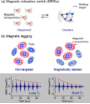
- , where enzymatic cleavage or competitive binding of molecular targets disassembles pre-formed clusters to cause an increase in T2. Note that MRSw assays are carried out without removing excess unbound MNPs. For larger biological structures such as bacteria, entire mammalian cells or cellular components


Review and outlook: from single nanoparticles to self-assembled monolayers and granular GMR sensors
Beilstein J. Nanotechnol. 2010, 1, 75–93, doi:10.3762/bjnano.1.10

- , larger ones by TOPO. The dendrimer has a very high dissociation constant which results in a strong binding to the metal atoms and, therefore, in a slow growth. 1.2 Alternative methods 1.2.1 Micro emulsion and magnetotactic bacteria Another method for the synthesis of nanoparticles is the micro emulsion
- the synthesis which leads to a low efficiency in comparison to the thermolysis. A very similar mechanism can be found with magnetotactic bacteria which produce ferrite nanoparticles under mild conditions as part of their metabolism. The biomineralization process within such bacteria is not yet well
- the C-terminal region of Mms6. In this study, cobalt ferrite nanoparticles not known to occur in magnetotactic bacteria were synthesized. Cobalt and iron salts were added to the c25-mms6 mixture and incubated at 4 °C. The mixture was stirred under argon flux until it reached room temperature and then




Other Beilstein-Institut Open Science Activities



