Search results
Search for "coordination" in Full Text gives 265 result(s) in Beilstein Journal of Nanotechnology. Showing first 200.
Bio-inspired micro-to-nanoporous polymers with tunable stiffness
Beilstein J. Nanotechnol. 2017, 8, 906–914, doi:10.3762/bjnano.8.92

- ImageJ plugin [24]. During the analysis, each pore was fitted with a sphere with the centre coordinates (X, Y) and radius R. The mean thickness of the polymer wall between the pore of interest I and the N closest pores is defined as Based on the SEM images the coordination number N was chosen to be



Probing the magnetic superexchange couplings between terminal CuII ions in heterotrinuclear bis(oxamidato) type complexes
Beilstein J. Nanotechnol. 2017, 8, 789–800, doi:10.3762/bjnano.8.82

- form a planar-quadratic NiN4 coordination environment. Two of them belong to the N,N’-o-phenylene bridges of 1A–3A (1A/2A: N1 and N3. 3A: N1 and N1A) and are referred to in the following as Naryl donor atoms. The other two belong to the alkyl-substituted amide functions of 1A–3A (1A/2A: N2 and N4. 3A
- -containing bis(oxamato) complex [n-Bu4N]2[Ni(opba)] (11) [23] and the related bis(oxamidato) type complex [Ph4P]2[Ni(opboMe2)] (12) [9] the following observation has been made: Three of bond angles of the central NiN2O2/NiN4 coordination units are small (11: 85.79(8)–86.18(5)°; 12: 82.7(3)–84.7(3)°), while
- complexes as described in [15]. Thus, the terminal CuII ions of 1A–3A are each coordinated by two O donor atoms of the oxamidato groups as well as three N donor atoms of the pmdta ligands to form CuN3O2 coordination units closer to the ideal square-pyramidal compared to the ideal trigonal-bipyramidal




Tailoring bifunctional hybrid organic–inorganic nanoadsorbents by the choice of functional layer composition probed by adsorption of Cu2+ ions
Beilstein J. Nanotechnol. 2017, 8, 334–347, doi:10.3762/bjnano.8.36
- were further investigated by electron paramagnetic resonance (EPR) and electron spectroscopy of diffuse reflectance (ESDR) spectroscopy using Cu2+ ion coordination as a probe. The composition and structure of the emerging surface complexes were determined and used to provide an insight into the
- are available for H+ sorption. The intrinsic structure and reactivity of the aminopropyl groups were investigated using Cu2+ adsorption. In the view that EPR spectra of the copper(II) complexes provide direct insight into the coordination of these cations, they were thus revealing the spatial
- adsorption isotherms are presented in Figure 5. To determine the formal coordination surrounding of Cu(II) ions in the adsorption layer, the isotherms were plotted in the form of CsCu:CsR as a function of C0Cu:C0R (Figure 6, Figure S8, Supporting Information File 1). These data were complemented by EPR and




From iron coordination compounds to metal oxide nanoparticles
Beilstein J. Nanotechnol. 2016, 7, 2074–2087, doi:10.3762/bjnano.7.198

- light scattering. The parameters were varied within each route to fine tune the size and shape of the formed nanoparticles. Keywords: iron coordination compounds; mixed oxide nanoparticles; morphology control; nanoparticle shape control; optimization procedure; Introduction The iron oxide-based
- ]. As precursors for obtaining iron oxides or mixed oxides thereof with other metals, their salts are most often used. In recent years, particular attention was paid to the use of coordination compounds as precursors, since they offer a number of advantages such as increased solubility, and better


Effect of Anderson localization on light emission from gold nanoparticle aggregates
Beilstein J. Nanotechnol. 2016, 7, 2013–2022, doi:10.3762/bjnano.7.192
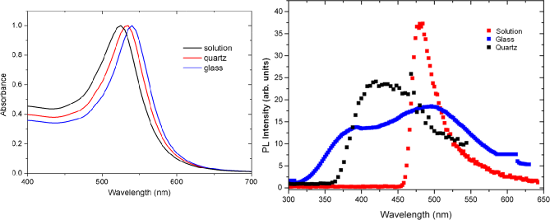
- difference for the 4f7/2 core level of 0.06 eV, and for the core level 4f5/2 of 0.14 eV. These differences are attributed to the different coordination number induced by the geometrical factors of the aggregates [17], i.e., their likely different aggregation density. The geometrical factors determine the
- excitation at 300 nm wavelength. Figure 2a shows that the samples differ only in the aggregation pattern and mass, in which the coordination number and geometry are supposed to be the main difference, which is confirmed by the shift in the XPS data in Figure 1. In Figure 3, the PL spectra of the AuNPs in all
- localization. Different substrates are found to induce different aggregation density and coordination number, which is confirmed from the shift in the XPS data. The difference in aggregation induces changes in the dephasing time, linewidth and particle plasmon resonance position. The AuNPs on quartz show a


Facile fabrication of luminescent organic dots by thermolysis of citric acid in urea melt, and their use for cell staining and polyelectrolyte microcapsule labelling
Beilstein J. Nanotechnol. 2016, 7, 1905–1917, doi:10.3762/bjnano.7.182

- urea thermolysis. Thus, the resulting O-dot is a set of primary fluorophores bound by covalent or intermolecular (coordination, donor–acceptor, hydrogen) bonds, for example, forming a polymer-like structure [47], so that the particles formed can be identified as clusters of independent fluorophores [19



In situ formation of reduced graphene oxide structures in ceria by combined sol–gel and solvothermal processing
Beilstein J. Nanotechnol. 2016, 7, 1815–1821, doi:10.3762/bjnano.7.174

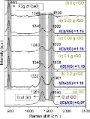
- that part of the defects were repaired and rGO was formed. Compared with the COO groups of GO (Figure 3b), the positions of C=O bands shifted from 1719 cm−1 to 1492 cm−1. The shifts are most likely caused by coordination of graphene to CeO2 through the residual COO groups. The IR spectrum of the sample




Microwave synthesis of high-quality and uniform 4 nm ZnFe2O4 nanocrystals for application in energy storage and nanomagnetics
Beilstein J. Nanotechnol. 2016, 7, 1350–1360, doi:10.3762/bjnano.7.126

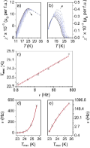
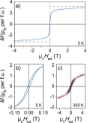
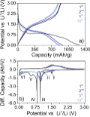
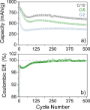
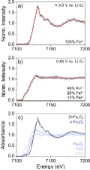
- coordination sites are randomly occupied in a 1:1 ratio by the A and B cations and the tetrahedral sites are only occupied by the B cations in inverse spinels (λ = 1). In both cases, the O2− ions form a cubic close-packed structure and reside on 32e sites. However, nanoscale spinel ferrites prepared by wet


On the pathway of cellular uptake: new insight into the interaction between the cell membrane and very small nanoparticles
Beilstein J. Nanotechnol. 2016, 7, 1296–1311, doi:10.3762/bjnano.7.121




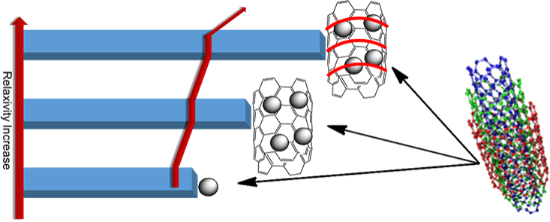
Multiwalled carbon nanotube hybrids as MRI contrast agents
Beilstein J. Nanotechnol. 2016, 7, 1086–1103, doi:10.3762/bjnano.7.102
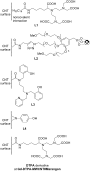
- ligand was coupled with a lipid chain, which was expected to enhance adsorption on the surface of the nanotube. The heptadentate DTPA ligand (L1), in turn, secured permanent coordination of Gd3+ in the new hybrid Gd-L1/MWCNT#Richard. Vittorio non-covalently combined pristine MWCNT with mesenchymal stem
- groups and opens up many possibilities for further functionalization, decoration, substitution or direct coordination of metals and their compounds. Carboxylic, hydroxyl (both phenol and alkyl alcohol) and carbonyl groups are formed on the surface and edges of the oxidized nanotubes oMWCNT. These
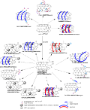
- model for coordination of the iron oxide nanoparticles (SPIO-oMWCNT#Lamanna) [37]. This model was obtained by ligand exchange of SPIO–fatty acid salts to the acidic surface of the oMWCNT. Covalent bonding, presented by Chen, was also done by dehydrating crosslinking [40]. First, SPIO was bonded to the



Phenalenyl-based mononuclear dysprosium complexes
Beilstein J. Nanotechnol. 2016, 7, 995–1009, doi:10.3762/bjnano.7.92
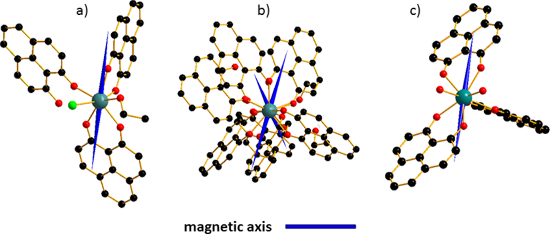
- sublimation onto surfaces, an important prerequisite for ongoing studies in molecular spintronics. Keywords: coordination complexes; dysprosium; magnetism; mononuclear; phenalenyl-based; Introduction In the pioneering studies of next-generation information processing devices, single-molecule magnets (SMMs
- , resulting in [Dy(PLN)3(H2O)2]·H2O (3). Due to the presence of non-depronated ligands and solvent molecules in the coordination sphere, all these complexes decomposed at ca. 350 °C during the sublimation process in high vacuum (10−6 mbar). Sublimable lanthanides quinolinates have been prepared by Katkova et
- et al. [58][59] for the two-coordinate complexes of Dy(III), large values of the effective energy barrier, Ueff, are immediately diminished if axial ligation is disrupted by solvent coordination. Considering this assumption, an increase of the magnetic relaxation barrier so as to blocking


The hydraulic mechanism in the hind wing veins of Cybister japonicus Sharp (order: Coleoptera)
Beilstein J. Nanotechnol. 2016, 7, 904–913, doi:10.3762/bjnano.7.82
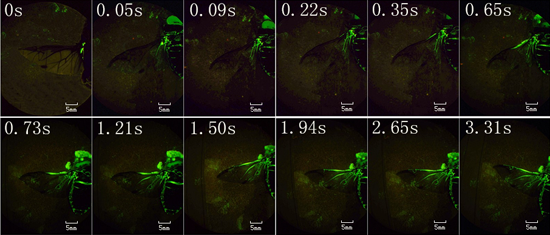
- simulation in this is the analysis of the motion of veins, mainly focusing on the vein expansion process, and the variation of the flow field and coordination. Thus, when defining the parameters for the simulation study, the model was set to a rigid body. If we are only concerned about the whole movement of





Coupled molecular and cantilever dynamics model for frequency-modulated atomic force microscopy
Beilstein J. Nanotechnol. 2016, 7, 708–720, doi:10.3762/bjnano.7.63

- in significant amounts. However, the adhesion hysteresis becomes weaker and ultimately ceases to exist: The increased short-range attraction makes it more and more difficult to let the projection atom jump from the substrate towards the approaching tip. The high coordination number wins over the




Finite-size effect on the dynamic and sensing performances of graphene resonators: the role of edge stress
Beilstein J. Nanotechnol. 2016, 7, 685–696, doi:10.3762/bjnano.7.61

- the coordination numbers of bulk atoms and edge atoms of graphene. It is shown that as the size of a graphene resonator decreases, the edge stress depending on the edge structure of a graphene resonator plays a critical role on both its dynamic and sensing performances. We found that the resonance
- nanometer scale, the edge atoms, which have different bond coordination numbers than bulk atoms, begin to play a vital role in the dynamic behavior of graphene. In particular, this imbalance between the coordination numbers of edge atoms and bulk atoms gives rise to edge stress on a graphene sheet [26][27


Investigating organic multilayers by spectroscopic ellipsometry: specific and non-specific interactions of polyhistidine with NTA self-assembled monolayers
Beilstein J. Nanotechnol. 2016, 7, 544–553, doi:10.3762/bjnano.7.48

- the new medium, the samples were immersed in 0.5 M EDTA (pH 8.6) solution for 15 min in order to remove undesired divalent metal ions and rinsed in MilliQ water. Soaking the NTA samples in a solution of 10 mM NiCl2 in 20 mM Tris (pH 7.4) for 5–10 min allowed for the coordination of NTA COOH groups



First-principles study of the structure of water layers on flat and stepped Pb electrodes
Beilstein J. Nanotechnol. 2016, 7, 533–543, doi:10.3762/bjnano.7.47
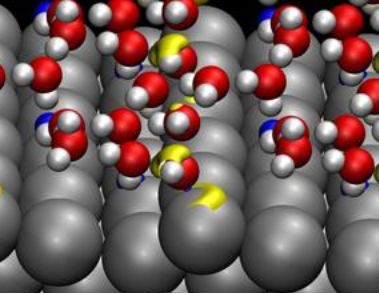
- adsorption energy per water molecule further increases because of the higher coordination upon formation of the second layer. Next, we have considered water structures on stepped Pb(311), Pb(511) and Pb(711) surfaces. There are only few studies addressing the structure of water at stepped metal surfaces [16


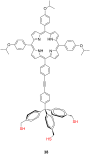
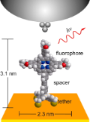
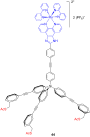
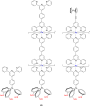
Rigid multipodal platforms for metal surfaces
Beilstein J. Nanotechnol. 2016, 7, 374–405, doi:10.3762/bjnano.7.34

- loosely packed films, commonly associated with weakly bound sulfur, unbound sulfur, disulfide moieties or a week coordination-type binding to the substrate. However, it should be noted that despite a better arrangement, a higher packing density and a significantly lower level of contaminations in the








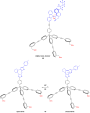

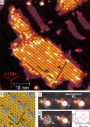
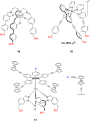
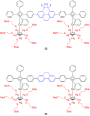
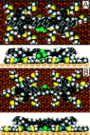
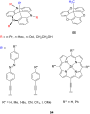

Case studies on the formation of chalcogenide self-assembled monolayers on surfaces and dissociative processes
Beilstein J. Nanotechnol. 2016, 7, 263–277, doi:10.3762/bjnano.7.24

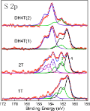
- [105][106][107][108][109][110]. This has been related to low coordination sites [109][110] and to the density of steps and different kinds of surface defects. Variability, to the extent of dissociation processes, could thus be expected depending upon the structure of the surface. Selenophene on Cu(111
- the preparation procedures appear to be reasonably good. We would relate this at least partly to surface morphology, since reactivity can be large at low coordination sites and depends on the density of steps and different kinds of surface defects. It is important to delineate this from the point of




Single-molecule magnet behavior in 2,2’-bipyrimidine-bridged dilanthanide complexes
Beilstein J. Nanotechnol. 2016, 7, 126–137, doi:10.3762/bjnano.7.15
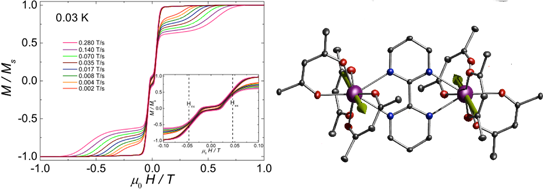
- symmetric shape. In combination these properties stabilize the symmetric coordination on both 1,4-diimine coordination sites. For homo-dinuclear complexes, the electronic or magnetic interaction between two metal centers remains unperturbed by asymmetry. Additionally, the coordination of the peripheral
- from the tmhd and two nitrogen atoms of the bpm, resulting in an O6N2 donor set. The coordination polyhedron around the lanthanide ion can be most closely described as a square antiprism (see Supporting Information File 1, Table S1) (D4d, CShM of 0.605) [35][36]. The coordination polyhedron, as
- defined by the aromatic pyrimidine rings of the bpm ligand, creating a chair-like conformation (Figure 1). The point group of the molecules varies between C1 and Ci depending on the degree of distortion within the molecule. The two coordination spheres within each dinuclear compound are more or less


Surface-site reactivity in small-molecule adsorption: A theoretical study of thiol binding on multi-coordinated gold clusters
Beilstein J. Nanotechnol. 2016, 7, 53–61, doi:10.3762/bjnano.7.6

- cluster with a broad range of metal site coordination numbers, from 3 to 9, and examined the binding conditions of methylthiol at the various sites. Conclusion: We found that despite the small molecular size, the dispersive interactions of the backbone are a determining factor in the molecular affinity
- for various sites. Kink sites were preferred binding locations due to the availability of multiple surface atoms for dispersive interactions with the methyl groups, whereas tip sites experienced low affinity, despite having low coordination numbers. Keywords: coordination; gold clusters; methylthiol
- in aminoacid or peptide behavior upon adsorption on non-ideal surfaces, i.e., substrates with adatoms, high-Miller-index facets or surface curvature have been examined individually [41][42][43][44][45], but no rigorous studies of the dependence of surface binding on site reactivity or coordination


Nitrogen-doped graphene films from chemical vapor deposition of pyridine: influence of process parameters on the electrical and optical properties
Beilstein J. Nanotechnol. 2015, 6, 2028–2038, doi:10.3762/bjnano.6.206
- this case, the N atom usually bonds with one O and two C atoms. It should be noted that the curve deconvolution of the N1s spectra does not seem to show trace of pyrrolic N, i.e., N atoms contributing two p electrons to the π system (e.g., the kind of coordination an N atom has in the five-membered C


Distribution of Pd clusters on ultrathin, epitaxial TiOx films on Pt3Ti(111)
Beilstein J. Nanotechnol. 2015, 6, 2007–2014, doi:10.3762/bjnano.6.204
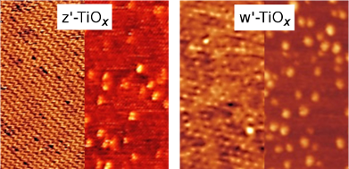
- metallic substrate. As suggested by theoretical calculations, the stripes consist of titanium atoms of different coordination [18]. Using a negative tip potential, four-fold oxygen-coordinated Ti atoms appear with the highest contrast in the STM images. They are surrounded by less bright, three-fold oxygen


Nanocuration workflows: Establishing best practices for identifying, inputting, and sharing data to inform decisions on nanomaterials
Beilstein J. Nanotechnol. 2015, 6, 1860–1871, doi:10.3762/bjnano.6.189

- bioinformatics, the general nanotechnology public, and Center investigators), and function (modeling for repeatable experimentation, accessing nanomaterial sources, exploratory research requiring coordination among disciplines). For each, “high quality” means fit-for-purpose and thus the curation workflow is


The Nanomaterial Data Curation Initiative: A collaborative approach to assessing, evaluating, and advancing the state of the field
Beilstein J. Nanotechnol. 2015, 6, 1752–1762, doi:10.3762/bjnano.6.179

- six signature initiatives of the National Nanotechnology Coordination Office, also provides a resource for federal agencies in the United States to work toward shared data streams (http://www.nano.gov/NSINKI). The Materials Genome Initiative (http://materialsinnovation.tms.org/genome.aspx) is a
Radiation losses in the microwave Ku band in magneto-electric nanocomposites
Beilstein J. Nanotechnol. 2015, 6, 1700–1707, doi:10.3762/bjnano.6.173

- ferric crystallographic site (octahedral or tetrahedral coordination) [30]. The broad spectral vibration in the region 1585–1146 cm−1 can be assigned to N–H deformation and C–N stretching. The peak at 1584 cm−1 is attributed to stretching vibration of C=N, the peak at 1296 cm−1 is assigned to stretching
- ″) and to the dielectric constant (ε′). The unsaturated coordination on the surface, nano-sized hexaferrite, the dangling bond atoms, and the enhanced surface area lead to multiple scattering resulting in the loss of radiation. Quantum size effects generate a separation among energy levels. Upon