


Search results
Search for "dispersions" in Full Text gives 182 result(s) in Beilstein Journal of Nanotechnology.
Influence of the diameter of single-walled carbon nanotube bundles on the optoelectronic performance of dry-deposited thin films
Beilstein J. Nanotechnol. 2012, 3, 692–702, doi:10.3762/bjnano.3.79

- sonication (cutting), acid cleaning (unintentional doping) or surfactant-based dispersions (residual surface contamination) [13][14]. Characteristic features have been explored previously by geometric scaling arguments and by comparing the performance of SWCNT films fabricated by different synthesis and
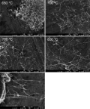


Conducting composite materials from the biopolymer kappa-carrageenan and carbon nanotubes
Beilstein J. Nanotechnol. 2012, 3, 415–427, doi:10.3762/bjnano.3.48

- [8][25][26][27][28][29]. For example, gellan gum-CNT dispersions have been wet-processed by inkjet printing into optically transparent films, which displayed sensitivity to water vapour [30]. Other commonly employed wet-processing methods used to process biopolymer–CNT dispersions into materials
- these CNT networks are contingent on the CNT/dispersant ratio. Increasing the nanotube concentration usually leads to an increase in the electrical conductivity and to mechanical reinforcement [31][32]. Vacuum filtration of dispersions usually results in films, which are generally referred to as
- over time. The absorbance at an arbitrarily picked wavelength (660 nm) becomes independent of sonication after 20 and 35 min of sonication for MWNTs and SWNTs, respectively (Figure 3c). Optical microscopy revealed the presence of aggregates in the dispersions subjected to short sonication times (5 min


Surface functionalization of aluminosilicate nanotubes with organic molecules
Beilstein J. Nanotechnol. 2012, 3, 82–100, doi:10.3762/bjnano.3.10

- organic solvent, but after modification with BMPOPO4, the resulting modified imogolite can be dispersed in various solvents. Unfortunately, the dispersions are neither homogenous nor stable. However, when PMMA was grafted to the surface of imogolite nanotubes, PMMA-g-imogolite showed good dispersibility


Improvement of the oxidation stability of cobalt nanoparticles
Beilstein J. Nanotechnol. 2012, 3, 75–81, doi:10.3762/bjnano.3.9

- oxidation of particle dispersions and powders was kinetically investigated and compared to as-prepared particle preparations. A post-synthesis treatment with different alcohols was employed, and we also investigate the influence of two different polymer shells on the oxidation process. We found a parabolic
- -controlled magnetic particle dispersions with strong magnetic properties and a good stability against oxygen and water. With a high saturation magnetization and strong magnetic anisotropy, cobalt nanoparticles in a size range between 10 and 40 nm behave as ferromagnetically blocked, single-domain magnetic
- to 20 days from synthesis, and were immediately investigated with respect to their magnetic properties by vibrating sample magnetometry (VSM). In addition to the dispersions, the dried powders of selected preparations were investigated. The magnetization curves of all toluene-based particle charges


Ceria/silicon carbide core–shell materials prepared by miniemulsion technique
Beilstein J. Nanotechnol. 2011, 2, 638–644, doi:10.3762/bjnano.2.67
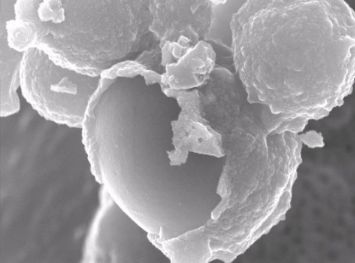
- holey carbon and dried using an infrared lamp. The TEM investigations were carried out on a Cs-corrected JEOL JEM-2010F. Particle sizes were determined with photon cross-correlation spectroscopy (PCCS) using a Nanophox particle sizer (Sympatec GmbH). The dispersions were diluted with demineralized water


Platinum nanoparticles from size adjusted functional colloidal particles generated by a seeded emulsion polymerization process
Beilstein J. Nanotechnol. 2011, 2, 459–472, doi:10.3762/bjnano.2.50

- -fold increase in volume. Larger diameters of seeded colloids could not be achieved as the present reaction pathway appears to break down with higher monomer excesses: Secondary nucleation or instable dispersions are the result. As all reactions produced an increase of particle size, it can be stated
- concentrations were below the critical value for micelle formation (cmc). Such concentrations are used in conventional emulsion polymerization and lead to particles nucleated in monomer swollen micelles [13]. Figure 3b and c show representative SEM micrographs of the resulting dispersions. For both cases
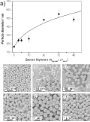
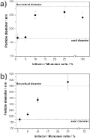
- . Additionally, both diffusion and solubility of the monomer are affected drastically by compositional changes in the continuous phase. In order to investigate these effects, systematic variations of the continuous phase were performed. Figure 4 and Table 4 show the properties of the resulting dispersions and



Dynamics of capillary infiltration of liquids into a highly aligned multi-walled carbon nanotube film
Beilstein J. Nanotechnol. 2011, 2, 311–317, doi:10.3762/bjnano.2.36

- entirely alter their interface performance, from highly lipophilic to even lipophobic [12][13]. In turn, preparation of aqueous dispersions of CNTs requires the use of low or high molecular weight surfactants [14]. Most of the theoretical approaches concerning dispersibility of CNTs in various liquids
- , via hydrogen bonds, entangling individual CNTs. It was found recently that polysaccharides, wrapped around nanotubes, enabled their “solubility” to various levels of unbundling (rope-to-single-tube transition) [38]. The best dispersions were obtained when gum arabic was used as a natural surfactant


Other Beilstein-Institut Open Science Activities



