Search results
Search for "laser" in Full Text gives 904 result(s) in Beilstein Journal of Nanotechnology. Showing first 200.
Roll-to-roll fabrication of superhydrophobic pads covered with nanofur for the efficient clean-up of oil spills
Beilstein J. Nanotechnol. 2022, 13, 1228–1239, doi:10.3762/bjnano.13.102

- , too [7]. Multiple techniques exist to prepare self-cleaning surfaces. Direct laser writing and electron beam lithography have been employed successfully to create superhydrophobic surfaces. However, due to low writing speeds these approaches are not viable for surface areas larger than a few square
- with high aspect ratio. These needles render superhydrophobic properties to the surface. Such surfaces can either be prepared using a RIE process [12] or a laser-assisted etching process described by Mazur et al. [13], which requires expensive silicon wafers as substrate as well as a femtosecond laser




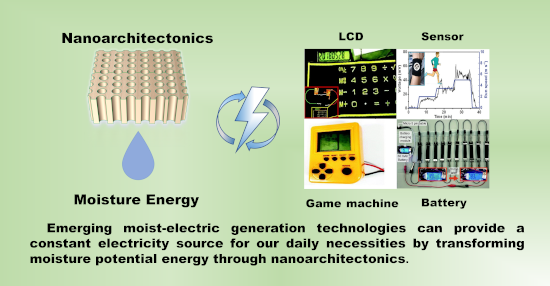
Application of nanoarchitectonics in moist-electric generation
Beilstein J. Nanotechnol. 2022, 13, 1185–1200, doi:10.3762/bjnano.13.99
- hygroscopic graphene oxide (GO) [61][62][63][64][65]. As shown in Figure 5, when the graphene oxide bulk material with a certain thickness is irradiated by a laser, the laser intensity inside the graphene is gradually attenuated, so that the oxygen-containing functional groups and carbon atom concentration of
- graphene oxide on the outer side are higher and more hydrophilic than the part that did not receive laser irradiation (Figure 5b). After exposure to moisture, a significant difference in ion concentration occurs due to the difference in humidity and the ability to dissociate hydronium ions, thereby driving
- ) Image of laser-processed asymmetric graphene fibers. Figure 5c was reprinted from [62]. This article was published in Nano Energy, vol. 32, by Y. Liang; F. Zhao; Z. Cheng; Q. Zhou; H. Shao; L. Jiang; L. Qu, “Self-powered wearable graphene fiber for information expression“, pages 329–335, Copyright


Microneedle-based ocular drug delivery systems – recent advances and challenges
Beilstein J. Nanotechnol. 2022, 13, 1167–1184, doi:10.3762/bjnano.13.98

- , biodegradable polymers such as poly(lactic acid), poly(glycolic acid), and non-biodegradable polymers, for example, photolithographic epoxy resins are used [148]. The methods used for the production of microneedles include lithographic or laser techniques, casting, and 3D printing, to mention a few. The laser
- cutting technique can be used to produce microneedles from metals or polymers. The main part of the process is cutting microneedles out of a plate with a laser and then bending them. The alignment of the tips can be achieved by electropolishing [149]. A similar technique is laser ablation. In this case
- , the substrate, absorbing the laser beam, heats up and evaporates or sublimes, which yields engraved 3D patterns [150]. In the fused deposition modelling (FDM) method, the thermoplastic material is heated to its softening point, then extruded through a nozzle and applied layer by layer to the build


A cantilever-based, ultrahigh-vacuum, low-temperature scanning probe instrument for multidimensional scanning force microscopy
Beilstein J. Nanotechnol. 2022, 13, 1120–1140, doi:10.3762/bjnano.13.95
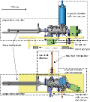
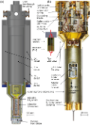
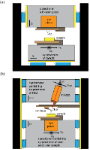
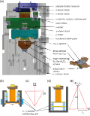
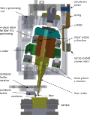
- , however, are complex, and their fabrication and assembly typically require considerable efforts. For this reason, all our sample/cantilever holders use the same four laser-cut metal parts as base plates (m1–m4) connected via a simple ceramic center piece (Figure 7f), on top of which different assemblies
- system is depicted in Figure 8a. A similar interferometer system has been developed by Miyahara and co-workers [53]. To perform the interferometry, we use a Sony SLD201 V3 laser diode with a wavelength of 785 nm coupled via an optical insulator to a Au-coated monomode optical fiber having a core diameter
- of 5 μm [54] delivering a maximum of 9.3 mW into the fiber at a drive current of 140 mA. To keep the temperature of the laser diode constant, it is mounted onto a Thorlabs TCLDM9 [55] thermoelectric cooler block, and the laser diode is operated at constant current. A combined laser diode and





Recent advances in green carbon dots (2015–2022): synthesis, metal ion sensing, and biological applications
Beilstein J. Nanotechnol. 2022, 13, 1068–1107, doi:10.3762/bjnano.13.93
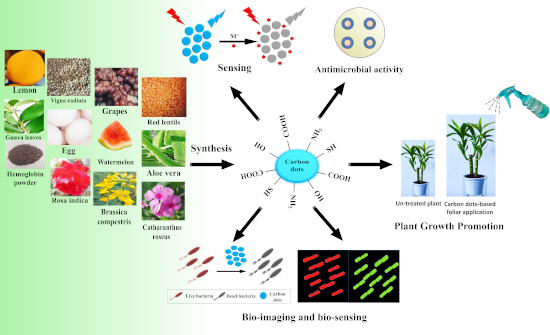
- synthetic pathways for the formation of CDs, that is, “top-down” and “bottom-up” methods. In the top-down method, large carbon structures (such as carbon nanotubes or graphite) are decomposed into CDs. The top-down methods include arc discharge, laser abrasion [24], chemical and electrochemical oxidation




Analytical and numerical design of a hybrid Fabry–Perot plano-concave microcavity for hexagonal boron nitride
Beilstein J. Nanotechnol. 2022, 13, 1030–1037, doi:10.3762/bjnano.13.90
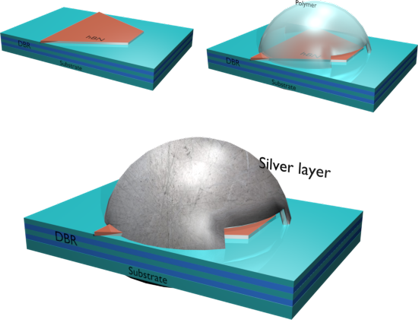
- (e.g., quantum dots [12], molecules [13]) by a process known as two-photon polymerization (2PP) [14] where a photopolymer resist is illuminated with a focused laser at 780 nm and absorbs two photons simultaneously, which triggers a corresponding chemical reaction that solidifies the material to build
- hBN where its value falls between experimentally achievable thicknesses of multilayer 2D materials [6]. A 3D concave shape polymer then could be fabricated on top of the 2D material (Figure 2b) by a direct laser writing system (e.g., Photonic Professional, Nanoscribe GmbH) by use of a 2PP process
- fabricated by direct laser writing process. (c) A silver layer is added on top of polymer. Cross-section of hybrid plano-concave microcavity shows the geometrical parameters and the two Gaussian modes inside. Spotsizes W02 and W2 for different values of R2 and L2. Transverse cut of Figure 4 through length L2


Numerical study on all-optical modulation characteristics of quantum cascade lasers
Beilstein J. Nanotechnol. 2022, 13, 1011–1019, doi:10.3762/bjnano.13.88

- Biao Wei Haijun Zhou Guangxiang Li Bin Tang Key Laboratory of Optoelectronic Technology & Systems, Ministry of Education, Chongqing University, Chongqing 400044, China 10.3762/bjnano.13.88 Abstract To explain the phenomenon of all-optical modulation of quantum cascade laser (QCL), and explore the
- optimizing its use and dielectric nanostructure design. Keywords: all-optical modulation; dielectric nanostructures; high refractive index materials; numerical study; quantum cascade lasers; Introduction The quantum cascade laser (QCL) was invented nearly 30 years ago [1], and its cavity consists of
- multiple nanostructures, which are grown by molecular beam epitaxy (MBE) [1]. It has been widely used in the fields of free space optical communication [2][3], gas detection [4][5], and biological research [6][7]. Because the QCL is a narrow linewidth and high-power laser working in the mid-infrared to


Interaction between honeybee mandibles and propolis
Beilstein J. Nanotechnol. 2022, 13, 958–974, doi:10.3762/bjnano.13.84

- “propolis bees”. Imaging and structural studies Bee mandibles were prepared and subsequently examined with binoculars, a scanning electron microscope (SEM), and a confocal 3D laser scanning microscope in order to identify anatomy and surface structure. Anatomy of the honeybee mandible Mandibles of all
- . Additionally, the medial surface profile of the mandible was studied on fresh, chloroform-washed specimens fixed to a glass slide using a drop of a melted mixture of 50% paraffin wax and 50% colophony. The mandibles were examined with a confocal 3D laser scanning microscope (Keyence VK-X250; Keyence
- levels, contrast, and brightness were adjusted, and scale bars and other labels were added. Profiles measured with the confocal 3D laser scanning microscope were digitized using WebPlotDigitizer (version 4.2, https://automeris.io/WebPlotDigitizer, Ankit Rohatgi, San Francisco, USA). Investigation of


Ultrafast signatures of magnetic inhomogeneity in Pd1−xFex (x ≤ 0.08) epitaxial thin films
Beilstein J. Nanotechnol. 2022, 13, 836–844, doi:10.3762/bjnano.13.74
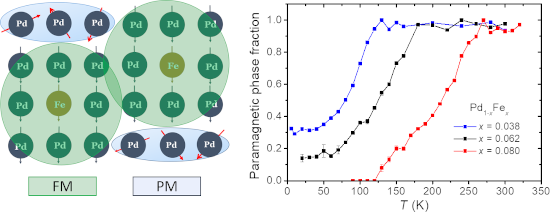
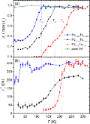
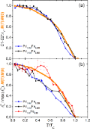
- Abstract A series of Pd1−xFex alloy epitaxial films (x = 0, 0.038, 0.062, and 0.080), a material promising for superconducting spintronics, was prepared and studied with ultrafast optical and magneto-optical laser spectroscopy in a wide temperature range of 4–300 K. It was found that the transition to the


Optimizing PMMA solutions to suppress contamination in the transfer of CVD graphene for batch production
Beilstein J. Nanotechnol. 2022, 13, 796–806, doi:10.3762/bjnano.13.70
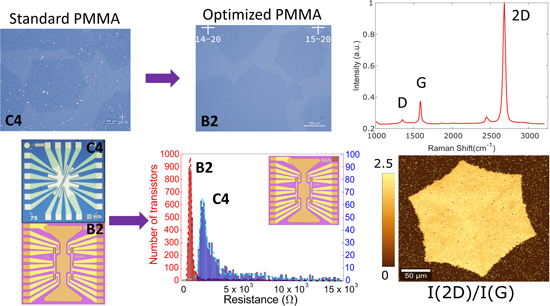
- , Model: Alpha300M+) with an excitation laser wavelength of 532 nm. A laser power of ca. 2 mW was used for all measurements. The backscattered laser light containing the Raman bands from 1200 to 3000 cm−1 was collected by a CCD camera (Andor, Model number: DV401A-BV-352) integrated with the WITec system
- . The characteristic Raman signature collected from a p-doped Si wafer at 520.7 cm−1 was employed as standard calibration. Raman mapping was conducted by raster scan, where the step size of the laser spot moving over a selected area is 1 µm, and the exposure time of 0.4 s was taken at each point of the
- frequency. The AFM measurement was carried out in tapping mode. A 633 nm laser light aimed at the back side of the cantilever tip was reflected toward a position-sensitive photodetector, which provides feedback signals to piezoelectric scanners that maintain the cantilever tip at constant height (force




Efficient liquid exfoliation of KP15 nanowires aided by Hansen's empirical theory
Beilstein J. Nanotechnol. 2022, 13, 788–795, doi:10.3762/bjnano.13.69
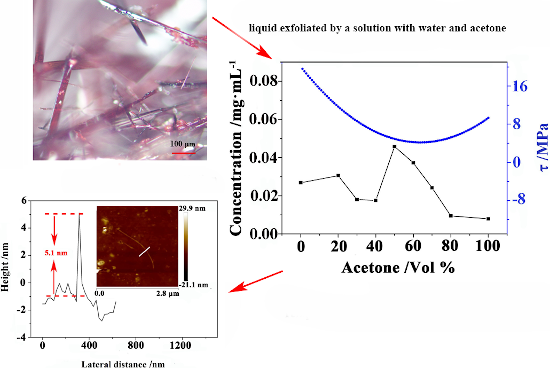
- . For the Raman tests, KP15 samples were spun on SiO2(300 nm)/Si substrates. The excitation wavelength used was 532 nm, the spot size was approx. 1 μm, and the laser power was kept below 20 μW. For low-temperature Raman measurements, a Linkam THMS600 cryostat cooled by liquid nitrogen was used to




Hierarchical Bi2WO6/TiO2-nanotube composites derived from natural cellulose for visible-light photocatalytic treatment of pollutants
Beilstein J. Nanotechnol. 2022, 13, 745–762, doi:10.3762/bjnano.13.66
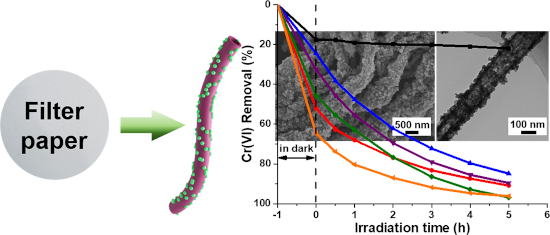
- reference standard for solid samples. The photoluminescence (PL) spectra were obtained on a Shimadzu RF-5301PC fluorescence spectrometer under a laser excitation of 360 nm. In order to observe the microstructures of the samples, a small amount of a given sample was dispersed in ethanol to generate a


A nonenzymatic reduced graphene oxide-based nanosensor for parathion
Beilstein J. Nanotechnol. 2022, 13, 730–744, doi:10.3762/bjnano.13.65
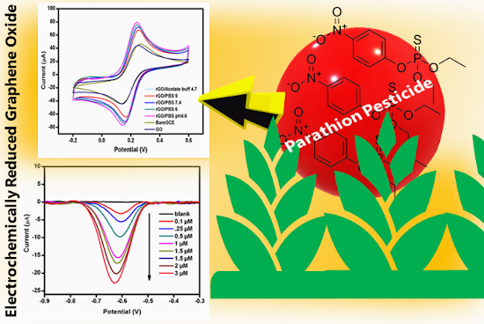
- spectra of the samples were recorded in the 1000–3500 cm−1 region with a resolution of 1 cm−1 using a Renishaw via a Reflex micro-Raman spectrometer with an argon ion (514.6 nm) laser. The X-ray photoemission spectroscopy (XPS) data were obtained from a PHI 5000 Versa probe II scanning XPS microprobe


Direct measurement of surface photovoltage by AC bias Kelvin probe force microscopy
Beilstein J. Nanotechnol. 2022, 13, 712–720, doi:10.3762/bjnano.13.63

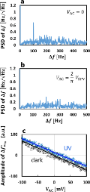
- darkness and illumination degrades the spatial and energy resolutions, reducing the accuracy of SPV measurements on the nanometer scale [23]. To overcome the above problem, direct SPV measurements by means of laser power modulation and a lock-in technique have been proposed. Streicher et al. used two
- force Fele in darkness is described as where ∂C/∂z is the capacitance gradient of the tip–sample system and VCPD is the CPD in darkness. Applying a modulated laser power with a sinusoidal waveform of frequency ωm, which is synchronized with the AC bias (Figure 1b), induces the SPV with the peak-to-peak
- amplitude VSPV: Therefore, the electrostatic force under modulated laser irradiation is described as This equation can be divided into three parts: (Equation 5) is measured to determine the SPV by controlling VAC and nullifying the modulated force where the SPV is derived as Thus, AC-KPFM controls the AC



Nanoarchitectonics of the cathode to improve the reversibility of Li–O2 batteries
Beilstein J. Nanotechnol. 2022, 13, 689–698, doi:10.3762/bjnano.13.61
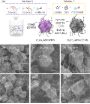
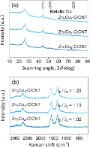
- microstructures of the materials. Powder XRD (PANalytical, Empyrean) and Raman spectroscopy (inVia Raman microscopes, Ar ion laser, 514 nm) were employed to analyze the structures. Their surface chemistry was investigated by XPS (Thermo Scientific, Sigma Probe), while their surface area and porosity were


Fabrication and testing of polymer microneedles for transdermal drug delivery
Beilstein J. Nanotechnol. 2022, 13, 629–640, doi:10.3762/bjnano.13.55
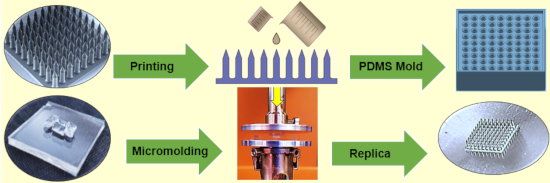
- multistage fabrication processes with high production costs [7]. Similarly, laser ablation and lithography techniques are costly, requiring extended production time [8]. To overcome the current manufacturing limitations, MNs might be fabricated cost-effectively, with high precision and accuracy, using 3D
- adjust settings such as slicing, shell and scaffolding, laser power, and scanning speeds before converting to General Writing Language (GWL) codes. Parameters such as slicing distance of 2 µm, multiple base slide counts of 4 layers, shell and scaffolding filling method, null shear angle (0°), and laser
- photoresist was drop cast onto an indium tin oxide (ITO) glass substrate prior to starting the printing process. A dip-in laser lithography (DiLL) objective (25× magnification, NA = 0.8) was used for printing, after which the MN array was washed in propylene glycol methyl ether acetate (PGMEA) for 10 minutes



A new method for obtaining the magnetic shape anisotropy directly from electron tomography images
Beilstein J. Nanotechnol. 2022, 13, 590–598, doi:10.3762/bjnano.13.51
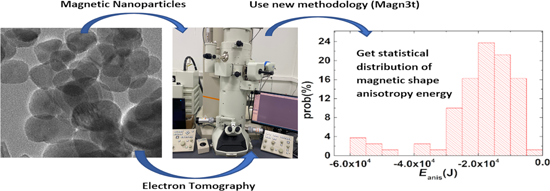
- , X-ray diffraction, magnetometry [4], transmission/scanning electron imaging [5][6], small-angle scattering techniques [7], dynamic light scattering, laser diffraction [8][9], resonant mass measurement, and spatial filter velocimetry. Each of these has certain features (i.e., ease of access, ease of


Revealing local structural properties of an atomically thin MoSe2 surface using optical microscopy
Beilstein J. Nanotechnol. 2022, 13, 572–581, doi:10.3762/bjnano.13.49

- molybdenum diselenide (MoSe2) flake as surface-enhanced Raman spectroscopy (SERS) platform, we demonstrate the dependency of the Raman enhancement on laser beam polarization and local structure using copper phthalocyanine (CuPc) as probe. Second harmonic generation (SHG) and photoluminescence spectroscopy
- pulsed laser as the excitation source. The real size of the MoSe2 flake is indicated by the dashed white triangle. We find that the SHG signal is barely visible at the border of the MoSe2 flake compared to the center of the MoSe2 flake. Furthermore, the bright-field optical image reveals also some small
- (called Q-band) from 500 to 800 nm. The absorption peaks situated at 627 and 696 nm are due to the second and the first π–π* transition of the phthalocyanine macrocycle, respectively [30]. Therefore, the Raman measurements for CuPc/MoSe2 are conducted using a 636 nm laser, which shows good resonance with


Effects of substrate stiffness on the viscoelasticity and migration of prostate cancer cells examined by atomic force microscopy
Beilstein J. Nanotechnol. 2022, 13, 560–569, doi:10.3762/bjnano.13.47
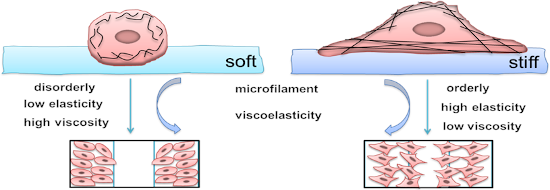
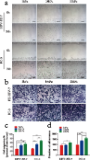
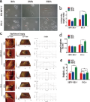
- unclear how mechanical properties regulate the cellular response to the environmental matrix. In this study, atomic force microscopy (AFM) and laser confocal imaging were used to qualitatively evaluate the relationship between substrate stiffness and migration of prostate cancer (PCa) cells. Cells
- the assay buffer was used to rinse the cells three times to remove residual esterase activity. Next, the cells were incubated at 37 °C for 15 min in assay buffer containing calcein-AM (1 μM) and PI (3 μM) and then imaged with a laser confocal microscope. Cell migration and invasion assays To assess
- washed with PBS and fluorescence images were obtained using an inverted optical microscope (Leica, Germany) with 488 laser lines. The obtained images were linearly analysed and pseudo-coloured using the ImageJ analysis software. Blebbistatin treatment assay To inhibit myosin II, cells were incubated with



Detection and imaging of Hg(II) in vivo using glutathione-functionalized gold nanoparticles
Beilstein J. Nanotechnol. 2022, 13, 549–559, doi:10.3762/bjnano.13.46
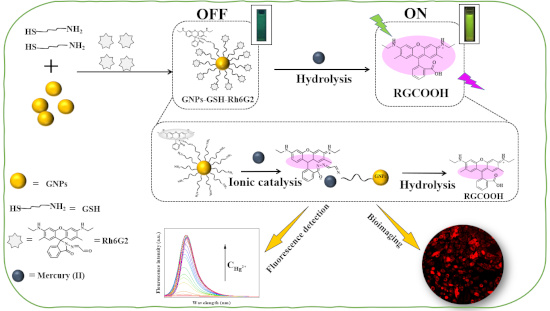
- to other non-GNP methods. It must be acknowledged that the detection window of GNPs-GSH-Rh6G2 is very wide (0.025–0.3 mM) but at the cost of a high LOD. GNPs-GSH-Rh6G2 bioimaging in living cells To study bioimaging of GSH-Rh6G2 and GNPs-GSH-Rh6G2 in living cells, confocal laser scanning microscopy
- acquired using an OLYMPUS CKX41 inverted fluorescence microscope (Olympus, Japan)/Leica SP5 laser scanning confocal microscope (Leica, Germany). Cell viability was measured by a PectraMax190 microplate reader (Molecular, USA). HPLC-MS was performed on an Agilent-ABQSTAR Pulsar (Agilent, Germany) with a
- were washed with HEPES buffer three times. Then, 30 μL of Hg2+ solution was added. Residual ions were washed with HEPES buffer before imaging. Confocal laser scanning microscopy with 543 nm excitation was carried out. Cytotoxicity assays Cytotoxicity assays were used to investigate the bio-safety of


Influence of thickness and morphology of MoS2 on the performance of counter electrodes in dye-sensitized solar cells
Beilstein J. Nanotechnol. 2022, 13, 528–537, doi:10.3762/bjnano.13.44
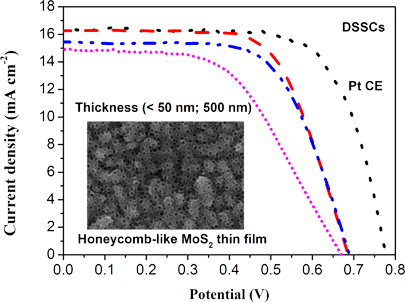
- performed on a LabRAM HR 800 Raman Spectrometer (HORIBA Jobin Yvon) with an excitation laser source at 532 nm. The morphology of MoS2 thin films was analyzed by an ultrahigh-resolution field-emission scanning electron microscope (FE-SEM, Hitachi SU-8010, Japan). The electrochemical catalytic activity of the


Ciprofloxacin-loaded dissolving polymeric microneedles as a potential therapeutic for the treatment of S. aureus skin infections
Beilstein J. Nanotechnol. 2022, 13, 517–527, doi:10.3762/bjnano.13.43
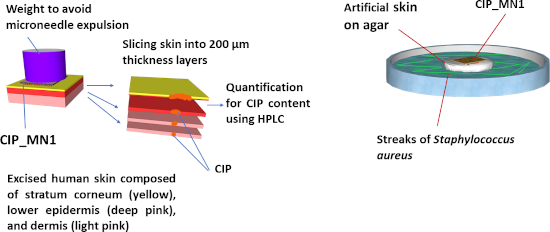
- Ciprofloxacin hydrochloride, PVA, PVP, acetonitrile, phosphoric acid, triethylamine, and phosphate buffer tablets were purchased from Merck, Germany. Staphylococcus aureus (ATCC-29213) was purchased from ATCC, USA. Poly(dimethylsiloxane) (PDMS) molds, including 196 laser-engineered pyramidal holes measuring 200


Zinc oxide nanostructures for fluorescence and Raman signal enhancement: a review
Beilstein J. Nanotechnol. 2022, 13, 472–490, doi:10.3762/bjnano.13.40
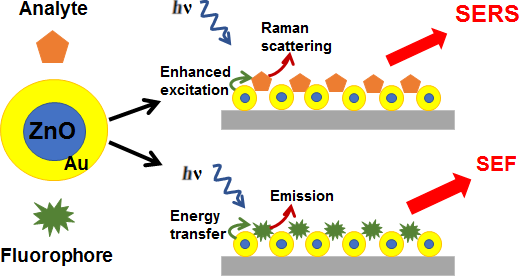
- ordered hybrid nanostructured substrates, ranging from more expensive and laborious ones, such as pulsed laser deposition or hydrothermal growth, followed by sputtering processes [31] or electron beam lithography to more cost-efficient and simple ones, such as photochemical deposition of metallic NPs or a
- ) [12] was carried out as well. Chou et al. employed a simple and rapid method, namely pulsed laser-induced photolysis to develop Au NPs on the surface of ZnO nanorods fabricated by the sol–gel method (Figure 2c,d) [38]. Various irradiation times were tested, indicating that a short irradiation time was
- photochemical reduction [32], pulsed laser-induced photolysis [38], or controlled decoration with Ag NPs using an electroless plating technique [44]. Photochemical synthesis permits the control of nucleation and growth rate without using organic additives. Xu et al. employed laser irradiation of ZnO nanorods in




Tubular glassy carbon microneedles with fullerene-like tips for biomedical applications
Beilstein J. Nanotechnol. 2022, 13, 455–461, doi:10.3762/bjnano.13.38
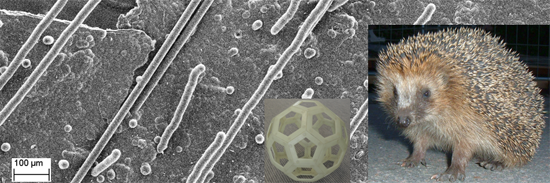
- Raman spectroscopy (WiTec CRM200, laser excitation at 632.8 nm), scanning electron microscopy (SEM Leo 1530, with a spatial resolution of 1 nm at 20 kV and 3 nm at 1 kV, equipped with an energy-dispersive X-ray analysis system EDX INCA 400 from Oxford Instruments), and X-ray diffraction (STOE STADI-P


A broadband detector based on series YBCO grain boundary Josephson junctions
Beilstein J. Nanotechnol. 2022, 13, 325–333, doi:10.3762/bjnano.13.27
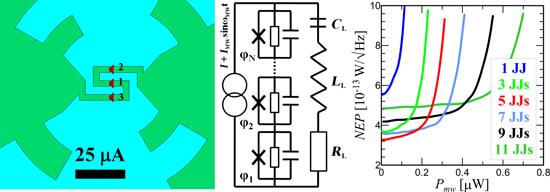
- a wide frequency range from tens of gigahertz to several terahertz [13][14], which exceeds the gap limitation of low-Tc detectors. So, in [12] the spectrum of a quantum cascade laser emission has been recovered by an YBaCuO detector at a central frequency around 2.2 THz. However, for some