

Search results
Search for "molecular dynamics" in Full Text gives 184 result(s) in Beilstein Journal of Nanotechnology.
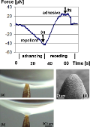
Direct monitoring of opto-mechanical switching of self-assembled monolayer films containing the azobenzene group
Beilstein J. Nanotechnol. 2011, 2, 834–844, doi:10.3762/bjnano.2.93
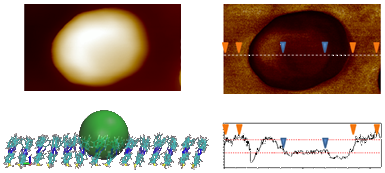
- show that the modulus of the cis-form is approximately twice that of the trans-isomer. Quantum mechanical and molecular dynamics studies show good agreement with this experimental result, and indicate that the stiffer response in the cis-form comprises contributions both from the individual molecular
- bonds and from intermolecular interactions in the film. These results demonstrate the power and insights gained from cutting-edge AFM technologies, and advanced computational methods. Keywords: AFM; azobenzene; elastic modulus; molecular dynamics; nanomechanics; photoswitch; quantum mechanics
- -containing polymer molecules [5][6]. These elegant measurements were simulated by molecular dynamics [7]. It was shown that the mechanical response arises only partly from the azo moiety, and includes contributions from other constituents of the polymer chain. The ability of azo-containing molecules to self



Current-induced dynamics in carbon atomic contacts
Beilstein J. Nanotechnol. 2011, 2, 814–823, doi:10.3762/bjnano.2.90
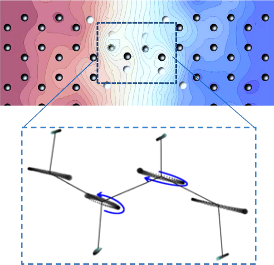
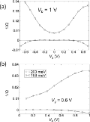
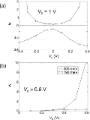
- , which can be used to explore current-induced vibrational instabilities due the NC/BP forces. Furthermore, using tight-binding and the Brenner potential we illustrate how Langevin-type molecular-dynamics calculations including the Joule heating effect for the carbon-chain systems can be performed
- . Molecular dynamics including current-induced forces enables an energy redistribution mechanism among the modes, mediated by anharmonic interactions, which is found to be vital in the description of the electrical heating. Conclusion: We have developed a semiclassical Langevin equation approach that can be
- computer simulation techniques, such as molecular dynamics (MD), preferably without adjustable parameters, to study in detail the complex current-driven atomic processes. To this end, we recently developed an approach based on the semiclassical Langevin equation, which may form the basis of MD. In this



Femtosecond time-resolved photodissociation dynamics of methyl halide molecules on ultrathin gold films
Beilstein J. Nanotechnol. 2011, 2, 618–627, doi:10.3762/bjnano.2.65

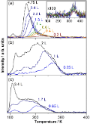
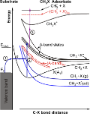
- organic molecules on metallic substrates. The observed molecular dynamics varies strongly for the three investigated methyl halide molecules and reflects the different electronic structure of the molecules as well as the interaction with the gold substrate surface. The dissociation of methyl iodide on


Surface induced self-organization of comb-like macromolecules
Beilstein J. Nanotechnol. 2011, 2, 569–584, doi:10.3762/bjnano.2.61

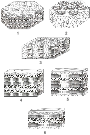
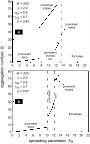
- is selective for A and B chains, spontaneous curvature of the molecule will occur. Recent data obtained from off-lattice molecular dynamics simulations [55] suggest that pearl-necklace type separation is also possible in binary bottle-brushes. This type of separation induced by the decrease in the




Self-organizing bioinspired oligothiophene–oligopeptide hybrids
Beilstein J. Nanotechnol. 2011, 2, 525–544, doi:10.3762/bjnano.2.57

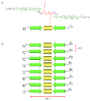
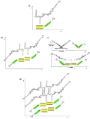
- stable fibrils as visualized by AFM and TEM. While the experimental evidence alone is not sufficient to reveal the exact molecular organization of the fibrils, theoretical approaches based on quantum chemistry calculations and large-scale atomistic molecular dynamics simulations are attempted in an
- effort to reveal the structure of the fibrils at the nanoscale. Based on the combined theoretical and experimental analysis, the most likely models of fibril formation and aggregation are suggested. Keywords: amyloid-like fibrils; bioinspired conjugates; molecular dynamics simulations; oligopeptides
- and the fibrillar morphology. When 3-D atomistic structures of microcrystals or oligomeric aggregates are available they may be used to construct computational models of the fibrillar aggregates, and through the application of atomistic molecular dynamics (MD) simulations the structural data can be




Towards a scalable and accurate quantum approach for describing vibrations of molecule–metal interfaces
Beilstein J. Nanotechnol. 2011, 2, 427–447, doi:10.3762/bjnano.2.48

- stretching frequencies. As an alternative to the harmonic approximation, two methods for computing anharmonic spectra are of particular interest: Molecular dynamics and the vibrational self-consistent field (VSCF) approach. Both techniques can go beyond the harmonic approximation, and provide a solid basis
- conformationally flexible molecules. Due to its conceptual simplicity and the ready availability of reliable empirical force fields (or forces computed ab initio), molecular dynamics is currently the most popular method for determining anharmonic frequencies of large systems (see [7] for an overview of some


Influence of water on the properties of an Au/Mpy/Pd metal/molecule/metal junction
Beilstein J. Nanotechnol. 2011, 2, 384–393, doi:10.3762/bjnano.2.44

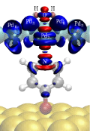
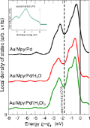
- for the stability in the water complex. Ab initio molecular dynamics simulations showed that at room temperature the hexagonal water bilayer structure on bulk metal surfaces becomes disordered [19], but it may persist on the Au/Mpy/Pd junction because of the higher stability of the H2O layer, which is

![[Graphic 1]](/bjnano/content/inline/2190-4286-2-44-i1.png?max-width=637&scale=0.945456) )R3...
)R3...


![[Graphic 2]](/bjnano/content/inline/2190-4286-2-44-i2.png?max-width=637&scale=1.18182) = 1/3 ML. Plott...
= 1/3 ML. Plott...
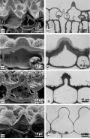
Superhydrophobicity in perfection: the outstanding properties of the lotus leaf
Beilstein J. Nanotechnol. 2011, 2, 152–161, doi:10.3762/bjnano.2.19

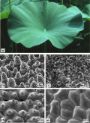
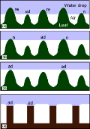
- lateral oxygen atoms which inhibit a tight package of the molecules. Thus the resulting layers have a strong curvature and form tubules with a circular cross-section (Figure 13). Today, the progress in molecular dynamics simulations enables the calculation of the behaviour of nano-structured surfaces in







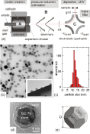
Structure, morphology, and magnetic properties of Fe nanoparticles deposited onto single-crystalline surfaces
Beilstein J. Nanotechnol. 2011, 2, 47–56, doi:10.3762/bjnano.2.6

- far from thermal equilibrium forming due to the complex landing kinetics of the smaller particles which are connected with the spontaneous reorientation process. Recent molecular-dynamics (MD) simulations give microscopic insight into the processes in nanoparticle deposition experiments [65]. In

Other Beilstein-Institut Open Science Activities