


Search results
Search for "quantum dots" in Full Text gives 232 result(s) in Beilstein Journal of Nanotechnology. Showing first 200.
Tailoring the ligand shell for the control of cellular uptake and optical properties of nanocrystals
Beilstein J. Nanotechnol. 2015, 6, 232–242, doi:10.3762/bjnano.6.22

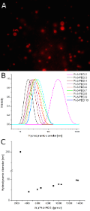
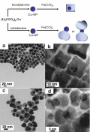
- and specificity in a broad in vitro test is demonstrated. Keywords: biolable; cellular uptake; fluorescence quenching; poylmeric micelles; quantum dots; Introduction One of the main challenges in using high quality nanoparticles for biological applications is to ensure that the ligand system
- has shown to drastically enhance the fluorescence properties, namely the fluorescence quantum efficiency, of encapsulated CdSe/CdS/ZnS and CdSe/CdxZn(1-x)S/ZnS core–shell–shell quantum dots (QDs). This enhancement can be explained to a certain extent by the cross-linking of the micelles but further






Caveolin-1 and CDC42 mediated endocytosis of silica-coated iron oxide nanoparticles in HeLa cells
Beilstein J. Nanotechnol. 2015, 6, 167–176, doi:10.3762/bjnano.6.16

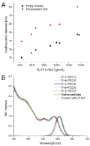
- was chosen as a model cell line. Hela cells are a well-established malignant cell line, which was widely used to study the uptake of iron oxide nanoparticles [18][21][24][32], gold nanoparticles [33][34] and other particle systems like quantum dots [35] or polymer particles [36][37]. To gain insights
- human alveolar epithelial cells and polystyrene nanoparticles around 100 nm [38] as well as polymer coated gold nanoparticles with a core size around 13 nm [39]. On the other hand there are studies showing the uptake of different nanoparticles by HeLa cells such as quantum dots [35], PEG-PLA particles


The distribution and degradation of radiolabeled superparamagnetic iron oxide nanoparticles and quantum dots in mice
Beilstein J. Nanotechnol. 2015, 6, 111–123, doi:10.3762/bjnano.6.11

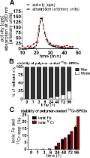
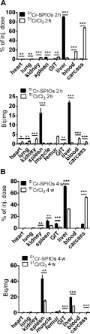
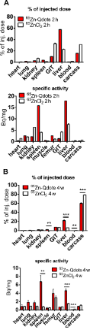
- , Germany Institute of Physical Chemistry and Electrochemistry, Technical University of Dresden, Bergstr. 66b, 01069 Dresden, Germany 10.3762/bjnano.6.11 Abstract 51Cr-labeled, superparamagnetic, iron oxide nanoparticles (51Cr-SPIOs) and 65Zn-labeled CdSe/CdS/ZnS-quantum dots (65Zn-Qdots) were prepared
- /CdS/ZnS-Qdots in the liver. Keywords: biodistribution; chromium(III); 51Cr; quantum dots; SPIOs; zinc metabolism; 65Zn; Introduction Quantum dots (Qdots) are semiconductor nanocrystals (2–100 nm in diameter) that combine a strong, size-tunable photoluminescence with robust photostability, which
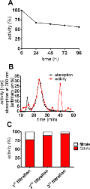
- the iron oxide core of SPIOs under similar experimental conditions was unsuccessful. However, a distinct incorporation of 65ZnCl2 occurred when CdSe/CdS/ZnS core/shell/shell quantum dots were synthesized (Figure 1). Both hydrophobic nanoparticle cores were encapsulated using the same polymer to render





Synthesis of boron nitride nanotubes and their applications
Beilstein J. Nanotechnol. 2015, 6, 84–102, doi:10.3762/bjnano.6.9
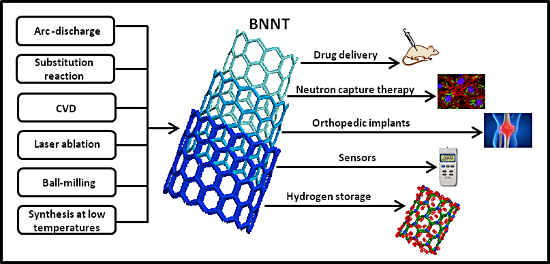
- amino groups and its use as a good dispersion agent [79]. The BNNTs were first coated with PLL and then with quantum dots (QDs) to observe the cellular uptake of PLL–BNNTs in C2C12 mouse myoblast cells. To observe the energy dependence of the uptake mechanism of the PLL–BNNTs, sodium azide was used to
- carriers of boron atoms. Figure 9 shows how the BNNTs were functionalized with PLL, a fluorescent probe (quantum dots) and folic acids. PLLs were wrapped around the BNNTs to induce a hydrophilic property. In addition, the BNNTs were coated with folic acids for selective interaction with the tumor cells


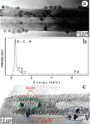


The fate of a designed protein corona on nanoparticles in vitro and in vivo
Beilstein J. Nanotechnol. 2015, 6, 36–46, doi:10.3762/bjnano.6.5

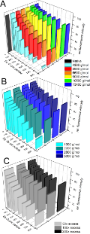
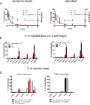
- resulted in a more neutral particle (B), reaction with PEG-bisamine in an even cationic particle (C) as seen in electrophoresis (left Quantum dots, right SPIOs with the same polymer-coating and the same pegylation). Modification of the EDC concentration resulted in gradually PEGylated products, which can


Nanoparticle interactions with live cells: Quantitative fluorescence microscopy of nanoparticle size effects
Beilstein J. Nanotechnol. 2014, 5, 2388–2397, doi:10.3762/bjnano.5.248
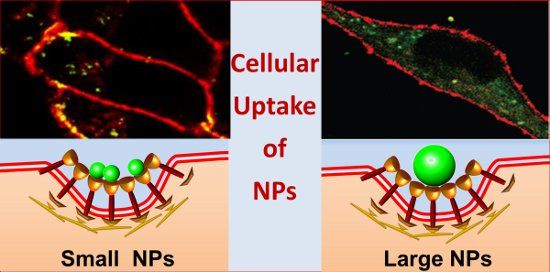
- with widely differing sizes. We have selected very small gold nanoclusters (AuNCs, diameter ≈3 nm) stabilized with dihydrolipoic acid (DHLA), semiconductor core-shell quantum dots (CdSe/ZnS, ≈10 nm) coated with D-penicillamine (DPA) and relatively large polystyrene (PS) NPs (≈100 nm) with different
- , some general conclusions are drawn as to how the NP size affects the mechanistic details of the uptake process. Results and Discussion NP characterization We have synthesized differently sized, water-soluble NPs, including intrinsically luminescent D-penicillamine-coated quantum dots (DPA-QDs) [28


Synthesis of radioactively labelled CdSe/CdS/ZnS quantum dots for in vivo experiments
Beilstein J. Nanotechnol. 2014, 5, 2383–2387, doi:10.3762/bjnano.5.247

- nanomaterials have been developed for applications in the field of bio-labelling. For the visualization of transport processes in the body, organs and cells, luminescent quantum dots (QDs) make for highly useful diagnostic tools. However, intercellular routes, bio-distribution, metabolism during degradation or
- phase transfer of the QDs. Keywords: biomarker; CdSe/CdS/ZnS; quantum dots; radioactive labelling; 65Zn; Introduction Two decades of research and investigation in the field of luminescent semiconductor nanoparticles, also known as quantum dots (QDs), have now passed since the fundamental work of


Inorganic Janus particles for biomedical applications
Beilstein J. Nanotechnol. 2014, 5, 2346–2362, doi:10.3762/bjnano.5.244
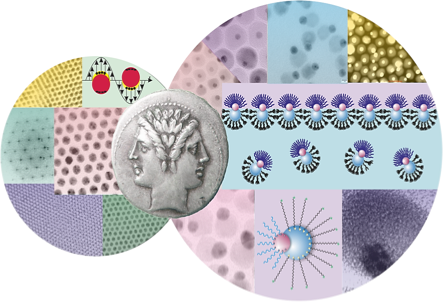
- properties [16][17]. Since the 1980s [16][18][19], there has been a huge research effort in optimizing the characteristics of hetero-structured semiconductors with extraordinary optical properties. Xie et al. [13] demonstrated the design of CdSe quantum dots covered by a multishell structure from CdS and ZnS
- yield governed by the electronic passivation of the surface, whereas the quantum yield was decreased for a shell thickness of more than two multilayers, which was attributed to lattice imperfections within the shell (Figure 2c) [13]. Recent developments in the fields of hetero-structured quantum dots
- exploration of their physicochemical properties and large scale applications in the near future. Illustrations of the transition from isotropic to anisotropic particles. a) Evolution of the PL-peak position, b) schematic representation, and c) evolution of the PL-quantum yield for several core-shell quantum






Advanced atomic force microscopy techniques II
Beilstein J. Nanotechnol. 2014, 5, 2326–2327, doi:10.3762/bjnano.5.241
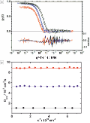
- batteries for a comparison of their nanoscale electrical, electrochemical, and morphological properties [6] or the analysis of CdS quantum dots on TiO2 by a combination of AFM and X-ray photoelectron spectroscopy [7]. The folding and rupture of graphene on SiC analyzed by non-contact AFM and Kelvin probe
Biopolymer colloids for controlling and templating inorganic synthesis
Beilstein J. Nanotechnol. 2014, 5, 2129–2138, doi:10.3762/bjnano.5.222
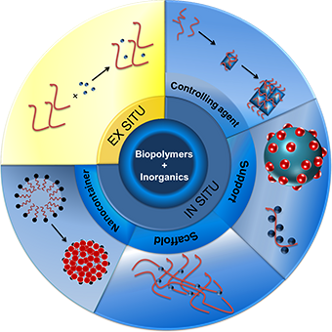
- . [5] prepared chitosan/silica composite microspheres by mixing an aqueous solution of the biopolymer with commercial nanosized silica particles. The obtained microparticles were dried afterwards. In further examples, chitosan matrices have also been used to immobilize CdSe quantum dots [6] and γ-Fe2O3
- particles were obtained (Figure 3). Analogous to the DNA case, peptidic supports have also been used for the deposition of metals [53] and semiconductor chalcogenide quantum dots [54][55][56][57][58][59][60][61][62][63][64][65]. B2. Biopolymer particles as “supports”: In the area of preparation of hollow


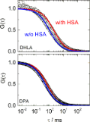
Effects of surface functionalization on the adsorption of human serum albumin onto nanoparticles – a fluorescence correlation spectroscopy study
Beilstein J. Nanotechnol. 2014, 5, 2036–2047, doi:10.3762/bjnano.5.212

- Fe–Pt nanoparticles (NPs, 6 nm radius), CdSe/ZnS quantum dots (QDs, 5 nm radius) and Au and Ag nanoclusters (1–4 nm radius), which are enshrouded by various water-solubilizing surface layers exposing different chemical functional groups (carboxyl, amino and both), thereby endowing the NPs with
- four orders of magnitude. These variations can be understood in terms of specific Coulombic interactions between the proteins and the NP surfaces. Keywords: fluorescence correlation spectroscopy; human serum albumin; nanoparticles; protein corona; quantum dots; Introduction In recent years, both




Data-adaptive image-denoising for detecting and quantifying nanoparticle entry in mucosal tissues through intravital 2-photon microscopy
Beilstein J. Nanotechnol. 2014, 5, 2016–2025, doi:10.3762/bjnano.5.210
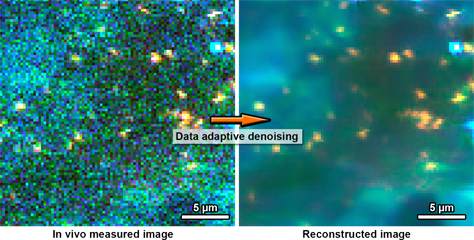
- microscopy (2PM); denoising; in vivo imaging; nanoparticles; signal to noise ratio (SNR); quantum dots; Introduction Imaging methods applied to detect fluorescent nanoparticles in mucosal tissues should provide high optical resolution and allow large volumes to be scanned. An important and versatile tool
- /ZnS-core/shell/shell quantum dots (QDs) used in this study were provided by the Center for Applied Nanotechnology, CAN GmbH, Germany (CANdots, Series A). These nanocrystals are originally dispersed in a nonpolar organic solvent. To allow for bioapplications they were transferred into the aqueous phase
- authors thank Dr. Jan Niehaus (CAN-GmbH, Germany) and Sören Becker (University of Hamburg, Germany) for kindly providing the quantum dots used in this study. Supported by Deutsche Forschungsgemeinschaft (GE 647/10, HU 629/4, WE 2059/8).


Carbon nano-onions (multi-layer fullerenes): chemistry and applications
Beilstein J. Nanotechnol. 2014, 5, 1980–1998, doi:10.3762/bjnano.5.207
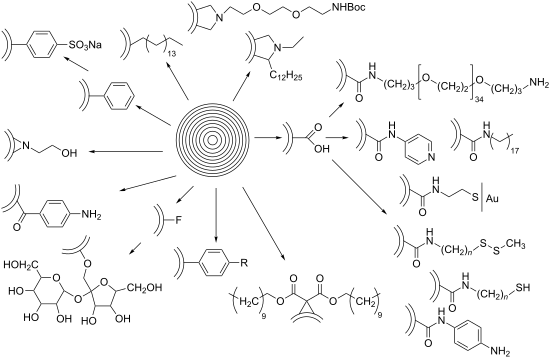
- research on carbon nanostructures. Biological and environmental applications Biological imaging: In contrast to other carbon nanomaterials such as CNTs [52] or carbon quantum dots [53], CNOs have not been widely employed in biological marking, yet. A first report was published in 2011 by Sarkar et al. by


Silicon and germanium nanocrystals: properties and characterization
Beilstein J. Nanotechnol. 2014, 5, 1787–1794, doi:10.3762/bjnano.5.189
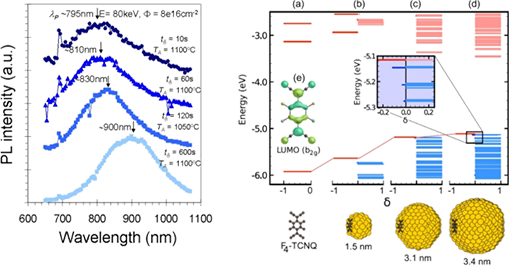
- models and the more elaborate k·p perturbation theory have been used to give insight into the quantum confinement [39], dispersion, as well as on the dependence of the electronic levels of nanocrystals and quantum dots on strain and electric fields [40]. Such results are general and have been helpful to


Controlling the optical and structural properties of ZnS–AgInS2 nanocrystals by using a photo-induced process
Beilstein J. Nanotechnol. 2014, 5, 1767–1773, doi:10.3762/bjnano.5.187

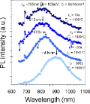
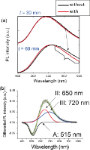
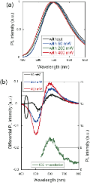
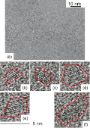
- ], quantum dots (QDs) [4], quantum wells [5], and quantum rings [6]. Kawazoe et al., have demonstrated the room-temperature operation of AND-gate and NOT-gate devices using InAs QD pairs [7]. In a nanophotonic device, near-field energy-transfer via a dipole-forbidden energy state, which is unattainable in




Experimental techniques for the characterization of carbon nanoparticles – a brief overview
Beilstein J. Nanotechnol. 2014, 5, 1760–1766, doi:10.3762/bjnano.5.186
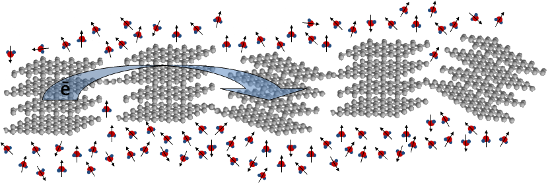
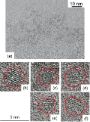
- as a quantum dots matrix [35][44]. In such a matrix, where CNs are structurally connected by some mechanical linkages (carbon chains or graphene fragments [34]), there exists a system of potential barriers, similar to the those formed by a dielectric separator in granular metals. The barriers depend


Influence of surface-modified maghemite nanoparticles on in vitro survival of human stem cells
Beilstein J. Nanotechnol. 2014, 5, 1732–1737, doi:10.3762/bjnano.5.183

- for the above mentioned purposes [9]. Monosized iron oxide nanoparticles, sometimes called ultra-small superparamagnetic iron oxide nanoparticles, play the dominant role. Quantum dots, gold and, recently, also upconversion nanoparticles are used less frequently. The main advantages of iron oxides
- (magnetite Fe3O4 or maghemite γ-Fe2O3) are their simple preparation and their magnetic properties, which are necessary for detection. Moreover, it is convenient that iron oxides are readily metabolized in the body. From this point of view, quantum dots are disqualified due to their toxicity. Like in every


Donor–acceptor graphene-based hybrid materials facilitating photo-induced electron-transfer reactions
Beilstein J. Nanotechnol. 2014, 5, 1580–1589, doi:10.3762/bjnano.5.170

- materials composed of graphene and photoactive components, such as porphyrins and phthalocyanines, have been prepared and evaluated regarding photo-induced charge transfer phenomena [16][17][18]. Moreover, semiconducting quantum dots such as CdS [19][20][21][22], CdSe [23][24][25][26], CdTe [27][28], ZnO


Synthesis of hydrophobic photoluminescent carbon nanodots by using L-tyrosine and citric acid through a thermal oxidation route
Beilstein J. Nanotechnol. 2014, 5, 1513–1522, doi:10.3762/bjnano.5.164

- as heterogeneous graphene quantum dots (GQDs) [15]. Many research groups developed synthetic routes to obtain CNDs without using surface passivating agents, by using natural resources like candle soot [6], orange juice [7], banana juice [16], ground soybeans [17], waste paper [18], and paper ash [19
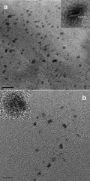
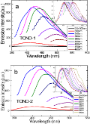
- structural defects [2][5][15][20]. Recently, Cushing et al. reported that the origin of excitation wavelength dependent emission, the continuous red shift and the broadening of bands is due to a “giant red-edge effect” of heterogeneous graphene quantum dots. The giant red-edge effect appears because the






The cell-type specific uptake of polymer-coated or micelle-embedded QDs and SPIOs does not provoke an acute pro-inflammatory response in the liver
Beilstein J. Nanotechnol. 2014, 5, 1432–1440, doi:10.3762/bjnano.5.155
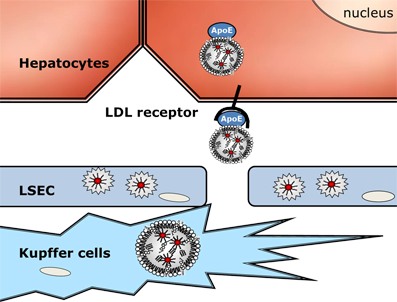
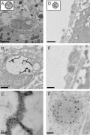
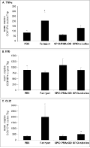
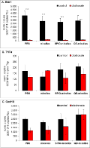
- .5.155 Abstract Semiconductor quantum dots (QD) and superparamagnetic iron oxide nanocrystals (SPIO) have exceptional physical properties that are well suited for biomedical applications in vitro and in vivo. For future applications, the direct injection of nanocrystals for imaging and therapy represents
- : hepatocytes; inflammation; Kupffer cells; liver sinusoidal endothelial cells; nanoparticle toxicity; nanoparticle uptake; quantum dots; superparamagnetic iron-oxide nanocrystals; Introduction The superior optical properties of QDs compared to organic dyes render them promising candidates for the demands of



Surface processes during purification of InP quantum dots
Beilstein J. Nanotechnol. 2014, 5, 1220–1225, doi:10.3762/bjnano.5.135

- , B-2020 Antwerp, Belgium 10.3762/bjnano.5.135 Abstract Recently, a new simple and fast method for the synthesis of InP quantum dots by using phosphine as phosphorous precursor and myristic acid as surface stabilizer was reported. Purification after synthesis is necessary to obtain samples with good
- precursor takes place, which leads to a better surface passivation. The electrophoretic purification technique does not increase luminescence efficiency but yields very pure quantum dots in only a few minutes. Additionally, the formation of In(OH)3 during the low temperature synthesis was explained
- . Purification of quantum dots is a very significant part of postsynthetical treatment that determines the properties of the material. But this subject is not sufficiently discussed in the literature. The paper is devoted to the processes that occur at the surface of quantum dots during purification. A new



Model systems for studying cell adhesion and biomimetic actin networks
Beilstein J. Nanotechnol. 2014, 5, 1193–1202, doi:10.3762/bjnano.5.131
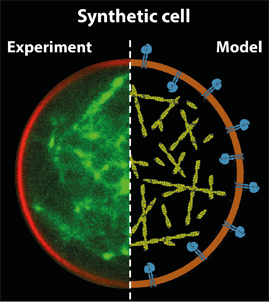
- . The successful incorporation of partly fluorescently labelled integrin αIIbβ3 into the GUVs was confirmed by confocal microscopy. Binding experiments of integrin-GUVs on surfaces and quantum dots coated with RGD ligands revealed that the incorporated integrins were biologically active. In reflection


Enhanced photocatalytic hydrogen evolution by combining water soluble graphene with cobalt salts
Beilstein J. Nanotechnol. 2014, 5, 1167–1174, doi:10.3762/bjnano.5.128

- artificial catalyst for photocatalytic hydrogen evolution [23], for example, was simply constructed in situ from earth-abundant cobalt salts and CdTe quantum dots. As a new carbon material with large surface area and excellent electrical properties, graphene has raised much attention since 2004 [24][25][26


Organic and inorganic–organic thin film structures by molecular layer deposition: A review
Beilstein J. Nanotechnol. 2014, 5, 1104–1136, doi:10.3762/bjnano.5.123
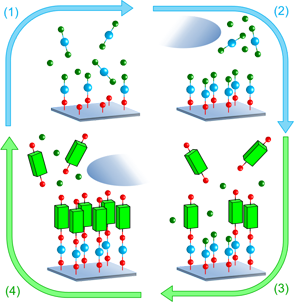
- decline [77]. Different combinations of terephthalaldehyde, 1,4-diaminobenzene and ethanedihydrazide have been used to fabricate quantum dots of varying lengths: These thin films showed promise for sensitization in photovoltaic devices [79][80]. Hybrid inorganic–organic thin films Since the first




Photocatalysis
Beilstein J. Nanotechnol. 2014, 5, 1071–1072, doi:10.3762/bjnano.5.119
- and morphological tuning, in particular for hybrid materials systems such as Ag–ZnO, VTi/MCM-41, are important toward achieving higher solar energy conversion efficiencies. In a couple of reports, materials alternative to conventional metal oxides, for example, reduced graphene oxide, graphene quantum
- dots integrated with TiO2 nanotube arrays, and carbon nitride, have been explored to construct photocatalysts with enhanced performances. On the other hand, molecular catalysts have an advantage in design flexibility and structural tunability. A contribution based on the investigation of molecular



