

Search results
Search for "structural properties" in Full Text gives 181 result(s) in Beilstein Journal of Nanotechnology.
Extended X-ray absorption fine structure of bimetallic nanoparticles
Beilstein J. Nanotechnol. 2011, 2, 237–251, doi:10.3762/bjnano.2.28
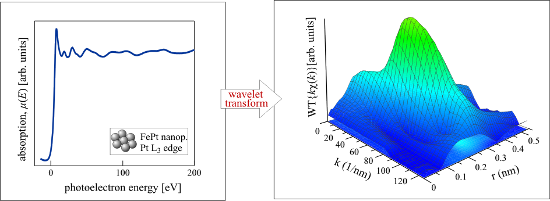
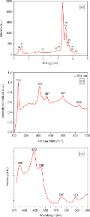
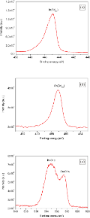
- and other contaminations on the investigated structure, EXAFS of in situ cleaned and oxide-free FePt nanoparticles seems to be a suitable tool to study the intrinsic structural properties of pure metallic nanoparticles. Wet-chemical synthesis A possible organometallic route to synthesise FePt



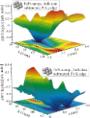
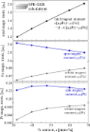
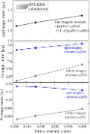
Structural and magnetic properties of ternary Fe1–xMnxPt nanoalloys from first principles
Beilstein J. Nanotechnol. 2011, 2, 162–172, doi:10.3762/bjnano.2.20
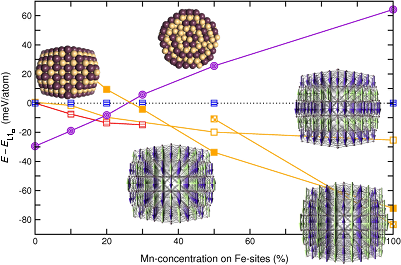
- and structural properties of the ternary systems are in good agreement with previous bulk and thin film measurements. At an intermediate Mn-content around x = 0.25 a crossover between several phases with magnetic and structural properties is encountered, which may be interesting for exploitation in
- accurate description of structural properties of ferrous alloys, the use of the generalized gradient approximation (GGA) for the representation of the exchange–correlation functional is mandatory. In the present work, the formulation of Perdew and Wang [47][48] in connection with the spin interpolation
- ferro- and antiferromagnetic regions with canted moments. Later, Meyer and Thiele [74] investigated the same system as epitaxial films grown on MgO. Their XRD (X-ray diffraction) data essentially confirmed the structural properties reported in [73] despite possible mechanical strains due to the thin


Room temperature synthesis of indium tin oxide nanotubes with high precision wall thickness by electroless deposition
Beilstein J. Nanotechnol. 2011, 2, 119–126, doi:10.3762/bjnano.2.14

- under aqueous conditions in ion track etched polycarbonate templates. Due to surface limitations, electroless deposition is a convenient and power saving method to construct hollow nanostructures. The structural properties of the ITO tubes grown were investigated by various analytical techniques. The


Structure, morphology, and magnetic properties of Fe nanoparticles deposited onto single-crystalline surfaces
Beilstein J. Nanotechnol. 2011, 2, 47–56, doi:10.3762/bjnano.2.6

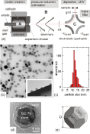
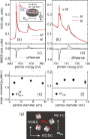
- . Conclusion: The magnetic and structural properties of nanoparticles are strongly affected by the deposition kinetics even when soft landing conditions are provided. The orientation of the deposited particles and thus their interface with the substrate strongly depend on the particle size with consequences
- physical approaches, the thermodynamics and the kinetics of the growth mode or – when depositing preformed clusters/nanoparticles on a surface – the landing kinetics and subsequent relaxation processes have a strong impact and thus need to be considered when attempting to control magnetic and structural
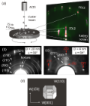
- properties of supported clusters or nanoparticles. Results: In this contribution we focus on mass-filtered Fe nanoparticles in a size range from 4 nm to 10 nm that are generated in a cluster source and subsequently deposited onto two single crystalline substrates: fcc Ni(111)/W(110) and bcc W(110). We use a

On the reticular construction concept of covalent organic frameworks
Beilstein J. Nanotechnol. 2010, 1, 60–70, doi:10.3762/bjnano.1.8

- ]. Structural properties We have compared structural properties of isolated building blocks with those of the extended COF structures. Negligible differences have been found in the bond lengths and bond angles of the building blocks and the corresponding crystal structures. This indicates that the structural




Enhanced visible light photocatalysis through fast crystallization of zinc oxide nanorods
Beilstein J. Nanotechnol. 2010, 1, 14–20, doi:10.3762/bjnano.1.3

- during synthesis is an attractive option for visible light photocatalysis and further results with different pollutants will be presented in succeeding reports. ZnO, apart from having specific structural properties, can also be grown on any type of substrates, such as glass, alumina, polyethylene


Other Beilstein-Institut Open Science Activities