


Search results
Search for "aggregation effects" in Full Text gives 3 result(s) in Beilstein Journal of Nanotechnology.
Decontamination from water pollutants and pathogens by electrospun nanofibers doped with heavy-atom-free borafluorene-BODIPY photosensitizers
Beilstein J. Nanotechnol. 2026, 17, 668–682, doi:10.3762/bjnano.17.46
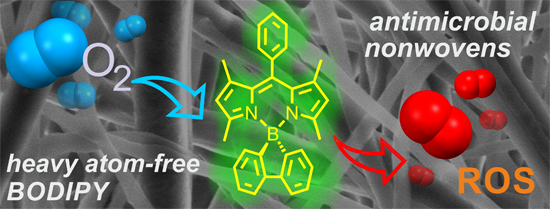
- fluorescence spectroscopy was used to check the possible aggregation of photosensitizer in PCL, as the emission behavior of BODIPY is sensitive to self-aggregation effects. The surface free energy value (SFE) was determined using the Kaelble–Owens–Wendt method, which accounts for both the polar component
- -radiative processes may be more efficient due to the possible aggregation effects. To further examine the performance of the electrospun photoactive fibers, we have conducted photocatalytic decontamination experiments involving two additional pharmaceutical agents, namely, ranitidine and propranolol. For

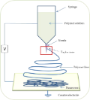
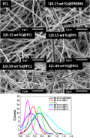


A review of metal-organic frameworks and polymers in mixed matrix membranes for CO2 capture
Beilstein J. Nanotechnol. 2025, 16, 155–186, doi:10.3762/bjnano.16.14
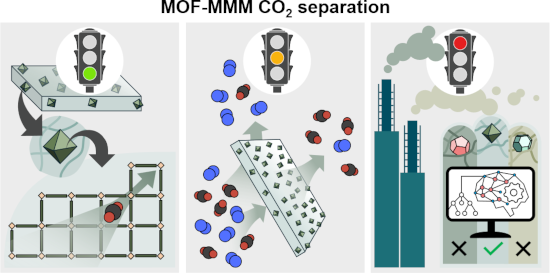
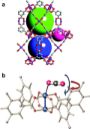
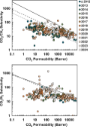
- illustrated in Figure 4, can accommodate MOF loadings of 30 wt % without notable aggregation effects [92], whereas others experience strong aggregation beyond, for example, 16 wt % MOF loading [91]. A well-established and simple method to reduce aggregation at higher MOF loadings is to prime the MOF slurry




Suppression of low-energy dissociative electron attachment in Fe(CO)5 upon clustering
Beilstein J. Nanotechnol. 2017, 8, 2200–2207, doi:10.3762/bjnano.8.219
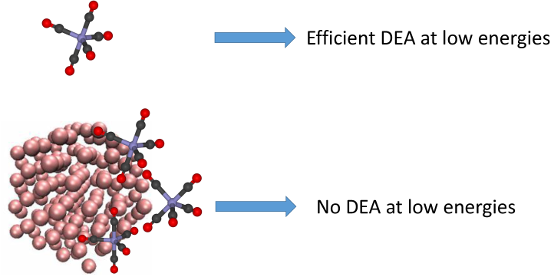
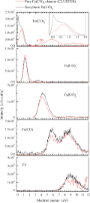
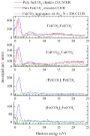
- electron attachment in isolated Fe(CO)5. Keywords: aggregation effects; dissociative electron attachment; FEBID; iron pentacarbonyl; long-range interactions; Introduction In recent years a number of gas-phase studies on molecules that are commonly used as precursors in electron-induced nanofabrication

Other Beilstein-Institut Open Science Activities



