


Search results
Search for "angle-resolved photoelectron spectroscopy (ARPES)" in Full Text gives 1 result(s) in Beilstein Journal of Nanotechnology.
Tuning the electronic properties of defect-rich MoS2
Beilstein J. Nanotechnol. 2026, 17, 796–805, doi:10.3762/bjnano.17.56
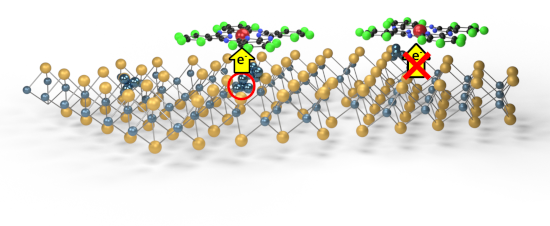
- structural defects significantly affect the electronic properties of the material. The present study utilizes angle-resolved photoelectron spectroscopy (ARPES) and surface-sensitive core-level spectroscopy (SXPS, XAS) with synchrotron radiation to investigate the interfaces between defect-rich MoS2 and
- . Keywords: angle-resolved photoelectron spectroscopy (ARPES); MoS2; phthalocyanine; X-ray absorption spectroscopy (XAS); X-ray photoelectron spectroscopy (XPS); Introduction In the pursuit for novel semiconducting materials, the group of transition metal dichalcogenides (TMDCs), including molybdenum
- spectroscopy (XAS), and angle-resolved photoelectron spectroscopy (ARPES) are powerful techniques for studying interfacial electronic structures with different surface sensitivities, the orientation of molecules in a heterostructure, and the band structure in proximity to the Fermi level. Using these


Other Beilstein-Institut Open Science Activities



