

Search results
Search for "functional materials" in Full Text gives 116 result(s) in Beilstein Journal of Nanotechnology.
He+ FIBID-fabricated 3D AFM tip architectures: an exploratory study of hollow pillars, helices, and spirals
Beilstein J. Nanotechnol. 2026, 17, 863–871, doi:10.3762/bjnano.17.62
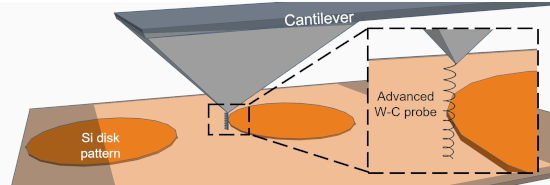
- growth, geometric freedom, and the possibility of integrating functional materials and non-standard architectures that would be difficult to realise by conventional fabrication routes. Within FIBID, helium ion beam-induced deposition (He+ FIBID) is particularly attractive for the fabrication of 3D



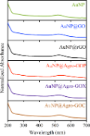
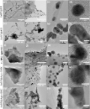
Upcycling agroindustrial waste into graphene oxide supports for gold nanoparticles: toward sustainable nanomaterials
Beilstein J. Nanotechnol. 2026, 17, 489–504, doi:10.3762/bjnano.17.32
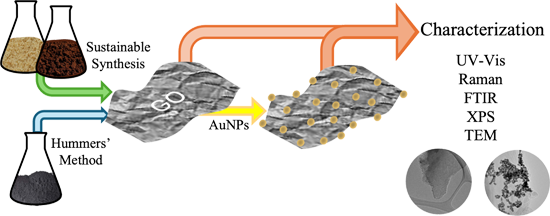
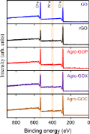
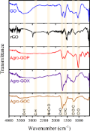
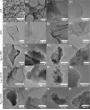
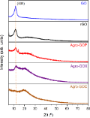
- functional materials. Regarding the pyrolysis of biowaste to obtain GO, most reported approaches rely on high-temperature carbonization, typically at 600–1000 °C for several hours, followed by chemical oxidation [18][19][20]. For example, Silviana et al. converted coco peat into GO through a two-stage



Micro- and nanoscale effects in biological and bioinspired materials and surfaces
Beilstein J. Nanotechnol. 2026, 17, 214–217, doi:10.3762/bjnano.17.14
- its water content, and bears potential for direct industrial applications or inspiration for novel technical adhesives. Some contributions highlighted the explanatory power of computational analysis of biological functional materials. Here, biological phenomena were investigated based on
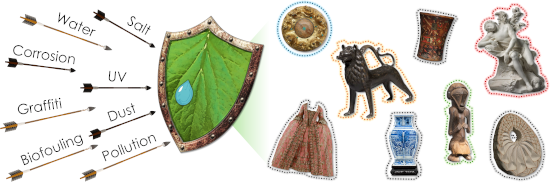
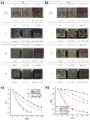
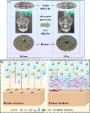
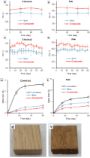
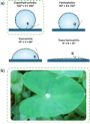
Functional surface engineering for cultural heritage protection: the role of superhydrophobic and superoleophobic coatings – a comprehensive review
Beilstein J. Nanotechnol. 2026, 17, 63–96, doi:10.3762/bjnano.17.6





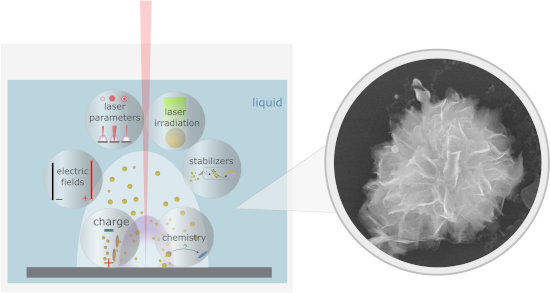
Laser ablation in liquids for shape-tailored synthesis of nanomaterials: status and challenges
Beilstein J. Nanotechnol. 2025, 16, 1963–1997, doi:10.3762/bjnano.16.137





Modeling magnetic properties of cobalt nanofilms used as a component of spin hybrid superconductor–ferromagnetic structures
Beilstein J. Nanotechnol. 2025, 16, 1557–1566, doi:10.3762/bjnano.16.110
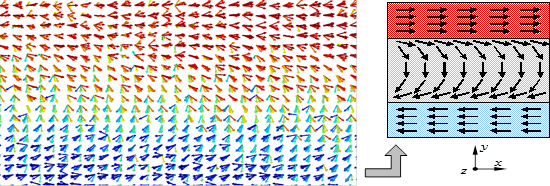
- Aleksey Fedotov Olesya Severyukhina Anastasia Salomatina Anatolie Sidorenko Modeling Structures and Functional Materials Group, Institute of Mechanics, Udmurt Federal Research Center, Ural Division, Russian Academy of Sciences, Baramzinoy 34, Izhevsk 426067, Russia Nanotechnology and Microsystems


Transient electronics for sustainability: Emerging technologies and future directions
Beilstein J. Nanotechnol. 2025, 16, 1545–1556, doi:10.3762/bjnano.16.109
- without attenuation remains a major limitation, and the biocompatibility of the stimuli or triggering mechanisms may also pose challenges. Additionally, this strategy is highly material-specific, requiring the tailored design and development of functional materials for each target application, which adds


Cross-reactivities in conjugation reactions involving iron oxide nanoparticles
Beilstein J. Nanotechnol. 2025, 16, 1504–1521, doi:10.3762/bjnano.16.106
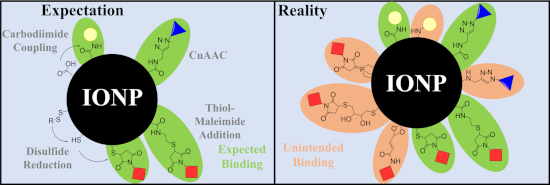
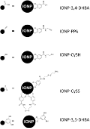
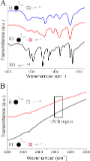
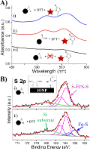
- )carbodiimide (EDC) coupling [5] and “click” chemistry reactions [6] have proven to be effective tools in the synthesis of novel functional materials. Carbodiimide coupling is an invaluable tool for the coupling of carboxylic acids to amines, through amide bond formation. The combination of EDC and N







Laser processing in liquids: insights into nanocolloid generation and thin film integration for energy, photonic, and sensing applications
Beilstein J. Nanotechnol. 2025, 16, 1428–1498, doi:10.3762/bjnano.16.104
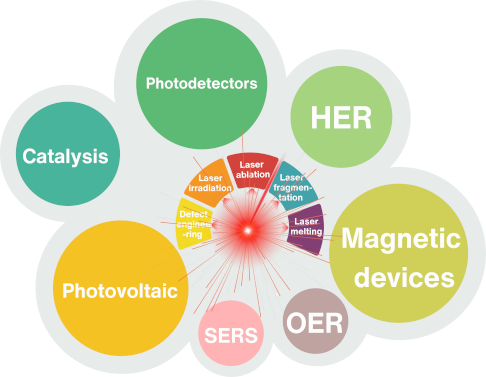
- method for developing advanced functional materials. This section of the discussion focuses on the fabrication of thin films using laser-processed nanocolloids by various techniques such as electrophoretic deposition (EPD), spin-dip coating, spin coating, drop-casting, and spray deposition. The choice of






Hydrogels and nanogels: effectiveness in dermal applications
Beilstein J. Nanotechnol. 2025, 16, 1216–1233, doi:10.3762/bjnano.16.90
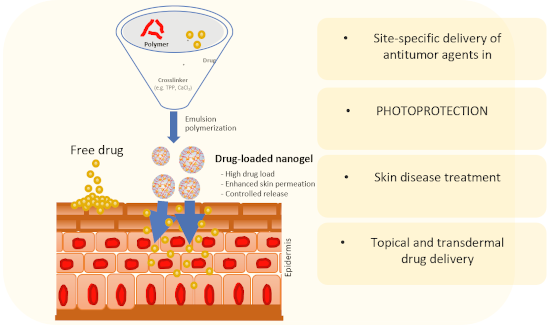
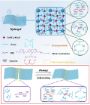
- prevention of the spontaneous combustion of coal [29]. The development of chemically functional materials on the nanoscale appears to be of fundamental importance when it comes to health applications. Nanogels are an excellent alternative for the manufacture of biomaterials due to their physical and chemical


Soft materials nanoarchitectonics: liquid crystals, polymers, gels, biomaterials, and others
Beilstein J. Nanotechnol. 2025, 16, 1025–1067, doi:10.3762/bjnano.16.77
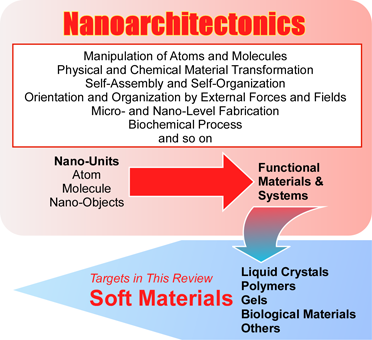
- concept of nanoarchitecture, as a post-nanotechnology methodology, can be defined as the construction of functional materials from nanometer-sized units using a variety of materials processes. It is believed to be particularly well suited to the assembly of soft materials that exhibit flexible and diverse
- materials systems. It can be reasonably proposed that the mastery of materials science in the context of soft functional materials will facilitate the development of advanced functional systems that emulate the characteristics of living organisms. This concept is not limited to applications in biology, such
- as biomedical applications [15][16][17][18][19][20], but also extends to functional material systems that address issues such as energy [21][22][23][24][25] and environment [26][27][28][29][30]. The creation of such soft functional materials has been fostered alongside the advancement of science






Time-resolved probing of laser-induced nanostructuring processes in liquids
Beilstein J. Nanotechnol. 2025, 16, 968–1002, doi:10.3762/bjnano.16.74
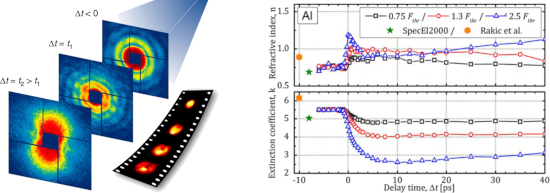
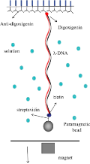
- -transition kinetics using femtosecond laser pulses is critical. Such research promises to improve the ability to engineer functional materials through on-demand customization. Recognizing that photoexcited electrons serve as the initial point, it is intuitive to envision controlling localized surface


Insights into the electronic and atomic structures of cerium oxide-based ultrathin films and nanostructures using high-brilliance light sources
Beilstein J. Nanotechnol. 2025, 16, 860–871, doi:10.3762/bjnano.16.65
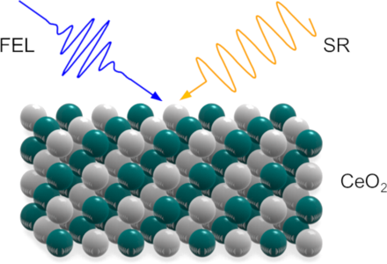
- light sources, such as synchrotrons and free-electron lasers, allow researchers to probe the structural, electronic, and dynamic properties of functional materials at an unprecedented level of detail. Techniques like X-ray photoelectron spectroscopy and X-ray absorption spectroscopy, can reveal atomic


Synthesis and magnetic transitions of rare-earth-free Fe–Mn–Ni–Si-based compositionally complex alloys at bulk and nanoscale
Beilstein J. Nanotechnol. 2025, 16, 823–836, doi:10.3762/bjnano.16.62
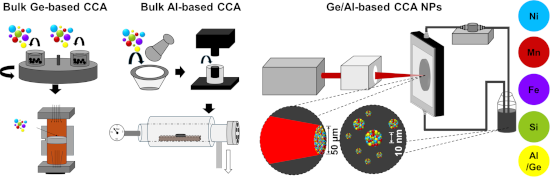
- CCAs NPs. Supporting Information Supporting Information File 40: Additional experimental data. Acknowledgements We thank Tobias Bochmann for his help with the SEM imaging and EDX mapping of the Ge- and Al-based CCA targets. We also thank Dr. Alex Aubert for his help performing SPS at Functional
- Materials in TU Darmstadt. Funding The authors gratefully acknowledge the funding by the German Research Foundation (DFG) within the Collaborative Research Centre/Transregio (CRC/TRR) 270 (Project-ID 405553726, projects (B08, A04 and Z02). We further thank the DFG for funding of the projects GO 2566/10-1


Zeolite materials with Ni and Co: synthesis and catalytic potential in the selective hydrogenation of citral
Beilstein J. Nanotechnol. 2025, 16, 520–529, doi:10.3762/bjnano.16.40
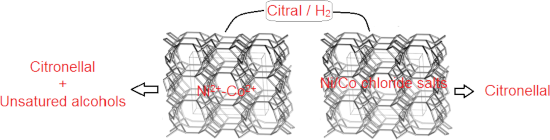
- metallic species for various applications, leading to the invention of new functional materials for sustainable development, such as catalysts [1][2][3]. Among the various methods used to modify zeolites, ion exchange is the most widely employed. Different ion exchange methods are known, such as ion


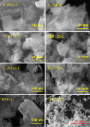
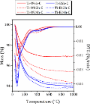
TiO2 immobilized on 2D mordenite: effect of hydrolysis conditions on structural, textural, and optical characteristics of the nanocomposites
Beilstein J. Nanotechnol. 2025, 16, 128–140, doi:10.3762/bjnano.16.12
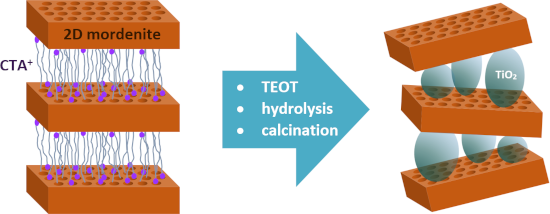
- hydrolysis medium. Keywords: 2D zeolite; hierarchical porosity; mordenite; TEOT; TiO2; titanium tetraethoxide; Introduction Zeolites are important heterogeneous catalysts in various industrial processes. More and more functional materials based on zeolites are being searched for, including zeolites with
- the Research Park of Saint Petersburg State University (Centre for X-ray Diffraction Studies; Interdisciplinary Resource Centre for Nanotechnology; Centre for Physical Methods of Surface Investigation; Centre for Diagnostics of Functional Materials for Medicine, Pharmacology and Nanoelectronics




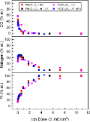
Ion-induced surface reactions and deposition from Pt(CO)2Cl2 and Pt(CO)2Br2
Beilstein J. Nanotechnol. 2024, 15, 1427–1439, doi:10.3762/bjnano.15.115
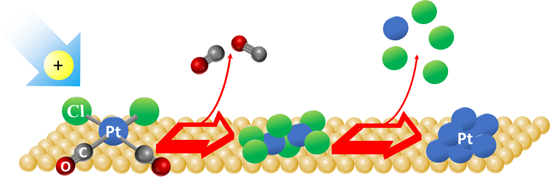
- , deposition strategies in various applications, such as circuit editing and lithographic mask repair in the semiconductor industry [7][8][9][10][11][12] as well as the growth of functional materials for magnetism [13][14][15][16], superconductivity [17], and sensing [18][19]. Compared to FEBID, FIBID operates



Can neutral clusters: a two-step G0W0 and DFT benchmark
Beilstein J. Nanotechnol. 2024, 15, 1010–1016, doi:10.3762/bjnano.15.82
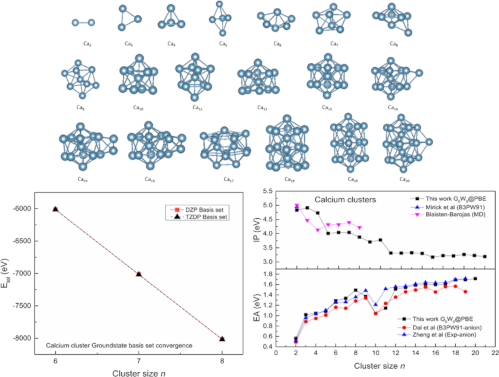
- properties and their potential applications, such as developing theoretical models and designing functional materials. The ground-state structures of Ca clusters (n = 2–20). The binding energies of ground-state Ca clusters (n = 2–20) in comparison with reported data [1][11][13][17]. The second difference in


Photocatalytic degradation of methylene blue under visible light by cobalt ferrite nanoparticles/graphene quantum dots
Beilstein J. Nanotechnol. 2024, 15, 475–489, doi:10.3762/bjnano.15.43
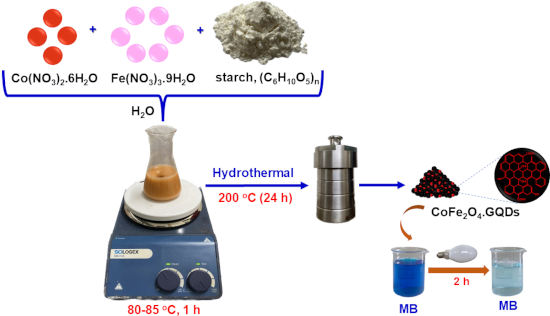
- hydrothermal method was reported [7]. The effect of oleylamine concentration on the physicochemical properties of CF synthesized via a solvothermal process has been presented [8]. However, ferrites exhibit self-agglomeration due to their magnetic nature. Combining different functional materials to prepare




Influence of conductive carbon and MnCo2O4 on morphological and electrical properties of hydrogels for electrochemical energy conversion
Beilstein J. Nanotechnol. 2024, 15, 57–70, doi:10.3762/bjnano.15.6
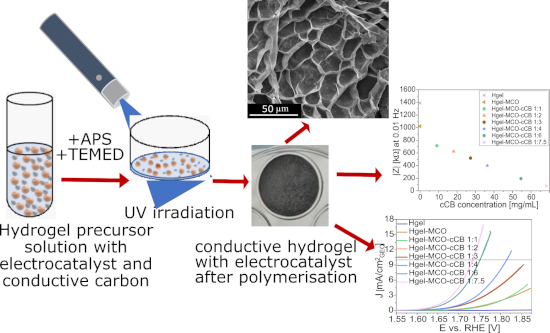
- , polypyrrole, and poly(ethylenedioxythiophene) [29][30][31], allows for the formation of conductive hydrogels. Conducting hydrogels possess properties of both conductive polymers and hydrogels, which makes them attractive functional materials for many applications in several fields of science and technology


Nanoarchitectonics of photothermal materials to enhance the sensitivity of lateral flow assays
Beilstein J. Nanotechnol. 2023, 14, 988–1003, doi:10.3762/bjnano.14.82
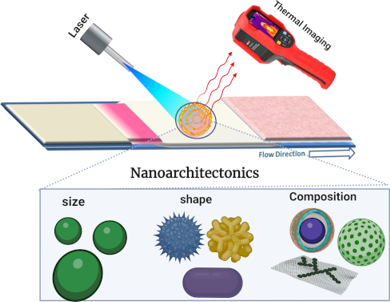
- materials with other functional materials have been found to be useful. Covalent organic frameworks (COFs) are a new class of organic polymers containing B, C, Si, N, and O in their backbones. Conjugation of COFs with Fe3O4 nanoparticles will yield a two to three times higher PCE than that of bare Fe3O4


Nanoarchitectonics for advanced applications in energy, environment and biology: Method for everything in materials science
Beilstein J. Nanotechnol. 2023, 14, 738–740, doi:10.3762/bjnano.14.60
- 10.3762/bjnano.14.60 Keywords: functional materials; materials science; nanoarchitectonics; nanotechnology; The advancement of society depends on functional materials that are available and systems that are generated by the population. We can say that the development of advanced civilizations happens in
- parallel and is due to the development of functional materials. In the beginning of the civilization, humans used to extract materials directly from nature and process them for personal use. Later, we learned how to create materials not found in nature through various chemical reactions. Such material
- the creation of functional materials that improved human life. In the course of their development, we have learned that the function of a material depends not only on the material itself but also on the precision of its internal structure. This is where nanotechnology has brought about a revolution

Nanoarchitectonics to entrap living cells in silica-based systems: encapsulations with yolk–shell and sepiolite nanomaterials
Beilstein J. Nanotechnol. 2023, 14, 522–534, doi:10.3762/bjnano.14.43
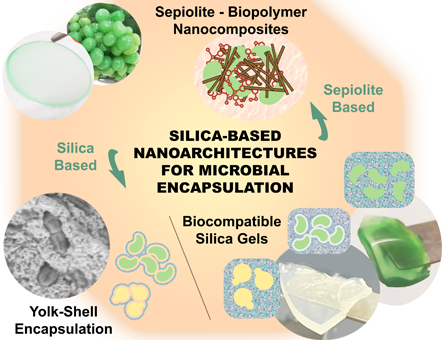
- assembly of biological and inorganic components is being increasingly developed with the aim of achieving high-quality functional materials exhibiting properties of living species, but entrapped within inorganic solid structures [2][3]. When such assembly processes are carried out at the nanometre scale


Molecular nanoarchitectonics: unification of nanotechnology and molecular/materials science
Beilstein J. Nanotechnol. 2023, 14, 434–453, doi:10.3762/bjnano.14.35

- are introduced, and future prospects of nanoarchitectonics are discussed. The fusion of basic science and the application of practical functional materials will complete materials chemistry for everything. Keywords: local probe chemistry; materials chemistry; nanoarchitectonics; nanotechnology; on
- properties. The development of functional materials is an important key to solving various problems in human society. Functional materials have been created together with developments of well-established science such as organic chemistry [4][5][6], inorganic chemistry [7][8][9], polymer chemistry [10][11][12
- . Controlling macroscopic functions by controlling the molecular structure is a very well-established design strategy in molecular nanoarchitectonics. There is also a strong research interest in combining structure-forming techniques to develop functional materials. For example, the Langmuir–Blodgett (LB







Evaluation of electrosynthesized reduced graphene oxide–Ni/Fe/Co-based (oxy)hydroxide catalysts towards the oxygen evolution reaction
Beilstein J. Nanotechnol. 2023, 14, 420–433, doi:10.3762/bjnano.14.34
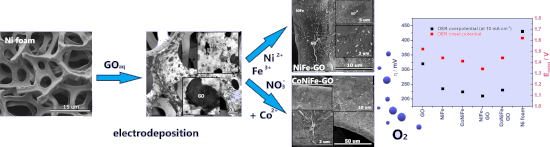
- Karolina Cysewska Marcin Lapinski Marcin Zajac Jakub Karczewski Piotr Jasinski Sebastian Molin Laboratory of Functional Materials, Faculty of Electronics, Telecommunications and Informatics, and Advance Materials Centre, Gdańsk University of Technology, ul. Narutowicza 11/12, 80-233 Gdańsk, Poland