


Search results
Search for "line defect" in Full Text gives 6 result(s) in Beilstein Journal of Nanotechnology.
Defects and defect-mediated engineering of two-dimensional materials: challenges and open questions
Beilstein J. Nanotechnol. 2026, 17, 454–488, doi:10.3762/bjnano.17.31
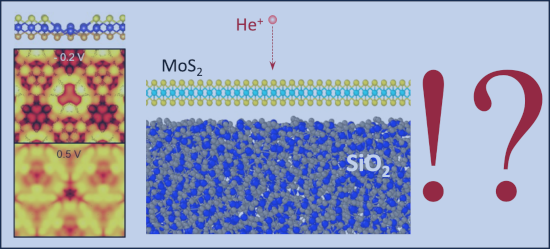
- Mo to form MTB networks [42]. Such surface reactions can change the composition and induce substoichiometric defects. The approach of reacting 2D sheets (e.g., chalcogenides) with excess metal may result in metastable point- and line-defect configurations [43][44][45] and even dense line-defect
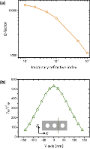
- contains a mirror twin boundary as a 1D line defect, in full analogy to a 3D twin crystal with a 2D twin plane. An atomic model of a mirror twin crystal with a MTB as formed in single layers of MoS2 is shown in Figure 10a. Such MTBs emerge when the threefold-symmetric MoS2 is grown on a sixfold-symmetric
- substrate [159][160]. While the MTBs possess many exciting properties of fundamental interest [159][161][162][163], in the present context, it is only important that translational symmetry along the line defect is preserved, giving rise to a dispersing hole-like band as shown in Figure 10b, that is, to a 1D





Atomic-resolution imaging of rutile TiO2(110)-(1 × 2) reconstructed surface by non-contact atomic force microscopy
Beilstein J. Nanotechnol. 2020, 11, 443–449, doi:10.3762/bjnano.11.35
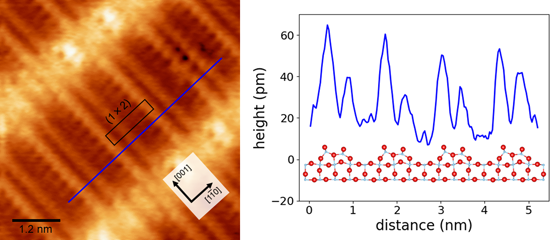
- -AFM and tunneling current for STM), the surface structure sometimes results in different contrasts in both images. In Figure 3, white squares and circles indicate line defects and protrusions, which are considered to be adsorbates or contamination. A line defect was imaged as a likely vacancy by STM
- information on the line defect. The line defects could be due to be sub-surface defects because of the geometry of the reflected top surface obtained in NC-AFM imaging using the interaction between the tip and the sample surface as a feedback signal. To identify the line defects, it is necessary to combine


Multiple Fano resonances with flexible tunablity based on symmetry-breaking resonators
Beilstein J. Nanotechnol. 2019, 10, 2459–2467, doi:10.3762/bjnano.10.236
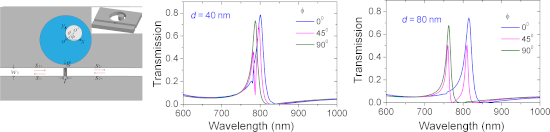
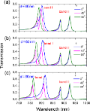
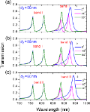
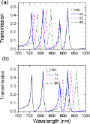
- stuctures are investigated at different platforms aiming for Fano resonance. Fano-type transmission phenomenona were observed in photonic crystal (PhC) waveguide–cavity systems [17][18]. The PhC waveguide is a line defect formed by removing a row of rods or air holes. The cavity is a point defect formed by




Design of photonic microcavities in hexagonal boron nitride
Beilstein J. Nanotechnol. 2018, 9, 102–108, doi:10.3762/bjnano.9.12
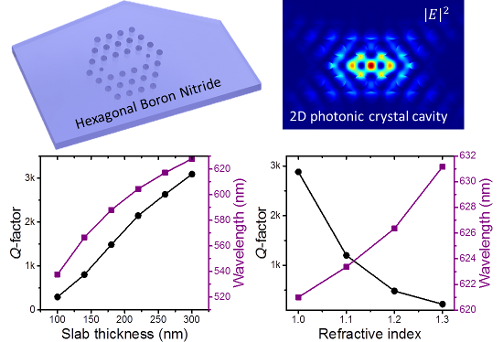
- cavities and monolithic coupled systems made from this material. Results and Discussion We begin with a 2D photonic crystal that contains a line defect cavity. The L3 cavity has been widely investigated because it was the first to exceed an experimental Q-factor of 10,000 [26][27]. In this study, we used a


High Ion/Ioff current ratio graphene field effect transistor: the role of line defect
Beilstein J. Nanotechnol. 2015, 6, 2062–2068, doi:10.3762/bjnano.6.210

- basic terms such as the on/off current, transconductance and subthreshold swing were investigated along with the extended line defect (ELD). The results indicated that the presence of ELDs had a significant effect on the parameters of the GNRFET. Compared to conventional transistors, the increase of the
- Ion/Ioff ratio in graphene transistors with ELDs enhances their applicability in digital devices. Keywords: field effect transistor; graphene; line defect; Introduction Graphene, a two-dimensional allotrope of carbon with the thickness of one atom, has attracted the attention of researchers because
- conductivity decrease with grain boundaries in materials [8][9]. By studying the grain boundaries in graphite, extended line defects become visible in the STM analysis [10]. The first experimental report of the extended line defect (ELD), which was studied through alternating Stone–Thrower–Wales defects, was


Molecular-resolution imaging of pentacene on KCl(001)
Beilstein J. Nanotechnol. 2012, 3, 186–191, doi:10.3762/bjnano.3.20
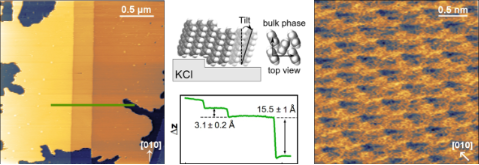
- pattern I, a line defect is observed that also follows the KCl [100] direction (Figure 2a and Figure 2b). On the upper side of the line defect the molecular pattern is displaced along the [100] direction compared to the lower side of the defect. The intrinsic distortions of the image make it difficult to
- estimate the amount of displacement in this direction. The image does not contradict the possibility that the pattern is displaced by a lattice vector of the substrate unit cell, which is much smaller than the molecular unit cell. In that case the line defect could release strain induced by the epitaxy of
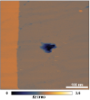
- the molecules on the surface. Another possibility is that the line defect results from a twinned growth. The line defect also has a profound effect on the energy dissipation (Figure 2b). The dissipated energy per oscillation cycle can be estimated by Ediss ≈ E0(Aexc − Aexc,0)/Aexc,0 with E0 = πkA2/Q


Other Beilstein-Institut Open Science Activities



