


Search results
Search for "nano–bio interactions" in Full Text gives 6 result(s) in Beilstein Journal of Nanotechnology.
Safe and sustainable by design with ML/AI: A transformative approach to advancing nanotechnology
Beilstein J. Nanotechnol. 2026, 17, 176–185, doi:10.3762/bjnano.17.11
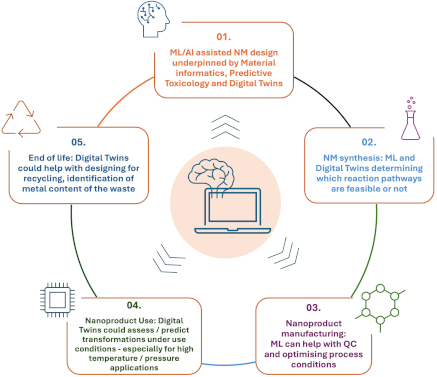
- nanotechnology, which demands not only advanced computational models but also a deep mechanistic understanding of nano–bio interactions, environmental fate, and lifecycle behaviour – areas where current models often fall short. Additionally, implementation of the SSbD framework requires a holistic integration


Influence of surface characteristics on the in vitro stability and cell uptake of nanoliposomes for brain delivery
Beilstein J. Nanotechnol. 2026, 17, 139–158, doi:10.3762/bjnano.17.9
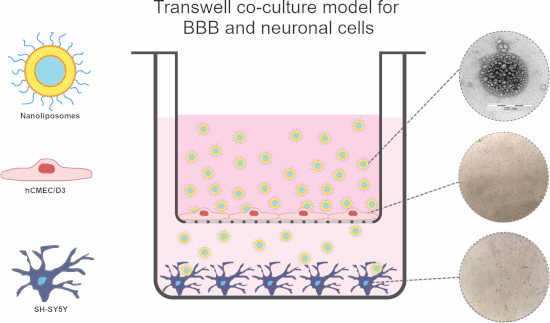
- the physicochemical characteristics and effectiveness of nanoliposomal (NLs) formulations. However, there has been minimal focus on elucidating nano–bio interactions and understanding the behavior of these formulations at organ and cellular levels. Specifically, it is widely recognized that when
- therapeutic outcomes [3][5]. Namely, current research on NLs predominantly focuses on their physicochemical characteristics and efficiency, but minimal attention has been given to understanding the nano–bio interactions at organ and cellular levels. When exposed to biological fluids, nanodelivery systems like
- systems behave in biological environments is limited, and further research is needed to explore the fundamental mechanisms of nano–bio interactions and develop strategies for their manipulation. In order to obtain valuable insights into the behavior of nanodelivery systems, as well as the nano–bio




Classification and application of metal-based nanoantioxidants in medicine and healthcare
Beilstein J. Nanotechnol. 2024, 15, 396–415, doi:10.3762/bjnano.15.36
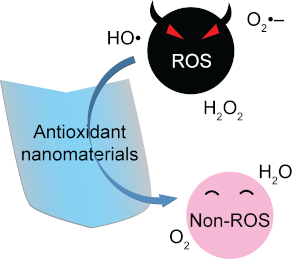
- acute toxicity causes tissue damage immediately after exposure to certain nanosized metals. Besides, the large specific surface area of nanomaterials has some benefits regarding excellent ROS scavenging; yet, a large specific surface area can also be a double-sided sword because it increases nano–bio
- interactions leading to toxic effects. Therefore, health and safety profiles of metal-based nanoantioxidants need to be provided. Second, metal-based nanoantioxidants have very diverse shapes, sizes, and surface functional groups. However, modifying these factors significantly changes the way metal-based


A review on the biological effects of nanomaterials on silkworm (Bombyx mori)
Beilstein J. Nanotechnol. 2021, 12, 190–202, doi:10.3762/bjnano.12.15

- [37] and chemicals, and to evaluate nano–bio interactions. The exposure of nanomaterials (NM) to the environment is reported to have detrimental effects on human lungs. Pulmonary inflammation was reported in C57BL/6N mice exposed to zinc oxide (ZnO) (size of nanoparticles functionalized with


Toxicity and safety study of silver and gold nanoparticles functionalized with cysteine and glutathione
Beilstein J. Nanotechnol. 2019, 10, 1802–1817, doi:10.3762/bjnano.10.175
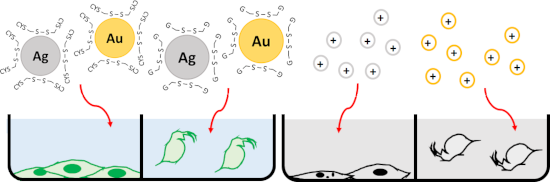
- Zagreb, Croatia 10.3762/bjnano.10.175 Abstract This study was designed to evaluate the nano–bio interactions between endogenous biothiols (cysteine and glutathione) with biomedically relevant, metallic nanoparticles (silver nanoparticles (AgNPs) and gold nanoparticles (AuNPs)), in order to assess the
- . Keywords: biocompatibility; cysteine; ecotoxicity; glutathione; nano–bio interactions; nanosafety; nanotoxicity; Introduction Metallic nanoparticles (NPs) such as silver and gold have been employed in a wide range of products and applications in the biomedical field owing to their remarkable physico
- . An increased toxicity effect was observed for the AgNPs prepared in the presence of GSH, but a decreased toxicity was observed in the case of AuNPs. Further studies should be directed toward transformation patterns of NPs in vivo and the role of nano–bio interactions that may either lead to less or


Nanoinformatics for environmental health and biomedicine
Beilstein J. Nanotechnol. 2015, 6, 2449–2451, doi:10.3762/bjnano.6.253
- , literature mining for nano-data collection and meta-analysis, data mining/machine learning of nano-data (e.g., development of quantitative structure–activity relationships (QSARs)), simulation of the fate and transport of nanomaterials, nano-bio interactions, and assessment of potential environmental and
Other Beilstein-Institut Open Science Activities



