Search results
Search for "polyimide" in Full Text gives 51 result(s) in Beilstein Journal of Nanotechnology.
Optical bio/chemical sensors for vitamin B12 analysis in food and pharmaceuticals: state of the art, challenges, and future outlooks
Beilstein J. Nanotechnol. 2025, 16, 2207–2244, doi:10.3762/bjnano.16.153


Electrical, photocatalytic, and sensory properties of graphene oxide and polyimide implanted with low- and medium-energy silver ions
Beilstein J. Nanotechnol. 2025, 16, 1794–1811, doi:10.3762/bjnano.16.123
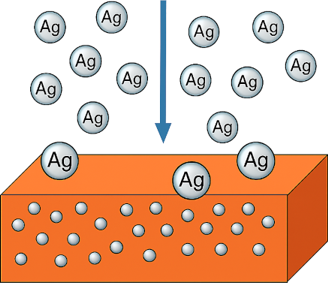
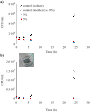
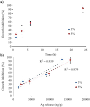
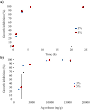
- , sensory, and photocatalytic properties of graphene oxide (GO) and polyimide (PI). Implantations were carried out with fluences ranging from 3.75 × 1012 cm−2 to 1 × 1016 cm−2. Silver ions offer excellent electrical, catalytic, and plasmonic characteristics, making them ideal for multifunctional enhancement
- multifunctional behavior of polymer systems. Keywords: ERDA; graphene oxide; ion implantation; photocatalysis; polyimide; RBS; Introduction Silver ion implantation is an effective strategy for controlling modification of the physicochemical properties of polymers and graphene-based materials. This method allows
- controlled modification of the electrical properties of dielectric and semiconducting materials [7]. When Ag ions are implanted into polymer substrates, such as polyimide (PI) or graphene oxide (GO), fundamental changes occur at the molecular and electronic levels, leading to a significant decrease in the


Transient electronics for sustainability: Emerging technologies and future directions
Beilstein J. Nanotechnol. 2025, 16, 1545–1556, doi:10.3762/bjnano.16.109
- photolithography onto biodegradable substrates necessitates the use of a critical technique known as transfer printing [72][73]. One of the most sophisticated transfer printing approaches utilizes poly(methyl methacrylate) (PMMA) as a sacrificial layer and diluted polyimide (PI) as a protective layer (Figure 2c


Laser processing in liquids: insights into nanocolloid generation and thin film integration for energy, photonic, and sensing applications
Beilstein J. Nanotechnol. 2025, 16, 1428–1498, doi:10.3762/bjnano.16.104






A review of metal-organic frameworks and polymers in mixed matrix membranes for CO2 capture
Beilstein J. Nanotechnol. 2025, 16, 155–186, doi:10.3762/bjnano.16.14
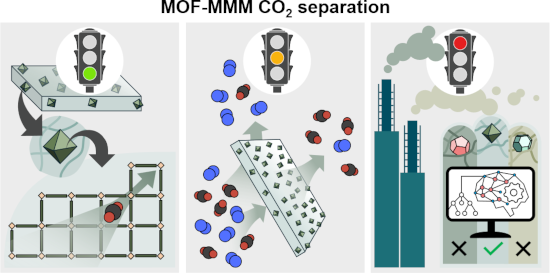
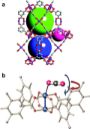
- -integrated MMM. Specifically, they used oxolane, dichloromethane, chloroform, and methyl ethyl ketone (MEK) to prepare their precursor slurry. The MMMs were synthesized with 6FDD co-polyimide and MOF-808 at 0, 10, and 30 wt % loadings. Generally, the choice of solvent affects parameters such as viscosity




Antimicrobial and mechanical properties of functionalized textile by nanoarchitectured photoinduced Ag@polymer coating
Beilstein J. Nanotechnol. 2023, 14, 95–109, doi:10.3762/bjnano.14.11

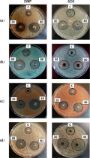
- investigated [26], with specific emphasis on AgNPs [27]. Textiles have been successfully functionalized with AgNPs using a variety of both physical and chemical deposition techniques [28]. To name a few, Mei et al. [29] used magnetic sputtering to deposit AgNPs onto polyimide textiles; OhadiFar et al. [30



Roll-to-roll fabrication of superhydrophobic pads covered with nanofur for the efficient clean-up of oil spills
Beilstein J. Nanotechnol. 2022, 13, 1228–1239, doi:10.3762/bjnano.13.102

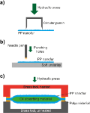
- analyzed in the following, we used 1.1 g of cosmetic cotton (Rossmann AG). The filled pad is then placed between two polyimide films (DuPont Kapton, 50 µm) just covering the edge to prevent cutting through the material during heat sealing. The welding is carried out in a custom-made tool, consisting of two
- are perforated by punching holes with a needle pen. A soft underlay guarantees that the needles penetrate the film completely. (c) Two cut-outs are filled with oil-absorbing material, placed between polyimide masks, and heat-welded using a heated brass tool. Finally, the uneven edge is cut off with a
- 100 µm. (b) To simplify filling the pads with oil absorbent material, the two halves are held together by scotch tape. (c) Such a preprocessed pad is placed between two polyimide films to avoid cutting through the material while welding. The upper hollow cylinder is heated and then pressed onto the




Recent advances in nanoarchitectures of monocrystalline coordination polymers through confined assembly
Beilstein J. Nanotechnol. 2022, 13, 763–777, doi:10.3762/bjnano.13.67

- –liquid or air–liquid interfaces. After evaporation of the solvent, the monocrystalline coordination polymers were packed by the condensed polymer, forming free-standing films. The coordination polymers could also be grown on 1D polyimide fibers first [140]. Then, the 1D fibers could self-assemble into





A chemiresistive sensor array based on polyaniline nanocomposites and machine learning classification
Beilstein J. Nanotechnol. 2022, 13, 411–423, doi:10.3762/bjnano.13.34
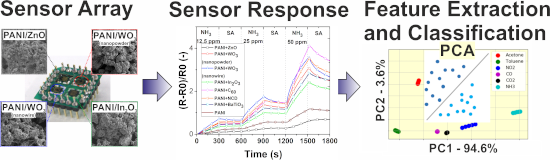
- electrode systems was manufactured as a flexible printed circuit board (DuPont Pyralux AP8535 with 75 µm thickness, double-sided, copper-clad laminate in an all-polyimide composite of polyimide film bonded to copper foil). It contains the heating elements and the temperature sensors for the temperature




Electrostatic pull-in application in flexible devices: A review
Beilstein J. Nanotechnol. 2022, 13, 390–403, doi:10.3762/bjnano.13.32
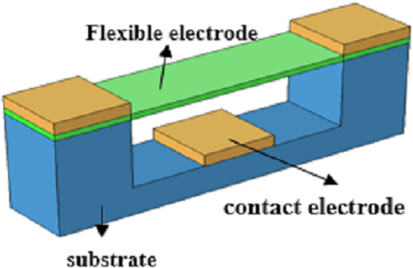
- beneficial to the miniaturization of microfluidic systems. Electrostatically actuated microvalves contain a closing electrode, an opening electrode, and a flexible removable diaphragm. Bae et al. [72] fabricated a bidirectional microvalve using flexible polyimide as the valve diaphragm. The response time is


Micro- and nanotechnology in biomedical engineering for cartilage tissue regeneration in osteoarthritis
Beilstein J. Nanotechnol. 2022, 13, 363–389, doi:10.3762/bjnano.13.31


Nanoporous and nonporous conjugated donor–acceptor polymer semiconductors for photocatalytic hydrogen production
Beilstein J. Nanotechnol. 2021, 12, 607–623, doi:10.3762/bjnano.12.50

- absorption (400–700 nm) and high photogenerated charge separation rate [101]. This heterojunction realized an AQY of up to 7.5% at 420 nm. By in situ solvothermal growth of CdS nanoparticles on ultrathin polyimide (PI) nanosheets, Zou et al. [102] achieved a HER of 30.65 μmol h−1 (50 mg) with 15% CdS/PI as




Intracranial recording in patients with aphasia using nanomaterial-based flexible electronics: promises and challenges
Beilstein J. Nanotechnol. 2021, 12, 330–342, doi:10.3762/bjnano.12.27

- (iWEBS) was fabricated to map cortical connectivity in a wide region, as presented in Figure 5a. The microelectrode array was made of patterned Au wires passivated with SU-8 photoresist on a flexible polyimide (PI) substrate (Figure 5b). The thickness of iWEBSis was only 14.5 µm with 2 µm SU-8 and 12.5


Photothermally active nanoparticles as a promising tool for eliminating bacteria and biofilms
Beilstein J. Nanotechnol. 2020, 11, 1134–1146, doi:10.3762/bjnano.11.98

- nanohole arrays with reduced graphene oxide nanosheets in a unique and flexible polyimide film for laser-gated pathogen inactivation. For the in vivo experiments, the patch was irradiated for 5 min with an LED array (940 nm, 10 W) and the patch surface temperature increased to 52 °C. These tests indicated


A novel dry-blending method to reduce the coefficient of thermal expansion of polymer templates for OTFT electrodes
Beilstein J. Nanotechnol. 2020, 11, 671–677, doi:10.3762/bjnano.11.53

- the EPI to prepare a polyimide–silica hybrid film having a low CTE. However, because of the poor dispersion of the nanomaterial and the high viscosity of the polymer during wet blending [17][18], the nanomaterial content in the composites is usually low, which causes the CTE of the polymer template to


Liquid crystal tunable claddings for polymer integrated optical waveguides
Beilstein J. Nanotechnol. 2019, 10, 2163–2170, doi:10.3762/bjnano.10.209

- conditioned with spin-coated polyimide (PIA-2304, Lixon Aligner) for homogeneous LC alignment, parallel to the plate, along the waveguide. Both the glass surface and the waveguide were gently rubbed with a velvet cloth to induce the desired orientation. If an external electric field is applied to the LC


Precise local control of liquid crystal pretilt on polymer layers by focused ion beam nanopatterning
Beilstein J. Nanotechnol. 2019, 10, 1691–1697, doi:10.3762/bjnano.10.164
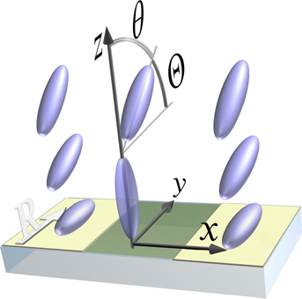
- display-quality glass substrates covered with ca. 150 nm thin transparent ITO electrodes. Polyimide (PI) is deposited onto the substrates by a conventional routine combining a precursor spin-coating and annealing at 190 °C for 1 h, which produces a mechanically robust PI layer of 10–20 nm thickness. Next


Subsurface imaging of flexible circuits via contact resonance atomic force microscopy
Beilstein J. Nanotechnol. 2019, 10, 1636–1647, doi:10.3762/bjnano.10.159

- (PC) and polyimide (PI) for the bottom and top layers, and Au, Cu, Ti, Ag and Mg for the middle layer. The mechanical parameters of these materials are listed in Table 2. The Young’s modulus and Poisson’s ratio of the silicon substrate are 160 GPa and 0.278, respectively. Cantilever vibration model



Ultrathin hydrophobic films based on the metal organic framework UiO-66-COOH(Zr)
Beilstein J. Nanotechnol. 2019, 10, 654–665, doi:10.3762/bjnano.10.65

- films containing nanometric or micrometric particles of the MOF NH2-MIL88B(Fe) and a commercial polyimide, showing that it is possible to obtain ultrathin MOF–polymer hybrid films with a homogeneous distribution of MOF particles within the polymer matrix [28]. In this contribution, submicrometer


Nanocomposite–parylene C thin films with high dielectric constant and low losses for future organic electronic devices
Beilstein J. Nanotechnol. 2019, 10, 428–441, doi:10.3762/bjnano.10.42
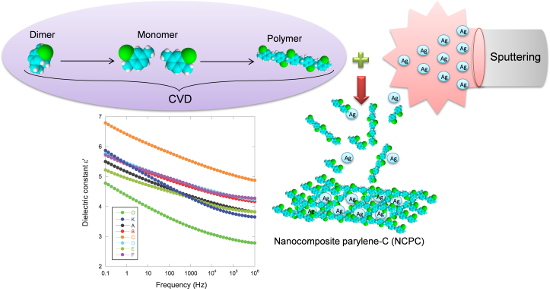
- other pure materials such as SiO2, polyimide, polyethylene, alumina (Al2O3), benzocyclobutenes (BCB) and SiO2/poly(methyl methacrylate) (PMMA), nanocomposite parylene C (NCPC) exhibits some interesting properties [39][40][41][42][43][44][45][46][47]. As an example, parylene C/Silica nanocomposites show
- constant. This was observed for example in polyimide [67] and parylene C [65] films. It is attributed to the interaction between the polymer chains and the substrate and also to the orientation of polymer chains along this substrate. In our case, the change in the value of the dielectric constant is too




Nanoporous water oxidation electrodes with a low loading of laser-deposited Ru/C exhibit enhanced corrosion stability
Beilstein J. Nanotechnol. 2019, 10, 157–167, doi:10.3762/bjnano.10.15
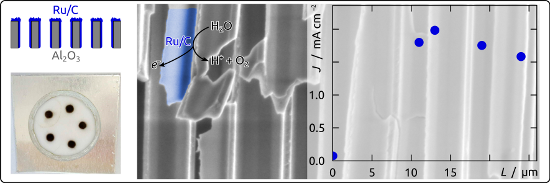
- deposition areas were laser-cut and subsequently glued with the ITO contact on small copper plates using double-sided conductive copper foil. A chemically resistant and electrically insulating polyimide (Kapton®) adhesive tape featuring a laser-cut circular window of 1.5 mm diameter was used to define the




Threshold voltage decrease in a thermotropic nematic liquid crystal doped with graphene oxide flakes
Beilstein J. Nanotechnol. 2019, 10, 71–78, doi:10.3762/bjnano.10.7
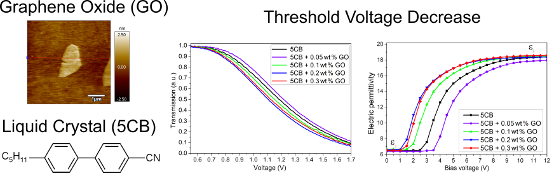
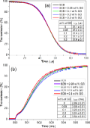
- polyimide SE-130 (Nissan Chemicals) of d ≈ 30 nm was deposed and rubbed to induce planar alignment (HG, homogenous) of the director n. The isotropic–nematic phase transition temperature was determined by means of the transmitted light intensity (TLI) technique, as a function of temperature. The temperature



Light extraction efficiency enhancement of flip-chip blue light-emitting diodes by anodic aluminum oxide
Beilstein J. Nanotechnol. 2018, 9, 1602–1612, doi:10.3762/bjnano.9.152

- of LEDs is difficult. Ryu et al. prepared a scattering layer composed of fine inorganic particles. They then sprayed a planarization layer composed of acrylic acid resin or polyimide resin on the scattering layer and obtained a LED surface with high flatness and hardness; these properties enhanced


Photoluminescence of CdSe/ZnS quantum dots in nematic liquid crystals in electric fields
Beilstein J. Nanotechnol. 2018, 9, 1544–1549, doi:10.3762/bjnano.9.145
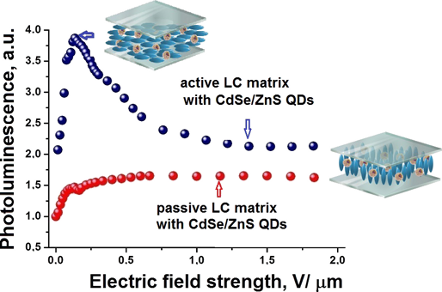
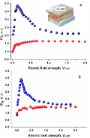
- of two quartz substrates with a fixed gap of about 33 μm. Both substrates were coated by cathode sputtering with transparent conductive electrodes based on indium tin oxide. Orienting layers of rubbed polyimide and chromolane were used to obtain a planar or vertical orientation of the LC molecules


Tailoring polarization and magnetization of absorbing terahertz metamaterials using a cut-wire sandwich structure
Beilstein J. Nanotechnol. 2018, 9, 1437–1447, doi:10.3762/bjnano.9.136
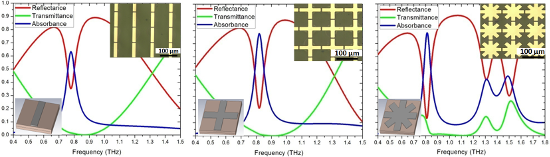
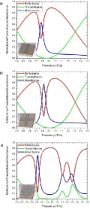
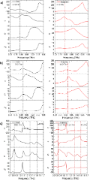
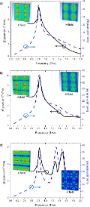
- illustrates the geometry of the cut-wire sandwich structure. The width of the gold metallic bar (W), the length of gold metallic bar (L), the gap size between two unit cells (g), the thickness of the gold metallic bar (Zg), the thickness of the dielectric (polyimide (PI)) (Zd), and the lattice constant (D = L
- . The effective permittivity increases with a decrease in gap width [12]. The anti-parallel surface current density on the gold electrode line at layer 1 and 2 effectively generate magnetization, which results in a large effective permeability. Both cut-wire structures were separated by a thin polyimide
- with its neighbor (5 µm), polyimide substrate thickness (5 µm), and tge cut-wire structure thickness (100 nm), respectively. D is the lattice constant (D = L + g). b) Sample 1: cut-wire sandwich structure, c) Sample 2: cross-shaped sandwich structure, d) Sample 3: star-shaped sandwich structure