


Search results
Search for "single-particle tracking" in Full Text gives 2 result(s) in Beilstein Journal of Nanotechnology.
Molecular engineering of individual dye-based nanoparticle photostability for ultrabright two-photon fluorescence
Beilstein J. Nanotechnol. 2026, 17, 688–696, doi:10.3762/bjnano.17.48
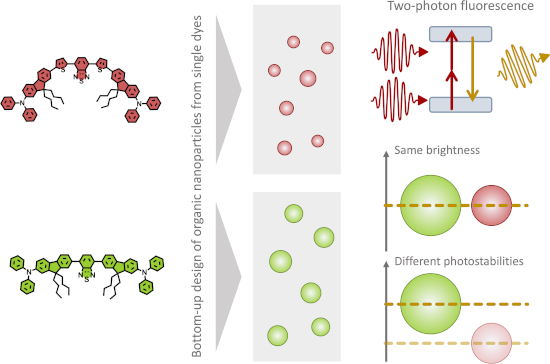
- whole animals, such as Xenopus tadpoles [3], zebrafish [16][17], and mice [15]. Furthermore, dFONs have proven highly effective as probes for single-particle tracking (SPT) experiments, both within cells [18][19] and deep in the extracellular space of the mouse brain [20]. Recently, we achieved a


The effect of surface charge on nonspecific uptake and cytotoxicity of CdSe/ZnS core/shell quantum dots
Beilstein J. Nanotechnol. 2015, 6, 281–292, doi:10.3762/bjnano.6.26

- -particle tracking), was shown to compromise the integrity of the cytoskeletal and plasma membrane dynamics, as evidenced by electric cell–substrate impedance sensing. Keywords: biocompatibility; CdSe/ZnS; cytotoxicity; ECIS; quantum dots; single-particle tracking; Introduction Quantum dots (QDs) are
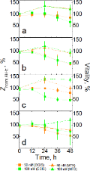
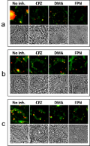
- quantify the cytotoxic effects of QDs on the viability of MDCKII cells in combination with single-particle tracking employing a wide-field fluorescence microscope [21]. The impact of QDs with different surface charges is characterized at the initial stages after exposure to cells, the stage at which
- ][27]. Furthermore, we combined ECIS with single-particle tracking, which was previously used to follow the intracellular pathway of Tat peptide-conjugated QDs in living cells [28], transport of QD-labelled monoclonal anti-HER2 antibody in mice [29], specific recognition of avidin-CD14 receptor by





Other Beilstein-Institut Open Science Activities



