

Search results
Search for "soil bacteria" in Full Text gives 2 result(s) in Beilstein Journal of Nanotechnology.
The role of biochar in combating microplastic pollution: a bibliometric analysis in environmental contexts
Beilstein J. Nanotechnol. 2025, 16, 1401–1416, doi:10.3762/bjnano.16.102
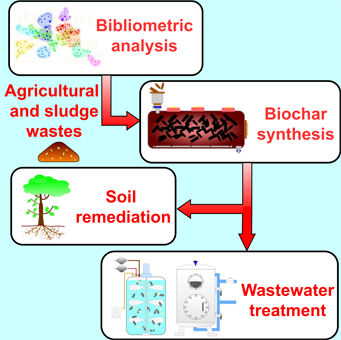
- biochar’s application. Biochar has demonstrated remarkable potential in mitigating the impacts of MPs on soil and plants. It enhances plant biomass yield by up to 80%, improves soil water retention and cation exchange capacity and increases Olsen-P levels. It also fosters the growth of beneficial soil
- bacteria, such as Subgroup 10, Bacillus, and Pseudomonas, which suppress harmful microorganisms, reduce antibiotic resistance genes and enhance biodiversity. The increased activity of soil enzymes, including urease and dehydrogenase, further illustrates its role in improving soil fertility. Notably



Analysis of soil bacteria susceptibility to manufactured nanoparticles via data visualization
Beilstein J. Nanotechnol. 2015, 6, 1635–1651, doi:10.3762/bjnano.6.166

- communities exposed to MNPs and thus evaluate the potential for environmental impacts. Keywords: environmental impact; manufactured nanoparticles; nanoinformatics; soil bacteria; visualization; Introduction Manufactured nanoparticles (MNPs) are now routinely used in numerous products and applications due to
- MNPs of primary size in the range of about 15–20 nm and about 20–30 nm [42], respectively. The soil bacteria were exposed to the above MNPs for 15 and 60 days at three different doses (0.5, 1.0, and 2.0 mg/g (soil) for TiO2 MNPs and 0.05, 0.1, and 0.5 mg/g (soil) for ZnO MNPs) as well as 0, 15, and 60
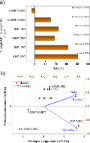
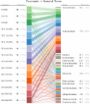
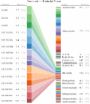
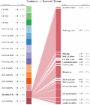
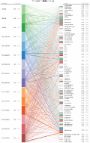
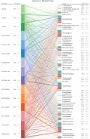
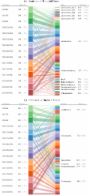
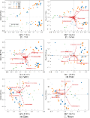
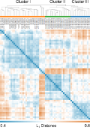
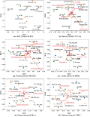
- -by-design nanomaterials. Workflow for visual data exploration of soil bacteria susceptible to MNP treatments. Bipartite graph for MNP-bacteria interrelationships at order level. Soil bacteria taxa identified for the above graph are for the 95th–5th percentile range ≥ 10/n (n denotes the total number




Other Beilstein-Institut Open Science Activities