


Search results
Search for "substitutional defects" in Full Text gives 4 result(s) in Beilstein Journal of Nanotechnology.
Defects and defect-mediated engineering of two-dimensional materials: challenges and open questions
Beilstein J. Nanotechnol. 2026, 17, 454–488, doi:10.3762/bjnano.17.31
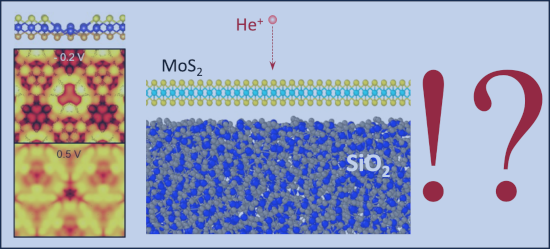
- surrounding the atoms [167][168][169][170][171]. Essentially, by analyzing shifts in binding energies and changes in peak intensities, XPS can identify various defect types, including vacancies, interstitials, and substitutional defects [172][173][174][175][176][177][178]. In the context of 2D materials
- in 2D materials also poses challenges for interpreting the data. Overlapping signals from different defects, such as vacancies, interstitials, and substitutional defects, can complicate analysis. To address this, combining XPS with complementary techniques, such as Raman spectroscopy, AFM, and DFT





Recent advances in green carbon dots (2015–2022): synthesis, metal ion sensing, and biological applications
Beilstein J. Nanotechnol. 2022, 13, 1068–1107, doi:10.3762/bjnano.13.93
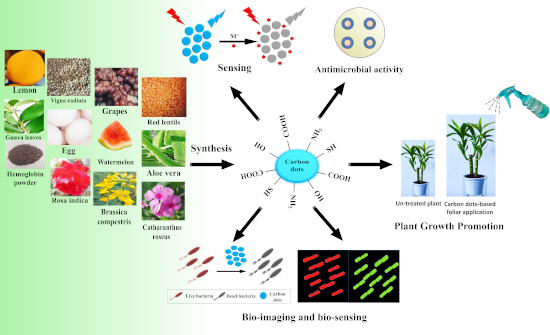
- contrast to nitrogen, phosphorus atoms are larger than carbon atoms. As a result, it has the potential to act as an n-type donor and create substitutional defects in the carbon cluster, changing the electronic and optical characteristics of CDs with great impact on polarizability, quantum yield, and




Effect of substitutional defects on resonant tunneling diodes based on armchair graphene and boron nitride nanoribbons lateral heterojunctions
Beilstein J. Nanotechnol. 2020, 11, 688–694, doi:10.3762/bjnano.11.56

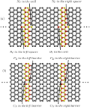
- substitutional defects (including BC, NC, CB, and CN) at the interface of graphene and boron nitride nanoribbons on the negative differential resistance behavior of the proposed resonant tunneling diode is investigated. Transport simulations are carried out in the framework of tight-binding Hamiltonians and non
- heterojunction; armchair boron nitride nanoribbon (ABNNR); armchair graphene nanoribbon (AGNR); negative differential resistance (NDR); nonequilibrium Green’s function (NEGF); resonant tunneling diode (RTD); substitutional defects; Introduction 2D materials have gained tremendous research interest due to the
- between graphene and hBN [3]. However, inevitable interfacial defects located at the interface of Gr/hBN heterojunctions, including point defects (single vacancies and substitutional defects) and topological defects can alter the electronic properties of Gr/hBN heterostructures and, consequently, the



Green fabrication of lanthanide-doped hydroxide-based phosphors: Y(OH)3:Eu3+ nanoparticles for white light generation
Beilstein J. Nanotechnol. 2019, 10, 1200–1210, doi:10.3762/bjnano.10.119

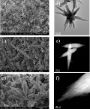
- during the reaction process may distort the crystal structure and lead to an increase in the formation of substitutional defects, which may facilitate the incorporation of dopant ions into the system [36][37][38][39]. As an example, luminescent red Y(OH)3:Eu3+ phosphors were fabricated via employing this



Other Beilstein-Institut Open Science Activities



